We’re all puppets, Laurie. I’m just a puppet who can see the strings
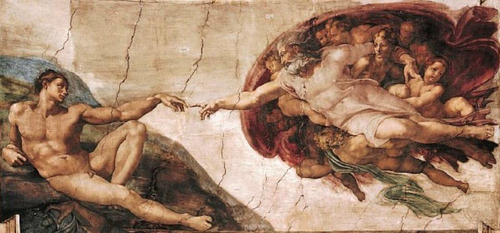
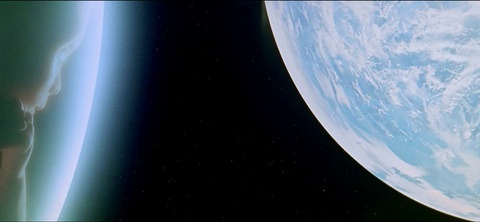
Inside many superhero stories is a Greek tragedy in hiding. There is the godlike hero, and he is flawed. In early days his weaknesses were simplistic, like Superman’s vulnerability to Kryptonite. Then Spider-Man was created as an insecure teenager, and comic books began to peer deeper. Now comes the “Watchmen,” with their origins as 1940s goofballs, their development into modern costumed vigilantes, and the laws against them as public nuisances. They are human. Although they have extraordinary physical powers, they aren’t superheroes in the usual sense. Then everything changes for Jon Osterman, remade after a nuclear accident as Dr. Manhattan. He isn’t as human as Batman, but that can be excused because he isn’t human at all.

He is the most metaphysically intriguing character in modern superhero movies. He not only lives in a quantum universe, but is aware that he does, and reflects about it. He says, “This world’s smartest man means no more to me than does its smartest termite.” He lives outside time and space. He explains that he doesn’t see the past and the future, but he does see his

December 14, 2012

410 East Washington Street

I was born at the center of the universe, and have had good fortune for all of my days. The center was located at the corner of Washington and Maple streets in Urbana, Illinois, a two-bedroom white stucco house with green canvas awnings, evergreens and geraniums in front and a white picket fence enclosing the back yard. Hollyhocks clustered thickly by the fence. There was a barbeque grill back there made by my father with stone and mortar, a dime embedded in its smokestack to mark the year of its completion.

There was a mountain ash tree in the front yard, and three more down the parking on the side of the house. These remarkable trees had white bark that could be peeled loose, and their branches were weighed down by clusters of red-orange berries. “People are always driving up and asking me about those trees,” my father said. He had planted them himself, and they were the only ones in town–perhaps in the world. They needed watering in the summertime, which he did by placing five-gallon cans under them with small holes drilled in their bottoms. These I carefully filled with the garden hose from the back yard, while making rainbow sprays over the grass around.

December 14, 2012

What do you mean by a miracle?

I’m not a miracle. And neither are the Chilean miners. We are all alive today for perfectly rational reasons. Yet there is a common compulsion to describe unlikely outcomes as miraculous — if they are happy, of course. If sad, they are simply reported on, or among the believing described as “the will of God.” Some disasters are so horrible they don’t qualify as the will of God, but as the work of Satan playing for the other team.

December 14, 2012

Cannes #1: On a darkling plain

Fifty years ago, the Palme d’Or winner at Cannes was Fellini’s “La Dolce Vita.” More every year I realize that it was the film of my lifetime. But indulge me while I list some more titles.

The other entries in the official competition included “Ballad of a Soldier,” by Grigori Chukhrai; “Lady with a Dog,” by Iosif Kheifits; “Home from the Hill,” by Vincente Minnelli; “The Virgin Spring,” by Ingmar Bergman;” “Kagi,” by Kon Ichikawa; “L’Avventura,” by Michelangelo Antonioni; “Le Trou,” by Jacques Becker; “Never on Sunday,” by Jules Dassin; “Sons and Lovers,” by Jack Cardiff; “The Savage Innocents,” by Nicholas Ray, and “The Young One,” by Luis Bunuel.

And many more. But I am not here at the 2010 Cannes Film Festival to mourn the present and praise the past.

December 14, 2012

The Texas School Book Repository

Do the schoolbook publishers of America have standards? Courage? Ethics? In what sense do they stand behind their product? For “product” they sometimes produce, and not textbooks in the traditional sense. I ask these questions for a reason.

Right-wingers from Texas will be deciding what will be added and taken out of the textbooks of America’s school children. They form the majority of the 15-member Texas State Board of Education. They believe current textbooks are slanted toward a liberal viewpoint, and that discussion of Darwin’s Theory of Evolution, which one member describes as “hooey,” wrongly excludes a consideration of Creationism.

December 14, 2012

The One-Percenters

“The upper 1 percent of Americans are now taking in nearly a quarter of the nation’s income every year. In terms of wealth rather than income, the top 1 percent control 40 percent.

“Their lot in life has improved considerably. Twenty-five years ago, the corresponding figures were 12 percent and 33 percent.”

December 14, 2012

The best documentaries of 2010

Documentaries became a box office factor with the rise of such films as “Hoop Dreams” and “Roger & Me.” Before then, there were hit music documentaries like “Woodstock” but most other nonfiction films could expect short runs in few theaters before dutiful audiences. What a small but growing minority of Friday night moviegoers is beginning to discover is that there’s a good chance the movie they might enjoy most at the multiplex is a doc.

In alphabetical order, these were the best documentaries I saw in 2010:

December 14, 2012

A symphony of voices

The video on this page was an undercover project, I learn, at Ebertfest 2012. Most of my Far-Flung Correspondents and Demanders were there in person, and those who couldn’t be contributed their voices via audio files. The idea originated with Kevin B. Lee, who did the audiotaping and editing. It was the inspiration of Michael Mirasol to use the foreign languages of those who spoke one.

December 14, 2012

The man with his name

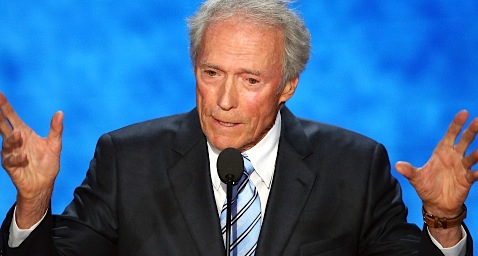
What exactly happened when Clint Eastwood was onstage at the Republican National Convention? The one thing we can agree on was that it was unexpected–by the Republicans, by the audience, perhaps even by Eastwood, who we now know was ad-libbing. It takes brass balls to ad-lib for 12 minutes in front of 30 million people on live TV, just working with yourself and an empty chair.

December 14, 2012

Making out is its own reward

Fifty years ago, a brief letter to the editor of a student newspaper led to a national furor over academic freedom. When it broke in 1959, the Leo Koch Case dominated front pages and newscasts. It remained a story for three years. Today it is so thoroughly forgotten that not even Wikipedia, which knows everything, has heard of it.

I was on the campus the whole time and later edited the same campus paper, but I don’t want to write about the case. I want to write about what was said in the letter.

It was published in the autumn of 1960. Let me take you back on a trip through time. That was a Puritan era by today’s standards.

December 14, 2012

Winners of the 2011 Toronto Film Festival

Nadine Labaki’s “Where Do We Go Now?” won the coveted Cadillac People’s Choice Award on Sunday at the 2011 Toronto International Film Festival. At the noncompetitive festival with no jury, this award is voted on by moviegoers on their way out of the theaters, and tallied by a formulas that equalizes for audience sizes.

December 14, 2012

My career in retailing

Now that I’ve been fired by Amazon, my brief career in retailing seems to be at an end. Was it only last November I was assuring Chaz I could make a quarter of a million, easy, in Amazon commissions? After all, between Twitter and Facebook I had 440,000 customers in the store every day, and if 2% of them bought a DVD, that would work out to…

December 14, 2012

The new great American director

Ramin Bahrani is the new great American director. After three films, each a master work, he has established himself as a gifted, confident filmmaker with ideas that involve who and where we are at this time. His films pay great attention to ordinary lives that are not so ordinary at all. His subjects so far have been immigrants working hard to make a living in America. His fourth film, now in preparation, will be a Western. His hero will be named Tom. Well, he couldn’t very well be named Huckleberry.

The Old West, too, was a land of immigrants, many of them speaking no English. But Bahrani never refers to his characters as immigrants. They are new Americans, climbing the lower rungs of the economic ladder. There is the Pakistani in “Man Push Cart,” who operates a coffee-and-bagel wagon in Manhattan. The Latino kid in “Chop Shop,” surviving in a vast auto parts bazaar in the shadow of Shea Stadium. The taxi driver from Senegal in “Goodbye Solo,” who works long hours in Winston-Salem, N.C. [“Solo” opens March 27 in Chicago and New York.] These people are not grim and depressed, but hopeful when they have little to be hopeful about. They aren’t walking around angry. Wounded, sometimes. They plan to prevail.

December 14, 2012

The best films of 2009

Since Moses brought the tablets down from the mountain, lists have come in tens, not that we couldn’t have done with several more commandments. Who says a year has Ten Best Films, anyway? Nobody but readers, editors, and most other movie critics. There was hell to pay last year when I published my list of Twenty Best. You’d have thought I belched at a funeral. So this year I have devoutly limited myself to exactly ten films.

December 14, 2012

Hollywood’s highway to Hell

My negative review of “The Raid: Redemption” violated one of my oldest principles, and put me way out of step with other critics. In my review I gave it one star. The movie currently stands at 8.4 on IMDb, 83% on the Tomatometer, 76 on MRQE, 73 on Metacritic, and 65.4 on Movie Review Intelligence. When my review appeared online at 12:01 a.m. Thursday morning, “The Raid” was hovering near 100% at Tomatoes. You need a 60 to be a “fresh” tomato.

December 14, 2012

Thank you for smoking

This stamp honoring Bette Davis was issued by the U. S. Postal Service on Sept. 18. The portrait by Michael Deas was inspired by a still photo from “All About Eve.” Notice anything missing? Before you even read this far, you were thinking, Where’s her cigarette? Yes reader, the cigarette in the original photo has been eliminated. We are all familiar, I am sure, with the countless children and teenagers who have been lured into the clutches of tobacco by stamp collecting, which seems so innocent, yet can have such tragic outcomes. But isn’t this is carrying the anti-smoking campaign one step over the line?

Depriving Bette Davis of her cigarette reminds me of Soviet revisionism, when disgraced party officials disappeared from official photographs. Might as well strip away the toupees of Fred Astaire and Jimmy Stewart. I was first alerted to this travesty by a reader, Wendell Openshaw of San Diego, who wrote me: “Do you share my revulsion for this attempt to revise history and distort a great screen persona for political purposes? It is political correctness and revisionist history run amok. Next it will be John Wayne holding a bouquet instead of a Winchester!”

The great Chicago photographer Victor Skrebneski took one of the most famous portraits of Davis. I showed him the stamp. His response: “I have been with Bette for years and I have never seen her without a cigarette! No cigarette! Who is this impostor?” I imagine Davis might not object to a portrait of her without a cigarette, because she posed for many. But to have a cigarette removed from one of her most famous poses! What she did to Joan Crawford in “What Ever Happened to Baby Jane” wouldn’t even compare to what ever would have happened to the artist Michael Deas.

December 14, 2012

Promethian panspermia

One of my Creationist friends recently questioned my enthusiasm for Ridley Scott’s new film “Prometheus.” He tweeted:

I tweeted in return:

He replied:

December 14, 2012

Outguess Ebert on the Oscars

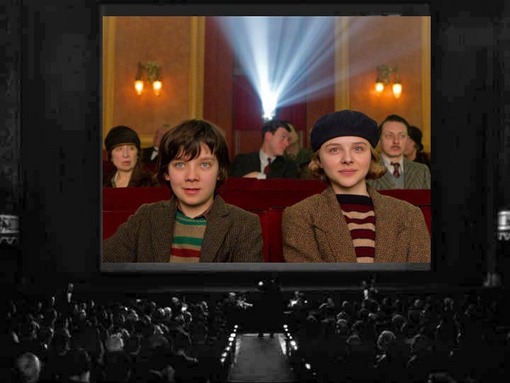
It doesn’t take a crystal ball to see that this year’s Academy Awards will amount to a shootout between “Hugo,” with 11 nominations, and “The Artist,” with 10. Fittingly, they are two movies inspired by love of movie history, the first about the inventor of the cinema, the second about the transition from silent films to talkies.

December 14, 2012

A great deal of solace

I’m double-posting my review of “Skyfall” to encourage comments, which my main site can’t accept.

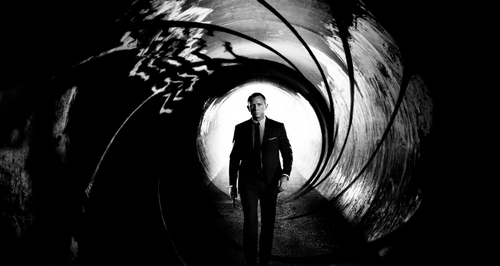
In this 50th year of the James Bond series, with the disappointing “Quantum of Solace” (2008) still in our minds, “Skyfall” triumphantly reinvents 007 in one of the best Bonds ever made. This is a full-blooded, joyous, intelligent celebration of a beloved cultural icon, with Daniel Craig taking full possession of a role he earlier played well in “Casino Royale,” not so well in “Quantum”–although it may not have been entirely his fault. I don’t know what I expected in Bond #23, but certainly not an experience this invigorating.

December 14, 2012

Books do furnish a life

When I get a little money I buy books; and if any is left I buy food and clothes. — Erasmus

One afternoon in Cape Town I sat in my little room at University House and took inventory. This must have been in June, winter in the southern hemisphere, and it had been raining steadily for most of a week. I was virtually alone in the student residence; the others had packed off for vacation. With an umbrella and plastic slicker I’d ventured out once or twice to the Pig and Whistle, where I favored the Ploughman’s Lunch, but to sustain life I’d laid in a supply of tinned sardines, cheddar and swiss cheese, Hob Nobs, apples, Carr’s Water Biscuits, ginger cookies, Hershey bars, biltong, sausage and a pot of jam. I had a little electric coil that would bring a cup of water to a boil, a jar of Nescafe, a box of sugar and some Instant Postum.

Not my office, but very close

I wrote in my journal: “I have not spoken to anyone since Monday. The radio is playing ‘Downtown’ by Petula Clerk. I’ve been reading some Shaw — Man and Superman. I’m wearing jeans, my cable knit sweater and my Keds. I’ve made coffee and am waiting for it to cool. Let it be recorded that at this moment I am happy.”

December 14, 2012
subscribe icon

The best movie reviews, in your inbox