The ultimate expression of humanity

This movie is 97 minutes of trying not to blink. Image after luxurious 70MM image. A perfect soundtrack. I watched it again, wearing headphones, sitting really close to an HD screen letting the film astound me with its Blu-Ray picture. And it did astound me, beyond my expectations. The details revealed textures and images I had not previously noticed. Every time I plan to watch Ron Fricke’s “Baraka” (1992), I watch far more than I plan. I intend to watch one scene, but realize quickly that I have to finish it.

December 14, 2012

Reactionary men who fear and hate strong women

What you are about to read may shock you. It’s all true, and it happened to me. It involves censorship and the movies and one man’s loathing of strong contemporary women.

I love motion pictures, and I love writing about them. I have been a movie critic in Buffalo, New York for a number of years. Reviewing films rose out of my passion for both journalism and cinema, the perfect combination.

In preparing this column, I thought about various headlines for it. Something like: The Perils Of Movie Reviewing. Or perhaps: What’s Happening To Freedom Of The Press? Or maybe this one: There Truly Are Reactionary Men Who Fear And Hate Strong Women.

December 14, 2012

Should “JFK” have even been made?

It seems like every film inspired on real-life events becomes controversial for one reason or another. The greater the subject’s notoriety, the louder the outcry. The backlash to Oliver Stone’s “JFK” was extreme by any standard; it became one of the rare features widely attacked for existing in the first place. This wasn’t all that surprising; the movie took one of the most painful events in American history and came up with shocking, damaging conclusions. That Stone tackled the “whats” of the case (the pieces that didn’t fit) was already a touchy proposition; that he tried to uncover the “whys” is what took the reaction the next level. Should a film like this have been made?

December 14, 2012

Don’t know why there’s no sun up in the sky

The first thing you must realize about “Stormy Weather,” before anything else, is that it is not real. Of course it isn’t real in the sense that it is a narrative film and as such it is fiction, but it is unreal in another way. It is a romanticization of African American life offering one-dimensional characters without nuance– in “response” to the one dimensional un-nuanced characters in other films.

The movie opens as famous dancer Bill Williamson (Bill Robinson) receives a magazine in his honor “celebrating the magnificent contribution of the colored race to the entertainment of the world during the past twenty five years.” This prompts him to reminisce about his career and courtship of the beautiful singer Selina Rogers (Lena Horne). The plot however, is of little importance. The film is primarily a vehicle for famous black talent in music and dance. These are glamorous blacks in romantic and dramatic leads. Blacks with sex appeal. Blacks with their own storyline.

December 14, 2012

A sermon no one can sleep through

Many of today’s films seem to be made solely for financial reasons, but the case of “The Exorcist” is more complex than most. It was a tremendous financial success, the all-time box office champ for a while, but only a psychic could have predicted that people would line up to see a movie of this nature.

December 14, 2012

Slapped by the Hand of Mother Nature

I’ve never been good with small talk. In those corporate conferences with high ceilings and manufactured friendships, I used to admire those high-speed networkers who spun small talk and smooth talk as they worked a room. I don’t play golf. I don’t drink booze. I’m a fair weather sports fan. If you were to stand alone in an elevator with me, you’d probably hear me breathe as I stared at the floor. Further, if you want to kill an otherwise lively conversation among a bunch of decreasingly sober corporate executives in ill-fitted khakis, sport coats, and crooked “Hi My Name is” name-tags, then make the mistake that I keep making: tell them that you’re an expert on religion. The crowd in front of you will split apart faster than the Red Sea. And, perhaps that is why I was never invited by my colleagues to go on those weekend warrior trips, like the characters in John Boorman’s forty year old “Deliverance” (1972). This is the story of four confident suburban businessmen looking to raft to the bottom of a river. Along the way, the experience pounds the hell out of them.

December 14, 2012

He wants to marry a hairdresser

“Film is the medium that gives room to our fantasies, most of the time harmless, since they are fantasies. The cinema is often more beautiful than life, if only because we write the screenplay.” – Leconte

The Hairdresser’s husband (1990) is a film so fantastical, so sensual, so romantic, that you can not help but sigh in ached longing…a longing that, deep down, you know is untouchable, but how good it is to be drenched so thoroughly in it in a French hairdressing salon, on sunny afternoons and stormy nights?

Dreamers. Lovers. However they came to be we do not know, and it does not matter. They are so content together, indeed so happy that they seem immune to the ravishing of life’s toil. Passion consumes their lives. The day begins with it, and ends with it.

December 14, 2012

Charlatan, Louisiana

On Netflix Instant

Robert Duvall’s “The Apostle” (1997) is the story of a preacher who believes he has unique permission to phone call the Divine. As is the case with such preachers, the rules of goodness and morality seem to apply to everyone else before they apply to him. Meaning, he is above the law until he gets frightened for breaking the law. So, his combination of impious exhilaration, impatient devotion, and self-righteous rage reveals a man in sunglasses, open palms, and fiery sermons, who plants trees while burning bridges. I love this movie as much as I despise its central character. This movie exists only because of its central character.

December 14, 2012

The Persistence of Memory

Memories don’t really have a beginning, a middle and an end. They’re more like vignetted sensations, impressions and paraphrases, where the most prominent detail might be sticky fingers from handling a bunch of wheat. If you could only live with one memory for all eternity, which would it be? That’s the question Hirokazu Koreeda’s “After Life” asks, while also showing us what makes something memorable.

December 14, 2012

Understanding the Dung Fly

Sang-hoon is a terrifying piece of work. He is someone you never want to mess up with. He is callous, narrow-minded, vulgar and, above all very volatile. Whenever his hair-trigger fury erupts, there’s more than hell to pay — and that happens often.

Even when his temper relatively abates, he is still difficult and hostile to communicate with, probably even with himself. In the opening sequence, we see a young woman being beaten by some guy in the night streets. Sang-hoon appears and he savagely beats that guy. And then, he spits at her, smacks her, and insults her.

December 14, 2012

Those who monitor and those who fear being monitored

Even outside the U.S. it’s common for movie-goers to avoid non-Hollywood films–not that subtitles are such a big deal to us, as we have no choice but to get accustomed to them since childhood. These feature’s real problems are that they don’t often receive much fanfare and their stars aren’t always well known. We tend to stay away until we get one a “must see” recommendations and that was my case with the German film “The Lives of Others” (2006). It’s a shame to think audiences will miss a story so gripping; this is one of the best films of its decade.

December 14, 2012

It takes all kinds of critters

There have been many horror movies about deranged characters and their insane deeds which make most of us cringe. As a diligent moviegoer, I have frequently encountered such movies, and I found some of them were enjoyable while others were repellent. While I saw a sense of humor in that ruthless South Korean horror movie “I Saw the Devil” (2010), my eyeballs were rolling in disbelief and disgust in the case of a movie called “The Human Centipede” (2009) and its more atrocious sequel.

December 14, 2012

The James Bond template

Attending the latest James Bond films has been a tradition in my family ever since I can remember, and why not? If anybody went to the movies as often as we did, they were bound to get plenty of “B” grade turkeys, yet the years made clear that just about any 007 film would have something more to offer than most, at the very least those terrific production values.

The first one I can recall going to was “Goldfinger” sometime around age 9, to one of those theatrical re-re-releases which were so common before the days of multiplexes and home video. I have to admit that what really motivated me to go see it back then was solely the possibility of being witness to the cinematic version of my old Corgi Aston Martin DB5 model car but, like most audiences, I found many facets which I had become familiar with, in other movies, being taken to a whole new level.

December 14, 2012

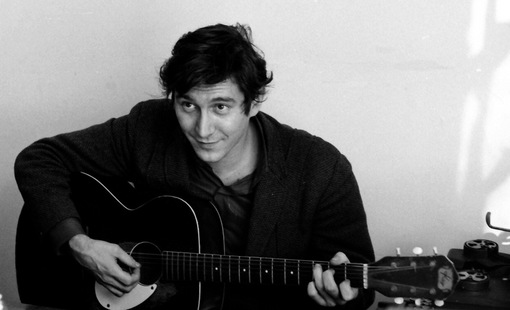
Phil Ochs: All the news that’s fit to sing

“Phil Ochs: There But for Fortune” plays Monday, January 23, at 10 pm EST/PST on PBS American Masters. It will thereafter be available via PBS On Demand, and is currently on Netflix Instant and DVD.

“Mistakes are lodged like harpoons and fish hooks in an intelligent person’s soul,” says one friend of political folk singer Phil Ochsof the deep depression that eventually led him to suicide in 1976. Och’s friends are like that, eloquent and insightful. His mentor Pete Seeger, in particular, speaks like he sings, modulating his voice to give anecdotes a mythic luster and heartbreaking resonance. But after watching “Phil Ochs: There But for Fortune” take a measure of the man’s adult life, it seems that some friends put too much emphasis on generic therapist’s reasons for his downward spiral — schizophrenia, alcoholism, declining popularity. It seems that Phil Ochs’ fall was inevitable, given the fact that his singing career began when he was barely out of his teens, when JFK’s assassination was a couple years off, and crashed after every progressive movement for which his protest songs provided spiritual fuel was crushed.

This is not a standard pop star rise-and-fall story. Ochs was physically involved in the antiwar and social justice movements he sang along with. He headlined, organized and even spontaneously showed up at a staggering number of rallies for various causes. His investment was evident in his performances, presented here with shocking audiovisual fidelity. Even though it’s captured on a black-and-white kinescope, a performance of his song “When I’m Gone” feels as clear and urgent as a live event. So, too, is his strumming and crooning at the 1964 Newport Music Festival. (Simply amazing sound and image restoration here.) The sonorous voice and wide, earnest eyes could just as easily belong to a Wall Street occupier serenading Zuccoti Park.

December 14, 2012

The Arikan Agenda: The Best Films of 2011

A few weeks ago on Facebook — that sly keeper of family secrets, whose memory seems to have increased incrementally with its new Timeline mumbo-jumbo — an actor of some repute posted a list of the best Twitter accounts of 2011, as compiled by a wholly forgettable outlet. He had been placed relatively highly, and someone commented that it was a very subjective list. Apart from the fact that taking issue with “a list of the best Twitter accounts of 2011, lol” is by definition absurd, the statement presented a logical fallacy (I am fully aware of the irony of regarding a throwaway Facebook comment in such depth). All lists are subjective: that’s why they’re lists. Nonetheless, this fairly simple fact gets lost in the year-end frenzy as interested parties start calling for the list-maker’s head, like angry villagers wielding pitchforks, if and when their favoured books, albums, films, etc fail to place on a given critic’s compilation of the year’s best.

December 14, 2012

‘Ponyo,’ the missing Oscar nominee,by Michael Mirasol of Manila

The Oscar nominees have been announced, now cinephiles everywhere have begun nitpicking amongst the nominations. Some will note those that should have and shouldn’t have been nominated, but one almost criminal omission from the Best Animated Film category was the absence of PONYO, Hayao Miyazaki’s latest work for Studio Ghibli.

In terms of filmmaking mastery, one can mention the name Miyazaki in the same breath as Spielberg or Scorsese. His works are beloved by animators, audiences, and critics around the world.

December 14, 2012

“How to Die in Oregon”: It’s personal

“How to Die in Oregon” plays on HBO on May 27, 29 and 31 and June 1 and 6.

Click here for HBO showtimes.

I’ve been encouraged to write autobiographically in this forum, so bear with me, dear reader. We’ve barely been introduced, and this time it’s personal. I’ll be sharing some thoughts about HBO’s extraordinary new documentary “How to Die in Oregon”, but first, allow me this indulgence:

When my father died four months ago at the age of 79, I sat beside him in my wheelchair as his death drew near. I couldn’t hold his hand and he couldn’t hold mine, so I gently touched the parchment-like skin of dad’s withered right arm while my older brother, standing on the other side of the bed, leaned over and quietly suggested to our father that this was “a good time to go.”

Dad must have agreed, because a few seconds later, he did.

He went gently and peacefully after many hours of slow, labored breathing. Only three weeks had passed since he’d been definitively diagnosed with bowel cancer. In a case of fortunate timing, we’d brought him home from the hospital about 30 hours earlier; we knew he preferred to die at home. Apart from the morphine drip we’d been trained to operate by compassionate hospice-care advisors, there were no lethal drugs or physicians involved.

(Above: Jerry and Jeff Shannon, 2009)

December 14, 2012

The People vs. George Lucas

A documentary called “The People vs. George Lucas” gives disgruntled, hard-core, “Star Wars” a chance to vent on the decisions George Lucas has made over the last several years, regarding the alterations to his beloved original trilogy as well as the overall outcome of that series’ prequels. It may be safe to say that these fans’ gargantuan expectations were not fully met.

I have to wonder if such expectations were realistic to begin with, I also ask myself if it was the world we live in today that drastically changed the rules of the game for the release of the maligned prequels. Let’s face it, the insufferable Ewoks never had to face the same fate that Jar Jar Binks did when days after the release of the first prequel, a web site called www.jarjarbinkssucks.com became the talk of the web in its early days.

December 14, 2012

To travel and live without reasons

When I observed the lifestyle of Ryan Bingham in Jason Reitman’s wonderful movie “Up in the Air” early in this year, Lawrence Kasdan’s 1988 movie “The Accidental Tourist” came to my mind. Like Ryan, Macon Leary (William Hurt) knows a lot about traveling around by plane. He can tell you how to pack your bag as small as possible. 

December 14, 2012

Raising Renee: Her sister’s keeper

“Raising Renee” premieres on HBO2 Wednesday, February 22 and is available on-demand at HBO on Demand and HBO Go thereafter.

“Raising Renee” is an accommodating look at the relationship between an award-winning painter, Beverly McIver, and one of her two older sisters, Renee. Although Renee is in her forties, she has the mindset of a third-grader. After their mother dies, Renee goes to live with Beverly and Beverly spends about six years “Raising Renee.”

This is the third look at a family facing life-changing problems from the husband and wife filmmaking team Jeanne Jordan and Steven Ascher. Their first was the personal 1995 “Troublesome Creek: A Midwestern,” in which Jordan’s own family attempts to save their Iowa farm. Given the Audience Award and the Grand Jury Prize for documentary at Sundance, it was nominated for an Academy Award for best documentary feature.

Their second, “So Much So Fast,” looked at the then 29-year-old Stephen Heywood who discovered he had amyotrophic lateral sclerosis (Lou Gehrig’s disease), a paralyzing neurodegenerative illness. Despite his diagnosis, Heywood gets married to Wendy; they have a child. Heywood died in 2006, but the self-taught architect inspired his brothers to co-found a website for ALS patients and an institute for research into treatment, the ALS Therapy Development Institute.

December 14, 2012
subscribe icon

The best movie reviews, in your inbox