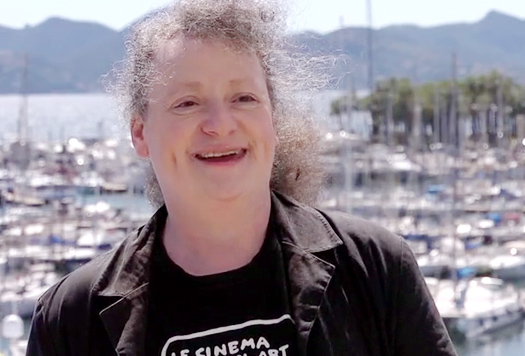
The AFI Class of ’92

Call it a bloodbath. Not literally, of course, but it sure felt like one.

It was a Friday afternoon in late spring 1993 at The American Film Institute. The Class of 1992, which had pretty much killed itself making short films (“cycle projects”) since starting the program in September, was waiting for a list. Dreading it, too. Because everybody’d known all year that of 168 “Fellows,” as AFI calls them — only 40 (or just 8 across 5 disciplines – directing, producing, cinematography, editing, production design) would be invited back, making that coveted Second Year cut for the opportunity to produce a second year film.

A top secret selection committee debated late into the day. Even I, then Special Projects Coordinator and right hand to the Dean of Studies, didn’t know who was meeting. There was tension everywhere, clinging like the humidity of a Midwestern summer, as the committee decided, and the Fellows waited.


December 14, 2012

A letter from Cairo on February 11, 2011

Today I walked the streets of Egypt proud–proud of my people and my country. It took us 18 days of protests to force Mubarak and his corrupt regime to resign. Their accounts will be frozen and the billions of dollars that should’ve gone into building a better and cleaner country will finally be restored for the good of our nation.

Mubarak left and we’re all proud of getting rid of a corrupt dictator but it’s the incidents I’ve witnessed with my own eyes throughout this revolution that has me swollen with pride. When Muslims prayed on a bridge, the police sprayed them with water and even though some slipped and fell, they stood back up and resumed. Egyptians of all religions were moved by this and when the water was pointed back at them, they created another front line of prayers. People kept coming in to reduce the impact of the water.

December 14, 2012

A world of one’s own

In a science magazine I used to read during my high school years, one of my favorite sections was on the science in SF movies. (The magazine is still published; whenever I come across it at the campus book store, it takes me back to when I was less jaded and more anti-social.) It answered my doubts on the climax sequence in “Total Recall” (1990), and pointed out that there were several implausible aspects in the premise of “Jurassic Park” (1993). In case of the movies like “Armageddon” (1998) and “Independence Day” (1996)–well, it didn’t require a lot of scientific knowledge to discern that they were brainless.

December 14, 2012

Greed is maybe good up to a point

Sequels to Hollywood hit films usually take a couple of years to arrive, maybe up to three or five or even ten, but twenty-three? Why would Oliver Stone wait this long to bring us a follow-up to his 1987 “Wall Street”? On this opening weekend of “Wall Street: Money Never Sleeps,” there doesn’t seem to be that much of a mystery regarding the “why now?” The forces behind the collapse of Wall Street and most of the world’s economies in 2008, and their nature, couldn’t have passed unnoticed to somebody like Stone, whose name is synonymous with plots, conspiracies and the like.

The original “Wall Street” might be a product of the 1980s and it looks a dated in some ways, but if it proves anything to current audiences it’s that there isn’t much new under the sun. Like other aspects of life, the real Wall Street is ruled by cycles in which similar events seem to re-occur with time and may continue to do so again and again. Greed is not a novelty.

December 14, 2012

The webs we weave

Philip Noyce’s “The Quiet American” is a tale of lies. It introduces itself as a noir murder mystery, but seamlessly veers into a story of man in love with a dancer, looking for redemption in his twilight.

From there it flows into a love triangle pitting an old frightened Brit (Michael Caine) against a young fearless American (Brendan Fraser). In moments of crisis, the American saves the Brit’s life. In a moment of anger, the Brit seems to allow the American’s death.

December 14, 2012

These men could have been friends

A few film directors end up becoming masters of specific subjects. Scorsese grew up in an environment that allowed him to understand organized crime from the inside. Tarantino has a grasp on the language that some street people, their drugs of choice and their methods of use, and so on. Michael Mann is the Hollywood Epic Techno-Crime expert. Did he grow up with it? Did he research it? A few years ago, I came across an old 70s Starsky & Hutch episode which happened to be written by him; in it, a serial killer claimed to receive his murdering orders from outer space and wore a tin-foil pointy-shaped hat for just that purpose. This means I’m basically leaning towards research, but your guess is as good as mine.

December 14, 2012

“Brief Encounter”: A matter of the heart

Marital infidelity is a favorite subject in films. It’s one of many taboos which audiences can explore without having to live through its challenges nor worry about its consequences. The emotional and social tumult that comes with it always provides filmmakers and actors with complex and often fiery material to work with. But because it is a social ill, it tends to be viewed through an illicit lens.

The very way these kinds of love affairs are defined speak for themselves. Adultery. Infidelity. Cheating. Marriage is a sacrament, hence anything that goes against it is cast as

December 14, 2012

Night train to nowhere

This complete film is on YouTube in eight parts, Russian with English subtitles, starting here.

The opening shot of Jerzy Kawalerowicz’s “Night Train” (1959) is an overhead one: we see the human swarm of the Polish city of Łódź, presented as an unruly collection of points moving up and down a vast staircase. They all seem pitted against one another by some unseen pinball player – and yet never quite collide. The perspective we are forced to assume is almost cruelly impersonal in its design: if one squints one’s eyes, one could see it all as a whirring bacteria colony under a microscope. Had it been not for Wanda Warska’s moody jazz hum (a variation on Artie Shaw’s “Moon Ray”), the shot would seem unbearably cold and detached. As it is, with the wistful music trickled all over the image, it’s just very, very sad.

December 14, 2012

Omer Mozaffar, a Pakistani Chicagoan, discusses James Cameron’s “Avatar”

I was born in Karachi, Pakistan, at a very young age. My beloved parents rode the huge wave that was the South Asian diaspora, landing here in Chicagoland, where I’ve been ever since. Thus, like many of my peers, I’ve been in a state of constant exile.

On the South Side of Chicago, I’m a Pakistani. In the rest of Chicago, I’m a Southsider. In the rest of America, I’m a Chicagoan. In the rest of the world, I’m an American. That is today’s “normal,” isn’t it? We are simultaneously, unintentionally local and global.

Still, the most comfortable spot for me is a center seat in the anonymous darkness of a crowded theater on the opening night of a movie. If you are reading this note on Roger Ebert’s blog, then perhaps you feel the same way.

December 14, 2012

The do-it-yourself auteurs

• Video by Kevin B. Lee • Text by Steven Boone

German Expressionism, Soviet Montage, Italian Neo-Realism, the French New Wave , the Japanese New Wave, the Australian New Wave, Cinema Novo, the New American Cinema, Cinema du Look, the Black Pack, Dogme 95, mumblecore…

In the cinema world, film “waves”–movements of like minded filmmakers bound by generation, nationality, stylistic tendencies or social/political position–rise, crest and fall away every decade. But the latest wave is something different.

December 14, 2012

Ashes Are For Ever

The original poster for “Ashes and Diamonds” resembles a desperate message written down in blood. Indeed, when Andrzej Wajda’s film opened in Poland in March 1958, it was greeted with a sense of urgency by the nation at large. Finally (thirteen years after WW2 ended) a movie got made that acknowledged the plight of the Home Army: the true war heroes whose vision of a free Poland didn’t include a communist takeover. For more than a decade, these people have been banned from collective memory and referred to only with state-approved derision. Suddenly, a Home Army officer was the focal point of a major film. And even though he died at the end, the viewers were identifying with his lost cause rather than with the winning one. They knew the latter all too well from their everyday lives to cheer it.

December 14, 2012

The man who decided to go along

Shrouded behind the frostbitten windows of an idling vehicle, Marcello Clerici (Jean-Louis Trintignant) peers out at the snow-covered French countryside where a political assassination takes place. Driven by another member of Mussolini’s Fascist government, the jittery man in the backseat has traveled through the night to reach this mission, but it is in the journey that Bernardo Bertolucci’s striking 1970 drama, “The Conformist,” takes shape. An adaptation of Alberto Moravia’s 1951 novel, the film details the inner working of cowardice, using Marcello as a supposed idealist defined by his cage in 1930s Italy, and through his pitiful struggle against independence explores its futility at every turn.

December 14, 2012

What Makes a Really Good Bad Guy

I realize I’m a minority on this one, but I actually liked Bane for much of “The Dark Knight Rises.” Even with most of his beautiful face covered up, Tom Hardy has a talent for effective physical acting. Each time Bane entered a room, he would clutch his collar, forming two fists that seemed to guard his chest. In that simple gesture, he established a commanding presence while subtly implying a defensive pose, his hands near his weak spot, poised to protect the mask.

December 14, 2012

Why video games are indeed Art

A few days ago, I was one of many critics who panned the film SUCKER PUNCH. Though I hadn’t written my own, I advocated several reviews that I felt reflected my sentiments.

Though I agreed in their disapproval, two words kept on reappearing with each negative review I read: “video game.” To say that the film draws greatly upon video game aspects is accurate. But with each citation, my fellow critics continue to beat the dead horse of an argument that video games are a meaningless form of mindless entertainment.

I grew up on movies and on video games, and love and respect what they bring to the table. Though I enjoy them on different levels, they both have given me moments of wonder and serious reflection. As an avid gamer and film lover, I find it a shame to see how one medium has gained artistic acceptance while the other continues to be derided by the mainstream. There are many reasons why they are looked down upon, but if you give them a shot, you just might conclude that video games should be considered art.

December 14, 2012

Swimming an ocean of emotions

There are some American suburbs that are notorious for their high concentration of high powered parents who excel in their high class careers, spare no expense in raising precisely crafted children, and in the process completely abandon themselves, their spouses, and their children. That is one level of Alexander Payne’s “The Descendants.” This is such a rich movie that I’ll have to watch it a few times to fairly appreciate all of its layers.

December 14, 2012

Lisa Nesselson from Paris: On the man who made you think you spoke French

Paris, Jan. 11 — The phone rang at 5:30 p.m.. It was France’s around-the-clock cable news station France24 asking if I could speak about the death of Eric Rohmer, live, in about 10 minutes. The news was very fresh in France and this was the first I’d heard of it.

Except for François Truffaut and Louis Malle, who both died relatively young, the most prolific talents of the French New Wave era are still at it. Claude Chabrol makes at least one film a year; Jacques Rivette and Alain Resnais released new features in 2009; Agnes Varda is busy mounting conceptual installations when she’s not making her delightful documentaries; Jean-Luc Godard is still tinkering away on digital video.

You begin to think they’re immortal — that much like symphony conductors who live to ripe old ages because waving their arms around is excellent exercise, that “pointing into the distance” pose so characteristic of film directors may be a boon to their longevity.

December 14, 2012

Racing toward oblivion

As we race further and faster toward a global war between Christians and Muslims, and as we feel compelled to choose sides, I have to think back to my childhood. One of the blessings of my youth is that my parents raised me in the simple, small life of the South Suburbs of Chicago. When we landed, the overwhelming majority of South Asian immigrants took residence in the North and West sides. The blessing is not that I was raised away from most other Pakistanis and Indians. Rather, that I grew up in a town that boldly, humbly calls itself a “Community of Churches.” It is a small town that banned all business on Sundays and prohibited any liquor sales any time of the day or week. And, what becomes more important is that when watching a film like Ridley Scott’s “Kingdom of Heaven” (2005), I remember my wonderful neighbors, childhood friends, and teachers far more than I remember the television and internet bigots who today masquerade as Christians, no matter how many of them there seem to be.

December 14, 2012

Mike Rix of Johannesburg discusses “District 9,” filmed in South Africa

I was born on the 20th of March 1974 in sunny Johannesburg. My love of movies began at a very young age. 80’s classics like “E.T. The Extra Terrestrial,” “Back to the Future” and “Rain Man” inspired me to study film after leaving school. At the Pretoria Technikon Film and Television School, my natural talent for low budget clay-mation was discovered when I threw together a one minute mixed-media animated short in the space of a day, which went on to score a unanimous 95% from the resident lecturers.

Since leaving film school in 1996, I’ve been involved in numerous productions for South African television, working as writer, director, animator and editor on shows such as Options, Arts Unlimited, Rise up and Read, Red Bull Flugtag, Sanlam Money Game, Golf Digest TV and Ultra Simple Golf, as well as numerous music videos, commercials and corporate training films. I also wrote, directed and edited Man in the Street, a micro-budget feature film screened at the Cannes Film Festival in 2003.

December 14, 2012

“They’re young, they’re in love, and they kill people”

I remember the first time I watched “Bonnie and Clyde” like it was yesterday. I was seventeen years old and eager to broaden my knowledge in film. On weekends, I would go watch classic movies at my paternal uncles’ who was a film buff himself. The only way to watch a movie uncut in Egypt was to purchase the video cassette from Europe or the USA and import it.

That is exactly what my uncle would do. His collection of UK video cassettes kept me busy for months. Every week I would visit him and we would watch one of Hollywood’s classics together. It was there, at his living room filled with movie posters, that I was first introduced to such memorable characters as Norman Bates, Antoine Doinel, Tommy DeVito, Hal 9000 and of course Bonnie and Clyde.

December 14, 2012

“Kill Bill” and the love of cinema

It’s hard to come up with many directors willing to take the leaps of faith that Quentin Tarantino does in every scene of his every movie. It’s even harder to come up with any who have the talent to back-up even trying. The biggest reason Tarantino has such a huge following may be how he goes all-out with seemingly little or no concern for crashing — which, amazingly, he never seems to do.

December 14, 2012
subscribe icon

The best movie reviews, in your inbox