Reality and fiction in ‘Borat’

View image Yes, they were fully paid for damages.

Salon has a work-in-progress round-up of the stories behind various staged and/or improvised scenes in “Borat.” (See Comments discussion below.) Here’s one I was particularly curious about:

David Corcoran, the most outspoken of the three [University of South Carolina Chi Psi frat boys], spoke with FHM about the experience. “This guy said they were filming a Kazakh reporter who wanted to hang out with frat guys,” Corcoran said. “They met 10 of us and I guess chose the three who wouldn’t recognize Borat.” The producers paid for the three men to drink at a bar, and then had them get in the RV and “pick Borat up … as if he was hitchhiking.” Once in the RV, he says, Borat showed them naked pictures of his sister and confessed to beating women.

Two of the guys — identified in court filings only as John Doe 1 and John Doe 2 — are now suing 20th Century Fox and One America Productions, the production company behind the film. The suit claims all three were told at the time that the film wouldn’t show in the U.S. and their identities would be kept secret. They’re seeking unspecified damages for “humiliation, mental anguish, and emotional and physical distress, loss of reputation, goodwill and standing in the community.”

Can these guys sue themselves? Will they call Mel Gibson as a character witness?

December 14, 2012

Chop Shop: Of hopes and hubcaps

Alejandro Polanco plays… Alejandro.

My review of “Chop Shop” is in the Chicago Sun-Times and on RogerEbert.com. Here’s an excerpt:

Three shots into Rahmin Bahrani’s “Chop Shop,” and you’re already pulled into its world with an effortless economy and precision that leave you no doubt you’re in the best of cinematic hands.

As day laborers stand by the side of a busy road, we don’t see the road, but we can hear the traffic. Their heads turn as a truck pulls up off-camera, and they rush over to be chosen for work. The driver, speaking English, selects a few guys and tells a kid he doesn’t need him. Just as the truck pulls back out onto the highway, the kid hops into the pickup bed. He needs the work. Wherever this is, it’s a Third World economy.

Second shot: The truck rolls past the camera, and we see the kid sitting up in the back. Third shot: The truck pulls over, and we notice the Chrysler Building, then the Empire State Building, in the distance. The driver gets out, lifts the protesting kid out of the back of the Chevy, gives the kid some money out of his own pocket and tells him to buy himself breakfast. Then the title of the movie appears….

December 14, 2012

Missing Bingham: Alchemy and the movies

(Photo by Russell Yip, SF Chronicle)

Since I learned Monday that my friend Bingham Ray had died of a stroke at Sundance, I’ve been tweeting random memories of him. He was 57, but we first met in 1984 when he was 30 and I was 27. In the years I knew him, he worked at New Yorker Films, Alive, Samuel Goldwyn, Avenue Pictures, October Films (which he co-founded with Jeff Lipsky), United Artists, Sidney Kimmel Entertainment… I can’t keep track of them all, but I hadn’t spoken to him since he moved west in November to head up the San Francisco Film Society. What I can’t fathom right now is that I won’t be running into him, as I could be sure I would, at a film festival or his office if I happened to be in town, or calling or e-mailing him on a whim… What I treasure most are the things I’ve been spontaneously remembering and tweeting about, like:

* Bingham Ray was a New Yorker. When he first moved to LA he took the bus [on Santa Monica] to [work at] Goldwyn — the only passenger who wasn’t a Beverly Hills maid.

(He learned to drive and got his license.)

* Great memory: Spontaneous BBQ lunch w/ Bingham Ray, Jeff Dowd, RTJ, K. Murphy, Julia Sweeney & me at the (tiny) 2000 SxSW Film Fest.

(This was one of those coincidences that wound up becoming a treasured afternoon. I remember being so happy to have these favorite people from different yet overlapping parts of my life for so long — I’d known “The Dude,” Richard, Kathleen and Julia since the 1970s — all together at one table! You just never know which moments are going to stay with you indelibly.)

December 14, 2012

Who killed the movies?

For Francois Truffaut, it was James Bond. In a 1979 interview with Don Allen in Sight & Sound, Truffaut said he felt “the film that marks the beginning of the period of decadence in the cinema is the first James Bond — ‘Dr. No.’ Until then the role of the cinema had been by and large to tell a story in the hope the audience would believe it… For the first time throughout the world mass audiences were exposed to what amounts as a degradation of the art of cinema, a type of cinema which relates neither to life nor the romantic tradition but only to other films and always by sending them up.”

As Ronald Bergan points out in his book “Francois Truffaut: Interviews), the Cahiers du Cinema critic turned nouvelle vague auteur was “recognizing postmodernism before the concept became current in the 1980s.” Truffaut (himself known as “The Gravedigger of French Cinema” for his scathing reviews in Cahiers during the 1950s) died in 1984. Surely there were those for whom the French New Wave itself indicated the End of Cinema — a decline in professional production values and, well, what Truffaut himself attacked as the tradition “the well-made film.”

December 14, 2012

Is it rape? Is it funny?

“If you thought Abu Ghraib was a laugh riot then you might love ‘Observe and Report,’ a potentially brilliant conceptual comedy that fizzles because its writer and director, Jody Hill, doesn’t have the guts to go with his spleen. […]

“What follows next should have been the shock of the movie: a cut to Ronnie [Seth Rogen] having vigorous sex with Brandi [Anna Faris] who, from her closed eyes, slack body and the vomit trailing from her mouth to her pillow, appears to have passed out. But before the words ‘date rape’ can form in your head, she rouses herself long enough to command Ronnie to keep going.”

— Manohla Dargis, New York Times

“Because we laugh and gasp at what follows, does that mean we approve? Having seen Ronnie’s actions in a movie, do we now believe that date rape should not be prosecuted — that it is just harmless fun?

“Although I have never had such a dilemma in life, usually being the first to pass out, I hope I’d have the decency to walk away from a semi-conscious woman. I hope I also wouldn’t harass a Muslim co-worker, use a Taser on a man who parks next to a loading dock, break into a mall and assault policemen, or triumphantly shoot an unarmed criminal. Although I adore ‘Lolita,’ I hope I am never tempted to lay a finger on a prepubescent girl….

“All this might seem crashingly obvious, but at least in this culture it can’t be restated too often that comedy is not safe.”

— David Edelstein, The Projectionist

Last weekend I witnessed a sort-of argument over whether “Observer and Report” was funny or not. Or maybe it was really about whether the movie was even supposed to be funny. I don’t know for sure because I haven’t seen it yet. So to me the discussion sounded mostly like: “It’s not funny!” / “Yes it is! I laughed!” / “No it’s not! I didn’t!” / “Yes it is!” / “It’s only funny to people I hated in high school!” / “Humor is hard to analyze because it’s personal!” / “No it’s not!” / “Yes it is!”…

December 14, 2012

Films on fire: Tony Scott and Christopher Nolan

“A man can be an artist … in anything, food, whatever. It depends on how good he is at it. Creasey’s art is death. He’s about to paint his masterpiece.”

— Rayburn (Christopher Walken), “Man on Fire” (2004)

While I’ve never been a fan of the late Tony Scott or Christopher Nolan, a few thoughtful articles in recent days have helped me see them in new lights, and got me to thinking about their resemblances as well as their dissimilarities. Several appreciations of Scott (especially those by Ignatiy Vishnevetsky, Bilge Ebiri, David Edelstein and Manohla Dargis), along with David Bordwell’s incisive essay on Christopher Nolan (“Nolan vs. Nolan”) got me to thinking about the common assumptions about these popular filmmakers, both of whom are known for quick, impressionistic imagery, intercut scenes, slam-bang action and a CGI-averse insistence on photographing the real world.¹ Regardless of what you ultimately make of their work, there’s no question they’ve done it their way.

This is an attempt to look at both filmmakers through the prism of others’ points of view, refracted in critical appraisals like the above.

Of course, Scott and Nolan have passionate admirers and detractors. Until Scott’s shocking suicide last week (from a bridge, a landmark that figures hauntingly in the climaxes of several of his movies), I wasn’t aware of many critics who championed his movies, but with a few exceptions the obits seem to have been more admiring than the reviews over the years — understandably, under the sad circumstances.

Those who applaud Scott and Nolan’s films see them as genre boundary-pushers (thrillers, action pictures, science-fiction, superhero movies); those who denigrate them see them as symptomatic of the debasement of resonant imagery in modern Hollywood movies. Both have been subjected to that worst of all critical insults, comparisons to Michael Bay:

“‘Inception’ may have been directed by Christopher Nolan, but Nolan’s dreams are apparently directed by Michael Bay.” — Andrew O’Hehir, “Inception: A clunky, overblown disappointment”

“If it sounds like I’m describing Michael Bay, that’s because I sort of am. What we like to think of today as the Bay/Jerry Bruckheimer aesthetic was, in fact, originally the Tony Scott aesthetic (often deployed in films made for Bruckheimer and his late partner Don Simpson). Only back then there was a lot more art to it.” — Bilge Ebiri, “To Control Something That’s Out of Control: On Tony Scott”

One of Scott’s notable defenders has been The New York Times’ Manohla Dargis. She identifies him as a “maximalist” who used “a lot of everything in his movies: smoke, cuts, camera moves, color. This kind of stylistic, self-conscious excess could be glorious, as in his underappreciated film ‘Domino’ (2005),” which Roger Ebert also somewhat grudgingly admired, quoting a character to describe the movie itself as having “the attention span of a ferret on crystal meth.” Dargis writes:

December 14, 2012

Four-star faves for January

Ben Whishaw in a stinky place in “Perfume.”

Roger Ebert on “Perfume: The Story of a Murderer”: “Why I love this story, I do not know. Why I have read the book twice and given away a dozen copies of the audiobook, I cannot explain. There is nothing fun about the story, except the way it ventures so fearlessly down one limited, terrifying, seductive dead end, and finds there a solution both sublime and horrifying. It took imagination to tell it, courage to film it, thought to act it, and from the audience it requires a brave curiosity about the peculiarity of obsession.”

Jim Emerson on “Letters from Iwo Jima”: “In both his films, Eastwood empathizes with the “expendable” soldier on the ground, the “poor bastard” who is only a pawn in a war conceived by generals and politicians, some of whom have never come anywhere near a battlefield or a combat zone. And Eastwood fully commits to a boots-on-the-ground POV: The raising of the American flag, presented as a routine, off-hand task to the soldiers in “Flags of Our Fathers” (and which would have remained that way if a photographer had not been present), is only glimpsed obliquely from afar by the Japanese in “Letters from Iwo Jima.” Life or death, heroism or folly: It all comes down to which side you’re on, and which piece of ground you’re occupying, at any given moment in the battle.”

December 14, 2012

The films of Joni Mitchell: A brief retrospective

View image Hejira: The refuge of the road, a prisoner of the white lines on the freeway…

Joni Mitchell is a gifted musician, a great songwriter, and a damn fine actress. (People always talk about her lyrics, but its her performances that make those words sing.) She’s also a terrific director and cinematographer and all-around filmmaker and critic — and I’m taking exclusively about her recorded music. I’ve been thinking about this for a long time, and then a thread on girish’s blog a while back made me want to write about it. So, here goes. A few of my favorite examples, music and lyrics, analysis and critique (hers), composition and montage:

How about the camerawork in this shot from “The Boho Dance” (from “The Hissing of Summer Lawns”):

A camera pans the cocktail hour

Behind a blind of potted palms

And finds a lady in a Paris dress

With runs in her nylons

I see this as a horizontal dolly shot more than a “pan.” And not too much zeroing in on the legs. Maybe a tilt down as the lady drops an hors d’oeuvre, just so you have a chance to notice. Or maybe somebody seated in the foreground spots the flawed stockings from across the room and there’s a bit of rack focus to the lady’s gams. Maybe we just see her in a full shot, with her back to us, standing in a cluster of other people who can’t see the runs that are turned toward the camera. Or, if she’s seated, perhaps she crosses or uncrosses her stems briefly, allowing us a glimpse of the telltale hosiery. There are lots of ways to shoot it, but Mitchell tells you what the shot needs to convey so you can come up with the specific compositions yourself.

Then there’s this amazing zoom out from “Hejira” (song and album — my personal favorite):

White flags of winter chimneys

Waving truce against the moon

In the mirrors of a modern bank

from the window of a hotel room

You see the snow-topped chimneys and the moon and you feel the mood. Then your perceptual awareness shifts. The tone drops a bit and you realize what you’re seeing is a reflection off a bank building. The music slips higher and you pull back even further. These images aren’t just objectively out there. You’re watching them from the window of your hotel room.

It’s a song about traveling, about getting away, about returning to oneself after the “possessive coupling” of a recent love affair. But it’s been fairly impressionistic (“all emotions and abstractions,” as she sings in “Song for Sharon”) until this point: “I’m traveling in some vehicle/I’m sitting in some cafe.” It’s an anonymous landscape, dotted with specific observations: “… as natural as the weather/In this moody sky today,” or “snow gathers like bolts of lace/Waltzing on a ballroom girl. And then, at the end, you (and the narrator) are actually back in the world, at a specific place at a particular moment, with the understanding that, even as a “defector from the petty wars,” it’s only until “love sucks me back that way.” Jaco Pastorius’ gray and wintery bass is just like that moody sky.

If Mitchell has a signature shot, it may be that hotel-room long shot. Like this one overlooking Central Park in “Song for Sharon” (from “Hejira”):

Now there are 29 skaters on Wolman Rink

Circling in singles and in pairs

In this vigorous anonymity

A blank face at the window stares and stares and stares and stares

Or this one from “Harry’s House”/”Centerpiece” (“The Hissing of Summer Lawns”):

He opens up his suitcase

In the continental suite

And people third stories down

Look like colored currents in the street

A helicopter lands on the Pan Am roof

Like a dragonfly on a tomb

Mitchell is also an expert sound designer. Watch (and listen) to this, from “For the Roses” (song and album):

I heard it in the wind last night

It sounded like applause

Chilly now

End of summer

No more shiny hot nights

It was just the arbutus rustling

And the bumping of the logs

And the moon swept down black water

Like an empty spotlight

Or this atmospheric (and subjective) sound work from “Car on a Hill” (on “Court and Spark”), where the protagonist waits, anxiously and uncertainly, for her lover to arrive in the Hollywood Hills. I think of this song as a kind of sequel to the Beatles’ “Blue Jay Way”:

Ive been sitting up waiting for my sugar to show

Ive been listening to the sirens and the radio

He said he’d be over three hours ago

Ive been waiting for his car on the hill…

Fast tires come screaming around the bend

But theres still no buzzer

They roll on…

Can you hear that? Definitely a Surround effect. Squealing tires in the canyons, maybe emerging out of the distant sound of sirens — you can’t quite tell where the sounds are coming from up here — getting closer, then… no buzzer. The song ends with a repeated circular figure on Fender Rhodes and guitar, with drive-by oboe (or synth), that leaves you — and her — hanging…

December 14, 2012

The scary parts (part 1)

When kids tell you about movies, they almost always take care to warn you about the scary parts. Everybody seems to go through at least one phase where the scary parts are just too much and the only solution is to flee the theater or switch to something else on the TV.

I understand. I’m going through one of those phases right now, and the movies that scare me the most are designed for kids. The first time I tried to watch “WALL-E” on Blu-ray (which was also the first time I’d seen the movie), I could barely handle it when the big rocketship nearly landed on WALL-E and he trembled in fear. He didn’t know what was going on! Not long afterwards I had to turn it off when EVE shut down (in accordance with her “directive”) because it was just too sad. I was feeling too much. For animated robots. Pathetic.

December 14, 2012

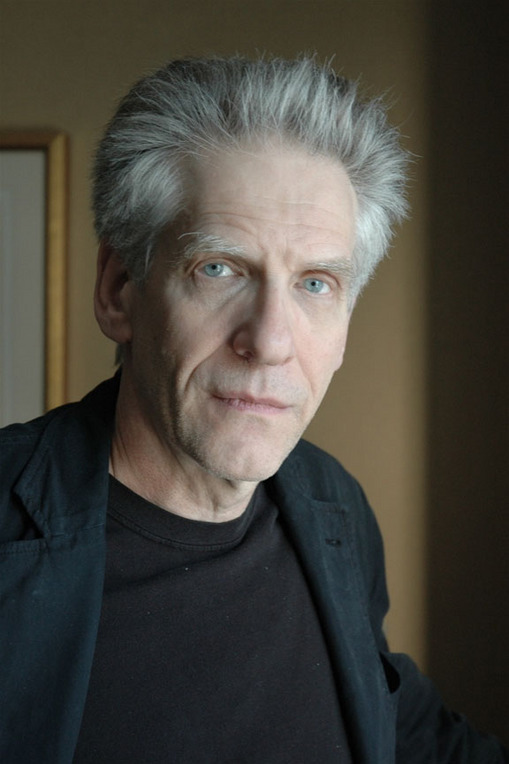
A piece of David Cronenberg’s mind

(Photo by Roger Ebert)

In his splendid Salon.com interview with David Cronenberg focusing on “A Dangerous Method,” Andrew O’Hehir begins by noting that Cronenberg is “a beloved interview subject for film journalists” — both because of the richness of his work and the stimulating quality of his conversation. I can testify to this, having interviewed Cronenberg several times over the years (starting with “Dead Ringers” in 1988, which in retrospect seems to have begun the second phase of his career). As O’Hehir says, Cronenberg is “a genuine intellectual in a realm crowded with poseurs and pretenders. He can talk easily about almost any topic you bring up; if he hadn’t turned out to be one of the premier cinematic visionaries of his generation, it’d be easy to imagine him as a writer or philosopher or historian.” Few filmmakers are as articulate about their own work.

What immediately struck me about the five paragraphs I’m about to quote — in response to O’Hehir’s first suggestion — is the breadth and depth of Cronenberg’s understanding of his own filmmaking process… and even the impetus and history behind auteurism. Cronenberg is a man who thinks when he speaks, exploring and refining his ideas as he communicates them. In the fast-serve business of media-coached mini-interviews and rigid, publicist-enforced talking points, that’s a rarity.

O’Hehir raises an idea from Charles Drazin’s book, French Cinema, “where he talks about the difference between old-school French movies, what they used to call the ‘tradition de qualité,’ mostly literary adaptations and historical dramas, and the auteurism of the New Wave, where you had to be a writer-director. It struck me that in your career you’ve almost gone backward, from the second kind of cinema to the first.”

Cronenberg responds:

December 14, 2012

Inverting a Zodiac code

There. That’s fixed. The corrected analog version.

Dear David Fincher:

Just a note to say how much I appreciate your film “Zodiac” — especially its use of 1960s and 1970s analog technologies and strategies. Cryptograms, city grids, travel distances, postmarks, calendars, trailer stall numbers, gun calibers, meal schedules, geographical jurisdictions, faxes, date books, phone numbers, addresses… well, I’ve expressed my admiration of how your film works and plays with these signs (no, I’m not a semiotician) before, and Manohla Dargis does a fine job of it in today’s New York Times, too. (I particularly like her observation that: “‘Zodiac’ is about thinking, it’s about working things through intellectually, hazarding guesses, trying to solve puzzles (the killer largely communicates through ciphers) and about the dawning of awareness, which encapsulates the experience of watching it.” That’s one way I like to describe a good movie: It not only teaches you how to watch it, but becomes about the experience you have as you watch it.)

The theatrical release analog version.

In a movie about obsessive detail, and the life-or-death importance placed upon even the tiniest, one little thing has stood out to me from my first viewing as being slightly… askew. Prominently displayed by the desk of San Francisco Chronicle reporter Paul Avery (Robert Downey Jr.) is a campaign button for Richard Nixon. The problem is that this button reads: NIXON. It has always struck me that Avery would have done what so many of us did at that time, which is to flip the button (or bumper-sticker or whatever) upside-down so that it read NOXIN — a simple visual gag that’s also a kind of cryptogram, and maybe a malformed counter-cultural pun (NIXON = TOXIN). We found it amusing that the monolithic GOP (or the RNC or CREEP or the FBI or some other Republican Establishment entity) had unwittingly, through the use of simple block letters, made it so easy to turn their message on its head. Mild subversive gestures were rarely so delightfully effortless. Best of all: 100% analog!

 Whip Inflation Now. The WIN button, from the Gerald R. Ford administration.

Anyway, I hope you have already made this little adjustment in your Director’s Cut of “Zodiac,” which I am about to watch. Just in case, I’ve taken the liberty of making a slight freehand PhotoShop tweak to the still, above.

Many thanks again,

jim

December 14, 2012

E-mail from a publicist

This e-mail pitch has been going around (with all the identifying information that I’ve stripped out), and I’m just not sure what to make of it. A “celebrity film critic” is “representing [yellow tail] Reserve wine” and wants to talk about movie-and-wine pairings… and the Oscars:

As you prepare your content for the Oscars, I’m wondering if you’re available for an interview with celebrity film critic Ben Lyons? Ben is available for interviews… for either phone or Skype interviews. If you prefer Skype, we can record it and provide back to you as a YouTube video.

During the interview, Ben can discuss his Oscar picks, as well as Oscar party planning tips. He is representing [yellow tail] Reserve wine and can also discuss suggested movie and wine pairings.

Appreciate your feedback. We only have a few slots left for the day, so I appreciate it if you could get back to me as soon as possible.

Who has accepted this remarkable interview opportunity? I googled “ben lyons” and “movie and wine” and learned that WPIX, former employer of Ben Lyons and Lyons Sr. (Jeffrey), did — just last September, which is either seven months after the Oscars or five before, depending on how you’re counting.

“Something tells me that if I wasn’t here you guys would be drinking [yellow tail] Reserve anyway,” said Ben Lyons at the top of the segment.

December 14, 2012

Deep Focus: Freedom of (eye-)movementin eight of the greatest long takes ever

We tend to remember long takes that call attention to themselves as such: the opening shots of “Touch of Evil” or “The Player”; the entrance to the Copacabana in “GoodFellas”; all those shots in Romanian movies, and pictures directed by Bela Tarr and Jia Zhangke… And then there are the ones you barely notice because your eyes have been guided so effortlessly around the frame, or you’ve been given the freedom to explore it on your own, or you’ve simply gotten so involved in the rhythms of the scene, the interplay between the characters, that you didn’t notice how long the shot had been going on.

For this compilation, “Deep Focus,” I’ve chosen eight shots I treasure (the last two I regard as among the finest in all of cinema). They’re not all strictly “deep focus” shots, but they do emphasize three-dimensionality in their compositions. I’ve presented them with only minimal identifications so you can simply watch them and see what happens without distraction or interruption. Instead, I’ve decided to write about them below. Feel free to watch the clips and then re-watch (freeze-frame, rewind, replay) the clips to see what you can see. To say they repay re-viewing is an understatement.

December 14, 2012

Don Draper pitches Facebook Timeline

YouTube has disabled embedding of this video. Watch here.

“Technology is a glittering lure, but there’s the rare occasion when the public can be engaged beyond Flash.” Or even HTML5.

(tip: kottke.org)

December 14, 2012

Jean-Luc Godard invents totally newdistribution and exhibition paradigm

From an interview with JLG at Cinemasparagus, regarding the director’s preferred distribution and exhibition method for his latest (and allegedly last) feature, “Film socialisme,” which premiered a few days ago at Cannes and which can be seen in its entirety, backwards and compressed into 67 seconds, above:

I really would have liked to have a boy and a girl be involved, a couple who had the urge to show things, who were kind of involved with the cinema, the sort of young people you might meet at small festivals. They’d be given a copy of the film on DVD, then be asked to train as skydivers. After that, places would be randomly chosen on a map of France, and they’d parachute down into those locations. They’d have to show the film wherever they landed. In a café, at a hotel… they’d manage. People would pay 3 or 4 euros to get in — no more than that. They might film this adventure, and sell it later on. Thanks to them, you get a sense of what it means to distribute a film. Afterwards, only you can make the decision, to find out whether or not it’s able to be projected in regular theaters. But not before having investigated everything for a year or two. Because beforehand, you’re just like me: you don’t know what the film is, you don’t know what might be interesting about it. You’ve gone a little outside the whole media space.

(translation: Craig Keller; tip: girish)

December 14, 2012

A.O. Scott’s perspective on NYFF

“The Queen”: NYFF Friday, commercial theaters Saturday.

In this morning’s New York Times, A.O. Scott offers his “Critic’s Notebook” view of where the NYFF fits into movie culture (at least in New York). Scott sees it as a showcase for “quality.” Compare to my questions and comments about NYFF:

Film festivals crowd the calendar and circle the globe, but New York’s is different. Instead of hundreds of films, it presents a few dozen, and it presents them, for the most part, one at a time, rather than in a frenzy of overscheduling. It is neither a hectic marketplace nor a pre-Oscar buzz factory, like Cannes or Toronto, or a film industry frat party, like Sundance. Its tone tends to be serious, sober, and perhaps sometimes a little sedate, even when the movies it shows are daring and provocative.

If I may trot out another metaphor, the New York Film Festival might be compared to an established, somewhat exclusive boutique holding its own in a world of big box superstores, oversize shopping malls and Internet retailers.

December 14, 2012

Roger’s take on the Oscars

Supporting actress nominee Rinko Kikuchi (center) plays a deaf girl in “Babel.”

Here’s Roger Ebert’s analysis of this morning’s Oscar nominations:

Oscar is growing more diverse and international by the year. This year’s Academy Award nominations, announced Tuesday, contain a few titles that most moviegoers haven’t seen and some they haven’t heard of. That’s perhaps an indication that the Academy voters, who once went mostly for big names, are doing their homework and seeing the pictures.

From relative obscurity came the nominees Ryan Gosling, whose overlooked work in “Half Nelson,” as a drug-addicted high-school teacher was little seen, and Jackie Earle Haley, the conflicted child molester in “Little Children,” an erotic tale of stolen love in the afternoon. Also consider 10-year-old Abigail Breslin, and 72-year-old veteran actor Alan Arkin, in “Little Miss Sunshine,” a story of a dysfunctional family’s cross-country road trip. Adriana Barraza, whose heartbreaking role as a housekeeper in “Babel” earned her a supporting actress nomination, and Rinko Kikuchi, whose emotionally wrenching performance as a grieving deaf teenager in “Babel” also earned her a nomination in that same category.

Read complete article at RogerEbert.com

December 14, 2012

Message from Mucusville

I was hit with a heckuva headcold last weekend and I feel like Steve Buscemi at the end of “Fargo.” If only I could get my head out of this woodchipper. I’ve been making notes and trying to watch some stuff, but it’s too hard to write through all this viscous residue in my head. Hope to post again very soon. NyQuil calls…

Phlegmatically yours,

Jim

December 14, 2012

Letter: Inconvenient truths

This letter from Leland McInnes eloquently sums up so many of the issues I keep returning to in Scanners (recently in regard to “United 93,” “The Da Vinci Code,” “An Inconvenient Truth”) — because, well, I’m obsessed with their vital importance: (film) criticism and critical thinking, skepticism, logic, conspiratorial thinking, art, religion, science, politics, you name it:

Joe Killin wrote a letter on the topic of theories and skepticism. There is a valid place for skepticism, especially in science where no result is ever certain, merely highly likely given the evidence. There is a distinct difference, however, between the skepticism that keeps an open mind and the sort of perverse skepticism required to reject well-supported theories.

There is a classic tale of Pyrrho, the founder of skepticism as a philosophy. He took the view that without certainty it was impossible to know which course of action was wiser. When out walking one day he found his teacher stuck in a ditch, unable to get out. After contemplating for a while, he walked on, having decided that he could not be certain he would actually do any good.

December 14, 2012

How much spoilage does a spoiler really spoil?

At The Frontal Cortex (a blog you should bookmark), Wired contributing editor Jonah Lehrer reveals his backward reading habits (yes, he likes to peek at the endings first) and cites a study that may indicate people enjoy stories more when they know spoilers ahead of time (“Spoilers Don’t Spoil Anything”). Is this why some moviegoers actually want to see trailers that consistently give away not only a movie’s major plot developments but the best lines and most memorable (that is, salable) images?

I’m always in favor of spoiler warnings in criticism out of respect for readers, who should be able to choose whether they care about discovering certain developments or twists if they haven’t seen the film under discussion yet. If, like Jonah Lehrer, you prefer to know about endings (or story points beyond the basic premise) in advance, then go ahead and watch the trailers or skip to the end of the DVD or peek at the final pages of the book. Nobody’s stopping you. But don’t try to force your ways on the rest of us. The critic who delights in giving away spoilers is like the drunken heckler who’s seen a stand-up comic’s act and shouts out the punchlines before the jokes are set up.

I’m also interested in counter-intuitive arguments, however. (I’m fascinated that today’s electric cars actually create more pollution and consume more energy than gas-powered vehicles, because of how their batteries are manufactured and charged — which is not to say that we shouldn’t make them, because the greater the demand, the more efficient the production cycle will become. And, of course, the less we rely on coal to generate electricity, the cleaner that process will get.)

While I question the statistical significance of the data in the study Lehrer cites, I do find some of Lehrer’s observations intriguing. (I enthusiastically recommend his book about the arts and the brain, “Proust Was a Neuroscientist.”) He concludes his post with three “random thoughts,” to which I will respond one by one:

December 14, 2012
subscribe icon

The best movie reviews, in your inbox