Family Guy Mocks Sarah Palin’s Son Trig For Having Down Syndrome

That’s not my headline up there. It’s from an unsigned entry at Huffington Post, where you’ll find a clip from this recent “Family Guy” episode (“Extra-Large Medium”). I don’t watch the show, so I may not understand the context of the scene in which the dumb 15-year-old son, Chris Griffin (voiced by Seth Green), goes on a date with Ellen, a girl with Down syndrome on whom he has a crush.

Here’s the way Huffpo describes it:

December 14, 2012

Bill Forsyth: “Great”-ness

View image David Bordwell and Bill Forsyth on an Ebertfest panel. (photy by Thompson McClellan)

My Ebertfest has already been made for me because I spoke to Bill Forsyth yesterday and, at one point, he said “Great.” This is major — particularly for a guy who, with his friends, went around saying “Great” in Gordon John Sinclair’s Scottish accent from “Gregory’s Girl” for years. It’s a well-known fact. Bella, bella.

In honor of tomorrow’s Ebertfest screening I went back and dug up my original 1987 review of Forsyth’s “Housekeeping” — which was the #1 film on my Ten Best list that year (along with such films as John Huston’s “The Dead,” Tim Hunter’s “River’s Edge,” Alain Cavalier’s “Therese” and John Boorman’s “Hope and Glory”):

Ruthie (Sara Walker) and Lucille (Andrea Burchill) are skating on thin ice. The orphaned sisters, now going through a gawky teen-age phase, spin silently in circles on the frozen surface of Fingerbone Lake. In the distance, a cluster of laughing children and barking dogs play rambunctiously, but Ruthie and Lucille keep to themselves. They don’t like the noise.

December 14, 2012

Restoring your faith in America

BAD WORD WARNING: In a world where people are stupid enough to mistake a childrens’ lightbox toy displaying the likeness of a cartoon character (which looks no more sinister than any random Pac Man-era video-game pixel blob) for a bomb — and then blame other people for their own ignorance — the only proper response to this…

… is this:

That’s right: The Aqua Teen Hunger Force marketing campaign had been under way in ten cities for ” a few weeks” by the time some non-basic-cable-subscribing Luddite in Boston freaked out the whole of Beantown by mistaking a wall-mounted LiteBrite for a bomb.

View image The Mooninite in question.

Kids: Do not take your Etch-A-Sketches out of your room, or you may be arrested as a terrorist. Or a hoaxter. Because, goodness knows, anyone in their right mind might easily mistake a plastic rectangle with a picture on it for an improvised explosive device and start a citywide panic via TV news before the authorities have the slightest idea of what’s going on. That’s called Homeland Security. Don’t mass outbreaks of unnecessary panic and fear make you feel secure? What’s the root word of “terrorism” again?

Wil Wheaton is right:

You know, if the goal of terrorists and the whole point of terrorism is to scare the sh-t out of us so badly that we leap ten feet in the air whenever someone says “boo,” then the terrorists are clearly kicking our national asses.And if “The Departed” doesn’t win an Oscar, it’s the fault of the city officials and broadcast media of Boston for perpetuating this hoax about a hoax and making everyone in the world want to avoid acknowledging that Boston exists. Again. People are too embarrassed and infuriated to even want to think about the laughingstock town of Boston now — and it’s right in the middle of Oscar voting time! (That makes about as much sense as the whole “terrorist hoax” canard, doesn’t it?)

Evidently, this is a conspiracy by Bostonians to spread fear and uncertainty — terror, if you will — that Martin Scorsese may not win his long-deserved Oscar. Why did he have to shoot — er, I’m sorry, film — the movie in Boston, for heaven’s sake?!?! All Boston politician and broadcasters who have perpetuated and promoted this hoax should be arrested, fined, and forced to watch the Cartoon Network 24/7 for 60 days, until well after the Governor’s Ball. And they should be forced to apologize — to the Mooninites, Turner Broadcasting, and to all the people of the world, for being so reckless and irresponsible.

This is just one of many, many times to come when I will dearly miss Molly Ivins. She would have had a ball with this.

December 14, 2012

“Thomas Kinkade has won and we, all of us, have lost”

As far as I’m concerned, that’s the sub-head of the year — for the first section of Greg Ferrara’s perfectly observed (and, for me, exhilaratingly cathartic) Cinema Styles blog post, Five Years, Five Peeves, Five Reasons to Go On. It’s so sharp (and not just when I happen to share his point of view) and funny that I feel like offering an annotated response. You should read the whole thing (I couldn’t even get past the first item without stopping to leave an enthusiastic comment), but I will refrain… sort of. There’s a lot to consider here. Lemme just hit some of the highlights:

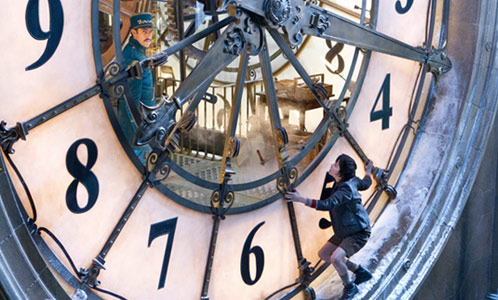
I have a problem with a lot of modern cinema. I don’t like the way most of it looks, I don’t like the way it’s edited (too choppy and frenetic) and I don’t like the way it’s acted (so painfully naturalistic that a wide range of performances are thoroughly interchangeable). And I have that feeling with a frighteningly high percentage of modern movies. But mostly, I have a problem with the way the movies look. And when I say I have a problem, I mean even with movies I like. We all know I don’t like CGI very much (I even do a series on special effects before CGI took over) and this is a big problem because it’s now everywhere, in practically all movies. Take “Hugo,” directed by Martin Scorsese. I use this movie as an example because it was a movie I liked and thus, I can assure you it is not me reacting to a movie I hate or using it as an excuse to hate the movie. No, I liked “Hugo” but I hated most of the look of it.

For months, even before it was released, I found myself feeling a strange reluctance to see “Hugo.” I still haven’t seen it, but I plan to do so in the next week or so — though I’m surprised to find that I am not looking forward to the latest Martin Scorsese Picture. Why? I hadn’t quite put my finger on it until I read Greg’s piece. It’s because I hate the frothy, cotton-candy look of the stills I’ve seen. I compared the look of “Avatar” to Thomas Kinkade and Thai restaurant fiber-optic flower lamps (remember Michael Atkinson’s priceless protest: “What, am I a forest animal, unthinkingly hypnotized by shiny objects?”).

December 14, 2012

Opening Shots: ‘Nights of Cabiria’

View image

View image

View image

From John Hartl, film critic for MSNBC, Seattle, WA:

“Nights of Cabiria��? (1957)

The opening scene in Federico Fellini’s greatest film presents a pattern that will be repeated in the story of Cabiria, a shrimpish streetwalker who is as feisty as she is gullible. She and her boyfriend of the moment, Giorgio, scamper across a vacant field in front of some appallingly character-less Roman apartments. She’s happy and uninhibited, but he seems impatient and calculating. As they approach a canal, he grabs her purse, shoves her in the water and runs away. A small boy hears her cries, and he and his friends rescue her just as she’s about to drown. Several adults join the rescue party, gracelessly turning her upside down as they expell the water she’s swallowed, and finally she starts breathing again. Offended and embarrassed by the kindness of strangers, she walks off in a huff.

Life rarely gets better for Cabiria, who doesn’t have much more luck in her dealings with celebrities, religion or a theatrical hypnosis session in which she bares her soul for an audience of still more strangers. Played with tremendous spirit by Fellini’s wife, Giulietta Masina, she has a habit of falling for traitorous losers, throwing money at them, then waking up to find herself surrounded by people she’s never met. The opening scene is almost a prophecy, yet it’s never depressing because Cabiria doesn’t know how to give in to despair. In the end, she achieves a state of grace in the midst of her most ruinous folly.

December 14, 2012

The Worst Movie of the Decade Relay

As near as I can tell, this particular discussion got started when Sara Libby wrote a short piece at True/Slant called “Worst Movie of the Decade: ‘Crash’.” She said:

It’s been called a “feel-good” racism movie — one that leads people to believe they’re on the right side of racism, when in fact they’re just having their buttons pushed and their preconceived notions re-affirmed. […]

Bad movies get made all the time. But what infuriated me about “Crash” was that so many people mistook it for something profound when it was truly the opposite. It shouts at the top of its lungs: “I’M SUBTLE! I’M NUANCED!” and so many people somehow agreed.

December 14, 2012

Shhhhhhhhutter up, critics!

I enjoyed Martin Scorsese’s “Shutter Island” as a kind of retro-Universal Pictures “old dark house” horror movie re-imagined by Hitchcock in the 1950s Technicolor textures of “Dial M for Murder,” “Rear Window” and “Vertigo.” As Scorsese himself described a similar project in 2007’s “The Key to Reserva,” it’s…

“like my own Hitchcock film. But it has to be the way he would have made the picture then, only making it now. But the way he would have made it then. If he was alive now, making this now, he would make it now as if he made it back then.”

When you see the back-projection [or chroma key] on the boat going to Shutter Island in the first scene of the movie, you’ll probably get the idea (even if you don’t consciously notice that it’s back-projection). The effect isn’t as obvious — shaky or grainy — as in ’50s Hitchcock, but it has that same air of hyper-unreality that suits the material just fine. If, however, you don’t pick up on what Scorsese’s doing by the end of the first scene, the pounding, churning, blaring über-Herrmann-esque score as the main characters approach the creepy insane asylum/prison/fortress (actually the “Passacaglia” Krzysztof Penderecki’s Third Symphony) ought to darn well clue you in.

December 14, 2012

Blow-up: Selling Sarah’s shorts

Remember last Independence Day when the (then-) governor of Alaska posed for a (psychologically) revealing photo spread in Runner’s World Magazine? (Check out the whole photo spread series.) Back then, I posted the photo at right, which has now been recycled as the cover photo for this week’s Newsweek magazine,¹ causing a ruckus. Sarah Palin, promoting the book ghostwritten with Lynn Vincent, posted on Facebook last night that she does not approve of the photo’s re-use:

[The] profile for which this photo was taken was all about health and fitness — a subject to which I am devoted and which is critically important to this nation. The out-of-context Newsweek approach is sexist and oh-so-expected by now. If anyone can learn anything from it: it shows why you shouldn’t judge a book by its cover, gender, or color of skin. The media will do anything to draw attention — even if out of context.

It’s so true. The darned media will just do just about anything to get attention, won’t they? I mean, they practically bend over and show off their babies, they’re so desperate for publicity! Last July, I was struck by the provocative red-white-and-blue overtones in this particular photo, and proposed “a fun exercise in critical thinking and visual interpretation.” The carefully arranged, iconic image, I wrote:

December 14, 2012

“Calling Barranca. Calling Barranca.”

Do you recognize this Barranca Airways plane? I hope so. Because it’s from one of my top-five favorite movies (and most personally influential of all time — and one of the great classics of American cinema.

A friend sent me this picture, from an “Antiques Roadshow” episode. The seller was asking $250 and didn’t even know he had…

December 14, 2012

Jack Nicholson explains the Oscars for you

View image Look out, Oscar: Jack’s behind the wheel.

Don’t know how I missed this from last month’s Variety, but in an interview with Peter Debruge, Jack Nicholson (most-nominated actor ever) gives his contrarian take on the Oscars that is typically blunt, not at all original, but realistic. And he speaks from a front-row perspective:

“I’m a big supporter of the Oscars from the beginning because I look at it for what I believe it was intended. However, for a very long time — and I don’t voice this very much — I’m disturbed by what they call the ‘Oscar race.’ I’ve noticed that it’s gradually spread, as though it were an election.

“This thing totally possesses the movie business for three months — and it’s now spreading to five months. Well, this cannot be really good for movies. […]

December 14, 2012

Coens take Oscars for words and picture

View image Joel and Ethan Coen flank Martin Scorsese. AP photo.

Oscar deadline story:

Everybody pretty much called it in advance, but nothing was certain until the very end. Joel and Ethan Coen’s crowning achievement, “No Country For Old Men,” toted some heavy Oscars Sunday night (for Picture, Director, Adapted Screenplay and Supporting Actor), but the Academy spread the wealth.

“We, uh… thank you very much,” said Ethan, accepting the Best Screenplay Adaptation Oscar, and it was a terrific speech. Six words. Maybe five-and-a-half. Funny. Pithy. Whether it was intentional or the shorter Coen brother just went up on his lines, he demonstrated that screenwriting is not just about crafting dialog. If you set the scene properly, the words themselves don’t have to be memorable, just the moment.

It was. And, because of the sense of drama created by the structure of the show, that scene felt like the tipping point for “No Country for Old Men.” You didn’t know where the evening’s storyline was headed, but once it got there, as always, it felt as if it had been inevitable. Kind of like the ending of “No Country” itself….

Continue reading at RogerEbert.com

December 14, 2012

And now for a brief furlough…

I work for a newspaper, the Chicago Sun-Times. As you may know, the Sun-Times recently filed for Chapter 11 bankruptcy protection — mainly because of the money embezzled by its former owner, Conrad Black, who is now in prison. The Sun-Times is also contractually obligated to pay his legal bills, believe it or not. Anyway, everybody I know on the editorial side has been told to take a mandatory one-week unpaid furlough, during which time we are not allowed to work. Mine is now. I’ll be back the day after Labor Memorial Day (May 27).

In the meantime, please keep commenting. I can’t respond, but somebody will continue to approve comments in my absence. See ya soon!

December 14, 2012

The Telluride legend of Richard Widmarkand the art of entertainment

View image Richard Widmark, straight shooter.

You may have heard some version of this story about Richard Widmark, who died last week at age 93. I was there, at the Telluride Film Festival in 1983 when it happened, in the Sheridan Opera House for the tributes to Andrei Tarkovsky and Widmark. Emotions were heightened, perhaps, not only by the thin mountain atmosphere, but but by a terrifying Cold War showdown between Leonid Brezhnev’s Soviet Union and Ronald Reagan’s USA (I don’t know which scared me more at the time) over the shooting down of Korean Air Lines Flight 007, which we didn’t learn about until we got to Telluride. Things were chilly up there.

The emotions associated with my memories are indelible, even if their precision has faded. But the gist of what Richard Widmark said that weekend, and the eloquence with which he said it, will always stay with me. Shortly after Widmark’s death, I contacted Gary Meyer, director of the Telluride Film Festival (whom I’d known as co-founder of Landmark Theatres), to see if Widmark’s tribute speech was transcribed anywhere, because I would love to reprint it. Those were relatively early days for the Telluride festival (which began in 1974 and seemed much more remote than it is now) and Gary couldn’t find any record of the speech, which I remember Widmark reading from notes he produced from his jacket pocket. But he did find some 1983 press coverage, from which I have pieced together the following “story.”

December 14, 2012

Psycho: Murder in close-up (without bodies)

View image Flushing away evidence of guilt in the toilet. A big drain.

View image Shower. Head.

Imagine the “Psycho” shower scene without Marion Crane or Mrs. Bates. Alfred Hitchcock’s (and Saul Bass’s) rapid-cut sequence is renowned for its use of close-ups to suggest the slicing of flesh when, in fact, there is none on the screen. You create that illusion in the cuts.

View image The plumbing continues to function as it is designed to, without regard to Marion’s trauma.

View image The ripping of a membrane, like flesh (keeps the wet inside), as Marion (below frame) reaches out, clutches at life while it slips from her grasp.

But what really makes the sequence work, I’d argue, is the way Hitchcock uses plumbing. Back in 1998, I published an extensive web article on Plumbing in the Cinema, in which I quoted from Stephen Rebello’s book, “Alfred Hitchcock and the Making of Psycho”:

“The script is shot through with obvious delight in skewering America’s sacred cows — virginity, cleanliness, privacy, masculinity, sex, mother love, marriage, the reliance on pills, the sanctity of the family… and the bathroom.” Rubello quotes screenwriter Joseph Stephano on the subject of primal-screen plumbing: “I told Hitch ‘I would like Marion to tear up a piece of paper and flush it down the toilet and SEE that toilet. Can we do that?’ A toilet had never been seen on-screen before, let alone flushing it. Hitch said, ‘I’m going to have to fight them on it.’ I thought if I could begin to unhinge audiences by showing a toilet flushing — we all suffer from peccadillos from toilet procedures — they’d be so out of it by the time of the shower murder, it would be an absolute killer. I thought [about the audience], ‘This is where you’re going to begin to know what the human race is all about. We’re going to start by showing you the toilet and it’s only going to get worse.’ We were getting into Freudian stuff and Hitchcock dug that kind of thing, so I knew we would get to see that toilet on-screen.” Just the sight of the flushing toilet was considered shocking enough to mildly unsettle and disorient audiences of the day.And the same is true today, though perhaps less noticeably so. In the same plumbing piece, here’s the way I described what happens next:Hitchcock’s guilty fugitive protagonist, Marion Crane (Janet Leigh), having totaled the sum of her indebtedness, monetary and karmic, on a slip of paper, rips up the evidence of her culpability, flushes it down the water chute (although a telltale piece of it misses the bowl, as Detective Arbogast [Martin Balsalm] will later discover) and steps into the shower. Just as she’s figuratively washing her the sins of her recent past down the drain, Mrs. Bates pays her a visit with a butcher knife. Marion pays for her sins in blood. And the image of her blood swirling into the blackness of the drain dissolves into an image of her now-lifeless eye. Her head lies on the bathroom floor next to the toilet. For what is a human body itself — its arteries and intestines and organs and other viscera — but an elaborate piece of organic plumbing?

View image Following the blood and the water down the drain.

That cold, hard biological reality underscores the whole scene, from the time Marion, looking for someplace to dispose of her accounting besides the wastebasket (where that nosy Norman would undoubtedly discover it), first glances toward the bathroom, hesitates, and then decides to take a shower. The hollow sound of the tiled room echoes through the scene — and, of course, Marion’s physical vulnerability is emphasized by her nakedness and the noise of the shower drowning out the rest of the world. She’s even made a point of closing the door firmly before stepping into the shower.

View image Into the drain, and out of a lifeless eye…

You can make all the Freudian jokes you like about the phallic showerhead, but it works. Yeah, it’s sexual, and Marion seems almost orgasmic when she slides under its spray. It’s also cleansing, even cathartic after all Marion’s been through since her furtive afternoon quickie (in bra and panties) with her boyfriend in the hotel room at the start of the picture: Since leaving work the previous day, she’s made a rash and fateful decision to steal cash from her employer and skip town. She exchanged cars, had a close encounter with a cop beside the highway in the desert, drove in the dark and pouring rain, and then had that strange little talk with the young man in the back room full of stuffed and mounted birds — the boy with the mean old invalid-ed mother locked up in that spooky house looming behind the motel. Who wouldn’t like to take a nice hot shower after a day-and-a-half like that?

[images missing: insert your memory of Marion’s murder here]

What you see on this page are just the close-ups of insentient bathroom fixtures in the sequence. All images containing organic matter have been stripped out. Marion is about to become one of these inanimate objects. The image of her blood swirling in the tub, and her dead face mashed against the white tile floor, shocks us even as it prepares us for the clean-up scene, where we will shift our identification from Marion onto Norman. To Hitchcock’s perverse delight, we will soon be rooting for Norman to scrub away and dispose of the evidence of our (ex-) main character’s murder. The drain is metaphorical, but it’s also the abyss. Marion has been our surrogate; and now her pupil is as void and lifeless as that hole. We peer into it, unable to fathom where it leads, and the blackness beckons…

This is another contribution to the Close-Up Blog-a-thon at the House Next Door.

December 14, 2012

Getting “Knocked Up”

At whom is this ad campaign aimed?


Judd Apatow’s “Knocked Up” ought to be the most-discussed (and argument-generating) movie of the year so far — which means it’s uncommonly smart and subversive and disturbing (and funny), especially for a summer sex comedy. I happen to think Paul Rudd and Leslie Mann, as Pete and Debbie, the bitter and resentful married couple with kids (Mann is Apatow’s wife, and the kids in the movie are theirs) are the funniest characters/actors in the picture (and Kristen Wiig: amazing), mainly because their material, and their performances, are so painfully true that it’s not funny. Which is what makes it so funny. It helps that all three are top-flight actors with a gift for uncanny understatement. Sometimes you don’t even know if the scene is funny or not (like Debbie’s suburban ambush of Pete) — and those are inevitably the most revealing and rewarding kinds of laughs, when you surprise yourself by laughing at how awful and truthful the characters are behaving.


Anyway, I’ve found that some women don’t like the movie, for sex-specific reasons I hope to discuss at length in the near future. Let me offer a few examples now from reviews that I think “get” “Knocked Up” — and not from my usual suspects, either.


Anthony Lane, The New Yorker:
One night, Ben [Seth Rogen] goes to a bar, picks up a girl, and goes to bed with her. Both are drunk at the time, and both, in consequence, throw up: Ben the next morning (“I just yakked,” he says winningly over breakfast), and the girl—who is no girl but a young woman named Alison (Katherine Heigl), with a growing career on television—some weeks later, into a trash can at work. Here comes the bit that will divide Apatow’s audience and (he hopes) get them arguing over the movie: Alison decides to inform the father and, little by little, to enfold him and his oafish, froggy grin in the gentle business of parenting. Call it the taming of the Shrek. Most women, I imagine, will scoff with incredulity: this is neither a last hurrah (Alison is still in her twenties) nor the ideal time (she has a good job), and Ben is the last slob on earth she would have chosen. Most men, meanwhile, will be too busy watching through their fingers. To them, this is “The Omen.” What’s interesting about this paragraph is that it’s slightly wrong. We go to the bar with the women, not the men. The gals are swept inside (even though Mann’s character is really too old to be there), while we catch a glimpse of Ben and his geek buddies near the front of the line. They’ve probably been standing out there for hours. (This doorman scene will pay off later — though I think it’s the weakest in the movie.)


My first reaction to the Ben-Alison match was that she would never want to see him again after their one-night stand. But, like so many women, Alison is someone who falls in love with a guy for who she wants him to be, not for who he really is. (She doesn’t even know who he is — and vice-versa.) At the point where she (improbably) lets him back into her life, it’s because she now views him as “the father of her child” (which, in her view though not our society’s, gives him some marginal rights) and as Pete and Debbie indicate cynically at the breakfast table in front of the kids, men and women who are in love get married and have babies. Or men and women who have babies get married and fall in love. Or something like that. Alison wants to be in love with the father of her child (their child, she insists), so she is determined to make herself believe that’s the case, even when it isn’t, because that’s the way it should be. And maybe she can even make him believe it.

December 14, 2012

Film Critic Keyboard Cat in the 23½ Century!(Or: “Play ’em off the bridge, KC!”)

My turn: In this episode, Keyboard Cat becomes a 23rd century film critic and must dodge deadly Romulan lens flares and Vulcan interrogation techniques on the bridge of the Starship Enterprise! Gratuitously excessive audio-visual excitement overkill galore!

UPDATE: Cameron sends this: “J.J. Abrams Admits Star Trek Lens Flares Are “Ridiculous”:

I know there are certain shots where even I watch and think, “Oh that’s ridiculous, that was too many.” But I love the idea that the future was so bright it couldn’t be contained in the frame. The flares weren’t just happening from on-camera light sources, they were happening off camera, and that was really the key to it. I want [to create] the sense that, just off camera, something spectacular is happening. […]

December 14, 2012

Preparing for The Dark Knight to Rise

So, we’re having this wonderful discussion at Scanners about the moral dimensions of superhero movies — mostly about “The Amazing Spider-Man,” “Marvel’s The Avengers” and “The Dark Knight.” I was bringing up some things from 2008 and 2009 about how some see the Joker as a “nihilist” or an “agent of chaos” and how I see him figuring into the moral design of the movie, and somebody posted this comment:

I’m so confused. You’ve spent the better part of 4 years slamming the dark knight for not being a “good” film, even though you’re now saying its chalked full of thematic material. So am I correct in assuming you like the themes it raises, it’s that the execution was poorish? So it’s ok to like the themes just not the way it’s presented, or that they presented too obviously, sloppily. Please give me a straight answer. I want to understand your interpretation of the material once and for all.

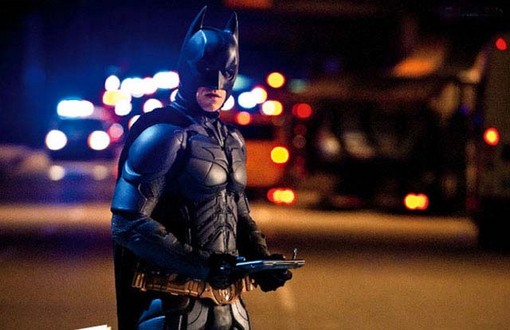
OK! Now, on the eve of the release of “The Dark Knight Rises,” is probably a good time to attempt to do that once again — if only to remind people that, although I have written a lot about “The Dark Knight” and Christopher Nolan (including pieces on “Following,” “Memento,”The Prestige” and “Inception”), my reservations about his work have been closely focused on two things, involving writing and direction. Here’s my (slightly cleaned-up) reply to that comment above:

December 14, 2012

No Country for Old Manhood

View image Sheriff Ed Tom Bell’s padre is the “younger man” now, but he can’t help compare himself to the old-timers like his father, grandfather, Uncle Mac…

Yeah, I’m sick of those “No Country for…” headlines (and the “There Will Be…” variations, too, but this one fits so perfectly…. In the February issue of Sight & Sound, Ben Walters and J.M. Tyree write that, at heart, the Coens’ film is “an interrogation of American manhood.” This is a wonderful paragraph:

There are no edifying models of manhood here. Sheriff Bell is well intentioned but troubled and halting; Moss is courageously but disastrously foolhardy. (Both Moss and Chigurh make repeated attempts at the sort of improvisatory survivalism that was a staple of 1980s television shows like “MacGyver” and “The A-Team,” though Chigurh is notably more accomplished.) In Bell’s and Moss’ marriages, though — with Bell’s strongly reminiscent of the loving, supportive relationship between Marge and Norm in “Fargo” (1996) — the Coens once again suggest that human connection trumps Hollywood-style man-alone heroism. Just compare the relaxed, warm atmosphere of the Moss trailer or the Bell homestead with the dump motels to whose garish signage, flimsy walls and soulless decorations the film pays such keen and damning attention. Here as elsewhere, hotels are the setting for a series of big and little deaths, most of them pointless and dumb. Sheriff Bell recognises the absurdity at work in this world. “I laugh myself sometimes,” he says. “Ain’t a whole lot else you can do.”

December 14, 2012

When I fall in love…

“Would you believe in a love at first sight?”

“Yes, I’m certain that it happens all the time.”

“What do you see when you turn out the light?”

“I can’t tell you but I know it’s mine.”

— Billy Shears, Sgt. Pepper’s Lonely Hearts Club Band

Sometimes I can pinpoint the very moment I first fall in love with a movie. It may happen in the first shot (Bong Joon-ho’s “Mother”; Michael Haneke’s “Caché”), or may be clinched in at the very end (the terminal instant of Rahmin Bahrani’s “Man Push Cart”), but in many cases there is an identifiable point at which I know that I am in love, even while the movie is unspooling, and by that time it’s not likely there’s any going back, unless the movie simply implodes.

Here are a few of those times from 2011 when I realized I was falling hard…

Tinker Tailor Soldier Spy

There’s not so much snow as in director Tomas Alfredson’s previous feature, “Let the Right One In,” but it gets plenty chilly here, in Cold War London, Budapest and Istanbul. The emotional iciness sneaks up on you: by the end, as the strands of loyalty and betrayal unravel, leaving characters exposed to some very cold realities, I found it uncommonly moving. (Yes, I cried — more than once.) Not unrelatedly, “Tinker Tailor” (no commas in this title) is one of the most hauntingly and imaginatively composed movies (both in terms of framings and shot sequences) that I’ve seen since… maybe the last Coen brothers picture. Early on, it catches you a little off-guard when, in the midst of a hushed, paranoid conversation in a musty apartment, there’s a cut to a monochromatic, neo-Gothic Eastern European skyline (punctuating John Hurt’s use of the word “Budapest” — a word that will become code for loss, failure, disgrace).

December 14, 2012

The Conspiracy Code Conspiracy

Sir Ian McKellen Explains It All For You in “The Da Vinci Code.”

As a species, we humans are designed to connect the dots. But so many of our problems and mistakes arise from: 1) not knowing (due to misunderstanding or lack of information) where, exactly, the dots are; 2) not knowing what they signify; and 3) misattributing conscious intention to some hidden force behind the nature and placement of those dots.

I’m alternately amused and bothered by responses I’ve seen to “United 93” and “The Da Vinci Code” that claim to know, one way or another, the truth, the whole truth and nothing but the truth about the events of 9/11, the history of the bible, the historical validity of Christianity and the existence of a monotheistic deity. (I have to pause here, just to laugh at that last sentence.)

The biggest conspiracy theory yet invented by mankind is “Intelligent Design,” the idea that everything that currently exists was destined to “turn out” the way it is right now because a supernatural intelligence (conspiring, apparently, with itself) made it happen deliberately. No room for chance or coincidence or (shudder) evolution in that fixed, closed-world view. But the only reason a concept as preposterous as Intelligent Design can continue to exist is because there are still so many things we don’t know about the development of life on this planet (or any other). That’s why Intelligent Design is also known as “God in the Gaps.” Anything that’s unclear or can’t yet be explained? Just plug “God” into the equation and voila! — it’s complete! Conspiracies about 9/11 or Christianity are, in principle, exactly the same: Just fill in the gaps in what is known with a top-secret cabal guiding everything behind the scenes, and suddenly it all makes sense. I guess that’s why they say a little bit of knowledge is a dangerous thing.

December 14, 2012
subscribe icon

The best movie reviews, in your inbox