This week: Four 4-star reviews!

View image Sexy time for celebrate nice reviews! Borat like to disco dance with men from village. Also Greenwich Village. And City of Brotherly Love.

This doesn’t happen very often. On RogerEbert.com today we have four 4-star reviews in a row.

Roger Ebert reviews the latest installment in Michael Apted’s lifelong documentary series, “49 Up.’

I have reviews of:

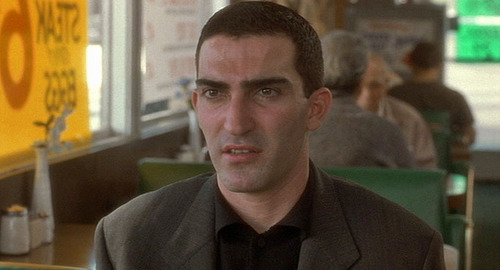
“Borat: Cultural Learnings of America for Make Benefit Glorious Nation of Kazakhstan,” a documentary about a foreign journalist… NOT! (You will only understand this joke if you see movie film.)

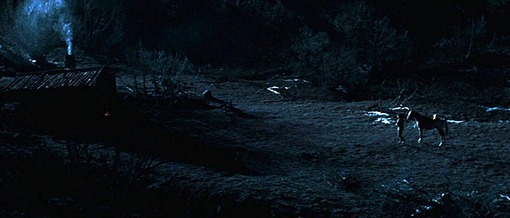
“Old Joy,” a meditative journey into the backwoods of an old friendship.

“51 Birch Street,” a son’s quietly astonishing look at his parents’ “ordinary” marriage.

That ought to keep you busy this weekend.

December 14, 2012

David Lynch’s Ultimate Peaks

At the Great Northern, you can check out anytime you like, but you can never leave.

What’s better than a cup of good, hot, black coffee? Well, nothing. But almost as good is the announcement of the “Twin Peaks: Definitive Gold Box Edition” DVD box set (due Oct. 30, 2007), which will include both seasons of the show and — for the first time ever on DVD — the two-hour pilot episode! Not only that, but two versions of it: the one that originally aired on ABC, and the “European” version (with its own bizarre coda/ending) that was released in theaters overseas.

Oh, and that’s not all. According to the My Two Cents blog at The Digital Bits:

You’ll also get Log Lady introductions for each episode, never-before-seen deleted scenes, production documents, the 4-part “Secrets from Another Place: Creating Twin Peaks” documentary (includes “Northwest Passage: Creating the Pilot,” “Freshly Squeezed: Creating Season 1,” “Where We’re From: Creating the Music” and “Into the Night: Creating Season 2”), the “A Slice of Lynch” retrospective roundtable discussion video, the “Return to Twin Peaks” featurette, 13 TV spots, 3 image galleries (The Richard Beymer Gallery, Unit Photography and Twin Peaks Trading Cards), 3 Georgia Coffee commercials, Julee Cruise’s “Falling” music video, 8 interactive maps and Kyle MacLachlan’s monologue and “Twin Peaks” sketch from “Saturday Night Live.” The episodes have all been remastered from the original negatives (a process personally supervised by Lynch) and will be presented in the original full frame aspect ratio with audio in both newly-mixed Dolby Digital 5.1 and the original 2.0.Consider the new, two-disc DVD edition of Lynch’s most recent feature “Inland Empire” a warm-up for this.

As for Lynch’s own view on DVD extras, refer to Sean Axmaker’s MSN Movies column quoted previously:

I believe talking is OK separate from a thing, but a commentary track that goes along through a film, I think, is maybe the worst possible thing a person could do. From then on, the film is seen in terms of the memory of that commentary and it changes things forever. […]

There are things in “More Things That Happened” [a selection of additional scenes on the 211-minute second disc] that give a feeling that could be like a brother or sister to the film. It’s like if you know a family, but you haven’t met the sister yet. You go over to Ohio and meet the sister, and it adds more to the feeling of the whole family.

Obviously, I disagree with Lynch on the “commentaries” — which provide one of the best ways of studying a film. But I see his point: When it’s the filmmaker, rather than a third party (like a critic or a scholar) who is doing the talking, it makes the comments seem limiting, more like a statement than than an interpretation of the film. And Lynch does not like to put strictures on interpretations of his work. (I’ve seen him, in audience Q&A sessions, tell people when they’re just flat-out, off-the-charts wrong about second-guessing his intentions, though.)

(Thanks to Jeff Shannon for passing along this news.)

December 14, 2012

Consensus? Mulholland Dr. is LA Film Critics’ movie of the decade, too

Critical polls conducted by Film Comment, indieWIRE, the Village Voice/LA Weekly, Cahiers du Cinéma and now the Los Angeles Film Critics Association have all chosen David Lynch’s 2001 “Mulholland Dr.” as the best movie of the decade.

UPDATE 2/12/10: The Muriels and Slant Magazine also choose “Mulholland Dr.” as best of the Aughts.

Full list below…

Justin Chang writes at LAFCA.net:

Call us provincial — David Lynch’s psychoerotic noir is one of the essential L.A. movies — but the more significant reason for the film’s enduring critical favor may be its deconstruction of the toxic allure of the Dream Factory. “Mulholland Dr.” projects an ambivalence toward Hollywood with which almost any critic can identify: Moving images have the power to seduce and move us, but many of them are the products of a system that routinely turns dreams into nightmares and artists into meat. Famously salvaged from a rejected TV pilot, Lynch’s film stands as both a cautionary tale and a mascot for the triumph of art and personal vision in an industry that, from where we sit, often seems actively devoted to the suppression of both. […]

December 14, 2012

Brokeback Jack and the gay “Departed”?

Nicholson’s gangster… in a straight jacket?

When I was in college, it was popular for English professors to insist that this character or that character in literature — or even the authors themselves — were what we used to call “latent homosexuals.” So, for example, Hamlet (who definitely had some mommy problems and daddy issues and treated Ophelia like an old dishrag) was maybe gay. And homoerotic undertones were found in novels (and private letters) by nearly everybody, but especially repressed Victorian writers.

So, when I received a comment from a Scanners reader suggesting that Jack Nicholson’s character, Frank Costello, in the (Oscar-winning) Martin Scorsese (Best) Picture, “The Departed,” might be read as gay, I thought: “Yeah, OK, sure.” And then I thought about it a little more and started laughing: “Well, yeah, of course!” Not that it’s any great revelation — especially for a director who’s known for displaying rampant homoeroticism (in his “gangster pictures,” especially) — but there it is. (You think the Academy was subconsciously trying to make up for last year’s surprise upset of “Brokeback Mountain”?) I mean, look at the guy’s wardrobe.

And consider the final (R-rated) scene between Costello and his girlfriend, Gwen, which struck me as having some negative sexual tension:

COSTELLOSweetheart, you’re giving me a hard-

on.

He starts to dial the phone.

GWEN

Are you sure it’s me or all that

talk about whiffin’ and crawlin’ up

asses?

COSTELLO

Hey, watch your f—king mouth.

GWEN

You watch it.

She rises and as she crosses:

GWEN (CONT’D)

Let me straighten you out.

Here’s part of the comment from Tam (and DVC mentioned it, too):

December 14, 2012

“There’s nothing I like less…”

View image Death… death of art… death of cinema…

“… than a bad argument for something I hold dear,” said Daniel Dennett, quoted at the top of the column to the right. In this case, the argument belongs to Camille Paglia (“Art Movies, R.I.P.”) and the thing I hold dear is the intoxication of seeing a great movie. She does a lovely job of capturing what the latter is like (although she puts it firmly in the past tense), but spends too much of her time simply explaining what a dinosaur she has become. (What am I talking about? It’s just Paglia in Apocalyptic Mode again. But I’m still trying to figure out why this column of hers bugs me so much.)

I have to admit: If I thought that in the last 30 years “only George Lucas’ multilayered, six-film ‘Star Wars’ epic can genuinely claim classic status,” you could stick a fork in me, too. Actually, you wouldn’t have to. I’d do it myself, because I’d know I was done, without “A New Hope” for movies.

Paglia says t’was modernism killed the magnificent beasts of art cinema; I think it’s more likely her own solipsism. Wallowing in what she calls a “cold douche for my narcissistic generation” (she’s referring to the deaths of Bergman and Antonioni, natch), Paglia wonders: “I’m not sure who, if anyone, still views moviegoing as a quasi-mystical experience.” (Obviously, she doesn’t read film critics or movie blogs, some of the best of which are also listed in the column to the right.)

But hers is not a rhetorical proposition. Posing a provocative open question is never enough. Paglia then formulates The Answer herself, and shuts the rest of us out in the cold, cold world of the Post-Boomer Death of Art:

The waning of art film has been just one of the bitter cultural disappointments that the baby-boom generation has had to endure. […]

My pagan brand of atheism is predicated on worship of both nature and art. I want the great world religions taught in every school. Secular humanism has reached a dead end — and any liberals who don’t recognize that are simply enabling the worldwide conservative reaction of fundamentalism in both Christianity and Islam. The human quest for meaning is innate and ineradicable. When the gods are toppled, new ones will soon be invented.

While I sympathize with Ms. Paglia’s Regrets (“I’m not sure who, if anyone, still views moviegoing as a quasi-mystical experience”), I resent her attempt to co-opt my pagan brand of atheism predicated on worship of both nature and art in the name of her art-movie secular-humanism death-wish. (OK, I wouldn’t use the word “worship.” What’s wrong with a little “awe,” girl? You needn’t go leaping at “worship” like a bull at a gate.)

She sounds like a reactionary religious fundamentalist to me: My god will endure, resistance is futile, and any attempts to embrace another religion will only enable the false gods to rise! Is there some kind of contest between Pagliaism, Christianity, and Islam?

This, however, is quite beautiful, in a deliberately anachronistic fashion:

Other indelible memories: the grinding of the collapsing stone balustrade in the baroque gardens of Alain Resnais’s “Last Year at Marienbad.” The night wind eerily stirring the spray-painted green trees in the London park of Antonioni’s “Blow-Up.” The column of army tanks ominously rumbling through the city street in the unknown land of Bergman’s “The Silence.” The life-giving waters of the Fountain of Trevi suddenly stopping in Federico Fellini’s “La Dolce Vita,” stranding Marcello Mastroianni and Anita Ekberg mid-kiss.Yet Paglia claims only the “Star Wars” movies are on that plane (ship?), “and it descends not from Bergman or Antonioni but from Stanley Kubrick and his pop antecedents in Hollywood science fiction.” I’m not quite sure what conclusions she’s trying to draw from that comparison. Are you?

(Thanks to girish for passing this along.

P.S. I just re-watched “The Silence” last night, in part because I didn’t remember any “column of army tanks.” Turns out that’s because they aren’t there. It’s one tank that comes into the square below the hotel window, stalls, starts up again, stalls for a long time, and then moves on. It’s ominous, but it’s not the way Paglia describes it. Memory can greatly enhance these long-ago moments from the cinema, too…

December 14, 2012

The death of film criticism has been greatly exaggerated, Part I

A Los Angeles Times/Bloomberg poll found that only 3 percent of 18- 24-year-olds would have picked this still as their first choice to accompany this article, since it has nothing whatsoever to do with the contents of the article itself. The poll has a margin of error of plus or minus 3 percent.

“All in all, it’s been a rotten tomato of a summer for America’s embattled film critics…. It’s no secret that critics have lost influence in recent years. A recent Los Angeles Times/Bloomberg poll found that among 18- to 24-year-olds, only 3% said reviews were the most important factor in their movie-going decision making. Older audiences still look to critics for guidance, especially with the smaller, more ambitious studio specialty films. But during the summer months, with studios wooing audiences with $40 million worth of marketing propaganda, critics appear especially overwhelmed, if not irrelevant.”

— The Los Angeles Times, asserting that critics are less powerful now than they never were. (8/15/06)

God, I love that paragraph. Go ahead — read it again. One of my favorite propaganda techniques — used in politics, journalism, criticism, you name it — is to present evidence (or, better yet, opinion polls cited as if they constituted evidence) refuting something that was never true — or even widely thought to be true — in the first place. It’s a form of genius, really — like the opinion polls asking Americans if they believed Saddam Hussein was behind 9/11, presented as though it could be made true if a majority felt it was. (There’s another term for this technique: Fox News.)

This propaganda trick is related to the Straw Man argument, where you attack a position somebody doesn’t hold instead of the one they do, but you pretend they’re saying something they don’t believe instead of what they actually said. All it takes is a bad listener. In the case of this article in the LA Times last week, it’s made especially compelling by the knowledge that Times management has wasted colossal amounts of money on a poll of youngpeopleoftoday, forcing good reporters like Patrick Goldstein to have to invent something to make it appear the poll’s findings meant… anything.

Read that hilariously insignificant statistic from the Times/Bloomberg poll one more time (and take an extra moment to savor the deliciously insinuating phrase, “It’s no secret…”): Only 3 percent of 18- to 24-year-olds cited film critics as the most important factor in deciding whether to see a movie. Conclusion: It’s no secret film critics are losing influence!!! The mind boggles. What percentage of persons in this six-year age span cited film critics as, say, the third-most important influence? Fifth-most? And what did this same age group say five years ago, 10 years ago, or 27 years ago? The “3 percent” figure is so narrowly defined that it’s not just meaningless, but exquisitely, absurdly. ludicrously so. Somewhere, Joseph Heller is laughing out loud. And think about this for just one second: How many 18- to 24-year-olds do you know who depend primarily upon adult authority figures (like critics), above all other influences, to make their media choices, whether it’s movies, music, video games, TV, web sites, whatever? Three percent seems a bit inflated to me.

(BTW, what are the ages of the “older audiences” who “still look to film critics for guidance” — and what percentage of them rank that guidance as the most important factor in making moviegoing decisions about those “smaller, more ambitious studio specialty films”? Man, oh man — those pollsters ask specific questions! “What is your most important source of guidance for smaller, more ambitious studio specialty films?” But did this Times/Bloomberg poll yield only one quotable statistic? If not, why weren’t others cited to put this one in perspective?)

This is the kind of story that is based on “overturning” assumptions that never were. News Flash: Bush administration officials may have underestimated when they said the invasion and occupation of Iraq would cost no more than $1 billion and was unlikely to last more than a few weeks — or as Donald Rumsfeld said, “I doubt six months.” The word, “Duh” was invented for these occasions. If you honestly did not realize how preposterously false the original premises were, then you might get fooled again into thinking the second non-story qualifies as “news.” (Follow up story: According to the president, when it comes to Iraq, “failure is not an option” — even though that is the option deliberately and consistently favored by his administration above all others 9 times out of 10.)

In about a year, expect another News Flash: Poll Reveals Young People in Teens and Twenties Notoriously Unreliable Poll Subjects.

December 14, 2012

TIFF 2007: The Eastern Inbred Class

Look at this woman. Do you hate her character yet?

Noah Baumbach’s “Margot at the Wedding” is one of the scariest films ever. Because it plays like a hidden-camera home movie as psychological x-ray. And no one is spared its cold, uncompromising scrutiny. (Or think of it as a segment of TV’s “To Catch a Predator” — and, as on the NBC flytrap reality show, everybody is the predator.)

If I were a character from the movie critiquing the movie, I would probably say something like: “Noah Baumbach must really detest his dreadful dysfunctional family.” Baumbach’s follow-up to “The Squid and the Whale” (among my top films of 2005) is another dead-on portrait of monstrously self-absorbed Northeastern inbreeders who believe that being “authentic” or “honest” means they have to express every single critical judgment or self-indulgent emotion that occurs to them, especially if they can use it to belittle or undermine somebody else in their immediate circle. Usually, that includes throwing in a clinical diagnosis, as a way of damning and dismissing the subject, and getting the amateur diagnostician off the moral hook just a little. (If you claim to be observing a “condition,” then neither you nor the object of the diagnosis can be held fully responsible.)

If I describe it as a horror movie — torture porn about a long-obsolete class of super-self-conscious but utterly un-self-aware white East-Coast intellectual trash — I trust that also conveys how bitterly, nastily funny the movie is. It’s like a Neil LaBute picture co-written by Jules Feiffer. Scalpel-sharp. Merciless. Cruel. Uncompromisingly misanthropic. And really getting off on being so.

I don’t think I’ve ever felt such contempt toward characters in a movie before. Perhaps it’s Strindbergian. The TIFF catalog compares the movie to Bergman and Woody Allen’s Bergman exercise, “Interiors,” and even Eric Rohmer. (Rohmer without pity. Or affection, I guess.) I thought it was more like “The Devil’s Rejects,” if the members of the Firefly family fed upon one another. And it’s funny.

The people in this movie are types who either crib from their friends’ and families’ lives for their New Yorker short stories — or who are mortified and infuriated that details from their lives are appearing in their friends’ or families’ New Yorker short stories. You may assume there’s an “autobiographical” dimension to it not only because one of the movies subjects is the way writers autopsy and cannibalize the people in their lives for their fiction, but also because each and every knife-twisting line is so toxic and cutting, so astonishingly self-serving, that you figure somebody just had to have actually said it, or thought it, or attributed it to somebody else in a snarky piece of gossip disguised as a revealing psychological insight disguised as an expression of sincere concern. In other words, the way these people talk and behave seems too awful not to be true.

“Well,” says one published author in the film, “we all take from life.” The difference is that, by this point in the movie, I assume her work is probably terrible, simultaneously pitiless and self-pitying, relentlessly “honest” and utter bullshit. (See the character of Briony in “Atonement.”) Baumbach himself, however, is an exceptionally keen writer and observer of the stifling Upper-East-class milieu in which he was raised. (Both his parents are writers and — ouch — film critics.) Which doesn’t mean his movie has anything to do with them. But one littérateur in the film observes that the character of the father in another’s story is loathsome but strangely sympathetic. You could say the same thing about nearly any character in “Margot at the Wedding.” Just leave out the “sympathetic.” In fact, just about anything you can say about this movie has already been addressed (and ridiculed) in this movie.

Here’s the basic set-up: Margot (Nicole Kidman) and her androgynously doughy offspring, appropriately named Claude (or “Clawd” or “Clod,” as in formless lump of dirt, played to excruciating perfection by Zane Pais) go to visit Margot’s estranged sister Pauline (Jennifer Jason-Leigh) in the old family house on the beach where they were raised. Pauline is about to get married to Malcolm (Jack Black), another shapeless wad of humanity who sports an ironic mustache that’s “supposed to be funny.” Next door are some vile neighbors living in a shack with the Kid From “Deliverance,” who are probably killing and eating whatever creatures (including wild animals, domesticated dogs and human babies) they can hunt. They’re like the family from “The Texas Chainsaw Massacre” (Tobe Hooper’s), but they seem a little more human(e) than the main characters in the big house.

Everybody is so busy trying to avoid appearing hypocritical that there’s not a genuine, straightforward emotional interaction in the film, just bubbles of self-absorbtion bumping into one another. These are extremely isolated, ultra-privileged people who would prefer to feel guilty about their privilege than grateful, because guilt intensifies their drama and their suffering and their sense of their own significance. Which, in the end, makes them feel a little better about themselves.

Oh, and there’s the most cynically self-conscious use of a dog in the history of motion pictures. Baumbach knows exactly what he’s doing, and it works.

If I’m making the film sound detestable, maybe that’s the best way I know of to express my admiration for it, and the way it keeps relentlessly covering the same ground (the characters’ linty psychic navels) while still managing to top itself, scene after scene. You’d think there’s be almost no place to go after a mother — quietly, with a vicious mixture of “concern” and disappointment — tells her teenage son that he’s “changed” and no longer has the grace she says she once treasured, and then adds as an afterthought, “But you’re still handsome!” And yet, there is. The scene I just mentioned made me gasp and then laugh in astonishment. Unfortunately, through most of the movie, nobody around me was laughing much. To them, it maybe seemed more like Eugene O’Neill, I don’t know.

Every performance in the film is terrifyingly good/awful. (That is, the actors hit every off-note just right, and the characters — in case I haven’t made this clear — are mortifying.) I think there’s some kind of excoriating analytical and observational genius in this home-horror-movie about cretinous, semi-articulate dunces. But when it was over (climaxing in an astonishing moment of self-dramatization and self-absorbtion), the same thought popped into my head that did at the end of Todd Solondz’s outlandishly scornful “Palindromes”: Who’s going to want to expose themselves to this gory dissection of these coldblooded creeps? Makes you want to see a good George Romero zombie movie. At least the Living Dead have real, uncalculated emotions.

P.S. I just went back and re-read Roger Ebert’s review of Rob Zombie’s “The Devil’s Rejects.” For me, the comparison works perfectly:

Here is a gaudy vomitorium of a movie, violent, nauseating…. If you are a hardened horror movie fan capable of appreciating skill and wit in the service of the deliberately disgusting, [this film] may exercise a certain strange charm. If on the other hand you close your eyes if a scene gets icky, here is a movie to see with blinders on, because it starts at icky and descends relentlessly through depraved and nauseating to the embrace of road kill.

December 14, 2012

Roadkill at 35,000 feet?

Bad snake! Bad, bad snake!

I think I was in college before I ever became aware of, or paid the slightest bit of attention to, box office grosses. Until “Entertainment Tonight” came along in the early 1980s, you had to subscribe to Daily Variety in order to find out how much money a particular picture was taking in, and I couldn’t have cared less. I was thrilled when I would go into a theater to watch a movie and there would be lots of seats. This was long before I became an exhibitor myself, and suddenly saw things from the other side. I’d never thought of movies as a lowly business before, but it didn’t take long to figure out the economic repercussions: The fewer people in the theater for a particular picture, the fewer movies like it we’d be probably get the chance to see, or (later) show. Somebody’s got to buy the overpriced concessions, pay the film and theater rentals, the salaries, the heat and electricity bills, etc.

I’m only sporadically interested in ticket sales or advertising campaigns — but in the case of “Snakes on a Plane,” where the movie itself was always irrelevant, I confess I’m a bit perplexed that, despite all the hype and supposedly feverish anticipation, its opening weekend numbers were so blah. Critics were mostly removed from the equation (although some went to see the movie at late-night shows Thursday night, which meant reviews landed in Friday and Saturday papers). But if you level the track and don’t count those extra grosses from Thursday night, “Snakes on a Plane” barely squeaked by three-week-old “Ricky Bobby” for the three-day weekend.

I was at a party with a whole buncha film critics Saturday, and everybody who had seen “Snakes on a Plane” had liked it. They all agreed it was a serviceable B-movie and a pretty fun time — indeed, a pre-fab “Rocky Horror”-like audience-participation experience from the very first showings. So, my question to you, Scanners readers, is: What happened? Did the hype turn people off — or was it just overexaggerated among a limited Internet-savvy crowd, while mainstream audiences just weren’t all that interested? Or could there have been more people like me out there than anticipated — people who felt it wasn’t so much that we didn’t want to see a movie called “Snakes on a Plane,” we just felt — long before it actually arrived — like we already had? I’d like to get your theories on it. If you saw the movie, what did you think? What do you make of the box-office and audience response? Or would you rather just forget about the whole thing?

December 14, 2012

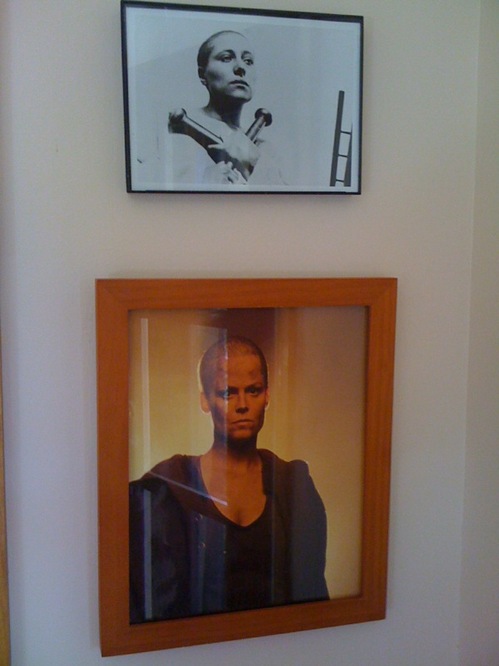
Ripley d’Arc

A little two-shot movie in a corner of the kitchen of critics Kathleen Murphy and Richard T. Jameson.

December 14, 2012

The really important Oscars

There are two of them that matter most to me, I think — and not in the Best Picture category. (“The King’s Speech” over “The Social Network”? Really? I can only shrug. Forget it, Jim — it’s the Academy…) I’m much more interested in seeing Roger Deakins and Skip Lievsay get their due recognition. DP Deakins, unquestionably one of the handful of great cinematographers working today, is nominated for “True Grit” (2010) — his ninth nomination in 16 years, and he has yet to win. How can this be? For the record, here are the films for which he has been nominated by the Academy: “The Shawshank Redemption,” “Fargo,” “Kundun,” “O Brother, Where Art Thou?,” “The Man Who Wasn’t There” (black-and-white widescreen, my favorite format), “No Country for Old Men” and “The Assassination of Jesse James by the Coward Robert Ford” (both in the same year!), “The Reader” (co-nominated with the also-great Chris Menges, who should have won for “The Three Burials of Melquiades Estrada”) and now, “True Grit.” (What? No nomination for “A Serious Man”?!?!) He also photographed “Sid and Nancy,” “Stormy Monday,” “Mountains of the Moon,” “Homicide,” “Barton Fink,” “The Secret Garden,” “The Hudsucker Proxy,” “Dead Man Walking” and “The Big Lebowski,” among many others.

Watch the impressive featurette/interview above for a few examples of Deakins’ brilliance (and, for once, that term is actually intended to refer to the intensity of light!).

The Carpetbagger has a short interview with Deakins today, too (which contains spoilers, although this excerpt does not):

December 14, 2012

When critics get slashed & butchered

View image On the state of film criticism, yesterday… and today.

An open letter to the Seattle Weekly from Michael Seiwerath of the Northwest Film Forum (posted at GreenCine Daily) should remind us, on the one hand, what’s lost when local film critics are replaced by syndicated content, and, on the other, why we are so fortunate not to have to rely exclusively on pulp-and-ink-based movie criticism.

The Seattle Weekly ran a review of the acclaimed documentary “Our Daily Bread” that was credited to J. Hoberman, longtime critic at the Village Voice, another “alternative weekly” in the Voice/New Times chain. But anybody who’s ever worked at a newspaper knows what happens to “wire copy” — it’s sliced and diced to fit whatever hole you have to fill. Hoberman’s original review combined his takes on Richard Linklater’s similarly themed “Fast Food Nation” with “Our Daily Bread,” but only part of the latter segment ran in Seattle. The result? Seiwerath describes it as a “botched cut-and-paste truncation”:

What ran in the February 21 edition of the Weekly is a recombinant jumble, devoid of time or place. Hacked from the end of the original review, the Weekly piece contains unexplained, unintelligible references to “[Fast Food] Nation.” The reader is left confused, with a mess of an article that is only made clear by some internet research into what happened four months ago and 3000 miles away. More than simply an editorial production error, this virtual review is the systemic result of a flawed new business model.

The planned efficiencies of media consolidation by the New Times are failing. Without a film editor and consistent criticism written by local writers, the reviews often contain factual errors and obvious references to openings in other cities. This is a system that is no longer serving either the reader or the advertising base. Borrowing from J Hoberman’s description of a fast food hamburger, the individual review has become “the ground residue of many, many messily butchered animals.”

December 14, 2012

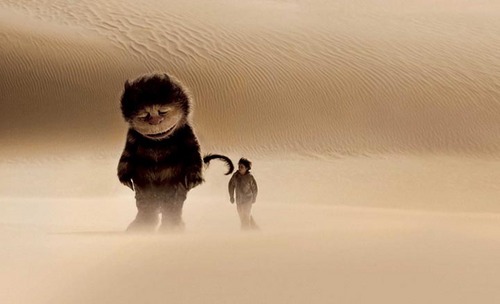
Where the Mopey Things Are

Spike Jonze’s “Where the Wild Things Are” (aka, “The Decline and Fall of the Wild Thing Empire”) is not Maurice Sendak’s “Where the Wild Things Are.” It’s only fair you should know that in advance. The book’s illustrations and nine sentences have been turned into a surprisingly (some might even say shockingly) literal-minded 90-minute motion picture about the misery of being a kid. Jonze and co-scenarist Dave Eggers are clearly in touch with their inner-miserable child; they seem to vividly remember all the daily turmoil that childhood is heir to — the tantrums, fights, scrapes, bruises, fears, anxieties, insults, hurt feelings, bossiness, cruelty, rejection, confusion, heckling, bullying, bragging, pouting, moping, testing, haggling, crying, rage…

Those aspects of childhood trauma are acutely and accurately portrayed in the movie. Every time the fun starts, somebody goes too far (like a puppy who hasn’t learned his soft mouth yet), and someone gets hurt or scared or angry or sad or all of those things. The movie’s adulterated sensibility is that of an alienated grown-up looking back at the (somewhat romanticized, over-intellectualized) misery of childhood and denying or downplaying the equally real fun stuff — the in-the-moment joy, the exhilaration of being and imagining and doing and playing. So, in some sense it’s a corrective to all those stupid “Isn’t it wonderful being a kid?” movies that remember childhood through equally distorted rose-tinted lenses.

December 14, 2012

All Your Beck Are Belong To Us

Update on “Teaching the Controversy: Why won’t he deny raping and killing?:

Rather than try to fight a First Amendment case (which they would be destined to lose), Glenn Beck’s lawyers have filed a complaint (.pdf here) with the World Intellectual Property Organization (WIPO), a “specialized agency of the United Nations” based in the neutral country of Switzerland, claiming that the satirical domain name glenn beck raped and murdered a young girl in 1990.com is: 1) a form of cybersquatting, 2) defamatory and 3) an infringement on his trademarked name. (The irony here is that the United Nations and socialist Switzerland are two things Beck does not believe in.)

December 14, 2012

Do the Contrarian (Part II)

The great Rufus Thomas, the World’s Oldest Finest Teenager, does “The Breakdown” (follow-up to “The Contrarian”).

“I enjoy the occasional flaying of a sacred cow.”

— anonymous movie critic

Can your monkey do the dog

Can your monkey do the dog

Well, my dog can monkey

just like you

But can your monkey do the do the do the

dog like I do?

— Rufus Thomas

The first thing you’ll notice about an auto-contrarian (or reactionary) piece, whether it’s an op-ed column or a movie review, is that it doesn’t so much try to build a point-by-point rebuttal or counter-argument. Instead, it prefers to disparage something or someone by association, by making ad hominem attacks on (real or imagined) supporters of whatever it scorns.

So, for instance, when Stephen Metcalf writes a “What’s All This, Then?” piece tearing down “The Searchers,” he first attributes the film’s reputation not to any merits it may or may not possess as a film, but simply to his generalizations about people who like it. Then he derides them as “film geeks,” “nerd cultists,” “critics whose careers emerged out of the rise of film studies as a discrete and self-respecting academic discipline,” and filmmakers such as Martin Scorsese, Paul Schrader, Francis Ford Coppola, John Milius and George Lucas, whom he labels “well-credentialed nerds.” So, you get the idea. Rather than make observations about the movie itself, you insult those who admire the movie and use that to smear the movie. It’s a schoolyard tactic: If you like “The Searchers,” you’re a nerd! Notice how the discussion is no longer about the movie, but about who Metcalf thinks is a nerd. (And never mind that “The Searchers” is a “termite” movie : Critically overlooked/dismissed as just another western when it was released, it’s a movie that grew in stature over time, as more critics and moviegoers got to see and evaluate it.)

If Metcalf had written a piece that dissected “The Searchers” from a new angle, that demonstrated what the film does (or fails to do) and why he felt that was or was not a worthy achievement, then I might have enjoyed his flailing of a sacred cow, too — even if it didn’t persuade me to change my own view of the cow. Moo. I find this sort of thing happens rather often, where I’ll read a critic’s take on a movie and think: “Wow, I’d probably feel the same way if I saw that movie, but that’s just not the movie I experienced.”

December 14, 2012

What do we mean by the “worst” movies of the year?

Of course, critics can only choose the best or worst of a given year from among the movies we’ve actually seen. I’m fortunate that I get to avoid most of the plain-old, garden-variety bad movies these days (“Old Dogs,” “All About Steve,” “G.I. Joe”). Something really has to be Monumentally Misconceived for me to consider it “the worst” — which usually means there’s a considerable amount of misapplied talent on display. So, I’ve managed to see only three of the movies on the consensus worst-list in the Vulture Critics’ Poll. (Guess which three?) Was the #1 choice too obvious? See the whole “Bottom 11” after the jump. Individual critics’ ballots and comments here.

December 14, 2012

Buñuelathon ’07!

A dream of dying: “Los Olvidados.”

Flickhead is hosting a Buñuel blog-a-thon this week, with postings on famous and obscure Buñuelian objects of desire. From the intro:

Few filmmakers have held my attention, respect and admiration for as long or as deeply as Luis Buñuel. For years I’ve thought of him as my ‘favorite’ director, mostly due to a personal connection I feel with his attitudes, humor and outlook. A surrealist, a wandering spirit, a cynic, a recovering Catholic…Buñuel used the cinema to explore these areas and took special delight in society’s inexorable draw to the seven deadly sins—especially pride, lust and greed. Among the very few masters capable of channeling elevated social and cultural criticisms into popular cinema, he took aim at the whole of humanity, recognizing the folly of our desires.My contributions are previous posts about the relationships between Jonathan Glazer’s “Birth” and “Un Chien Andalou” (“‘Birth’ of a Buñuelian notion”) and Buñuel’s autobiography, “My Last Sigh.”

December 14, 2012

5-25-77: A Geek Odyssey

View image How many movie references can you spot in this image from “5-25-77”?

Most of this is true. The rest is even truer.

— Opening disclaimer, “5-25-77”

“To everybody else, movies are something to do when you’re tired of living real life. To you, real life is something to do when you’re tired of watching movies.”

— from Patrick Read Johnson’s “5-25-77”

View image How about this one?

In James Bridges’ “September 30, 1955” (1978), Richard Thomas (then best-known as John-Boy Walton on TV) played an Arkansas college student devastated by the death of his idol James Dean on the title date. In Patrick Read Johnson’s “5-25-77,” John Francis Daley (best-known as the great Sam Weir in “Freaks & Geeks”) plays, basically, Patrick Read Johnson, who visited his idol Steven Spielberg on his spring break in 1977 (while Spielberg was finishing up “Close Encounters”). As the story goes, Johnson got to see an early screening of “Star Wars” (which opened on the title date 30 years ago) while there were still dogfight scenes from old WW II movies in place of the spaceships, and proclaimed himself the world’s #1 “Star Wars” Fan. In his semi-autobiographical movie — “from the producers of ‘Star Wars’ and ‘American Graffiti'” (Fred Roos and Gary Kurtz) — Johnson tells a version of his own story, about growing up in a small Midwestern town and trying to make it to a showing of “Star Wars” on the first day of its release. Teaser trailer here — at least for the time being. (BTW, Anybody else remember with fondness the episode of “That ’70s Show” in which Topher Grace and pals were smitten with “Star Wars” mania? It captured the now-bittersweet utopian euphoria the movie inspired at the time.)

And here?

Twitch had some sympathetic ruminations about “5-25-77” and the “Star Wars” phenomenon last year that I’d like to share with you on the 30th anniversary of that Portentous Day:

I’ve learned the hard way that there is a basic generational gap involved with “Star Wars” fans. There is the current crop for whom the prequel trilogy was their first exposure, and then there are the rest of us.

While I’m not quite old enough to have seen “A New Hope” on its first run it is no exaggeration at all to say that “Star Wars” populated the landscape of my imagination like nothing else at least until I hit puberty. The “Star Wars” universe is where I lived out my childhood. […]

No comment.

The current crop of “Star Wars” fans can’t seem to understand why us older lot are so bothered by the over-digitization of our childhood dream-world. But Patrick Read Johnson does. And how. “5-25-77” is his loosely autobiographical film about the impact of “Star Wars” on his own life as a teenage geek in love with the movies. We linked to an early, very rough teaser a while back but we have just been sent the full length trailer and if the film comes anywhere close to living up to this Johnson has made one of the most loving odes to geekdom ever. It is simply fantastic.

December 14, 2012

Happy 300 million!

View image Sonja Sohn (left, with Dominic West as Detective McNulty, in “The Wire”): The future of America, I hope!

The wee bundle of joy who raises the US population to an even 300 million (for a fraction of second before we zoom past the milestone) may be a beautiful brown baby boy! We’re a nation of ethnic mutts (and I’m of English-Irish-Italian-Cuban heritage — proudly “mixed race”), but I wish I could live long enough to see the day (and it won’t be that long) when most Americans will resemble Tiger Woods or Sonja Sohn or Bejamin Bratt or Halle Berry or Cameron Diaz or Jimmy Smits or Salma Hayek or… Well, OK, the beautiful ones, anyway. From Reuters:

A baby boy of Latino heritage, born in Los Angeles on Tuesday, might well be the 300 millionth American. The 200 millionth, a Chinese-American lawyer in Atlanta, says he’ll be very relieved.

U.S. population will top 300 million at about 7:46 a.m. EDT on Tuesday, according to the U.S. Census Bureau, nearly 39 years after the 200 million mark was reached on November 20, 1967. […]

It is possible to make an educated guess at who the 300 millionth American will be, said demographer William Frey of the Brookings Institution.

“I predict it’s going to be a Latino baby boy, born in Los Angeles to a Mexican immigrant mother,” Frey said by telephone.

This prediction makes sense, Frey said, because about half of U.S. population growth is due to Hispanics, the biggest gains in the Hispanic population are in Los Angeles, more boys are born than girls and the U.S. population is growing more due to natural increase than through immigration.

“In theory, it could be anybody who crosses a border, who comes off a plane as a new immigrant or is born anywhere in the United States but if you have to put the odds on high probability, I would say my guess is pretty good,” Frey said.

What a country!!!

December 14, 2012

Alien in “3D”: Just one frame

(or, Who put the mise in the mise en scène?)

UPDATE: Here’s a new, more color-accurate frame grab — an unmodified screen capture from the new-ish Blu-ray set of the “Alien Anthology.”

Look at the frame-grab above from Ridley Scott’s “Alien” (1979). I’m not making any high claims for it as a masterpiece of composition, or saying that it has great meaning in the context of the movie, or that it expresses anything typical/archetypal about Scott’s style or values (aesthetic, moral). But it sure is a pleasure to take in. You’ve got the interplay between the right, left and center, the foreground and the background, each in its own space, but visually interrelated. The camera is in the operating room with Dallas and Ash, who are looking at their comatose patient, Kane, whose feet are at left, in a quarantine chamber (because he has a xenomorph hugging his face). In the background, through the window, is the rest of the Nostromo crew, anxiously waiting for news. That’s right — the entire (human) cast of the movie in one shot.

We can hear what the crew is saying as well as what Dallas and Ash are saying (exactly what they’re saying is not terribly important, just their worry and uncertainty), though it’s not clear if they can all hear one another. The drama is expressed visually: Kane is immobilized, isolated, beyond reach; Dallas and Ash are the intermediaries between his living death (in quarantine) and life, as represented by the rest of the crew, but they don’t know what to do; the crew is on the outside looking in, twice removed from Kane who was, until just a short time ago, one of them.

December 14, 2012

TIFF 08: The Coens Who Came In From the Cold

In a Coen Brothers movie every pause and stutter, every “um” and grammatical (mis-)construction, every repetition and idiosyncratic pronunciation, is inscribed like a note on a musical staff. The composer-conductors write the music, indicate the pitch, tempo and duration of each passage, and the select musicians — soloists and ensemble players — attack their assigned parts with the virtuoso flair for which they are known. As composers have often written works specifically suited to the talents of their favorite musicians, so the Coens frequently write roles tailored to the individual actors they want to work with.

“Burn After Reading” is a deft little piece, directed with a straight face and performed with a roiling comedic energy that matches brio with precision. That’s what makes it funny. Emmanuel Lebezki’s cinematography, Carter Burwell’s score, Roderick Jaynes’ editing (yes, we all know that’s a pseudonym) could proudly serve any modern espionage picture. All serve a ridiculously plotted absurdist farce, which is what the best spy stories usually boil down to, whether they’re comic or tragic.

December 14, 2012
subscribe icon

The best movie reviews, in your inbox