The smell of the taste of money

You’ll probably despise the main characters in the coldly lavish new South Korean film “The Taste of Money” (2012). I was about to describe them as belonging to the top 1%, but given how shallow and hateful these people are, I think it would be more accurate to say “the bottom 0.01%.” They’re a plutocratic family at the very top of South Korean society. They run a big, influential conglomerate like Samsung and LG (which are also family businesses at their core). They can buy and do anything because of their wealth and the power which comes with it. In their view, they deserve to be called VVIPs, or very, very important people.

February 11, 2013

Django America

Quentin Tarantino’s “Django Unchained” (2012) is a very good Tarantino movie. Save for “Pulp Fiction,” I tend to appreciate and respect Tarantino movies more than I enjoy them. “Pulp Fiction,” however, was so entertaining that I did not want it to end. Such were my feelings with “Django Unchained.” As a mash of bloody pulp cinema with great aspirations, it is as entertaining as anything I have seen from Tarantino. For Tarantino diehards it is as Tarantino-esque as everything else from him.

February 11, 2013

Lincoln: The Abe Team

“Lincoln,” a new movie directed by Steven Spielberg, overflows with talk, large chunks of which are delivered by the titular character. It opens, however, with an instance of Lincoln listening. After a brief outburst of violence, which allows us to witness the Civil War strife in all its mud-drenched brutality, four soldiers of various ranks and differing races casually approach the sixteenth President and talk to him. Their demeanor varies, running the gamut from celebrity-struck goofiness (“Hey, how tall are you?”) to brave political confrontation by a Black corporal, demanding equal opportunities for a military career. And yet, as the scene closes, the soldiers end up literally speaking in Lincoln’s words. By showing they have memorized the “Gettysburg Address,” they give the ultimate proof of political trust in one’s leader: they allow Lincoln’s mind to merge with their own.

February 11, 2013

Deadly strangers on a train

“Transsiberian” is a Hitchcockian thriller decorated with icy wintry landscapes. It sets its tone right at the beginning, carefully developing an unstable feeling while loading the story. It steadily amplifies a sense of dread within its closed space. We sense something terrible will happen, and it does happen, but we are surprised because we suddenly find the movie rapidly accelerating on an unexpected course–and it never stops until it reaches to its finale literally approaching toward it from the opposite side.

February 11, 2013

The Yellow Ticket

The only Polish actress ever to become a major Hollywood star, Pola Negri (née Apolonia Chałupiec), lived a life as exciting as the movies she graced with her presence. Born in a small Polish town of Lipno in 1894 (while the country was still under a triple occupation by its neighbors), she climbed her way up: first to the theatre stages of Warsaw and then to the budding movie business. After a successful crossover to the much more sophisticated German film industry — and a happy pairing with its finest director, Ernst Lubitsch — she starred in the international smash-hit, “Madame Dubarry” (1919). It was Lubitsch’s ticket to Hollywood — as well as Pola’s.

February 11, 2013

The odds are with the house

I’m fairly certain most Martin Scorsese fans prefer his Robert DeNiro period to the current one with Leonardo DiCaprio. The later entries may include the film that won him the Academy Award for Best Picture (“The Departed”) and they’ve surely displayed signs of greatness, but I don’t think any of them can be discussed as pinnacle achievements like his earlier ones.

February 11, 2013

Trapped in Disney World: Poland’s movie critic of the year and our Far-Flung Correspondent, who gets smacked HARD by Woody

Like Mary Poppins, Disney World is “practically perfect in every way.” But what our jolly ‘oliday with Mary didn’t reveal were the slight imperfections alluded to by that phrase’s quantifier: Practically perfect? I’ll bet Ms. Poppins’ small glitches were legendary when they occurred. Maybe her umbrella flights damaged the ozone layer, or her spoonfuls of sugar helped wreck Dick van Dyke’s Cockney accent. I speculate about near-perfection because I’ve been to Walt’s Orlando resort 19 times, and while most of these visits went off without a hitch, when things did go wrong, they went wrong in unforgettable, spectacular fashion.

February 11, 2013

The color of our emotions, or, “色,戒”

Lust. Caution.
Lust, Caution.
Lust…Caution.

The English name of Ang Lee’s 2007 film consists of two words. Taken separately, they stand alone as individual concepts: Lust, a primal, human urge; Caution, an evolved, societal tool. Put them side-by-side, and contrast emerges: primal versus evolved, individual versus society, incongruent. Poke a little hole in the membrane that separates the two, and dynamics shift. Lust surges in the face of Caution. Caution stares right back, coolly, unflinching.

February 11, 2013

The stories of “Pi” are both true

I walked into “Life of Pi” with extremely high expectations. After all, Ang Lee is a masterful director who helmed two of the greatest modern love stories in film. The trailers assured me that it was a must-see for the visuals alone, and then a friend said that it would transform me to another world through groundbreaking use of cinematography to manipulate the membrane of water. I walked in expecting the greatest use of 3D in film history; I walked out with much more.

February 11, 2013

A nameless gangster in 2012’s best South Korean film

Ik-hyeon is a sleazy piece of work you cannot help but look at with disgust and wonder. While he is corrupt, greedy, treacherous, opportunistic, vain, and foolish, he is also a wily scoundrel who may get away with his crimes and misdemeanors even when everything seems to fall down on him, and he is willing to win the game by any means necessary for his survival and advance in the system.

February 11, 2013

Nostalgia for the Light

You can watch the full video of “Nostalgia for the Light” (2012) on the PBS POV website until January 23, 2013. Also available to watch instantly on Netflix.

The desert light in the daytime is sharp and destructive, slowly blinding you as you age. I grew up in what had been a desert, and that taught me to love the night, yet I never looked up to contemplate the stars. Perhaps if I had I would have learned to love the desert as Patricio Guzmán.

February 11, 2013

Losing face to your enemy

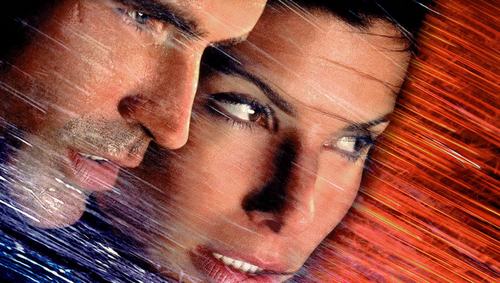
The plot in “Face/Off” (1997) may sound ridiculous in real life terms but allowing our imaginations to experience and accept such preposterous events, the kind none of us will ever be able to live through, is a prime example of the great feats that cinema can achieve. And what a fantastic concept “Face/Off” had to begin with. There have been recent features where I’ve had a hard time grasping how boardrooms full of film executives could possibly green light the spending of millions of dollars when being pitched ideas that no filmmaker, however talented, could ever have succeeded with (“A man cures his depression by talking to a puppet beaver!” “A young archer princess grows closer to her mother when a witch turns her into a bear!”).

February 11, 2013

When Silence is not Golden

Dedicated to all those who lost family members prematurely, and to two students — one struggling with addiction, and the other who lost her father.

This is grief. The silence that comes with a loved one’s death is like no normal silence. It is in our culture that we respond to this stillness with stillness upon stillness. We try to think of death as that leap into some great beyond, perhaps finally letting our loved one’s fluorescent inner radiance free. In the process, those loved ones take with them the air from within our lungs. So, in coping, we respond to their perceived new freedom by restricting ourselves with strict boundaries. And, as we cope with loss, we find relief in reunions. Time begins to jump around as we sit in the moment in front of us, leaping between moments in the past, frightened by the cloud in the future. The reunions open old happy memories that help turn that searing, salty burn of the tears into a blankety warmth. But, in our culture, the reunions often end quickly, leaving us alone in the darkness, unable to sleep. This is grief. And, this is what I observed in the first half hour of Susanne Bier’s soft-spoken “Things we Lost in the Fire” (2007).

February 11, 2013

Little Hushpuppy in a big forgotten world

Benh Zeitlin’s first feature film, “Beasts of the Southern Wild” (2012), is at times a wonderful and at times a gripping story of a little girl making sense in a forgotten land of trees and rust. It follows in the tradition of movies about happy children running through an unhappy world, in an America we never see on the screen. If she does not steal your heart in the first hour, she will surely grab it in the final thirty minutes. So, if you have your own little Ruthless Gradeschooler her age, then I pity the levees that hold back your tears.

February 11, 2013

Pixar’s Moonrakers

La Luna available via VOD on YouTube.

The traditional end-of-the-year list-making craze is bound to dominate the Internet for the entire month of December (as well as stir many a Twitter feud). It’s hardly a stretch to foresee that most of the upcoming Top 10 lists will be dominated by three movies featuring remarkable kids. Benh Zeitlin’s “Beasts of the Southern Wild”, Wes Anderson’s “Moonrise Kingdom” and the Dardenne brothers’ “The Kid with a Bike” all featured children as characters whose temperament, imagination and sheer physical energy couldn’t be contained by the (very different) worlds which they happened to inhabit.

February 11, 2013

Travelling with an unknown companion

* Available on Netflix Instant

The deliberate omission of a film’s plot point draws intrigue, anticipation, and dread toward its eventual reveal, but in “The Loneliest Planet,” director Julia Loktev’s terse, quixotic drama, that secretive center should rightly be the least emphasized aspect. Its narrative indeed hinges on a gesture best left discovered (although easily imagined), but it excels instead in exploring what shifts that crucial action represents. Etching into relief the mislaid assumptions on which relationships are founded and forgotten, there is a quiet, terrifying accuracy to Loktev’s work – one without fanfare or supernatural copout – that reveals itself under the guise of expressionistic travelogue into the Georgian mountains.

February 11, 2013

Out of the frying pan and into more Orcs

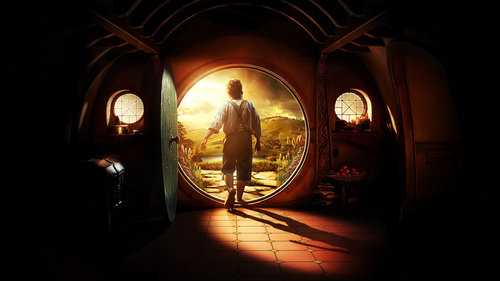
Some people hate “Dune” because it’s nothing like the novel, but venerate “The Shining” for the same reason. You can’t please everyone when you adapt a book to film, so you’re better off hoping you’ll please anyone. Even if it’s just a handful, it’s those few who will be your fiercest defenders against the purists. So let’s start with what Peter Jackson’s “The Hobbit” isn’t: If you read the book, it’s not the book you read. It includes plot elements from “The Hobbit,” details that weren’t fleshed out in “The Lord of the Rings” movies, bits from the “LOTR” appendices, and stuff that was created for the sake of this new trilogy.

February 11, 2013

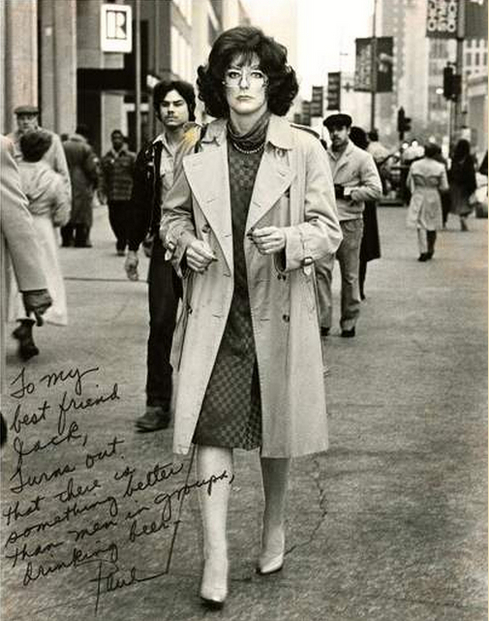
“Sheep, Galloway, Sheep!” Paul Galloway, a beloved legend

We will never hear the Sheep Story again. Nor will we enjoy his presence in a room, which was an invitation to good cheer. Paul Galloway, the most incomparable raconteur I ever met in a newsroom, is dead. Everyone who knew him will know what a silence that creates.

I loved the guy. I introduced him to his wife, Maggie. I couldn’t see enough of them. It will be impossible to share with you the joy of his company, but I am going to try. Let others write the formal obituaries. All I know is, Paul died at about 3:30 p.m. Monday, at their “winter home” in Tulsa, Okla. There’s a Winter Home Story. With Paul, there was a story about everything. He was somewhere in his 70s. When you get to be our age, “somewhere” is close enough.

February 11, 2013

“Speed 3”–Winner of my 1999 contest

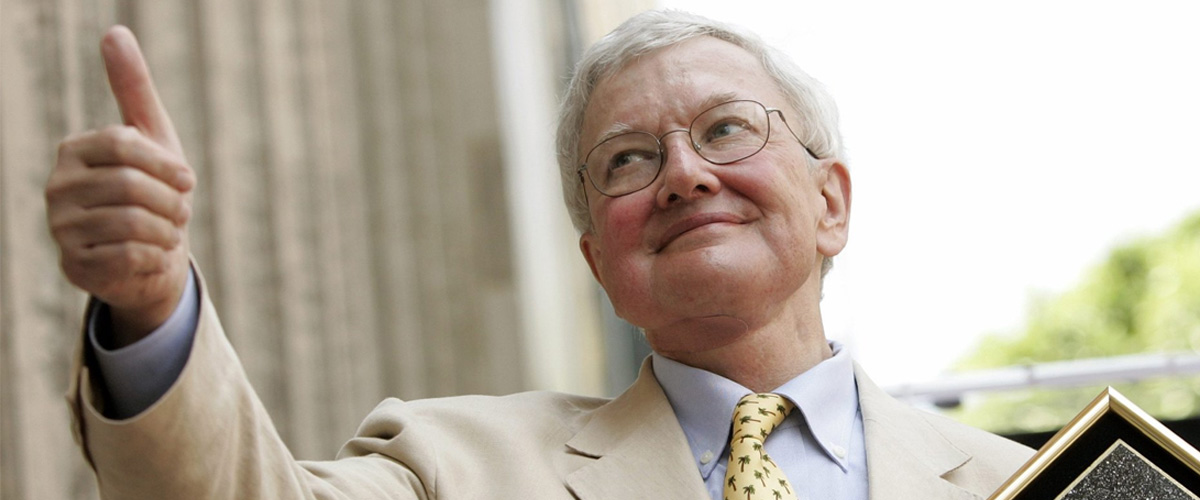
No favorable review I’ve ever written has inspired more disbelief than my three stars for “Speed 2.” Even its star, Sandra Bullock, started mentioning in interviews her disgust with herself for agreeing to star in it. It’s frequently cited as an example of what a lousy critic I am. (Note well: Siskel also gave it thumbs up.) All the same, I’m grateful to movies that show me what I haven’t seen before, and “Speed 2” had a cruise ship plowing right up the main street of a Caribbean village.

February 11, 2013

Gabby Giffords made me cry. America? And you?

I sense the debate over gun control is entering into a new phase and the gun lobby is losing. After Obama’s second victory, the wind changed. Republicans are suffering uncertainty, and many of them grow restless. We have absorbed years of mass murders, random violence and accidental shootings. If the nation is no longer is no able to absorb those deaths, then Congress will act first against multiple-shot magazines for guns intended for in war.

February 11, 2013
subscribe icon

The best movie reviews, in your inbox