Gatsby without greatness

Did it seem to you that The Great Gatsby was especially difficult to read? It’s a book that most American students encounter in high school. When I read it the first time, I certainly missed some of the nuances, but I didn’t stumble over any of the words.

Even at the time, I noticed the particular beauty of its conclusion. After the whole doomed scenario has played out, Nick looks once again across the waters of the Sound:

Most of the big shore places were closed now and there were hardly any lights except the shadowy, moving glow of a ferryboat across the Sound. And as the moon rose higher the inessential houses began to melt away until gradually I became aware of the old island here that flowered once for Dutch sailors’ eyes–a fresh, green breast of the new world. Its vanished trees, the trees that had made way for Gatsby’s house, had once pandered in whispers to the last and greatest of all human dreams; for a transitory enchanted moment man must have held his breath in the presence of this continent, compelled into an æsthetic contemplation he neither understood nor desired, face to face for the last time in history with something commensurate to his capacity for wonder.

December 14, 2012

Tea and empathy

The Tea Party and the Wall Street demonstrators share the same conviction: They are the victims of theft by powerful institutions. The Tea Party blames government taxation. The demonstrators blame corruption in the financial industry.

The concern about taxation is perplexing, since U.S. tax rates are at a historic low. Indeed, there seems little chance that we can ever begin to pay off the American deficit without raising taxes. Many millionaires, led by Warren Buffet, have volunteered to pay higher taxes. A belief persists, however, that the middle class bears an unfair tax burden. In repeating this charge the other day, Mitt Romney included himself in the middle class.

December 14, 2012

The leisure of the theory class

I have lived more than nine months of my life in Boulder, Colorado, one week at a time. Here I am again. Here more than anywhere else I have heard for the first time about more new things, met more fascinating people who have nothing to do with the movies, learned more about debate, and trained under fire to think on my feet. So please don’t zone out on me because I use the zzzzz-inducing term “Conference on World Affairs.”

For 61 years, this annual meeting at the University of Colorado has persuaded a very mixed bag of people to travel to Boulder at their own expense, appear with each other on panels not of their choosing, live with local hosts who volunteer their homes, speak spontaneously on topics they learn about only after they arrive, are driven around town by volunteers, fed at lunch by the university, and in the evening by such as CWA chairman Jane Butcher in her own home. For years the conference founder Howard Higman personally cooked on Tuesday night. The hundreds of panels, demonstrations, concerts, polemics, poetry, politics and performances are and always have been free and open to the public.

December 14, 2012

All by ourselves alone

In Venice there is a small bridge leading over a side canal. Halfway up the steps is a landing, and a little cafe has found its perch there. In front of this cafe is a table with two chairs. If you chose the chair with its back to the cafe, you can overlook the steps leading from the canal path, or rivetta, ahead of you. This is a quiet neighborhood crossroads, a good place to sit with a cup of cappuccino and the Herald-Trib you got from the newsstand behind Piazza San Marco.

Above: The Holly Bush, Holly Mount, Hampstead. Choose the corner next to the fire.

December 14, 2012

Werner & Errol & the images in their caves

• Toronto Report #3

Werner Herzog and Errol Morris have been friends for a very long time, from the days in the 1970s when Morris saw Herzog’s first films at the Univ. of Wisconsin and decided to become a filmmaker. Errol told Herzog of a film he wanted to shoot, but kept delaying. Herzog told him he needed more self-discipline. He added: “If you make this film, I’ll eat my shoe.”

December 14, 2012

TIFF #8: The protest: A change of mind

I’m writing this the day after first posting this entry. I now regret it. The point I make about artists is perfectly valid but I realize I wasn’t prepared with enough facts about the events leading up to the Festival’s decision to showcase Tel Aviv in the City-to-City section. I thought of it as an innocent goodwill gesture, but now realize it was part of a deliberate plan to “re-brand” Israel in Toronto, as a pilot for a larger such program. The Festival should never have agreed to be used like this. It was naive for the plan’s supporters to believe it would have the effect they hoped for. The original entry remains below. The first 50 or so comments were posted before these regrets.

¶ The tumult continues here about the decision to spotlight Tel Aviv in the City-to-City sidebar program of the Toronto Film Festival. The protesters say the festival is thereby recognizing the “apartheid regime” of Israel. The controversy shows no sign of abating, and indeed on Tuesday it was still big news in the Toronto newspapers, with the Star’s front page featuring lineups of those opposing the TIFF decision (including Harry Belafonte, Jane Fonda, Viggo Mortenson, Julie Christie and Danny Glover) and those supporting it (including Jerry Seinfeld, David Cronenberg, Sasha Baron Cohen, Lenny Kravitz, Lisa Kudrow and Natalie Portman).

December 14, 2012

In the meadow, we can pan a snowman

You better watch out

You better not cry

You better have clout

We’re telling you why

Two Thumbs Down

are comin’ to town

We’re making a list,

Checking it twice;

Gonna find out whose

movie was scheiss.

Sandy Claws is comin’ to town.

We see you when you’re (bleeping),

We know when you’re a fake

We know if you’ve been bad or good

So be good for cinema’s sake!

December 14, 2012

I remember you

The emails have been arriving with depressing regularity. Often the subject line is only the name of a friend. With dread I know what the message will contain: That person has died. In recent weeks there have been seven such losses. Three came in a 10-day period, and I fell into sadness.

December 14, 2012

A roll of whose dice?

Is the universe deterministic, or random? Not the first question you’d expect to hear in a thriller, even a great one. But to hear this question posed soon after the opening sequence of “Knowing” gave me a particular thrill. Nicolas Cage plays Koestler, a professor of astrophysics at MIT, and as he toys with a model of the solar system, he asks that question of his students. Deterministic means that if you have a complete understanding of the laws of physics, you can predict with certainty everything that will happen after (for example) the universe is created in the Big Bang.

December 14, 2012

The Incredible Shrinking Man

I’ve revealed many personal details here, but the other day I discovered something I didn’t much want to share. I am shrinking. During a routine test of my bone density, a nurse backed me up against a wall and used a built-in device to measure me.

“Five feet, five and a half inches,” she said. If this was true, I had lost two and a half inches.

It could not be true, I reasoned. I must not have been standing up straight. My shoulders and back were damaged during surgery, and it’s harder for me to do the ramrod routine. My head tends to lean forward. And so on and so forth.

Okay, so let’s say I only lost two inches.

December 14, 2012

A few calm words about The List

The king is dead. Long live the king. Welles’ “Citizen Kane” has been dethroned from the Sight & Sound list of the greatest films of all time, and replaced by Hitchcock’s “Vertigo.” It’s not as if nobody saw this coming. The list first appeared in 1952, and “Vertigo” (1958) made the list for the first time only in 1982. Climbing slowly, it placed five votes behind “Kane” in 2002. Although many moviegoers would probably rank “Psycho” or maybe “North by Northwest” as Hitch’s best, for S&S types his film to beat was “Notorious” (1946). That’s the one I voted for until I went through “Vertigo” a shot at a time at the University of Virginia, became persuaded of its greatness, and put it on my 2002 list.

December 14, 2012

I was born inside the movie of my life

The opening pages of my memoir, to be published September 13, 2011:I was born inside the movie of my life. The visuals were before me, the audio surrounded me, the plot unfolded inevitably but not necessarily. I don’t remember how I got into the movie, but it continues to entertain me. At first the frames flicker without connection, as they do in Bergman’s Persona after the film breaks and begins again. I am flat on my stomach on the front sidewalk, my eyes an inch from a procession of ants. What these are I do not know. It is the only sidewalk in my life, in front of the only house. I have seen grasshoppers and ladybugs. My uncle Bob extends the business end of a fly swatter toward me, and I grasp it and try to walk toward him.

December 14, 2012

How to read a movie

At left: Hitchcock’s “Notorious.” Bergman on strong axis. Grant at left. Bergman lighter, Grant shadowed. Grant above, Bergman below. Movement toward lower right. The attention and pressure is on her.

I’ve mentioned from time to time the “shot at a time” sessions I do at film festivals and universities, sifting through a film with the help of the audience. The e-mails I receive indicate this is perceived as some kind of esoteric exercise. Actually, it’s something anyone can do, including you, and you don’t need to be an expert, because the audience, and the film itself, are your most helpful collaborators. Of course it would be wise to research a film you hope to dismantle in public, and be familiar with its director and context, but I believe the process in its pure form could be applied to a film you’ve never even heard of. I want to tell you how.

December 14, 2012

And the nominees are…

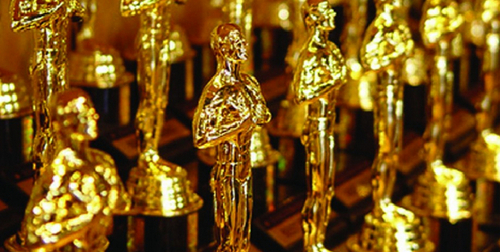
With the 2013 Oscarcast moved up to Feb. 24, movie fans are already in a lather over the possible nominees, especially since again this year there can be “up to” ten finalists in the Best Picture category. I claim no inside knowledge (I’m still waiting to hear from my friend Deep Oscar), but it’s never too early to speculate.

December 14, 2012

Sundance and five Sundance-style movies

Scroll down for my earlier entries.

The first five Sundance entries I’ve seen are the kinds of film the festival exists to showcase. It is possible that many of them won’t ever open in most of the places you readers live, but you’ve impressed me with your resourcefulness in finding them anyway (and no, I don’t mean piracy). You guys demonstrate that if you want to find a movie badly enough, you often can.

One of them, “Homewrecker,” is for rent right now via YouTube, in keeping with the festival’s Reinvention/Rebirth/Renewal and its embrace of new distribution channels such as the net and regional art cinemas.

That one and “Armless” are playing in the new Sundance section named NEXT, which specializes in movies with “low to no budgets.” The guidelines specify budgets below $500,000, and both of these look closer to half a million than to “no.”

December 14, 2012

“Nobody has the right to take another life”

Yesterday I read this in an article in the British Guardian newspaper:

“Twelve of the last 13 people condemned to death in Harris County, Texas were black. After Texas itself, Harris County is the national leader in its number of executions.

“Over one third of Texas’s 305 death row inmates – and half of the state’s 121 black death row prisoners – are from Harris County.

December 14, 2012

Cannes #2: A magical curtain for Jacques Tati

I walked into Cinema Arcades, behind our hotel, for a Cannes market screening of “The Illusionist” and saw the magically melancholy final act of Jacques Tati’s career.

Tati of course was the tall Frenchman, bowing from the waist, pipe in mouth, often wearing a trench coat, pants too short, always the center of befuddlements.

If you’ve seen “Mr. Hulot’s Holiday,” you know who he was, and if you haven’t, it belongs in your holding pattern.

December 14, 2012

The Best Films of 2011

Making lists is not my favorite occupation. They inevitably inspire only reader complaints. Not once have I ever heard from a reader that my list was just fine, and they liked it. Yet an annual Best Ten list is apparently a statutory obligation for movie critics.

My best guess is that between six and ten of these movies won’t be familiar. Those are the most useful titles for you, instead of an ordering of movies you already know all about.

One recent year I committed the outrage of listing 20 movies in alphabetical order. What an uproar! Here are my top 20 films, in order of approximate preference.

December 14, 2012

Darwin survives as the fittest

On February 12, we celebrate the bicentennials of two of the greatest figures of the 19th century: Abraham Lincoln and Charles Darwin. In hailing Lincoln, bells will peal from sea to shining sea. The same date is also designated around the world as Darwin Day, and in Shrewsbury, Shropshire, his birthplace, a cake with 200 candles will be presented in the Square, and everyone will be offered a slice. If you’re of school age, living in Shropshire, and your birthday is Feb. 12, the city invites you to Darwin’s Birthday Bash. This is a grand celebration for a man whose Theory of Evolution promoted atheism, inspired Hitler’s genocides, and thinks your grandfather was a monkey.

None of those things are true, but such claims are what I’ve been dealing with since Dec. 3, 2008, when I published a blog entry praising Darwin’s Theory and castigating Ben Stein’s documentary “Expelled,” which claimed the opposing theory of Intelligent Design was being silenced in a crime against freedom of speech. That entry has so far drawn some 280,000 visits and inspired nearly 1,300 comments comprising some 145,000 words, every one of which I have read. The thread is still active and growing every day.

December 14, 2012
subscribe icon

The best movie reviews, in your inbox