Chaz Bono: On Being and Becomingness

“Becoming Chaz” airs Sunday, November 27 6PM ET/PT on OWN before the 8 p.m. premiere of its follow-up, “Being Chaz.”

Not too long ago, I was planning to marry a woman who was born a man, so Chaz Bono’s story is a bit familiar. It’s pretty simple, really, and you’ve heard it a thousand times by now: A transgender person feels trapped in the “wrong” body. Just for acting upon this lifelong impulse by changing their physical characteristics to better represent their true selves, transpeople are being assaulted and murdered in shameful numbers. The movie “Boys Don’t Cry” might have softened a few bigoted hearts around this issue, but the killing continues worldwide.

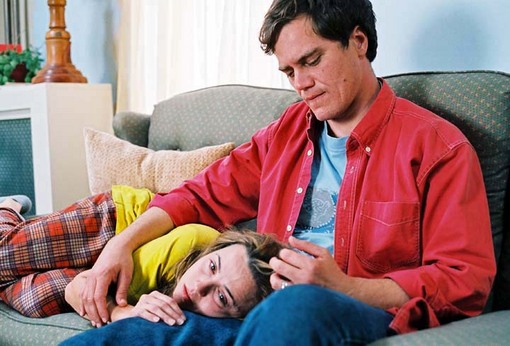
Chaz, born Chastity Bono to celebrity couple Sonny and Cher, could have lived through his transition from female to male in private, but it’s clear in the documentary “Becoming Chaz” that he knew the true cost of invisibility in such a transphobic world. He let the cameras roll during some unflattering, raw moments–the idea being that this story shouldn’t idealize his experience any more than it should exploit it for freak show appeal. The aim is to show that Chaz, the man, is as real as you and I, not an illusion to be brought off. It’s hard to imagine that the killers out there might be moved by all this candor, but those whose indifference or unawareness helps perpetuate discrimination should at least get a healthy jolt of recognition. “Becoming Chaz” is as much about the kind-faced “Dancing with the Stars” contestant’s relationship as it is about his metamorphosis. That was my way into the film: I know a little bit about being “the partner.”


December 14, 2012

“How to Fold a Flag”: 12 times,for each of a soldier’s virtues

Beginning a new column devoted to films available via Video on Demand in all its forms.

● “How to Fold a Flag”● “We Are the Night”

To say that Javorn Drummond, Jon Powers, Michael Goss and Stuart Wilf come from different walks of life is something of an understatement. If they hadn’t served together in Iraq in 2003-04, they never would’ve met. Now they’re back home, separated by geography, uneasy peace and haunting memories of what they saw and did during a war they determined to be pointless. They might meet again someday — or not — but they share a bond of life, death and military service that they’ll take to their graves.

These are the guys we got to know in “Gunner Palace,” the superb 2005 documentary co-directed by the husband-and-wife team of Michael Tucker and Petra Epperlein. They defended America as soldiers in the Army’s 2/3 Field Artillery Division, never quite sure what they were killing or dying for. There was a fifth “star” in the film, Ben Colgan, who sacrificed his elite Delta Forces post to join the artillery unit in Baghdad. Then he sacrificed his life to an IED.

December 14, 2012

The Electric Dancing of War Babies

Playing in theaters nationwide Thursday, August 4, 2011. Details here.

by Steven Boone

“The Electric Daisy Carnival Experience” captures a dance music scene I tend to find noisy and vapid. But that’s me. If you’re a big fan of DJ-based acts like 12th Planet, Major Lazer, Moby and will.i.am, or just a true devotee of the rave scene, this film is immersive, passionate about its subject and visually striking. Director Kevin Kerslake seems to have as many cameras on hand as the Beastie Boys handed out to concertgoers in their gonzo 2006 music doc “Awesome; I F—-n Shot That!”

It helps that Kerslake is a veteran music video director (R.E.M., Nirvana) whose career is probably older than most of the screaming kids in the crowd. He shows no restraint in dropping the camera deep into the mob like a performer into a mosh pit but doesn’t let the chaos take over. It also helps that, right up front, like Michael Bay showing us a Victoria’s Secret derriere in 3-D at the start of his last Transformers movie, Kerslake crams as many shots of unbelievably gorgeous girls doing cartwheels in clown makeup and lingerie as mathematically possible.

December 14, 2012

Tim and Eric Mediocre Movie, Great Job!

“Tim and Eric’s Billion Dollar Movie” is available for streaming/download on iTunes, Amazon Instant, Vudu and YouTube. In theaters March 2.

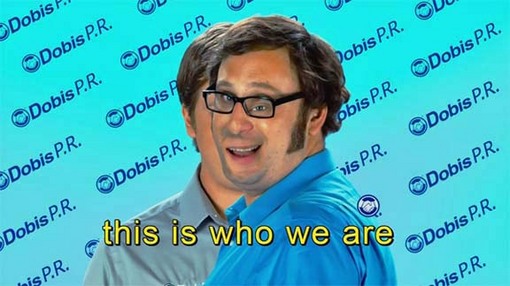
“Tim and Eric’s Billion Dollar Movie” is a lot like “Tim and Eric’s Awesome Show, Great Job!.” They’re both experimental video art posing as sketch comedy. In them you can see DNA from Ernie Kovacs, John Waters, the Kuchar brothers, Robert Downey, Sr., Tom Rubnitz, early Beck music videos, Damon Packard, Aqua Teen Hunger Force (and every other Adult Swim psychotic episode) and Harmony Korine, to name just a random few. But it’s likely that actor-writer-directors Tim Heidecker and Eric Wareheim took inspiration from none of these freaks.

The duo’s work seems to flow directly from three sources: Bad corporate promotional and instructional videos, absurd local TV programming and assaultive blockbuster films. Their collages of chopped-and-screwed sounds with spastic motion graphics and sloppy green screen don’t seem much different (in effect, if not production values) from what’s on cable any given Sunday. It’s just that they put unattractive, demented-seeming people in front of the green screen instead of the usual telegenic emoters. They spout nonsense where platitudes and corporate messages usually go. When celebrities appear on the show, they flub and stutter like robot hologram versions of themselves. It’s as if the show’s editor was a spam bot.

Whether any of it is funny is almost beside the point. The creeping surrealism often takes away your ability to blink, especially, I suspect, when, like me, you have no history with the show.

December 14, 2012

Puppet Nazis vs. the Grindhouse Gang!

● Jackboots on Whitehall (DVD/VOD/Digital cable July 26)

● American Grindhouse (DVD/Hulu July 26)

by Steven Boone

The animated comedy “Jackboots on Whitehall” does its best to tweak every British stiff-upper-lip stereotype ever perpetuated in film and popular culture since World War II. This satire employs puppet animation techniques familiar from “Team America: World Police” and classic George Pal puppetoons, but with exquisite production design more akin to Wes Anderson’s stop-motion “Fantastic Mr. Fox.” Instead of marionettes or stop-motion, however, filmmakers Edward and Rory McHenry employ animatronic dolls enhanced with CGI.

The period detail in this account of Hitler’s alt-reality occupation of London is stunning: a convincing re-creation of Whitehall, the road whose major landmarks comprise the seat of British government; the airship Hindenburg, which, in this reality, never blew up and now serves as a Nazi attack vehicle; Hadrian’s Wall and the hills of Scotland; vintage fighter planes, palaces, tanks, luxury cars… Equally meticulous is the costuming, from Winston Churchill’s pinstriped suit to the Raj soldiers’ blue turbans.

While the McHenry brothers’ puppets aren’t articulated beyond some binary limb and neck movements, they are sculpted with such expressive character it’s easy to suspend disbelief. Exuberant character voices help. Timothy Spall as a gruff Churchill, Alan Cumming as a fey Hitler and Tom Wilkinson as a simpering Goebbels play it lip-smackingly broad. Richard E. Grant portrays a tightly wound priest so perpetually furious that its possible he gave his entire performance through clenched teeth. Ewan McGregor lends the unlikely farm boy hero some warmth. Along the way, some downright filthy jokes fly by almost subliminally, under kids’ radar (including a visual joke last seen in “Boogie Nights”). In fact, so much of the humor is adult, whether in raunchiness or complexity, that Jackboots on Whitehall is less a family film than one for liberal parents and their precocious teens. The DVD includes a fascinating behind-the-scenes documentary that details just how much love went into this handcrafted epic.

December 14, 2012

Sleepless Night: Opening up a sixpack of Whup-Ass

“Sleepless Night” (103 minutes) is available on demand through various cable systems,

Vudu, iTunes and Amazon Instant, starting April 17th. It will be theatrically released in New York and Austin, Texas on May 11, 2012.

by Odie Henderson

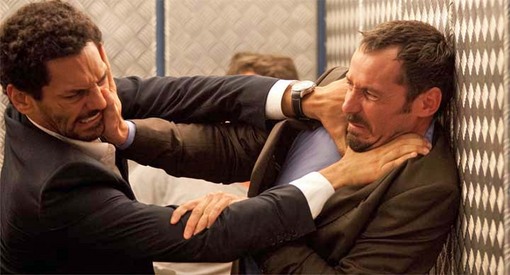
A stolen bag of cocaine, a kidnapped kid, corrupt cops, a shaky camera and a dance club the size of a Super Walmart configure Frederic Jardin’s “Sleepless Night,” a frenetic French action film that will either get your heart or your head pounding. This is a relentless genre exercise, both exhilarating and exhausting. Its numerous showdown set pieces feature foes in gun battles, foot chases and fisticuffs. Our protagonist uses whatever’s handy to subdue his opponents: People’s noggins get hit with doors, bread, dishes, bullets and the cleanest part of the commode. Gendarmes go from corrupt to virtuous and vice versa, film speeds vary from slow motion to sped up, and narrow escapes coexist with near-misses. With this much activity, sensory overload is all but guaranteed.

Vincent (French comedian Tomer Sisley) is a corrupt cop who begins his day by robbing 10 kilos of cocaine from the henchmen of José Marciano (Serge Riaboukine). Marciano’s godson is shot, but not before Vincent is stabbed and both he and his partner are seen by one of Marciano’s men. Marciano knows who robbed him, and he also knows Vincent’s son, Thomas, would make a great bargaining chip for the return of his yayo. The gangster kidnaps Vincent’s son and demands the exchange be made at Marciano’s restaurant-slash-dance club, Le Tarmac.

December 14, 2012

The enemy of my enemy es mi amigo

“Amigo” is playing in selected theaters, including the Siskel Film Center in Chicago.

by Odie Henderson

There is something to be said for the economy in John Sayles’ movie titles. He gets his point across in five words or less. The theatrical films he has written and directed bear the names of locations (“Matewan,” “Sunshine State,” “Silver City,” “Limbo”) or are deceptively simple descriptive statements (“The Secret of Roan Inish,” “The Brother From Another Planet,” “Return of the Secaucus Seven,” “Amigo”). All 17 titles average out to just under 3 words per movie moniker (actually, 2.5), which means Sayles’ 18th movie must star the king of the three word movie title, Steven Seagal. Laugh if you must, but IMDb will tell you Sayles once wrote a film for Dolph Lundgren. Seagal is only a “Marked for Death” sequel away, should Mr. Sayles take my advice.

In the meantime, his 17th film opens September 16th On Demand. “Amigo” follows the path running through much of Sayles’ work: It is politically aware, occasionally melodramatic and maintains a certain intimacy despite sprawling across multiple characters and stories. Bitter irony and blatant humanism peacefully co-exist as Sayles’ heroes, heroines and villains struggle to maintain the dignity he inherently believes they have. The director’s masterpiece, “Lone Star,” is the quintessential example of Sayles expressing his themes and ideas in epic format. Anchored by Chris Cooper, “Lone Star” spins a tale of power, race and class across generations, juggling numerous characters with whom the story invests such weight and interest that I could follow any of them out of the film and into their own adventures.

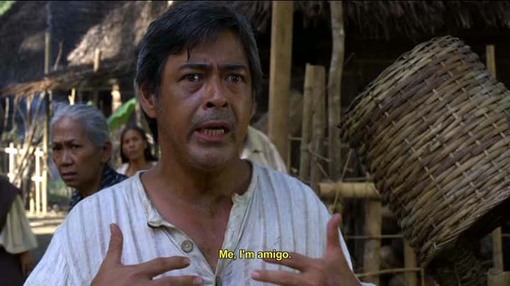
“Amigo” is not as tightly crafted as “Lone Star.” It’s a messier work whose dialogue is at times a tad too purple, its political allusions a little too obvious, and it has a one-note character that is uncharacteristic of its creator. Much of its plot is predictable in an old-fashioned, yet comforting studio-system way. Reminiscent of a sloppier E. L. Doctorow novel, “Amigo” merges real-life characters with fictional ones while plumbing a bygone era for parallels of today. Like Doctorow, Sayles provides numerous details of the period he depicts, culled from the research he did for his book “A Moment in the Sun.” Its U.S. occupation plotline could represent Iraq or Vietnam or Afghanistan, and its soldier characters are good ol’ boys found in many an old war movie (and many an actual platoon, as well). What makes “Amigo” engrossing despite its predictability is the object of its gaze: This is an occupation story, but for a change, “the Other” is us. The occupied people are observing the outsiders who have interrupted their life narrative by invading their country. In “Amigo,” we are entrenched in the Philippine-American War (1899-1902).

December 14, 2012

Happy days are here again

For me the best news produced by the Florida primary was Newt Gingrich’s vow to take his fight all the way to the floor of this year’s Republican convention. It has been way too long since a national political convention was more than a coronation stage-managed by public relations experts.

December 14, 2012

Cab Calloway: The Hi-De-Ho Man

“Cab Calloway: Sketches” premieres at 10 p.m. ET/PT Monday, February 27 on PBS’s “American Masters” (check local listings), and PBS on demand after that.

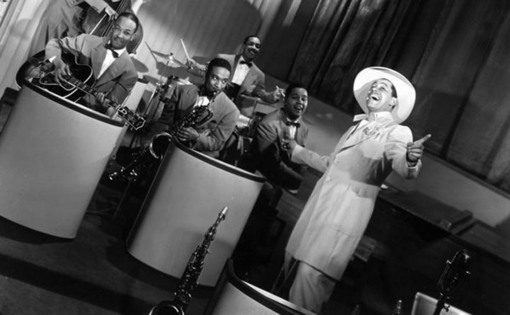
When I was 10, I snuck into my first R-rated movie and caught my first glimpse of Cab Calloway. Mind you, I’d heard him numerous times, as my folks had “Minnie the Moocher” on a 45. But much like the young audience who flocked to “The Blues Brothers” in 1980, I’d never actually seen him before. Until his musical number, Calloway looked like a nice old man. But once the strains of “Minnie the Moocher” started playing, he became something astonishing. He was hypnotic, dressed to the nines, with dreamlike movements and straight hair he shook like no Black person I knew. He was delivered to me the size Cab Calloway should always be delivered: On a big movie screen. I was in awe. 31 years later, I attended a midnight screening of “The Blues Brothers” at the IFC Center in New York City. Despite my familiarity with Calloway’s appearance and his other movies, I had the same reaction to seeing him on the big screen. That film remains the only time I’ve seen him in those dimensions, and he’d lost none of his allure.

Calloway’s appearance in “The Blues Brothers” features in the final act of “Cab Calloway: Sketches,” Gail Levin’s documentary for PBS’s “American Masters.” Director John Landis and the Memphis musicians who made up the Blues Brothers band discuss their time with the self-proclaimed “Hi-De-Ho Man.” Steve Cropper, Donald “Duck” Dunn and Lou Marini speak of Calloway’s constant dapperness and the aura any living legend carries around. He told them stories, had a good time with the actors, and scared the hell out of his director during a recording session of the song Calloway pressed to vinyl in 1930. “Sketches” covers the origins of both Calloway and his leading lady, Minnie.

“Sketches” begins B.M., that is, before “Minnie the Moocher,” with Cab Calloway at the Savoy Ballroom in Harlem. The Savoy was where people went stompin’–it was the biggest Black dance club in town. They called it “The Land of Happy Feet.” If you played there, you’d arrived (at least to Black folks you had). Calloway appears with his band, the Alabamians, who, according to historian Gary Giddins, “had nothing to do with Alabama. ” Upon arrival, Cab and company got into a “Battle of the Bands” with Savoy favorites, The Missourians. “They got their asses beat, ” says Giddens, and Calloway, here in clips from an interview he conducted in his later years, seconds that notion. “But when the Missourians were looking for a new leader, they remembered me, ” says Calloway. His career immediately got a boost.

December 14, 2012

Stop making senses: An epidemic love story

“Perfect Sense” (89 minutes) is now available via IFC On Demand and can be rented or downloaded via iTunes, Amazon Instant Video, SundanceNOW, XBOX and PlayStation 3. The film will also begin a limited release in theaters on February 3rd.

by Jeff Shannon

The cause of the disease is unknown, and there is no cure. It could be a cluster of diseases, nobody knows for sure. The experts say it’s not contagious, but that’s just a futile ploy to prevent panic. It’s spreading throughout the world as a full-blown epidemic. The symptoms are brutal and unrelenting: Slowly but surely, your senses fall away — first you lose the sense of smell. Then taste, and eventually hearing…panic strikes you anyway, and the world around you ceases to make any kind of sense. How can you possibly survive the onslaught of sensory deprivation? What can you do when you’re overwhelmed by an escalating sense of infantile helplessness?

Welcome to the apocalypse of “Perfect Sense,” an imperfect yet deeply affecting film from David McKenzie, a British director who’s been quietly building a list of respectable credits (his latest is the rock ‘n roll comedy “You Instead”) since 1994. (He also regularly casts his actor brother Alastair, perhaps best known for his role in the popular BBC series “Monarch of the Glen.”) “Perfect Sense” was well-received at Sundance last year, but it’s not the kind of film that makes distributors see dollar signs in their eyes. It’s an actor’s showcase for Ewan McGregor and Eva Green, who meet the challenge head-on. Technically impressive and beautifully filmed (by Giles Nuttgens), quite frankly it’s too distinctive — choke on that, distributors! — to be easily pigeon-holed and marketed to the masses.

December 14, 2012

A personal message from Chaz Ebert

To all those who have expressed concern about the future of “Ebert Presents at the Movies,” thank you!

We are moved by the response from friends, bloggers, viewers, newspaper writers and even heavyweights in the industry stepping up in an incredible effort to rally support for Roger and the “Ebert Presents” show.

It is clear that this show is valued and respected for the quality of content and programming, and the contribution it makes to the fabric of our culture. We are also pleased that so many of you agree with us about the talents of Christy Lemire, Ignatiy Vishnevetsky and our contributors.

December 14, 2012

Richard Garriott, Space Cowboy

“Man on a Mission: Richard Garriott’s Road to the Stars” (83 minutes) will be available On Demand on Cox from Jan. 13-March 12, 2012 and on VUDU, Shaw Video on Demand and others starting Jan. 13. It opens the same day at Facets Cinematheque in Chicago and other theatrical venues.

“Man on a Mission: Richard Garriott’s Road to the Stars” begins by asking the question: “Why explore space?” By the end of this somewhat indulgent documentary you may ask, particularly considering these tough economic times, “Why spend $30 million to be the sixth private citizen to orbit the earth?” Is this the story of a quest begun in childhood or part of a publicity ploy?

December 14, 2012

Woody Allen: Manhattan Moviemaker Mystery

“Woody Allen: A Documentary” airs on PBS stations in two parts, at 9 p. m. Sunday and Monday, Nov. 20 and 21. Check local listings for airtimes. Also available via PBS On Demand.

by Odie Henderson

I took this gig as a challenge. It’s not that I hate Woody Allen; I just don’t adore him as much as you would like. Plus, I live in the Bizarro World when it comes to his films, enjoying the ones most people hate and vice-versa. For example, I hated “Match Point,” disliked “Annie Hall,” and could never commit to “Manhattan” despite its astonishing, heartbreaking cinematography. Conversely, I loved “Deconstructing Harry,” found “A Midsummer Night’s Sex Comedy” amusing, and I may be the only sane person who liked “Hollywood Ending.” These confessions may disturb die-hard fans, but before you vow never to read anything of mine again, you should watch American Masters’ “Woody Allen: A Documentary.” There you’ll discover that Woody Allen dislikes most of his movies, even going so far as to offer to make a different movie for free if United Artists used “Manhattan” for kindling. Compared to that, my “meh” reaction to the gorgeous-looking film is a ringing endorsement. We now know who should be getting your hate mail, don’t we?

Not that Allen would care. Robert B. Weide’s exceptional documentary makes clear that critical opinion is the farthest thing from its subject’s mind. The prolific writer-director has been too busy cranking out a film a year for the past four decades to worry about what anyone thinks of them. You’d have to go back to the studio system’s heyday for that kind of output, work that produced eleven solo and three collaborative Oscar nominations for writing. That’s two more than my beloved Billy Wilder, who coincidentally never got a solo writing nomination. Add to those fourteen writing nods his six directing nominations, sole acting nod and the resulting three wins, and you have one of the most honored filmmakers in Hollywood history. He can expect a 22nd nomination for “Midnight In Paris,” which I cop to liking but not with the slobbering praise afforded it by most critics. (It’s like a cross between Cliffs Notes, “The Purple Rose of Cairo” and a Tea Party rally, with all that “it’s so much better in the past” nonsense.) The fact that awards mortify Allen makes these numerous acknowledgements the kind of ironic, funny joke one would find in, well, a Woody Allen movie.

December 14, 2012

Return: It’s (not so) good to be home

“Return” (97 minutes) is available Feb. 28 via most major on-demand platforms including cable, satellite, iTunes and Amazon Instant.

When the most intense experiences of daily life are repeated across generations, they become the historical touchstones of our cultural identity. By natural progression they’re woven into our movies, where dreams and nightmares are etched in light.

The returning soldier (a subject previously examined here in the HBO documentary “How to Fold a Flag” and the 1956 Paul Newman drama “The Rack”) has been a mainstay in film since the earliest days of the silent era. When you consider upcoming changes in the ranks of the American military, more and more of those soldiers are now likely to be female. And since independent film is where social progress typically finds its earliest, least compromised expression, we’re now seeing more richly observant films like “Return,” a sensitively rendered drama that marks a promising debut for writer-director Liza Johnson, in rewarding collaboration with underrated actress Linda Cardellini.

Cardellini won hearts with her appealing role on the beloved, short-lived TV series “Freaks and Geeks” (1999-2000) and deepened her range over 126 episodes of “ER” (2003-09). She’s perfectly cast here as Kelli, a National Guard reservist and married mother of two. Still young but spiritually exhausted, she’s just returned home after what she later suggests was a routine deployment in the Middle East. Iraq or Afghanistan — it doesn’t matter which, and the movie never specifies. Either way, there’s no such thing as a routine deployment, and Kelli returns to her previous life in struggling, small-town Ohio, adrift in a state of neurasthenic limbo. War changes you, even if Kelli claims that “other people had it a lot worse.” Kelli may be suffering from some degree of PTSD, but she’s getting no apparent help from military counselors.

December 14, 2012

Knocked up at the movies

Above all it was her personality. Pauline Kael had an overwhelming presence in a conversation. There will no doubt be many discussions of Kael’s work and influence and with the publication of Brian Kellow’s new biography Pauline Kael: A Life in the Dark, and the Library of America’s forthcoming collection of her work.

She was the most powerful, loved and hated film critic of her time, but her work cannot be discussed objectively by simply reading it. She challenges you on every page, she’s always in your face, and she functioned as the arbiter of any social group she joined. She was quite a dame.

December 14, 2012

Larry Sanders: Changing television and changing lives

August, 2012, marks the 20th anniversary of the debut of “The Larry Sanders Show,” episodes of which are available on Netflix Instant, Amazon Instant, iTunes, and DVD. This is the third and final part of Edward Copeland’s extensive tribute to the show, including interviews with many of those involved in creating one of the best-loved comedies in television history. Part 1 (Ten Best Episodes) is here and Part 2 (The show behind the show) is here.

A related article about Bob Odenkirk and his characters, Stevie Grant and Saul Goodman (on “Breaking Bad”), is here.

by Edward Copeland

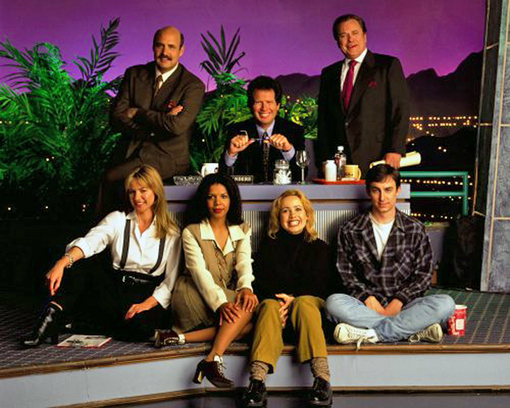
“It was an amazing experience,” said Jeffrey Tambor. “I come from the theater and it was very, very much approached like theater. It was rehearsed and Garry took a long, long time in casting and putting that particular unit together.” In a phone interview, Tambor talked about how Garry Shandling and his behind-the-scenes team selected the performers to play the characters, regulars and guest stars, on “The Larry Sanders Show” when it debuted 20 years ago. Shandling chose well throughout the series’ run and — from the veteran to the novice, the theater-trained acting teacher and character actor to the comedy troupe star in his most subtle role — they all tend to feel the way Tambor does: “It changed my career. It changed my life.”

December 14, 2012

Hugh Hefner has been good for us

From the moment that Hal Holmes and I slipped quietly into his basement and he showed me his father’s hidden collection of Playboy magazines, the map of my emotional geography shifted toward Chicago. In that magical city lived a man named Hugh Hefner who had Playmates possessing wondrous bits and pieces I had never seen before. I wanted to be invited to his house.

I was trembling on the brim of puberty, and aroused not so much by the rather sedate color “centerfold” of an undressed woman, as by the black and white photos that accompanied them. These showed an ordinary woman (I believe it was Janet Pilgrim) entering an office building in Chicago, and being made up for her “pictorial.” Made up! Two makeup artists were shown applying powders and creams to her flesh. This electrified me. It made Pilgrim a real person. In an interview she spoke of her life and ambitions.

December 14, 2012

Guilty Pleasures: 50 Shades of Cliché

“Guilty Pleasures” (60 min.) premieres on the PBS series P. O.V. on Thursday, July 12 (check your local listings). The DVD is available for pre-order on the PBS website. It will stream on the POV’s website July 13-Aug. 12.

by Donald Liebenson

“Guilty Pleasures.” A documentary. About romance novels. She didn’t watch documentaries. She didn’t read romance novels. When she agreed to join him for what he called “movie night” (“I’ll show you something you’ve never seen,” he had said lasciviously), this is not what she signed up for. Her inner goddess yearned for a shirtless Ryan Gosling.

“Here,” she offered, unsnapping “Crazy Stupid Love” from its DVD case. Suddenly, like a coiled snake, he lunged, grabbed the disc from her trembling hand and flung it against the wall, sending it spinning, spinning.

December 14, 2012

There is something and not nothing

The mind of a theoretical physicist must be a wonderful place. It can consider things that for me are only words, and will always be words. It can make play with multiple dimensions. It can contemplate black holes. It can not only theorize the existence of the Higgs boson, but can devise an experiment to find it–an experiment that succeeds.

December 14, 2012

Billy the Kid, orphan outlaw

“American Experience: Billy the Kid” is available on demand at PBS.org after its January 10 broadcast at 9 p.m. (ET/PT). Check local listings.

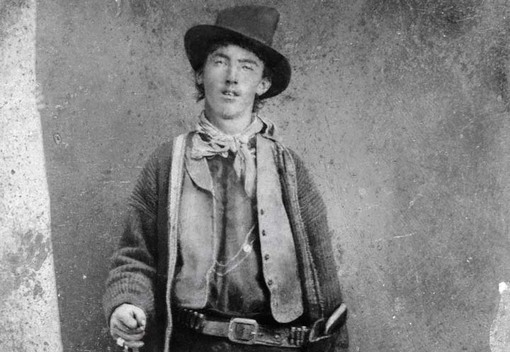
Who hasn’t heard of Billy the Kid? He’s often portrayed in Westerns — sometimes as a blood-thirsty killer — but the PBS “American Experience” documentary “Billy the Kid” gives us a sympathetic portrayal of an orphan who “became the most wanted man of the west.” Instead of drama, blood, and lust in the dust, you’ll get a more multicultural view of a homeless kid gone wrong after being wronged.

The one-hour film, narrated by Michael Murphy, begins with a hangman’s noose. The date is April 28, 1881 and the 21-year-old man known as Billy the Kid is in the custody of Sheriff Pat Garrett. He escapes his appointment with the hangman, but he won’t be alive much longer.

December 14, 2012
subscribe icon

The best movie reviews, in your inbox