The Arikan Agenda: The Best Films of 2011

A few weeks ago on Facebook — that sly keeper of family secrets, whose memory seems to have increased incrementally with its new Timeline mumbo-jumbo — an actor of some repute posted a list of the best Twitter accounts of 2011, as compiled by a wholly forgettable outlet. He had been placed relatively highly, and someone commented that it was a very subjective list. Apart from the fact that taking issue with “a list of the best Twitter accounts of 2011, lol” is by definition absurd, the statement presented a logical fallacy (I am fully aware of the irony of regarding a throwaway Facebook comment in such depth). All lists are subjective: that’s why they’re lists. Nonetheless, this fairly simple fact gets lost in the year-end frenzy as interested parties start calling for the list-maker’s head, like angry villagers wielding pitchforks, if and when their favoured books, albums, films, etc fail to place on a given critic’s compilation of the year’s best.

December 14, 2012

‘Ponyo,’ the missing Oscar nominee,by Michael Mirasol of Manila

The Oscar nominees have been announced, now cinephiles everywhere have begun nitpicking amongst the nominations. Some will note those that should have and shouldn’t have been nominated, but one almost criminal omission from the Best Animated Film category was the absence of PONYO, Hayao Miyazaki’s latest work for Studio Ghibli.

In terms of filmmaking mastery, one can mention the name Miyazaki in the same breath as Spielberg or Scorsese. His works are beloved by animators, audiences, and critics around the world.

December 14, 2012

“How to Die in Oregon”: It’s personal

“How to Die in Oregon” plays on HBO on May 27, 29 and 31 and June 1 and 6.

Click here for HBO showtimes.

I’ve been encouraged to write autobiographically in this forum, so bear with me, dear reader. We’ve barely been introduced, and this time it’s personal. I’ll be sharing some thoughts about HBO’s extraordinary new documentary “How to Die in Oregon”, but first, allow me this indulgence:

When my father died four months ago at the age of 79, I sat beside him in my wheelchair as his death drew near. I couldn’t hold his hand and he couldn’t hold mine, so I gently touched the parchment-like skin of dad’s withered right arm while my older brother, standing on the other side of the bed, leaned over and quietly suggested to our father that this was “a good time to go.”

Dad must have agreed, because a few seconds later, he did.

He went gently and peacefully after many hours of slow, labored breathing. Only three weeks had passed since he’d been definitively diagnosed with bowel cancer. In a case of fortunate timing, we’d brought him home from the hospital about 30 hours earlier; we knew he preferred to die at home. Apart from the morphine drip we’d been trained to operate by compassionate hospice-care advisors, there were no lethal drugs or physicians involved.

(Above: Jerry and Jeff Shannon, 2009)

December 14, 2012

The People vs. George Lucas

A documentary called “The People vs. George Lucas” gives disgruntled, hard-core, “Star Wars” a chance to vent on the decisions George Lucas has made over the last several years, regarding the alterations to his beloved original trilogy as well as the overall outcome of that series’ prequels. It may be safe to say that these fans’ gargantuan expectations were not fully met.

I have to wonder if such expectations were realistic to begin with, I also ask myself if it was the world we live in today that drastically changed the rules of the game for the release of the maligned prequels. Let’s face it, the insufferable Ewoks never had to face the same fate that Jar Jar Binks did when days after the release of the first prequel, a web site called www.jarjarbinkssucks.com became the talk of the web in its early days.

December 14, 2012

To travel and live without reasons

When I observed the lifestyle of Ryan Bingham in Jason Reitman’s wonderful movie “Up in the Air” early in this year, Lawrence Kasdan’s 1988 movie “The Accidental Tourist” came to my mind. Like Ryan, Macon Leary (William Hurt) knows a lot about traveling around by plane. He can tell you how to pack your bag as small as possible. 

December 14, 2012

Raising Renee: Her sister’s keeper

“Raising Renee” premieres on HBO2 Wednesday, February 22 and is available on-demand at HBO on Demand and HBO Go thereafter.

“Raising Renee” is an accommodating look at the relationship between an award-winning painter, Beverly McIver, and one of her two older sisters, Renee. Although Renee is in her forties, she has the mindset of a third-grader. After their mother dies, Renee goes to live with Beverly and Beverly spends about six years “Raising Renee.”

This is the third look at a family facing life-changing problems from the husband and wife filmmaking team Jeanne Jordan and Steven Ascher. Their first was the personal 1995 “Troublesome Creek: A Midwestern,” in which Jordan’s own family attempts to save their Iowa farm. Given the Audience Award and the Grand Jury Prize for documentary at Sundance, it was nominated for an Academy Award for best documentary feature.

Their second, “So Much So Fast,” looked at the then 29-year-old Stephen Heywood who discovered he had amyotrophic lateral sclerosis (Lou Gehrig’s disease), a paralyzing neurodegenerative illness. Despite his diagnosis, Heywood gets married to Wendy; they have a child. Heywood died in 2006, but the self-taught architect inspired his brothers to co-found a website for ALS patients and an institute for research into treatment, the ALS Therapy Development Institute.

December 14, 2012

“Moozlums” have been here for a long time

Qasim Basir presents his first feature film, “Mooz-lum,” featuring Danny Glover, Nia Long, and Roger Guenveur Smith. Based on true events, it follows the story of Tariq (Evan Ross, son of Diana Ross) as he begins college, hoping to escape his childhood struggles. Estranged from his mother and sister, he spent his youth living at times with a strict, religious father and at times in a local madrassa (Islamic seminary). He is a Muslim college student, enrolling in the Fall of 2001. Simply, it is a story of a man trying to hide from the boy within him, just as all hell is about to break loose.

The movie opens nationally on Friday, 2/11. The title is a play on a common mispronunciation of “Muslim.” I shrug when President Obama, despite his childhood in Indonesia, pronounces the term as “Muz-lem,” though that is still better than the archaic “Moslem.” The point here is not that anyone is intentionally mispronouncing the name. Rather, those of us with Muslim names

December 14, 2012

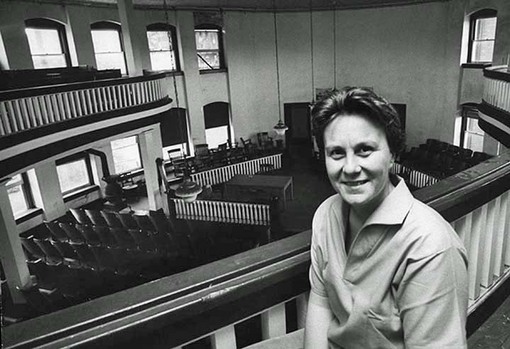
“Hey, Boo”: The private life of To Kill a Mockingbird

“Hey, Boo: Harper Lee & To Kill a Mockingbird” (82 minutes) premieres on the PBS series “American Masters” on Monday, April 2nd, at 10 p.m. (check local listings). The film is also available on-demand via Netflix and iTunes.

by Jeff Shannon

To Kill a Mockingbird was published on July 11th, 1960, and Harper Lee’s first and only novel has been a publishing phenomenon ever since. Although its first printing by the venerable publishing house of J.B. Lippincott was a mere 5,000 copies, it was an immediate bestseller, and has consistently sold a million copies a year for over 50 years. It was a shoo-in for the Pulitzer Prize, and is frequently cited as the second-most beloved book of all time, after the Holy Bible. Some British librarians went a step further: In a 2006 poll, they ranked Mockingbird at the top, above the Bible, in a list of books “every adult should read before they die.” Despite some early objections to its use of racial epithets (specifically the “N-word”), the novel has been required, if sometimes controversial, classroom reading for decades.

With its potent themes of racial injustice, inequality, courage, compassion and lost innocence in the noxiously segregated American South, Lee’s novel preceded and fueled the civil rights movement that erupted in its wake. I don’t think it’s an exaggeration to say that To Kill a Mockingbird is the most influential novel of the 20th century, considered by many to be America’s national novel. The equally beloved, Oscar-winning 1962 film version — famously adapted by Horton Foote and directed by Robert Mulligan — was immediately embraced as an enduring classic worthy of its source material.

December 14, 2012

Colorless green ideas “Sleep Furiously”

Fandor.com will present “Sleep Furiously” along with the featurette “Sketchbook for the Library Van,” for a free 24-hour On Demand window on July 29th. Details here. Also playing Aug. 12-18 at Facets Cinematheque in Chicago.

by Odie Henderson

“You’ve got to have characters to make a community.”

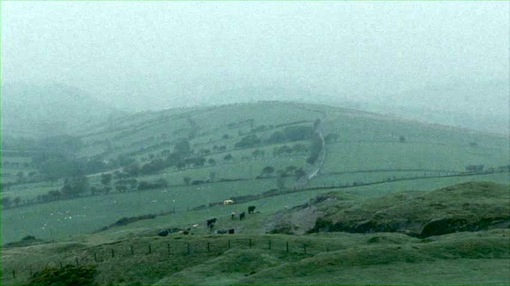
What does it mean to a community when a school shuts down? Here in the U.S., it means either the state doesn’t have any money to run it or the kids have burned it down. In Trefeurig, Wales, however, the dissolution of a school is something far more ominous, especially if it is the only school in town. “Sleep Furiously” uses Trefeurig’s school closing as its central event yet only hints at its deeper implications: Youth may be wasted on the young, but the world can’t continue to exist without them.

“Sleep Furiously” is not a conventional documentary. There are no talking heads, no narration, and no explicit point of view, pro or con, toward its subject. Like the Ross Brothers’ “45365,” “Sleep Furiously” is an observation of its director’s hometown, specifically the people who inhabit it. They go about their business and the filmmaker records them. It is only after the final frames are projected that we realize this film is depicting the collateral damage that comes with technological change.

Filmmaker Gideon Koppel returns to Trefeurig, where his parents were refugees from Germany during World War II, but he is not there to interview anyone nor is he there to mourn or celebrate the changing of the tide. He’s just a fly on the wall as the residents go about their daily routines armed with the knowledge that they may be the last to perform them. We meet the townsfolk, all of whom remain nameless, and follow them through a year of seasons. School events and county fairs are shown. Scenes are cut abruptly, and they are sometimes scored (by Aphex Twin) and sometimes silent. There is no explanation for any of this, and I had to be told by another reviewer that one of the people Koppel follows is his own mother. Viewers may find this narrative minimalism frustrating, or even pretentiously arty, but remember: It’s only pretentious if it doesn’t hold your attention. “Sleep Furiously” held mine; I was lulled by its meditative quality and taken aback by the director’s occasional use of the entire canvas of the screen.

December 14, 2012

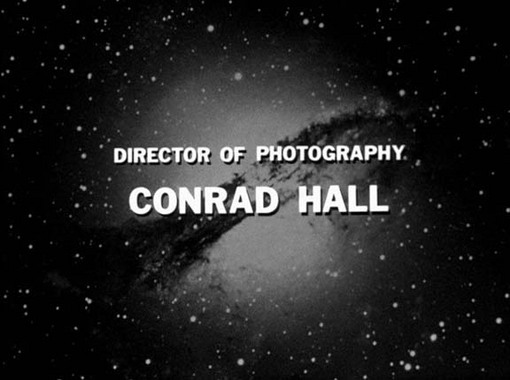
A Master Emerges: Conrad Hall and “The Outer Limits”

• “The Outer Limits” (original series) is available on Netflix (DVD), Hulu Plus and Amazon Instant Video.

• “In Cold Blood” is available on Netflix (DVD and Blu-ray) and Amazon Instant Video.

• “Cool Hand Luke” is available on Netflix (DVD and Blu-ray) and Amazon Instant Video.

• “American Beauty” is available on Netflix (DVD and Blu-ray) and Amazon Instant Video.

• “Road to Perdition” is available on Netflix (DVD and Blu-ray).

by Jeff Shannon Eyes Wide Open: A Single Artist’s Vision

Ask anyone who’s devoted their life to the study and appreciation of movies and they can probably tell you exactly when they were “bitten by the movie bug,” that moment of personal epiphany that sparked an all-consuming passion for what is arguably the greatest, most powerful medium of artistic expression.

In my case, it was Stanley Kubrick’s “2001: A Space Odyssey” that literally changed my life. That’s an influential milestone I share with many cinephiles who came of age in the 1950s and ’60s, especially those “movie brats” (among them James Cameron, George Lucas and Steven Spielberg) who were drawn to imaginative visions of the future. Because I’d spent most of my childhood outdoors or casually enjoying Disney films and other kid-friendly fare, I didn’t see Kubrick’s visionary masterpiece until it played a return engagement at Seattle’s glorious Cinerama Theater, in 1971, when I was nine years old.

(With its huge, curved Cinerama screen, the Cinerama is still the only theater in Seattle capable of showing “2001” as Kubrick intended. It exclusively hosted the film’s original 77-week Seattle run beginning in April 1968, and the fully restored 70-millimeter print of “2001” had its world premiere there, appropriately enough, in 2001, two years after the aging cinema was purchased and beautifully renovated by Microsoft co-founder Paul Allen. It’s now one of only three theaters in the world — along with the Cinerama Dome in Los Angeles and the Pictureville Cinema in Bradford England — equipped to exhibit three-panel Cinerama, requiring three synchronized projectors for the only seven films created in the three-strip Cinerama process, including 1956’s “This Is Cinerama” and 1962’s “How the West Was Won.” Starting this week [Sept. 30th] and running through mid-October, Seattle’s Cinerama is hosting a “70mm Festival” of 15 films, including “2001,” that originally premiered there.)

Like no other film before it, “2001” opened my eyes to the power of a single artist’s vision and led me to understand the supremacy of a great director. I didn’t know it then, but I’d discovered the basis of auteur theory, and while it would be foolish to deny that film is (to echo that award-acceptance cliché) the most collaborative of all art forms, it’s no contradiction to embrace the Kubrick quote that greets all visitors to kubrickfilms.com, Warner Bros.’ authorized Kubrick website: “One man writes a novel. One man writes a symphony. It is essential for one man to make a film.” (Disregard “man”; Kubrick would’ve been the first to include female filmmakers in his statement.)

December 14, 2012

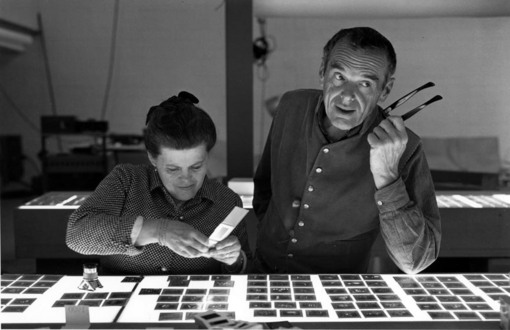
Two Parts of a Whole: The Legacy of Charles and Ray Eames

“Charles & Ray Eames: The Architect and the Painter” (85 minutes) premieres December 19th at 10:00pm on the PBS series “American Masters, ” and will be available thereafter on PBS-on-demand. The film will also be released on DVD on Dec. 13th.

The six-DVD set of “The Films of Charles & Ray Eames” is available from Facets Multimedia ($79.99) and a few other online outlets, and each disc can be rented separately from Netflix.

by Jeff Shannon

If I had been a precocious six-year-old with a passion for architecture, I could’ve told you that my elementary school was an Eames building. It wasn’t designed by Charles Eames himself, but everything about it was influenced by the design aesthetic of Charles and Ray Eames, most notably the design of the Eames’ own home in Pacific Palisades, California.

A now-legendary structure known in the architecture world as Case Study No. 8, the Eames House (completed in 1949) is a geometrical marvel of steel and glass, squares and rectangles carefully aligned or offset to pleasing effect, with bold colors (Ray being the painter and co-designer, Charles being the architect) to complement the inviting lines of the structure. Like so many public structures built in the late ’50s and early ’60s, Seaview Elementary in Edmonds, Washington, was a wanna-be Eames House for grade-schoolers, a modest, functional tribute to Charles and Ray Eames and a symbol of their phenomenal influence on the look of the 20th century.

So ubiquitous is the Eames influence that it remains utterly unique, not merely in terms of design but in the grand design of the human species. Stroll through any major city in the world and chances are you’ll see the Eames influence everywhere, from the cheap functionality of IKEA furniture to the form-fitting fiberglass of chairs in cafeterias, lobbies and waiting rooms all over the planet. When you realize that the Eames influence is literally inescapable in the lives of city-dwellers everywhere, you don’t feel resentful as you might upon finding Starbucks coffee shops on both sides of the same street. Instead, you might register a kind of awestruck gratitude for how Eames designs have improved your life and the lives of everyone you know.

December 14, 2012
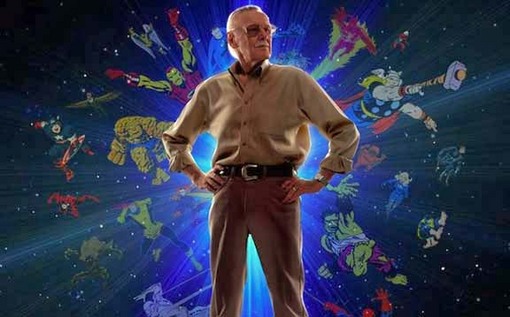
With Great Power: Stan Lee, superhero

“With Great Power: The Stan Lee Story” is available on-demand at Netflix.com, Amazon.com, iTunes, EpixHD.com and Vudu.com. Stan Lee will be attending a special screening of “With Great Power” at the Stan Lee Comikaze Expo in Los Angeles on September 15, 2012.

By Jana Spider-Woman Hulk Daredevil Wonder Woman Beast Monji

The title, “With Great Power: The Stan Lee Story,” is a tip off, but if the only Uncle Ben you know is a nattily dressed black gentleman who sells conveniently packaged rice, then Stan Lee wants to invite you to his Marvel universe. This is the world where Uncle Ben adopted his orphaned nephew who would be bitten by a radioactive spider in high school. That sullen, selfish teen would soon find that the bite of karma can be transformational and he becomes a super hero with an attitude: Spider-Man.

December 14, 2012
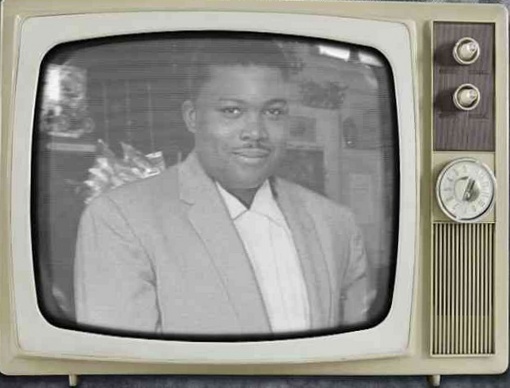
Booker’s Place: A Mississippi reckoning

“Booker’s Place: A Mississippi Story (92 minutes) is available on-demand at iTunes and Amazon starting April 26th. It will be theatrically released in Los Angeles, CA on April 25, 2012. and New York on April 27, 2012.

“Booker’s Place: A Mississippi Story” asks a question about documentaries to which I admit I’ve not given much consideration: Can a documentary negatively affect the lives of their participants? For Booker Wright, an interviewee in Frank DeFelitta’s 1966 NBC documentary, “Mississippi: A Self-Portrait,” his appearance cost him a severe beating, the bombing of his business, and potentially his death 7 years later. Wright’s “crime” was to speak too bluntly about life as a Black man in Greenwood, Mississippi. “Booker’s Place” investigates the ramifications of DeFelitta using footage he knew was incendiary, yet invaluable to his role as one who documents the truth. Did DeFelitta also commit a “crime” in allowing the footage to be broadcast, assisting in the eventual fate of Booker Wright? Wright’s granddaughter, Yvette Johnson and Frank’s son, Raymond DeFelitta, answer this and more in their must-see documentary.


The elder DeFelitta’s documentary aired on NBC at the height of the civil rights movement. Hidden for decades in a vault, “Mississippi: A Self-Portrait” resurfaced as Frank DeFelitta and his son were cataloguing the numerous documentaries Frank made for NBC in the ’60’s. At the same time, Booker Wright’s granddaughter, who had never met her grandfather, was writing a blog about her discoveries researching him. Although Johnson had heard of his NBC appearance, her searches for the footage yielded nothing but dead-ends. After the younger DeFelitta heard of Johnson’s blog, he contacted her. Their meeting sent them on a journey for answers to their central questions. DeFelitta wanted to know how much, if any, effect his father’s documentary had on Booker Wright; Johnson wanted to know more about her grandfather, and whether his comments were intentional or, in her words, the work of “an accidental activist.”

December 14, 2012
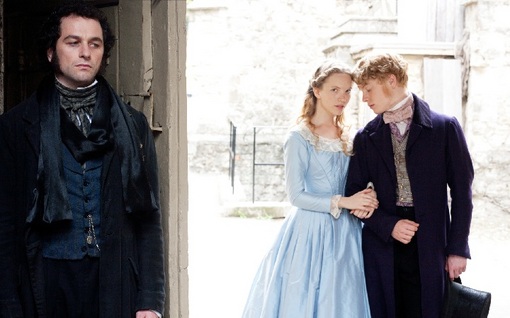
Edwin Drood: Cold Case Reopened

“The Mystery of Edwin Drood” (120 minutes) premieres on PBS “Masterpiece Classic” at 9 p.m. Sunday, April 15th (check local listings). The film can also be watched online for a limited time beginning April 16th. It is also available on DVD.

When Charles Dickens died on June 9th, 1870, his final novel, The Mystery of Edwin Drood, was barely half-finished. Almost immediately, completing the novel became a kind of literary sport, as numerous authors took it upon themselves to finish Drood in a manner fitting with Dickens’s own style and substance. Speculative attempts to complete the story continue to this day, and now we have a new PBS “Masterpiece Classic” version to discuss, debate and appreciate. Directed by Diarmuid Lawrence and adapted by British playwright and veteran TV writer Gwyneth Hughes (who previously penned the “Masterpiece Classic” drama Mrs. Austen Regrets), this two-hour version of “The Mystery of Edwin Drood” dares to stretch credibility almost but not quite to the breaking point.

It’s a delicate game being played here, so I’ll avoid spoilers altogether. Suffice it to say that Hughes’ solution to the mystery of Edwin Drood is in keeping with Dickens’ intentions. We know from Dickens’ own correspondence that it was Edwin’s uncle, John Jasper, who would ultimately be held accountable for the alleged murder of his nephew. Not content to limit themselves to just this one historically well-established plot twist, Hughes and Lawrence have added a familial dimension to the story that qualifies, in this context, as a surprising (though not altogether shocking) revelation. Whether Dickens would’ve approved is yet another topic worthy of debate.

December 14, 2012

The Loving Story: A romantic interracial landmark

“The Loving Story” premieres on Valentine’s Day, February 14, at 9 p.m. on HBO (check local listings), and is available via HBO On Demand and HBO Go thereafter.

“The Loving Story” is as modest and taciturn as its subject, an interracial couple who, in 1958 rural Central Point, Virginia, just wanted to be left alone. For the most part, they were, and that was the problem as much as it was their fervent wish. When the local sheriff busted into their bedroom at 4 am and hauled them off to jail for violating the Racial Integrity Act, there was no national audience, in contrast to the fire hosings, bombings and other acts of racist terror that couldn’t help but make the evening news at the time. The whole world was not watching. It’s hard to fathom why after seeing the luminous 16mm footage uncovered in “The Loving Story.” Documenting many pivotal moments in the case, it adds a dash of something rarely seen in the grand narrative of the American Civil Rights struggle: romance.

In the footage and iconic photographs, the Lovings appear to be deeply in love. Richard is a silent, barrel-chested Ed Harris lookalike; Mildred is shy and beautiful, the essence of poised intelligence. How could a story this simple and universal, with two photogenic romantic leads captured in a Life magazine feature, get lost in the Civil Rights shuffle?

The Loving case eventually went all the way to the Supreme Court, and all along the way, the couple insisted upon discretion and privacy. Only a small documentary crew — filmmaker Hope Ryden and cinematographer Abbot Mills — gained access to their home, but they made the most of it. The photography is as discreet but watchful as Mildred herself. When she, well, lovingly buckles her little daughter’s suede shoe as they prepare for an outing, the camera isolates the mother’s slender brown arm steadying her child’s pale leg. In the film’s context, as assembled by producer-director Nancy Buirski, moments like this one simply cry out, “Why on earth would a decent person want to disrupt this beautiful life?”

December 14, 2012

Legend of the Millennium Dragon: Epic anime

“Legend of the Millennium Dragon” is available on DVD/Blu-ray and via iTunes and Amazon Instant. In Japanese with English subtitles.

When a movie jumps from one culture to another, especially one with a different language, expect some things to be lost in translation. If you’re not up on Japanese history and folklore, you might be a bit mystified by director Hirotsugu Kawasaki’s 2011 “Legend of the Millennium Dragon.” Based on a two-book novel by Takafumi Takada (with screenplay by Naruhisa Arakawa and Hirotsugu Kawasaki), this engrossing animation with beautifully detailed background paintings whisks us into an ancient war between gods in Heian Japan.

Names are important in this quick-moving adventure. Shakespeare wrote that a rose by any other name would smell as sweet, but his historical tragedies would hardly make any sense to one who thinks the “War of the Roses” involves Michael Douglas and Kathleen Turner. “Holinshed’s Chronicles and “Bulfinch’s Mythology” won’t help you here. Much of what happens in “The Legend of the Millennium Dragon” harks back to two ancient tomes: “Kojiki” and the “Nihonshoki.”

The original title, “Onigamiden,” means “Legend of the Demon God,” but dragons are probably more attractive to an English-speaking audience than demons. A dragon does appear, but the story involves finding courage and a sacred sword. Then there’s that age-old question: Just who are the demons?

December 14, 2012

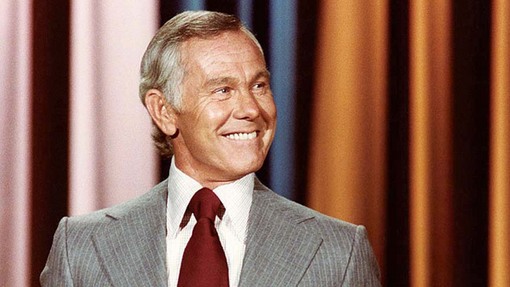
Johnny Carson: The man behind the curtain

“Johnny Carson: The King of Late Night” (120 minutes) premieres on PBS’ “American Masters” at 9:00pm Monday, May 14th (check local listings). The film will also be released on DVD and Blu-ray on July 17th.

As I reflect on my life, I grow increasingly grateful for having witnessed the greatest half-century in the history of the United States. Consider just a few of the crucial events that have shaped us during the past 50 years: The civil rights movements for African-Americans, women and the disabled; the assassinations of JFK, MLK and RFK; the war in Vietnam and its domestic fallout; landing on the moon and exploring the outer reaches of the universe; the global trauma of AIDS and seemingly perpetual threats of war and terrorism; and, perhaps most important, the emergence and meteoric rise of the digital age, exemplified by the Internet and social media with the power to literally change history through an exponential expansion of human connectedness.

If you’ve witnessed these decades through the multicolored lenses of popular culture, the rewards have been astonishing. Consider the careers we’ve seen in that time: Dylan, The Beatles, The Rolling Stones, Neil Young, Springsteen, Madonna, The Clash, U2, Nirvana… Don Rickles, Richard Pryor, George Carlin, Eddie Murphy, Tina Fey… Clint Eastwood, Martin Scorsese, Dustin Hoffman, Meryl Streep, Steven Spielberg, Werner Herzog… We could all make our own long lists and we’d all arrive at the same conclusion: The past half-century has been nothing short of phenomenal.

And one way or another, it all comes down to “The Tonight Show with Johnny Carson.”

December 14, 2012

Black history written with lightning

“The Black Power Mixtape: 1967-1975” plays on PBS’s “Independent Lens” Thursday, February 9, 2012. Check local listings. It is also available on DVD, Netflix Instant and Amazon Instant.

After viewing “The Black Power Mixtape: 1967-1975,” I stumbled out of the theater and into a blinding, mid-afternoon New York City sun, every nerve in my body ablaze. All my neurons seemed to be firing at once, and my brain was so full of thought I sought some way to collect myself. I started to walk, focusing more on reconciling my thoughts than a navigational direction. With no destination in mind, I walked for what seemed an eternity, trying to put my emotional responses together. I was jolted from my mental process by an old woman standing next to me on a Manhattan street corner. I must have looked shell-shocked, because she touched my arm as we waited for a Lower East Side traffic light to change. “Honey, are you alright?” she asked, genuine concern on her face.

Fully back in reality, I said “I’m fine, ma’am. Thank you for asking.”

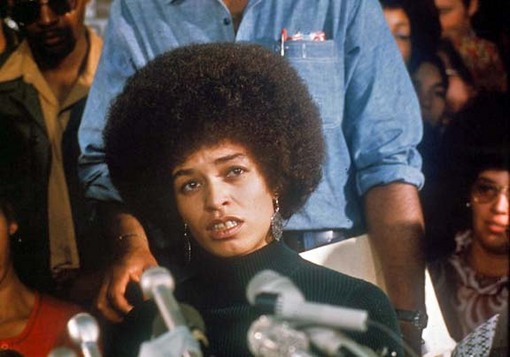
My reaction requires an explanation. Swedish journalist and filmmaker Göran Hugo Olsson’s documentary took me back to the days when I came to a mature understanding of the implications of being Black, male, and broke. My adolescence was full of reading the speeches and works of Black leaders besides Dr. Martin Luther King, Jr. I chose to do this after my uncle took me to a Black-owned bookstore and suggested several books I should read. He avoided MLK not out of some form of militant stance, but because footage and information about King were everywhere. He was the star of every Black History Month on TV, and those who rejected the message of non-violence were either marginalized, demonized or ignored. I devoured works by people whose messages were downright terrifying to mainstream America: Malcolm X, Stokely Carmichael, Eldridge Cleaver, and Huey P. Newton.

December 14, 2012

On “The Rack” with Paul Newman and Stewart Stern

• “The Rack” (1956)

• “Until They Sail” (1957)

• “The Prize” (1963)

• “Tales of Tomorrow: Ice From Space” (1953)”The Rack,” “Until They Sail” and “The Prize” are now available on made-to-order DVD from the Warner Archive Collection for $19.95 each. “Tales of Tomorrow” can be viewed on Hulu Plus and Amazon Instant Video.

by Jeff Shannon

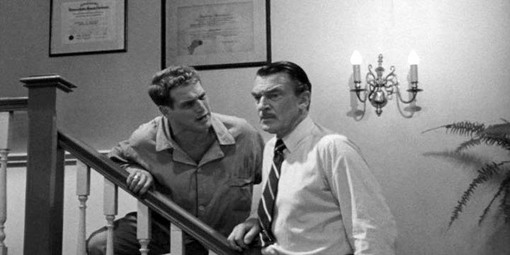
You would think that every film Paul Newman ever appeared in would be readily available on home video, right? Guess again. One of the best films from Newman’s early career has managed to slip through the cracks of home-video distribution for decades, and unless you’re old enough to have seen it in theaters or on TV over the years, it’s possible you’ve never even heard of it.

So when I heard that “The Rack” (1956) was available on home video for the very first time, I couldn’t wait to break the news to Stewart Stern.

For anyone who’s wondering “Stewart who?” there’s a convenient shortcut you can use when discussing the impressive life and career of Stewart Stern. All you have to say is, “He wrote ‘Rebel Without a Cause.'”

Uh-huh, that one. With a credit like that, any screenwriter could legitimately claim a slice of movie immortality, like James Dean did as the now-iconic star of Nicholas Ray’s 1955 teen-angst classic.

But to say that Stern only wrote “Rebel” is a bit like saying Frank Lloyd Wright designed a house. In the course of his distinguished, decades-spanning career, Stern wrote rich, psychologically perceptive scripts that were magnets for great actors and great acting: His script for “The Ugly American” (1963) gave Brando plenty to chew on; his Oscar-nominated script for “Rachel, Rachel” (1968) gave Joanne Woodward what is arguably the best role of her career (under the direction of her husband, Paul Newman; they also earned Oscar nods); and Stern’s Emmy and Peabody-winning teleplay for “Sybil” (1976) transformed cute TV actress Sally Field into an Emmy winner with a pair of Oscars in her future. A few years later, Stern left Hollywood, weary of the rat race and struggling with writer’s block, the delayed effect of post-traumatic stress from service in World War II. In the mid-’80s, Stern relocated to Seattle and never looked back.

And while Stern may have been a nephew of Paramount Pictures founder Adolph Zukor, with additional family ties to MGM moguls Arthur Loew Sr. and Jr., his closest Hollywood connection was more personal and more warmly indicative of the man’s soul and spirit: For 55 years, Stewart Stern was one of Paul Newman’s very best friends.

December 14, 2012

Hemingway & Gellhorn: Corny and canny

“Hemingway & Gellhorn (160 minutes) debuts on HBO May 28th, and will be available on HBO Go and HBO On Demand May 29th.

“If two people love each other, there can be no happy end to it.” — Ernest Hemingway

by Odie Henderson

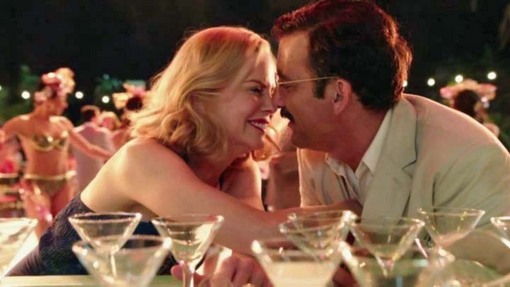
Philip Kaufman’s epic HBO movie “Hemingway & Gellhorn” is old-fashioned, corny as hell and not above using cliché. None of these characteristics is necessarily a bad thing, especially if the filmmakers know they are employing them. This film evokes the rainy Sunday afternoon old-movie fare I grew up watching on TV, movies with a tough, macho hero, a smart, brassy dame and the undeniable chemistry between them. Kaufman updates the formula to modern times with belts of profanity and jolts of sex, but “Hemingway and Gellhorn” maintains the feeling of an era long since passed, wherein its leads could have been played by Gable and Harlow or Bogie and Betty Bacall.

The titular characters are Ernest Hemingway and his third wife, Martha Gellhorn. Gellhorn is widely considered one of the greatest war correspondents in journalism history, covering wars well into her 80’s. Yet, she was constantly overshadowed by her more famous ex-husband. Theirs was a torrid affair, started while Hemingway was married to his Catholic second wife and continuing through their coverage of several wars. “We were good at wars,” Gellhorn said, “and when there was no war, we made our own.” The screenplay, by Barbara Turner (“Georgia”) and Jerry Stahl (“Permanent Midnight”) is filled with prose like this, and I enjoyed devouring every purple morsel of it. “Hemingway and Gellhorn” even opens with the now-elderly Gellhorn telling us what a lousy lay she was.

December 14, 2012
subscribe icon

The best movie reviews, in your inbox