“Mein Führer, I kann valk!”

Tom Brokaw, NBC News: “It’s unfortunate for Vice President Cheney to have had this accident obviously, because there will be those who don’t like him, who will be writing tomorrow that he had a Dr. Strangelove appearance as he appeared today in his wheelchair.”

Brokaw brought it up. Judge for yourself. Did it occur to Brokaw that that this could have been a wily piece of black-hearted/suited satirical stagecraft on Cheney’s part? Wonder what was in those boxes that he was reportedly moving — himself — when he injured his back. Shreddable secret documents, perhaps? Or could the former CEO of Halliburton not afford to hire movers?

(AP Photo)

UPDATE: Reports that the ex-VP was doing a little recreational waterboarding down by the Potomac when he slipped on the ice have not been confirmed.

December 14, 2012

A view from ‘The Bridge’

View image: Pieter Brueghel, “Landscape with the Fall of Icarus” c. 1558.

Today, I’ve been writing about “The Bridge” (opening in Chicago next week), a documentary about the stories of people who jumped to their deaths from the Golden Gate Bridge in 2004.

View image: From “The Bridge,” directed by Eric Steel (2005)

I read that the director, Eric Steel (who had cameras on the bridge from dawn to dusk for the entire year) had invoked Breughel’s “Landscape with the Fall of Icarus” — and that resonated with me. Then I remembered the poem of the same name by one of my favorite poets, William Carlos Williams.

View image From “Vertigo,” directed by Alfred Hitchcock (1958)

For me, as an American, a West Coaster and a cinephile, the Golden Gate Bridge has always loomed large in my consciousness. Today, as I attempt to digest this shattering film, I am moved and awed to offer these images, from Brueghel to the bridge — visions not just of a magnificent structure or landmark, but of a place of mythic stature in the imagination.

“Landscape with the Fall of Icarus”by William Carlos Williams

According to Brueghel

when Icarus fell

it was spring

a farmer was ploughing

his field

the whole pageantry

of the year was

awake tingling

near

the edge of the sea

concerned

with itself

sweating in the sun

that melted

the wings’ wax

unsignificantly

off the coast

there was

a splash quite unnoticed

this was

Icarus drowning

(Statistic: Most American suicides take place in the spring.)

December 14, 2012

IndieWIRE crix poll: American blood, blood, blood

View image Paul Dano anoints Daniel Day Lewis in “There Will Be Blood.”

IndieWIRE has announced the results of its annual critics’ poll, and Paul Thomas Anderson’s “There Will Be Blood” dominates (picture, director, screenplay, cinematography, lead performance), followed by David Fincher’s “Zodiac” and Joel & Ethan Coen’s No Country for Old Men.

For most American viewers, this is going to be a Netflix list: Two of the top ten movies never barely opened theatrically outside of New York (“Syndromes and a Century,” “Colossal Youth”); two never played in more than 20 theaters at once (“Offside,” “Killer of Sheep” — the restoration of Charles Burnett’s 1977 film); two haven’t opened yet, and won’t in most places until 2008 (“There Will Be Blood,” “4 Months, 3 Weeks, 2 Days”); and, in these days when wide releases typically launch on 2,000 – 4,000 theaters, two never made it to more than 400 at any given time (“I’m Not There” [149], “The Assassination of Jesse James By the Coward Robert Ford” [301]). Only two others ever spread beyond 1,000 screens: “No Country for Old Men” and “Zodiac.” Three of the ten best selections — “Killer of Sheep,” “Offside” and “Zodiac” — are currently available on DVD.

Poll administrator Dennis Lim noted that, compared to 2006 when “the relative dearth of truly exciting films” was lamented by many critics, this year’s 106 participants were more enthusiastic about their choices. One eyebrow-raising development was cited in the indieWIRE introduction, though:

If there is a strking hole to be found in this year’s [poll results]… it is the utter lack of American indie films. While last year’s survey celebrated outside-the-system films such as David Lynch’s “Inland Empire,” Kelly Reichart’s “Old Joy,” Ryan Fleck’s “Half Nelson” and Andrew Bujalski’s “Mutual Appreciation,” the acclaimed new films from American filmmakers this year came from directly within the Hollywood and Indiewood system, starring name actors.Other poll-toppers: Best First Film (Sarah Polley, “Away from Her”), Best Documentary (“No End in Sight,” Charles Ferguson), Supporting Performance (Cate Blanchett, “I’m Not There”), The complete results in all the categories can be scrutinized here. And the individual critics’ ballots (including mine) are here.

December 14, 2012

Who is the gaucho, amigo?

Cousin Dupree?

A couple days ago we published an Opening Shot contribution for Woody Allen’s “Annie Hall” in which Allen cited an old joke to illustrate a point about his view of life:

Two elderly women are at a Catskills mountain resort, and one of ’em says: “Boy, the food at this place is really terrible.” The other one says, “Yeah, I know, and such small portions.”I couldn’t help but think of that when I saw the open letter Steely Dan’s Donald Fagen and Walter Becker posted on their web site (“Open Letter to the Great Comic Actor, Luke Wilson”). Be sure to check out the groovy Residential Suites at Longworth stationery: “Where Value is King… And So Are You!”

Fagen and Becker address their open letter to Luke to complain about his brother Owen’s movie, “You, Me and Dupree,” which they say is a bad movie that they think Owen should have thanked them for, because they think the story (and title) resemble their song “Cousin Dupree,” off the “Two Against Nature” album. “Cousin Dupree” is about a guy who… well, let them put it in their own words:

Well I’ve kicked around a lot since high school

I’ve worked a lot of nowhere gigs

From keyboard man in a rock’n ska band

To haulin’ boss crude in the big rigs

Now I’ve come back home to plan my next move

From the comfort of my Aunt Faye’s couch

When I see my little cousin Janine walk in

All I could say was ow ow ouch

Honey how you’ve grown

Like a rose

Well we used to play

When we were three

How about a kiss for your cousin Dupree

Write Fagen and Becker:Anyway, they got your little brother on the hook for this summer stinkbomb — I mean, check the reviews — and he’s using all his heaviest Owen C. licks to try to get this pathetic way-unfunny debacle off the ground and, in the end, no matter what he does or what happens at the box office, in the short run, he’s gonna go down hard for trashing the work of some pretty heavy artists like us in the process. … I mean, we’re like totally out in the cold on this one — no ASCAP, no soundtrack, no consultant gig (like we got from the Farrelly Bros. when they used a bunch of songs in their movie, “You, Me and Irene” or whatever). No phone call, no muffin basket, no flowes, nothing….

But, hey, luke, man — there is one petite solid you could do for us at this time — do you think you could persuade your bro to do the right thing and come down to our Concert at Irvine and apologize to our fans for this travesty?

OK, I can see some similarities between one Dupree and the other — especially the ramblin’ nature of the character, the sleeping on the couch, and all that.

But, frankly, I think Owen Wilson’s Dupree is even more like the out-of-place “special friend,” the unwelcome guest who will not leave, who is the title character of the Dan masterpiece “Gaucho”:

Can’t you see they’re laughing at me

Get rid of him

I don’t care what you do at home

Would you care to explain…

Who is the gaucho amigo

Why is he standing

In your spangled leather poncho

And your elevator shoes

Bodacious cowboys

Such as your friend

Will never be welcome here

High in the Custerdome…

No he can’t sleep on the floor

What do you think I’m yelling for

I’ll drop him near the freeway

Doesn’t he have a home…

UPDATE: Discussion of various interpretations of “Gaucho” (any or all of which work) here. Best of all: ” It’s obvious that the singer is berating an acquaintance (a roommate or other such cohabitant?) for his association with some poseur, a lightweight, freeloading hipster fraud who’s long overstayed his welcome. Beyond that, though, we know nothing. Who are these characters? What are the circumstances of their involvement? What is the Custerdome? In the end, of course, it doesn’t matter, because we’re hearing a snippet of a diatribe from one character to another, and that’s all we’re supposed to be hearing.”

December 14, 2012

Pineapple Extension: “You guys were in a car chase?!”

If there’s any doubt in your mind (and I can’t imagine why there would be) that “Pineapple Express” is a head trip movie about stoners imagining themselves the heroes of a movie they’d like to see, the final morning-after breakfast-and-bonding scene (not to mention the Robert Palmer “Woke up laughing” snippet followed by the Huey Lewis song over the end credits) drives it home like Bubby. The “Extended Version” now on DVD and Blu-ray goes even further. The guys re-live their movie, summing up what they’ve shared, and what they’ve learned.

Check out the clip above (WARNING — spoilers and R-rated language), and then continue below for the Huey Lewis plot-synopsis lyrics. Director David Gordon Green reportedly asked just three things: 1) that it sound like his ’80s stuff; 2) that it contain repeated mentions of the movie title; and 3) that it contain something like a plot synopsis. I smell Oscar! (In a good way…)

P.S. Hey, man, have you ever played “Dark Side of the Moon” at the same time as “The Wizard of Oz”… ?

December 14, 2012

Greatest Films of All Time: Where’s the funny?

The big loser in the 2012 Sight & Sound critics poll is… funny. OK, we know there are no losers, only winners! But, still, with the obvious exceptions of “Citizen Kane” and “Rules of the Game,” this decade’s consensus choices for the Greatest Films of All Time are not a whole lotta laughs, even though they’re terrific motion pictures. There’s not much in the way of chuckles or joie de vivre to be found in “Vertigo,” “Tokyo Story,” “Man with a Movie Camera,” “The Searchers,” “The Passion of Joan of Arc”… At least “Sunrise,” “2001: A Space Odyssey” and “8 1/2” have healthy senses of humor, but “Kane” and “Rules of the Game” are the only movies in the top 10 with the propulsive vitality of (screwball) comedy. They are flat-out fun (even if they are regarded as “classics”). And with “Kane” bumped to #2 this time, The List has become, to paraphrase a great comedy from the 1980s, one less funny.

I say this as someone who believes that comedy is everything, and that drama is lifeless (or at least emotionally stunted) without it. Some might argue that comedy without drama is also limited and superficial, but I think comedy is more profound and complex — and more difficult to pull off successfully. I can name plenty of comedies that capture a mature vision of human existence (if you’re into that kind of thing — like all of Buster Keaton), but a drama that (artificially) excludes humor is feels false and inert to me. [No, I’m not saying the other movies in the Top Ten are humorless or lack cinematic exuberance; just that their energy is not primarily comedic, as i feel Welles’ and Renoir’s are. To some extent, I’m talking about the overall tendency to value “seriousness” above “humor” in these sorts of exercises.] As for the 2012 Sight & Sound Top Ten, compare it with 1982 (“Singin’ in the Rain,” “The General”), 1992 (“L’Atlante”) and 2002 (“Singin’ in the Rain”). The lack of comedy on the new list hearkens back to the Somber Ol’ Days of the 1950s, ’60s and ’70s. As somebody once said: Why so serious?

December 14, 2012

What’s in David Lynch’s DVD player?

View image The Inland Empire is under that hair.

Sean Axmaker talks to David Lynch about digital video in general, and the new DVD of “Inland Empire” in particular, over at MSN Movies:

You have, of course, never done a commentary track, but the “Stories” section of the “Inland Empire” disc could almost be a stand-alone commentary because you talk about so many things around the film.

I believe talking is OK separate from a thing, but a commentary track that goes along through a film, I think, is maybe the worst possible thing a person could do. From then on, the film is seen in terms of the memory of that commentary and it changes things forever.

You have about 70 minutes of deleted footage in the “More Things That Happened” section and you’ve edited them so they play like their own dreamlike film.

Right. There are things in “More Things That Happened” that give a feeling that could be like a brother or sister to the film. It’s like if you know a family, but you haven’t met the sister yet. You go over to Ohio and meet the sister, and it adds more to the feeling of the whole family.

In the “Stories” section of the “Inland Empire” supplements, you go on a rant about people watching movies on their phones. So how do you feel about the huge explosion of home theater?

I feel great about the home theater. It’s so hopeful. It’s a counterpart to the telephone experience, or the computer screen, but a lot of people are going to see their films on computers and phones and they will think they saw the films, but they will not have seen the film. And that’s a sadness, as I say in “Stories,” that’s a real sadness. It’s very hard to sink into a world when the picture is so small. I hope that the home-theater big screens at home will be something they embrace so they can feel and think in the world — not have all this distraction around it.

I’m waiting for my DVD of “Inland Empire” to arrive. (I almost always watch them at night, with the lights off, on a 55″ Sony LCD projection HDTV with surround sound.)

Even if you haven’t seen Lynch’s latest magnum opus (“Twin Peaks” was similarly big and deep), you can still check out my review, which was written as a sort of “Viewers’ Guide to ‘Inland Empire,'” suggesting various ways of looking at it. A synopsis would be impossible, anyway…

December 14, 2012

Belatedly, Iron Man

View image Action hero with eyelashes.

My review of “Iron Man” is at RogerEbert.com. Here’s an excerpt:

The world needs another comic book movie like it needs another Bush administration, but if we must have one more (and the Evil Marketing Geniuses at Marvel MegaIndustries will do their utmost to ensure that we always will), “Iron Man” is a swell one to have. Not only is it a good comic book movie (smart and stupid, stirring and silly, intimate and spectacular), it’s winning enough to engage even those who’ve never cared much for comic books or the movies they spawn. Like me.

“Iron Man” begins on dangerous ground: in the harsh terrain of Battleground Afghanistan. A convoy of Humvees (inadequately armored, no doubt) speeds through the desert carrying ultra-bazillionaire Death Merchant, and notoriously dissolute playboy, Tony Stark (Robert Downey Jr.), scotch in hand, flirting with the female driver.

Right on cue, an IED detonates, the Hummers are ambushed by Taliban-esque fighters, the American soldiers are slaughtered, and Tony is kidnapped. It won’t be the first time that this gaudy piece of summer-movie pulp fiction strays a little too far into bloody Mess o’ Potamian reality for comfort. Is this political commentary of some kind, or just exploitation? Like its hero “Iron Man” takes false steps, stumbles, and even occasionally crashes, yet quickly recovers its footing.

The reason it’s so nimble is that director Jon Favreau (“Elf,” “Zathura”) and his fleet crew of actors grasp the action-fantasy premise and treat it with the looseness and sharpness of improvisational comedy. (Favreau himself has worked out with The Groundlings troupe in Los Angeles from time to time.) It’s difficult to tell how much of what they’re doing is taken directly from the script (credited to four writers, and who knows how many others labored behind the scenes), but even when they’re reciting somber dialog-bubble exposition, they treat it the way an improv actor would: smoothly feeding information into the scene, building a foundation on which everybody can work, and play….

December 14, 2012

From the Overlooked Hotel

EbertSwag: Love that Hitchockian coffee mug design, although nobody’s going to mug Lauren Bacall over this stuff… (photo by Jim Emerson)

URBANA, IL — All the guests of Roger Ebert’s Overlooked Film Festival stay in the Illini Student Union building on the campus of Ebert’s alma mater, the University of Illinois. That’s right — the third and fourth floors are a hotel — with Wi-Fi access in the rooms, too. Take the elevator to the main floor and — voila! — you’re in college again! And that’s the spirit of the Overlooked — discovering and learning about terrific movies (and movie-makers) you may otherwise have missed. But it’s not just the movies: Ebert interviews the filmmakers after the screenings, the audience gets the chance to ask questions, and panels debate the present and future of independent production and exhibition.

December 14, 2012

Quentin Tarantino’s Top 8 for 2009

Why don’t more directors do this — congratulate their fellow filmmakers on their favorite achievements? We know that movie-mad Quentin Tarantino loves movie lists as much as anybody. Last week he gave the Hollwywood Reporter’s Heat Vision blog his list of the best films of 2009 (not including “Inglourious Basterds”) — and he seems pretty serious about it. He admits he hasn’t seen some of the possible contenders (“Avatar,” “The Lovely Bones,” “Invictus”) and feels there are a few more he’d like to see again before he firms up the list (“Bright Star,” “District 9”). I know how he feels: I just caught up with “Bright Star,” “Still Walking” and “Anvil! The Story of Anvil” this weekend, got second viewings of a couple others (“Liverpool,” “35 Shots of Rum”)… and I’m still playing catch-up.

Watch the video above for QT’s presentation of his Top 8 (so far), or see the list below…

December 14, 2012

A few more revealing angles on the schoolbus getaway

Above, this may be the best view of all: You can see exactly how the camera is mounted for the shot. The set-up is indeed designed to camouflage that there is no actual hole in the “bank wall.” I didn’t know exactly why it was done this way when I originally saw the movie, but I had a hunch. Again: It’s not a debacle, it’s not a Crime Against Cinema, it’s a directorial (or budget) choice. Take it for what it is. Then again, it’s also a failure of imagination. They can do wonders with opticals and CGI these days (see the astonishing, virtually invisible Digital Domain work on “Zodiac”). Watch the “Zodiac” footage. Or build a bigger/deeper add-on set. Why settle for less?

Here you see one full take, and some of the vehicles returning to positions afterward.

After the jump: Better glimpses of the flats used to extend the building and provide the “hole” in the exterior wall of the Gotham bank…

December 14, 2012

It’s a God! It’s a Man! It’s Super-Jesus!

Kal-El descends to Earth in his Super Jesus Christ Pose

The figure responsible for last year’s so-called Hollywood slump may just be be the savior of this year’s summer grosses, according to some biz types. Yes, we’re talking about Jesus Christ. Mel Gibson’s blockbuster “The Passion of the Christ” attracted so many people who don’t ordinarily go to the movies in the spring of 2004, that it made the revenues for 2005 look out of whack in comparison. But this year, JC helped inspire “The Da Vinci Code” to a miraculous opening (despite generally bad reviews — a miserable 24% on the TomatoMeter). It’s been the top grosser for five weeks overseas, where Box Office Jesus has trumped all the X-Men’s superpowers combined. Next, the King of the Jews is poised to take on “Forrest Gump,” making “The Da Vinci Code” the biggest Tom Hanks movie ever. Holy Fool!

(Second) Coming Soon: “Superman Returns.” He’s been away, but now he’s back. Just like You Know Who….

December 14, 2012

“Kite Runner” delayed to protect kids

View image “Kite Runner” director Marc Forster on location.

“The Kite Runner,” directed by Marc Forster (“Monster’s Ball,” “Finding Neverland,” “Stranger Than Fiction”) and based on Khaled Housseini’s best-selling 2003 novel, opens the Chicago International Film Festival tonight. But the New York Times reports that Paramount Vantage has delayed the US theatrical release out of concern for the safety of the child actors in the film:

The studio distributing “The Kite Runner,” a tale of childhood betrayal, sexual predation and ethnic tension in Afghanistan, is delaying the film’s release to get its three schoolboy stars out of Kabul — perhaps permanently — in response to fears that they could be attacked for their enactment of a culturally inflammatory rape scene.

Executives at the distributor, Paramount Vantage, are contending with issues stemming from the rising lawlessness in Kabul in the year since the boys were cast.

The boys and their relatives are now accusing the filmmakers of mistreatment, and warnings have been relayed to the studio from Afghan and American officials and aid workers that the movie could aggravate simmering enmities between the politically dominant Pashtun and the long-oppressed Hazara.

In an effort to prevent not only a public-relations disaster but also possible violence, studio lawyers and marketing bosses have employed a stranger-than-fiction team of consultants. In August they sent a retired Central Intelligence Agency counterterrorism operative in the region to Kabul to assess the dangers facing the child actors. And on Sunday a Washington-based political adviser flew to the United Arab Emirates to arrange a safe haven for the boys and their relatives.

“If we’re being overly cautious, that’s O.K.,” Karen Magid, a lawyer for Paramount, said. “We’re in uncharted territory.”

In interviews, more than a dozen people involved in the studio’s response described grappling with vexing questions: testing the limits of corporate responsibility, wondering who was exploiting whom and pondering the price of on-screen authenticity….

Ebert writes of the film itself with great admiration:How long has it been since you saw a movie that succeeds as pure story? That doesn’t depend on stars, effects or genres, but simply fascinates you with how it will turn out? Marc Forster’s “The Kite Runner,” based on a much-loved novel, is a movie like that. It superimposes human faces and a historical context on the tragic images of war from Afghanistan.The Times story reports that Paramount Vantage has delayed the theatrical release “by six weeks, to Dec. 14, when the young stars’ school year will have ended.”Though the book is admired in Afghanistan by many in the elite, its narrative remains unfamiliar to the broader population, for whom oral storytelling and rumor communication carry far greater weight.

The Taliban destroyed nearly all movie theaters in Afghanistan, but pirated DVDs often arrive soon after a major film’s release in the West. […]

In January in Afghanistan, DVDs of “Kabul Express” — an Indian film in which a character hurls insults at Hazara — led to protests, government denunciations and calls for the execution of the offending actor, who fled the country.

Perhaps not coincidentally, the “Kite Runner” [12-year-old] actor who plays Hassan… told reporters at that time that he feared for his life because his fellow Hazara might feel humiliated by his rape scene. His father said he himself was misled by the film’s producers, insisting that they never told him of the scene until it was about to be shot and that they had promised to cut it.

Hangama Anwari, the child-rights commissioner for the Afghanistan Independent Human Rights Commission, said on Monday that she had urged Paramount’s counterterrorism consultant to get Ahmad Khan out of the country, at least until after the movie is released. “They should not play around with the lives and security of people,” she said of the filmmakers. “The Hazara people will take it as an insult.”

This reminds me about another must-see movie from the 2005 Toronto Film Festival, Christian Frei’s “The Giant Buddhas,” now available on DVD. I never did get a chance to write about it from Toronto, but I want to rewatch it and discuss what it does — looking at the statues of the Giant Buddhas, destroyed by the Taliban in 2001 through stories and perspectives both historical and contemporary.

December 14, 2012

Making contact: Spielberg’s Close Encounters and E.T.

[This resurrected piece is my contribution to the Steven Spielberg Blogathon co-hosted by Adam Zanzie (Icebox Movies) and Ryan Kelly (Medfly Quarantine). Originally published in the (pre-home-video) December, 1982, issue of The Informer, a monthly publication of the Seattle Film Society, when I was just a wee lad, barely a quarter-century old.]

“E.T.” is a universal film — and I’m not just talking about the MCA company that released it. Steven Spielberg’s latest celluloid fable is fast on its way to becoming the most popular movie ever made. Yet, unfortunately, critical attention has been focused primarily on the phenomenon of “E.T.” rather than on the cinematic merits of the movie itself. So much has been said about “E.T.” as an extraordinary entertainment, a masterfully orchestrated work of childlike wish-fulfillment, that people seem to have overlooked the fact that it’s also — dare I say it? — a rich and resonant Work of Art. Perhaps Spielberg is too unassuming, too unabashedly populist in his style and (overt) subject matter to make critics sit up and take notice of what he’s doing from shot to shot.

Nevertheless, “E.T.” is connecting with millions of people worldwide — and for good reason. Like “Close Encounters of the Third Kind,” Spielberg’s other masterpiece about intergalactic harmony and understanding (and perhaps the largest-scale abstract/experimental film released by a major Hollywood studio since Stanley Kubrick’s “2001: A Space Odyssey.”), “E.T.” is above all about contact, about the very nature of communication, and the system of signs we human beings have created to bring ourselves closer to one another: spoken language, gestures, symbolic objects, physical contact — and any combination of the above.

The ad slogan for “Close Encounters” (hereafter referred to as “CE3K”) was “We Are Not Alone,” and both that film and “E.T.” are about alienated individuals who try to break out of their isolation, who struggle to bridge the void between themselves and others. Perhaps the best way to get to the heart of these movies is to take a look at some of the ways Spielberg’s characters communicate with (or fail to reach) each other — and how Spielberg uses cinematic technique to bring film, characters, and audiences, into contact.

December 14, 2012

Polanski déjà vu in Vancouver

Took the train to British Columbia Thursday for the Vancouver International Film Festival, one of the five largest fests in North America (377 films this year), from which I’ll be reporting for the next week. Checked into my hotel, looked out the window and had a moment of Polanski déjà vu from “The Tenant”: I didn’t see myself looking back at myself, but I think that’s me in the window below, writing this post. So far I have no urge to jump or put on a wig. More as it develops…

December 14, 2012

Opening Shots: ‘Fight Club’

View image: From synapses deep inside the brain…

View image

View image: … out through a sweaty pore…

From Robert Humanick, a film odyssey:

I’m not sure if this applies to the “opening shot” rules, in that it is included as part of the opening credits, as well as the fact that it was digitally rendered (some people are picky about such things). But having already read (and agreed with) many of the other submitted choices (particularly “Aguirre,” my personal favorite), I felt this one needed a voice of its own.

“Fight Club” opens from remote darkness into unrestrained chaos, the camera pulling back at near-breakneak speed out of an unknown quarter through various layers of strangely textured substances, the frantic nature compounded by the Dust Brothers’ pulse-techno soundtrack. Ultimately, the microscopic journey reveals itself to have been taking place within the brain of the film’s unnamed main character (Edward Norton). The point-of-view shot exits his body through a pore on his face (a bead of sweat rolling down from it just as the camera retracts from the skin), pulling further back over more differing terrains to ultimately reveal a hazy human figure. Just as the picture comes into focus, revealing the figure to be at the mercy of the film’s quasi-villian (who has a gun shoved mercilessly into his mouth), the recurring voiceover begins: “People are always asking me if I know Tyler Durden.”

December 14, 2012

Anthony Mann’s Big Black Book

Turner Classic Movies is saluting the June 30 birthday of director Anthony Mann with day of his films — including 1949’s “The Black Book” (aka “Reign of Terror”) an Austro-Hungarian Expressionist film noir take on the French Revolution, photographed by one of Mann’s frequent early collaborators (and one of the noirest of black-and-white cinematographers), John Alton. At Straight Shooting (bookmark it), Richard T. Jameson surveys the career of a filmmaker who

acquired a passionate cult among connoisseurs of film style for having made some of the most lucidly and powerfully visualized films in American cinema. Few filmmakers have equaled his genius for fusing landscape and dramatic action, and his heroes–in the films noir of the late Forties and his majestic Westerns of the Fifties–are a compellingly conflicted lot. […]

Was Anthony Mann a director of the first rank? Not when the touchstones are Lang, Ford, and Hawks…. But his best work goes a long way toward making film noir and the Western our two richest genres, and his relentless pursuit of dynamic images ensures him the esteem of anyone who believes that movies should be worth looking at, minute by minute, frame by frame.

December 14, 2012

The summer of our mega-discontent?

Among my friends and neighbors the most-discussed movie of the summer has been “Roman Polanski: Wanted and Desired.” I’ve heard tell that some other movies have opened, too, and I saw some of them. I saw “Speed Racer,” but only because I was reviewing it. And I saw “Iron Man” and “Pineapple Express” and last week I saw “The Dark Knight.” Just saw “Tropic Thunder,” too. I pretty much liked all of them except “Speed Racer,” which was at least stimulating to write about and discuss. But I’d say only “Pineapple Express” is a work of true genius. Meanwhile, the most ambitious and accomplished movie of the year so far (and I’m only 4/7ths of the way into it) is HBO’s “Generation Kill.” Next on the list of movies I really want to see is “Man On Wire,” the documentary about the guy who walked a tightrope between the World Trade Center towers. And “Wall-E.” I’m excited.

But the way Stephanie Zacharek at Salon.com sees it, millions of moviegoers may be suffering from a malaise. She asks: “Are you suffering from blockbuster fatigue?”

December 14, 2012

Adam Sandler’s house of cruelty

“Through my films I’m eventually trying to one day tell the truth. I don’t know if I’m ever going to get there, but I’m slowly letting pieces of myself out there and then maybe by the time I’m 85, I’ll look back and say, ‘All right, that about sums it up.'”

— Adam Sandler, interview clip used in the 2012 Oscar broadcast

What if those schlocky Adam Sandler movies that you either think are funny or you don’t really aren’t just schlocky Adam Sandler movies that you either think are funny or you don’t? What if they don’t have much to do with movies at all, but are more like leveraged derivative instruments (I don’t actually know what those are) or synthetic collateralized debt obligation (CDO) transactions, devised by accountants to provide maximum returns with minimum effort — that promise investors profits for next-to-nothing? Ultra-low-budget production values and minor league actors, writers and directors (except for Sandler himself, who gets $25 million-plus up-front plus a heavy chunk of the gross), subsidized by egregious product placements, make for maximum risk minimalization.

As a moviegoer and a critic, all I care about is what’s on the screen — or isn’t. But there’s so little on the screen in Adam Sandler movies, that I confess I’m bewildered at what some claim to see in them. So, if you’re curious about, say, how the production cost of the average Adam Sandler comedy jumped from about $30 million to about $80 million overnight… well, just keep reading.

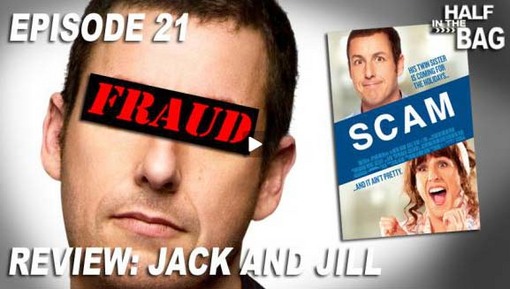
The so-called ” flop” of “That’s My Boy” this past weekend (Sandler’s second after “Jack and Jill” — almost a trend!) has been greeted with schadenfreude in some quarters, but it disregards the likelihood that financial arrangements have long been in place that ensure a Sandler movie has to really, seriously tank before it winds up actually losing money.* Who knows — there may be the equivalent of credit default swaps that protect Sony and Happy Madison from disappointing returns. I wouldn’t be surprised to learn that there are investment devices that allow the backing companies to actually make money by placing wagers predicting the underperformance of a given movie, just to hedge their bets. Everybody wins, right?

December 14, 2012

Compatibility and taste: Bad sneakers and a piña colada, my friend

Somebody named Michael Jones — essentially the same Mr. Jones Bob Dylan wrote about years ago — appeared on HuffPo recently with a piece called “That Steely Dan Moment” — you know, about a discovery of musical taste that makes you wonder if you could ever love the person who possesses it. The twist is that he’s the one who falls short and doesn’t know it. Turn up the Eagles, the neighbors are listening, Mr. Jones.

Anyway, I wouldn’t have paid attention except that his story (who knows where or when it originally appeared if it was on HuffPo) reminded me of an article my friend Julia Sweeney did for the February, 1993, issue of SPIN magazine that was written and edited by the staff of “Saturday Night Live.” It probably wasn’t an entirely original idea then, either, but it was called “Men, Music & Me,” and in it she discussed her assessments of collegiate and post-collegiate boyfriends — using their cinematic and musical tastes as a guide. (Please also see my entry on Carl Wilson’s book, “Let’s Talk About Love: A Journey to the End of Taste.”)

December 14, 2012
subscribe icon

The best movie reviews, in your inbox