Woody Allen interviews Billy Graham

var a2a_config = a2a_config || {};
a2a_config.linkname = “Roger Ebert’s Journal”;
a2a_config.linkurl = “http://blogs.suntimes.com/ebert/”;
a2a_config.num_services = 8;


var a2a_config = a2a_config || {};
a2a_config.linkname = “Roger Ebert’s Journal”;
a2a_config.linkurl = “http://blogs.suntimes.com/ebert/”;
a2a_config.num_services = 8;
In October 1974, Benny canceled a performance in Dallas after suffering a dizzy spell, coupled with a feeling of numbness in his arms. Despite a battery of tests, Benny’s ailment could not be determined. When he complained of stomach pains in early December, a first test showed nothing, but a subsequent one showed he had inoperable pancreatic cancer. Choosing to spend his final days at home, he was visited by close friends including George Burns, Bob Hope, Frank Sinatra, Johnny Carson and New Zealand crooner John Rowles. He died from the disease on December 26, 1974. Bob Hope delivered the eulogy at his funeral. Mr. Benny’s will arranged for a single long-stemmed red rose to be delivered to his widowed wife, Mary Livingstone, every day for the rest of her life.–Wikipedia
var a2a_config = a2a_config || {};
a2a_config.linkname = “Roger Ebert’s Journal”;
a2a_config.linkurl = “http://blogs.suntimes.com/ebert/”;
a2a_config.num_services = 8;
Amazon.com Widgets
• Roger Ebert / Oct. 15, 1978
Los Angeles, California – For a lot of people, doing a comedy sketch with Charo would be enough for one day. For almost anybody, doing a comedy sketch with Charo and doing a comedy sketch in bed with Cheryl Tiegs would be more than enough for one day.
But it wasn’t enough for Bob Hope. He got up early in the morning one day last week to fly in a Lear jet to San Francisco. He let me fly along. He wanted to surprise a ballroom full of Budweiser distributors with an unscheduled walk-on during a sales convention. After a standing ovation and a few quick one-liners (“President Carter didn’t invite me to Camp David, maybe because Begin doesn’t like hams…”), Hope was back on the jet and flying down to L.A. to tape his comedy special. (Budweiser, not surprisingly, is one of the sponsors for the show.)
“It’s got a great title,” Hope said. “They’re calling it Bob Hope’s All-Star Comedy Salute to the 75th Anniversary of the World Series. I’m not sure, but I think it sets a record for the longest name of a TV show.”
Hope looked tanned and relaxed and nowhere near his 75 years; he’d worked on his material – for the walk-on and the TV special – while flying up to San Francisco, and now he’d scheduled the return flight for an interview for the World Book Year Book. His schedule accounts for every hour in the day, and he’s working somewhere almost every day of the year.
“The man continues to amaze me,” says Ward Grant, who handles Hope’s public relations. “Here he is 75 years old, and he’s working harder than he ever has. We keep statistics. Last year he did 250 personal appearances. Played 39 rounds of golf for charity. Was on more than 40 talk shows. Taped a season of TV specials. Flew tens of thousands of miles…”
Hope’s schedule is simplicity itself, for Hope. “It’s a great life,” he said. “Say I’m going somewhere to do a show. I get there, I sleep late, I have breakfast, maybe I play a round of golf somewhere, or see the sights. Then I’m on at 8 p.m., I do an hour and a quarter, an hour and a half of material, and I’m finished.
“It’s a great feeling, working in front of an audience. Keeps you fresh. I love it. But when I’m finished, I’m finished. I want to unwind. That’s why I’ve never played Vegas. They want you to do two shows a night. After the first show, I want to call it a day. I’ve never liked doing a lot of shows in one day although I’ve done it, of course, during the overseas trips to entertain GIs. And once when I wanted to set the house record at the Palace in New York, so we opened early and squeezed in a couple of extra shows. I seem to remember they had a 75-minute sea epic on the screen, and to sneak in another show we cut out 15 minutes of waves…”
It’s been a good and a bad year for Hope. It started tragically with the death of his longtime friend and sparring partner, Bing Crosby. It had its high point when Hope’s 75th birthday celebration made him the toast of Washington; he was honored by a special session of Congress, during which, he recalls with a smile, no less than three congressional house rules were broken: “The rules say members can’t recognize anyone in the gallery, or tell jokes, or sing. They did all three, if you call that singing…”
Was the congressional tribute the proudest moment of his life?
“One of the proudest, yes. There was a great moment in 1963 when President Kennedy gave me the Presidential Medal. I was standing all alone in a little room opening onto the Rose Garden, waiting to be introduced, and I had the strangest memory. Maybe it was being all alone that inspired it; I remembered standing by myself in front of the Woods Theater on Randolph Street in Chicago, and looking across the street at Henrici’s restaurant, and thinking ‘They’re eating. I’m not.’
“I was trying to break into vaudeville at the time, and not doing a very good job of it. It was just about then I decided to change my first name from Leslie to Bob.”
Why Bob?
He smiled. “It sounded chummier.”
Crosby’s death brought an end to plans for them to team up once again with Dorothy Lamour for another Road movie. But now, Hope says, he’s thinking of doing a Road movie with George Burns. “It’s terrific, the success George has had recently,” he said. “And I like to stick around him because he’s the only guy out here that’s older than I am.”
Hope’s early motion-picture days were spent at Paramount, the home studio for W. C. Fields. What was Fields like? “Absolutely unique. He had this little gag he’d pull on Paramount. They’d give him a script and he’d take it home, supposedly to study it, and then he’d call up and announce that it needed work but he thought he could fix it. Then he’d just work in one of his old vaudeville routines, and charge them $50,000. On ‘The Big Broadcast of 1933,’ for example, he stuck in a golf game that had nothing to do with the movie. What Fields didn’t know was that Paramount expected him to charge them $50,000, and he was worth it, so they budgeted for it before they ever gave him the script.”
The jet landed not far from beautiful downtown Burbank, and two hours later, Hope and Charo, he in a baseball uniform, she in an astonishing variation on a jogger’s outfit, were taping their sketch before a live audience in the NBC studios.
The audience was made up of people who just happened to be taking the studio tour when Hope needed an audience, and they looked pleased with themselves for getting to see Hope in person: Their applause and laughter seemed a couple of notches more enthusiastic than they might have been for anyone else, and I remembered a short exchange on the plane.
“I don’t want to embarrass you.” I’d said, “by referring to you as an institution…”
“Go right ahead,” Hope said with a grin.
var a2a_config = a2a_config || {};
a2a_config.linkname = “Roger Ebert’s Journal”;
a2a_config.linkurl = “http://blogs.suntimes.com/ebert/”;
a2a_config.num_services = 8;
I posted this video a day ago, and it drew thousands of visits and a lot of comments. One of them was from the woman seen in the video, Stacey Armato, who clarifies the situation and adds the charge that the TSA was retaliating against her! She writes me:
Thank you all for your support. My brother in law compiled the video for me to speed up TSA footage I received of my very long screening process at PHX. There were a couple errors in his effort to put together the footage as quickly as possible. [Below] is the updated video.
I was not pregnant at the time (I got pregnant six weeks later), my son was 7mo at the time, and I arrived an hour before my flight (not 20 min)…but TSA erased almost 30 minutes of the second half of my screening. Also, it clarifies that I had filed a complaint against TSA the week before for not knowing the breast milk screening rules and their actions on February 1 were retaliatory because of that complaint.
It was a terrible experience but have so appreciated the kind words and support. I will do my best to give them a good fight.
Thank you. Stacey
var a2a_config = a2a_config || {};
a2a_config.linkname = “Roger Ebert’s Journal”;
a2a_config.linkurl = “http://blogs.suntimes.com/ebert/”;
a2a_config.num_services = 8;
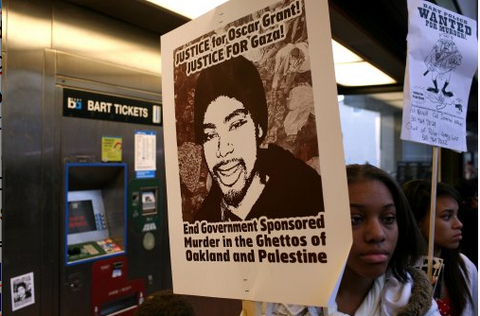
“Fruitvale” is the hands-down champ at
Sundance 2013, and its 26-year-old director, Ryan Coogler, is the toast of the town. It’s based on the story of Oscar Grant, a young black man shot in the back by Oakland transportation police on New Year’s Day 2009. Starting with actual cell phone footage of the death, it unreels into fiction to retrace the last hours of his life. Go here for a story by Entertainment Weekly.
There are many categories at Sundance. Here are the trailers for the top ones. Click here for the complete list of 2012 winners.
“Fruitvale,” winner of the Grand Jury Prize for Dramatic, and the category’s Audience Award.
“Blood Brother,” winner of the Grand Jury Prize for Documentary, and the cateory’s Audience Award:
“A River Changes Course” from Cambodia, winner of the World Cinema Grand Jury Prize for Documentary:
“Jiseul” from South Korea, winner of the World Cinema Grand Jury Prize for Dramatic:
The Audience Award, winner of the World Cinema Dramatic:
“The Square (Al Midan),” from Egypt, winner of the Audience Award for World Cinema Documentary: , U.S.A.
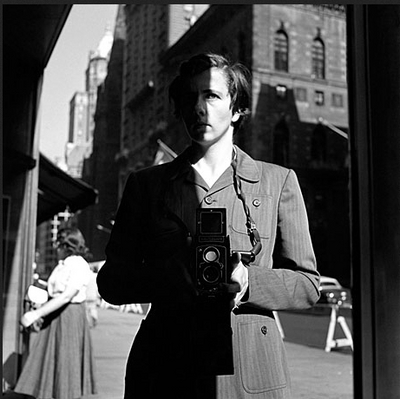
I have the book. This great photographer died unknown, having made an invaluable photographic record of the Chicago of her time. The rediscovery of her work was a great event in the history of photography. The director of this film is Charlie Siskel, Gene’s nephew.
Here is a story in Variety.
Does a dog know how it looks? It knows how another dog looks, certainly. It can tell friends from foes from strangers at a distance, aided greatly by smell. But does it place much importance on appearance? I know a smaller dog may back away from a larger one, but does that involve a mental weigh-in? I think it has more to do with the display of emotions, and I’ve seen big dogs back away in the face of small dogs in a

Thanks for the link to Michael Jones.
Go here for an interactive page of the 40 gigapixel photo of the Strahov Library in Prague.
var a2a_config = a2a_config || {};
a2a_config.linkname = “Roger Ebert’s Journal”;
a2a_config.linkurl = “http://blogs.suntimes.com/ebert/”;
a2a_config.num_services = 8;
Atom Egoyan must be a wonderful teacher. (Photo by Roger Ebert)
Egoyan on inspiration
Egoyan on erotic scenes
 
Egoyan on Amanda Seyfried
Egoyan on Liam Neeson
Egoyan on Ingmar Bergman and the essence of cinema
Egoyan on preconceptions about actors
Egoyan on film versus video as a medium
Egoyan on the “tipping point”
Egoyan on why we’re uneasy seeing famous stars in sex scenes.
if (WIDGETBOX) WIDGETBOX.renderWidget(‘1b397149-af9a-4c53-b8cf-a8894526dbcf’);
Get the Roger Ebert’s Journal widget and many other great free widgets at Widgetbox! Not seeing a widget? (More info)
I’ve already posted a lot of John Prine, but I had never seen these particular videos before. The high-quality sound and picture are explained because they’re from a concert he did for Irish television. Prine is the best poet-songwriter of his generation. Period.
This is the first time I ever heard John call “Hello in There” his favorite song, but I’m not surprised. I’ve seen more people cry during this than any other song. When we were dating, Chaz and I were on the highway and I slipped in the tape, and later I looked over and saw tears running down her cheeks.
In addition to being a song, this is a short story.
An earlier post on John Prine with more songs, and the first review he ever received.
var a2a_config = a2a_config || {};
a2a_config.linkname = “Roger Ebert’s Journal”;
a2a_config.linkurl = “http://blogs.suntimes.com/ebert/”;
a2a_config.num_services = 8;
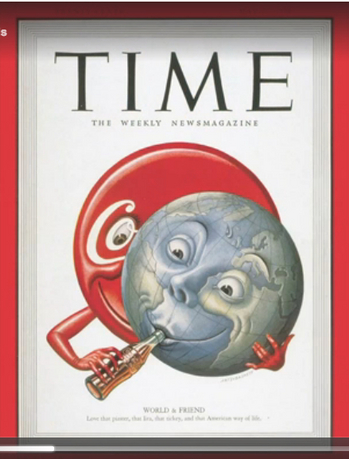
Click here for the story: 90 years of history in 90 Time magazine covers.
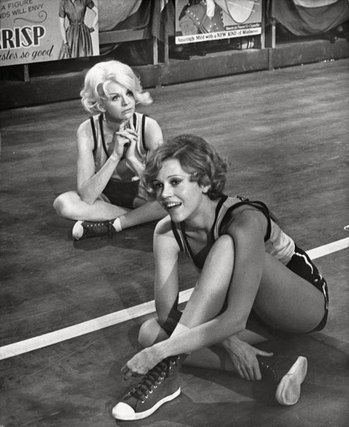
“They Shoot Horses, Don’t They?”
Four Stars
Gloria Jane Fonda
Robert Michael Sarrazin
Alice Susannah York
Rocky Gig Young
Cinerama presents a film directed by Sydney Pollack. Screenplay by James Poe and Robert E. Thompson. Running time: 123 minutes. MPAA Rating: PG.
Review / Roger Ebert (1970)
Erase the forced smiles from the desperate faces, and what the dance marathons of the 1930s came down to was fairly simple. A roomful of human beings went around and around within four walls for weeks at a time without sleep, populating a circus for others who paid to see them. At the end, those who didn’t collapse or drop dead won cash prizes that were good money during the Depression. And the Depression, in an oblique sort of way, was the reason for it all. The marathons offered money to the winners and distraction to everyone else.
To be sure, some of the marathons got pretty grim. Contestants tried to dance their way through illnesses and pregnancies, through lice and hallucinations, and the sight of them doing it was part of the show. Beyond the hit tunes and the crepe paper and the free pig as a door prize, there was an elementary sadism in the appeal of the marathons.
Among American spectator sports, they rank with stock-car racing. There was always that delicious possibility, you see, that somebody would die. Or freak out. Or stand helplessly while his partner collapsed and he lost the investment of hundreds of hours of his life.
“They Shoot Horses, Don’t They?’ is a masterful re-creation of the marathon era for audiences that are mostly unfamiliar with it. In addition to everything else it does, “Horses” holds our attention because it tells us something we didn’t know about human nature and American society. It tells us a lot more than that, of course, but because it works on this fundamental level as well it is one of the best American movies of the 1970s. It is so good as a movie, indeed, that it doesn’t have to bother with explaining the things in my first two paragraphs; they are all there and that’s where I found them, but they are completely incorporated into the structure of the film.
Director Sydney Pollack has built a ballroom and filled it with characters. They come from nowhere, really; Michael Sarrazin is photographed as if he has walked into the ballroom directly from the sea. The characters seem to have no histories, no alternate lives; they exist only within the walls of the ballroom and during the ticking of the official clock. Pollack has simplified the universe. He has got everything in life boiled down to this silly contest; and what he tells us has more to do with lives than contests.
Sarrazin meets Jane Fonda, and they became partners almost absentmindedly; he wasn’t even planning on entering a marathon. There are other contestants, particularly Red Buttons and Bonnie Bedelia in splendid supporting performances, and they are whipped around the floor by the false enthusiasm of Gig Young, the master of ceremonies. “Yowzza!Yowzza!” he chants, and all the while he regards the contestants with the peculiarly disinterested curiosity of an exhausted god.
There are not a lot of laughs in “Horses,” because Pollack has directed from the point of view of the contestants. They are bitter beyond any hope of release. The movie’s delicately timed pacing and Pollack’s visual style work almost stealthily to involve us; we begin to feel the physical weariness and spiritual desperation of the characters.
The movie begins on a note of alienation and spirals down from there. “Horses” provides us no cheap release at the end; and the ending, precisely because it is so obvious, is all the more effective. We knew it was coming. Even the title gave it away. And when it comes, it is effective not because it is a surprise but because it is inevitable. As inevitable as death.
The performances are perfectly matched to Pollack’s grim vision. Jane Fonda is hard, unbreakable, filled with hate and fear. Sarrazin can do nothing, really, but stand there and pity her; no one, not even during the Depression, should have to feel so without hope. Red Buttons, as the sailor who’s a veteran of other marathons and cheerfully teaches everybody the ropes, reminds us that the great character actor from “Sayanora” still exists, and that comedians are somehow the best in certain tragic roles.
And that’s what the movie comes down to, maybe. The characters are comedians trapped in tragic roles. They signed up for the three square meals a day and the crack at the $1,500 prize, and they can stop after all whenever they want to. But somehow they can’t stop, and as the hundreds and thousands of hours of weariness and futility begin to accumulate, the great dance marathon begins to look more and more like life.
var a2a_config = a2a_config || {};
a2a_config.linkname = “Roger Ebert’s Journal”;
a2a_config.linkurl = “http://blogs.suntimes.com/ebert/”;
a2a_config.num_services = 8;
Video by slickgigolo.
Internet Scout: Larry J. Kolb, ex-CIA.
var a2a_config = a2a_config || {};
a2a_config.linkname = “Roger Ebert’s Journal”;
a2a_config.linkurl = “http://blogs.suntimes.com/ebert/”;
a2a_config.num_services = 8;
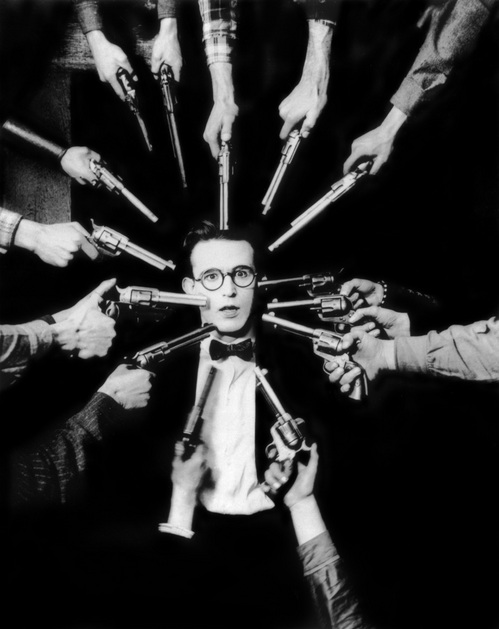
This rare early short has been beautifully restored. Below it, a three-part interview on CBS in the early 1960s.
Harold Lloyd: Captain Kidds Kids by FMO-Movies
Thanks to my Far Flung Correspondent, Pablo Villaça in Brazil, for the CBS links.
var a2a_config = a2a_config || {};
a2a_config.linkname = “Roger Ebert’s Journal”;
a2a_config.linkurl = “http://blogs.suntimes.com/ebert/”;
a2a_config.num_services = 8;
var a2a_config = a2a_config || {};
a2a_config.linkname = “Roger Ebert’s Journal”;
a2a_config.linkurl = “http://blogs.suntimes.com/ebert/”;
a2a_config.num_services = 8;
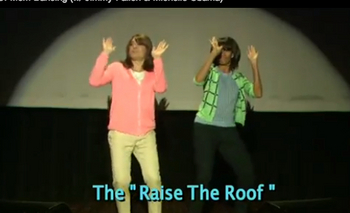
I’m trying to imagine other First Ladies doing this. I suspect Nancy Reagan would have had some moves.
My third collection of reviews of movies I really hated. Order A Horrible Experience of Unbearable Length: More Movies That Suck from Barnes and Noble, Amazon or the independent bookstore of your choice:
Introduction to the book By Roger Ebert I received several messages from readers asking me why I felt it was even necessary for me to review “The Human Centipede II.” (There was also one telling me it should have been titled “Human Centipede Number Two,” but never mind that one.) My reply was that it was my duty. I feared it would attract large crowds to the box office, and as it turned out I was right. I did what I could to warn people away. Certain colleagues of mine discussed it as a work of art (however “flawed”). I would beg them to think really, really hard of another movie opening the same weekend that might possibly be better for the mental health of their readers.
It was not my duty to review many of the other movies in this book. I review most of the major releases during the year, but I also make it a point to review lots of indie films, documentaries, foreign films, and what we used to call “art movies” and might now call “movies for grown ups.” If I had skipped a few of these titles, I don’t believe my job would have been threatened. But I might have enjoyed it less.
After reviewing a truly good movie, the second most fun is viewing a truly bad one. It’s the in-between movies that can begin to feel routine. Consider, for example, the truly bad “Transformers: Revenge of the Fallen” (2009), the movie that provided the title for this book. I saw the movie, returned home, sat down at the computer keyboard, and the opening words of my review fairly flew from my fingertips: “Transformers: Revenge of the Fallen” is a horrible experience of unbearable length, briefly punctuated by three or four amusing moments. Where did those words come from? They were the simple truth. Gene Siskel always argued that he was a newspaperman first and a film critic second: “I cover the movie beat.” What that meant for him is that his first paragraph should be the kind of “lead” they teach you to write in journalism school. Before you get to your opinion about a new movie, you should begin with the news. We could have an interesting discussion about whether the opening of my “TROF” review was news or opinion. To me, it was completely factual. To many readers who posted comments on my blog, it was completely inaccurate. It was opinion, and my opinion was wrong.
Yes, there are people who like the Transformers movies. I sorta liked the first one myself, in 2007. The charm wore off. The third in the series, “Transformers: Dark of the Moon” (2011) was no better. Predictably, some critics were inspired by TDOM to analyze the visual style of Michael Bay. Finding success in a Michael Bay film is like finding the Virgin on a slice of toast, but less rewarding.
Sometimes in my negative reviews I have weaknesses. I’m aware of them, and yet I indulge them all the same. Show me a bad movie about zombies or vampires, for example, and I will inevitably go into speculation about the reality that underlies their conditions. A few days ago, I was re-watching Murnau’s original “Nosferatu” (1922), and something struck me for the first time. As you may recall, Graf Oriok, a character inspired by Count Dracula, encloses himself in a coffin and ships himself along with a group of similar coffins on a freighter bound for Wisbourg. He carries with him the Black Plague, which will kill everyone on board.
It struck me that this was an extraordinary leap of faith on his part. Inside the coffin he is presumably in the trance-like state of all vampires. He certainly must anticipate that everyone on board will soon be dead. The ship will be at the mercy of the winds and tides. If by good chance it drifts to Wisbourg (which it does), what can the good people of Wisbourg be expected to do? Prudently throw the coffins overboard or sink the ship to protect themselves from the plague, I imagine. But if they happen to open his coffin in sunlight, Graf Oriok will be destroyed. Luckily, he releases himself from the coffin at night, sitting bolt upright in a famous scene. But think of the things that could have gone wrong.
That’s how my mind works. We are now far away from the topic of “Nosferatu.” I am also fascinated by Darwin’s Theory of Evolution as it implies to zombies. Since Richard Dawkins teaches us that the only concern of a selfish gene is to survive until the next generation of the organism that carries it, what are the prospects of zombie genes, which can presumably be transmitted only by the dead? And now do zombies reproduce, or spread? Oh, I could go on. Why must they eat flesh? Why not a whole foods diet of fruits, vegetables and grains? Maybe a little fish?
I know this has nothing to do with film criticism. I am blown along by the winds of my own zeal. If a good vampire or zombie movie comes along, I do my best to play fair with it. With a bad one, I am merciless and irresponsible. That’s why I like the bad ones best.
Perhaps my reasoning goes like this: Few people buying the newspaper are likely to require a serious analysis of, for example, James Raynor’s “Angry and Moist: An Undead Chronicle” (2004). This is a zombie movie I haven’t seen so it will work well as an example. Therefore, it is my task to write a review that will be enjoyable to read even if the reader has no interest in the film and no plans to ever see it.
I suppose that explains a good many of the reviews in this book. Some of the films herein are only fairly bad. Some are not bad so much as evil and reprehensible. Others, let’s face it, have no importance at all other than in inspiring movie reviews. Of all the films in this book, it is for those I am most grateful.
Click here to order a new or used copy of I Hated, Hated, HATED this Movie (2000). And here to order, new or used, a copy of Your Movie Sucks (2007).
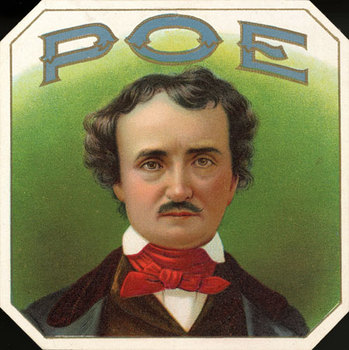
The Tell-Tale Heart
Edgar Allan Poe
TRUE! nervous, very, very dreadfully nervous I had been and am; but why WILL you say that I am mad? The disease had sharpened my senses, not destroyed, not dulled them. Above all was the sense of hearing acute. I heard all things in the heaven and in the earth. I heard many things in hell. How then am I mad? Hearken! and observe how healthily, how calmly, I can tell you the whole story.
It is impossible to say how first the idea entered my brain, but, once conceived, it haunted me day and night. Object there was none. Passion there was none. I loved the old man. He had never wronged me. He had never given me insult. For his gold I had no desire. I think it was his eye! Yes, it was this! One of his eyes resembled that of a vulture — a pale blue eye with a film over it. Whenever it fell upon me my blood ran cold, and so by degrees, very gradually, I made up my mind to take the life of the old man, and thus rid myself of the eye for ever.
Now this is the point. You fancy me mad. Madmen know nothing. But you should have seen me. You should have seen how wisely I proceeded — with what caution — with what foresight, with what dissimulation, I went to work! I was never kinder to the old man than during the whole week before I killed him. And every night about midnight I turned the latch of his door and opened it oh, so gently! And then, when I had made an opening sufficient for my head, I put in a dark lantern all closed, closed so that no light shone out, and then I thrust in my head. Oh, you would have laughed to see how cunningly I thrust it in! I moved it slowly, very, very slowly, so that I might not disturb the old man’s sleep. It took me an hour to place my whole head within the opening so far that I could see him as he lay upon his bed. Ha! would a madman have been so wise as this? And then when my head was well in the room I undid the lantern cautiously — oh, so cautiously — cautiously (for the hinges creaked), I undid it just so much that a single thin ray fell upon the vulture eye. And this I did for seven long nights, every night just at midnight, but I found the eye always closed, and so it was impossible to do the work, for it was not the old man who vexed me but his Evil Eye. And every morning, when the day broke, I went boldly into the chamber and spoke courageously to him, calling him by name in a hearty tone, and inquiring how he had passed the night. So you see he would have been a very profound old man, indeed , to suspect that every night, just at twelve, I looked in upon him while he slept.
Upon the eighth night I was more than usually cautious in opening the door. A watch’s minute hand moves more quickly than did mine. Never before that night had I felt the extent of my own powers, of my sagacity. I could scarcely contain my feelings of triumph. To think that there I was opening the door little by little, and he not even to dream of my secret deeds or thoughts. I fairly chuckled at the idea, and perhaps he heard me, for he moved on the bed suddenly as if startled. Now you may think that I drew back — but no. His room was as black as pitch with the thick darkness (for the shutters were close fastened through fear of robbers), and so I knew that he could not see the opening of the door, and I kept pushing it on steadily, steadily.
I had my head in, and was about to open the lantern, when my thumb slipped upon the tin fastening , and the old man sprang up in the bed, crying out, “Who’s there?”
I kept quite still and said nothing. For a whole hour I did not move a muscle, and in the meantime I did not hear him lie down. He was still sitting up in the bed, listening; just as I have done night after night hearkening to the death watches in the wall.
Presently, I heard a slight groan, and I knew it was the groan of mortal terror. It was not a groan of pain or of grief — oh, no! It was the low stifled sound that arises from the bottom of the soul when overcharged with awe. I knew the sound well. Many a night, just at midnight, when all the world slept, it has welled up from my own bosom, deepening, with its dreadful echo, the terrors that distracted me. I say I knew it well. I knew what the old man felt, and pitied him although I chuckled at heart. I knew that he had been lying awake ever since the first slight noise when he had turned in the bed. His fears had been ever since growing upon him. He had been trying to fancy them causeless, but could not. He had been saying to himself, “It is nothing but the wind in the chimney, it is only a mouse crossing the floor,” or, “It is merely a cricket which has made a single chirp.” Yes he has been trying to comfort himself with these suppositions ; but he had found all in vain. ALL IN VAIN, because Death in approaching him had stalked with his black shadow before him and enveloped the victim. And it was the mournful influence of the unperceived shadow that caused him to feel, although he neither saw nor heard, to feel the presence of my head within the room.
When I had waited a long time very patiently without hearing him lie down, I resolved to open a little — a very, very little crevice in the lantern. So I opened it — you cannot imagine how stealthily, stealthily — until at length a single dim ray like the thread of the spider shot out from the crevice and fell upon the vulture eye.
It was open, wide, wide open, and I grew furious as I gazed upon it. I saw it with perfect distinctness — all a dull blue with a hideous veil over it that chilled the very marrow in my bones, but I could see nothing else of the old man’s face or person, for I had directed the ray as if by instinct precisely upon the damned spot.
And now have I not told you that what you mistake for madness is but over-acuteness of the senses? now, I say, there came to my ears a low, dull, quick sound, such as a watch makes when enveloped in cotton. I knew that sound well too. It was the beating of the old man’s heart. It increased my fury as the beating of a drum stimulates the soldier into courage.
But even yet I refrained and kept still. I scarcely breathed. I held the lantern motionless. I tried how steadily I could maintain the ray upon the eye. Meantime the hellish tattoo of the heart increased. It grew quicker and quicker, and louder and louder, every instant. The old man’s terror must have been extreme! It grew louder, I say, louder every moment! — do you mark me well? I have told you that I am nervous: so I am. And now at the dead hour of the night, amid the dreadful silence of that old house, so strange a noise as this excited me to uncontrollable terror. Yet, for some minutes longer I refrained and stood still. But the beating grew louder, louder! I thought the heart must burst. And now a new anxiety seized me — the sound would be heard by a neighbour! The old man’s hour had come! With a loud yell, I threw open the lantern and leaped into the room. He shrieked once — once only. In an instant I dragged him to the floor, and pulled the heavy bed over him. I then smiled gaily, to find the deed so far done. But for many minutes the heart beat on with a muffled sound. This, however, did not vex me; it would not be heard through the wall. At length it ceased. The old man was dead. I removed the bed and examined the corpse. Yes, he was stone, stone dead. I placed my hand upon the heart and held it there many minutes. There was no pulsation. He was stone dead. His eye would trouble me no more.
If still you think me mad, you will think so no longer when I describe the wise precautions I took for the concealment of the body. The night waned, and I worked hastily, but in silence.
I took up three planks from the flooring of the chamber, and deposited all between the scantlings. I then replaced the boards so cleverly so cunningly, that no human eye — not even his — could have detected anything wrong. There was nothing to wash out — no stain of any kind — no blood-spot whatever. I had been too wary for that.
When I had made an end of these labours, it was four o’clock — still dark as midnight. As the bell sounded the hour, there came a knocking at the street door. I went down to open it with a light heart, — for what had I now to fear? There entered three men, who introduced themselves, with perfect suavity, as officers of the police. A shriek had been heard by a neighbour during the night; suspicion of foul play had been aroused; information had been lodged at the police office, and they (the officers) had been deputed to search the premises.
I smiled, — for what had I to fear? I bade the gentlemen welcome. The shriek, I said, was my own in a dream. The old man, I mentioned, was absent in the country. I took my visitors all over the house. I bade them search — search well. I led them, at length, to his chamber. I showed them his treasures, secure, undisturbed. In the enthusiasm of my confidence, I brought chairs into the room, and desired them here to rest from their fatigues, while I myself, in the wild audacity of my perfect triumph, placed my own seat upon the very spot beneath which reposed the corpse of the victim.
The officers were satisfied. My MANNER had convinced them. I was singularly at ease. They sat and while I answered cheerily, they chatted of familiar things. But, ere long, I felt myself getting pale and wished them gone. My head ached, and I fancied a ringing in my ears; but still they sat, and still chatted. The ringing became more distinct : I talked more freely to get rid of the feeling: but it continued and gained definitiveness — until, at length, I found that the noise was NOT within my ears.
No doubt I now grew VERY pale; but I talked more fluently, and with a heightened voice. Yet the sound increased — and what could I do? It was A LOW, DULL, QUICK SOUND — MUCH SUCH A SOUND AS A WATCH MAKES WHEN ENVELOPED IN COTTON. I gasped for breath, and yet the officers heard it not. I talked more quickly, more vehemently but the noise steadily increased. I arose and argued about trifles, in a high key and with violent gesticulations; but the noise steadily increased. Why WOULD they not be gone? I paced the floor to and fro with heavy strides, as if excited to fury by the observations of the men, but the noise steadily increased. O God! what COULD I do? I foamed — I raved — I swore! I swung the chair upon which I had been sitting, and grated it upon the boards, but the noise arose over all and continually increased. It grew louder — louder — louder! And still the men chatted pleasantly , and smiled. Was it possible they heard not? Almighty God! — no, no? They heard! — they suspected! — they KNEW! — they were making a mockery of my horror! — this I thought, and this I think. But anything was better than this agony! Anything was more tolerable than this derision! I could bear those hypocritical smiles no longer! I felt that I must scream or die! — and now — again — hark! louder! louder! louder! LOUDER! —
“Villains!” I shrieked, “dissemble no more! I admit the deed! — tear up the planks! — here, here! — it is the beating of his hideous heart!”
With thanks to Old Hollywood, which is an extraordinary collection.
More than 140 of my pages are linked at the bottom of the right column.
var a2a_config = a2a_config || {};
a2a_config.linkname = “Roger Ebert’s Journal”;
a2a_config.linkurl = “http://blogs.suntimes.com/ebert/”;
a2a_config.num_services = 8;