
Jack Bauer Returns in “24: Live Another Day”

Jack Bauer returns in the limited FOX series “24: Live Another Day.”


Jack Bauer returns in the limited FOX series “24: Live Another Day.”

Louis C.K. brings his hit FX show back to the network on Monday, May 5th. We’ve seen the first four. It’s still the best comedy on TV.
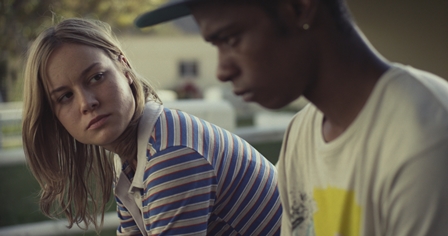
The latest interesting additions to Netflix, Hulu Plus, Amazon, and On Demand platforms in the Streaming Consumer Guide.

BBC America’s hit sci-fi show is back for another round of addictive action.

Ali Arikan has figured out how AMC’s “Mad Men” will end.
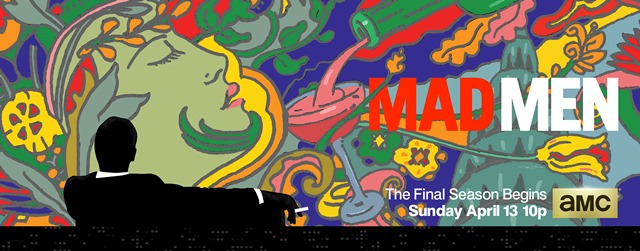
The final season of “Mad Men” begins with the familiar routines of its damaged characters but they have more tragic resonance than ever.
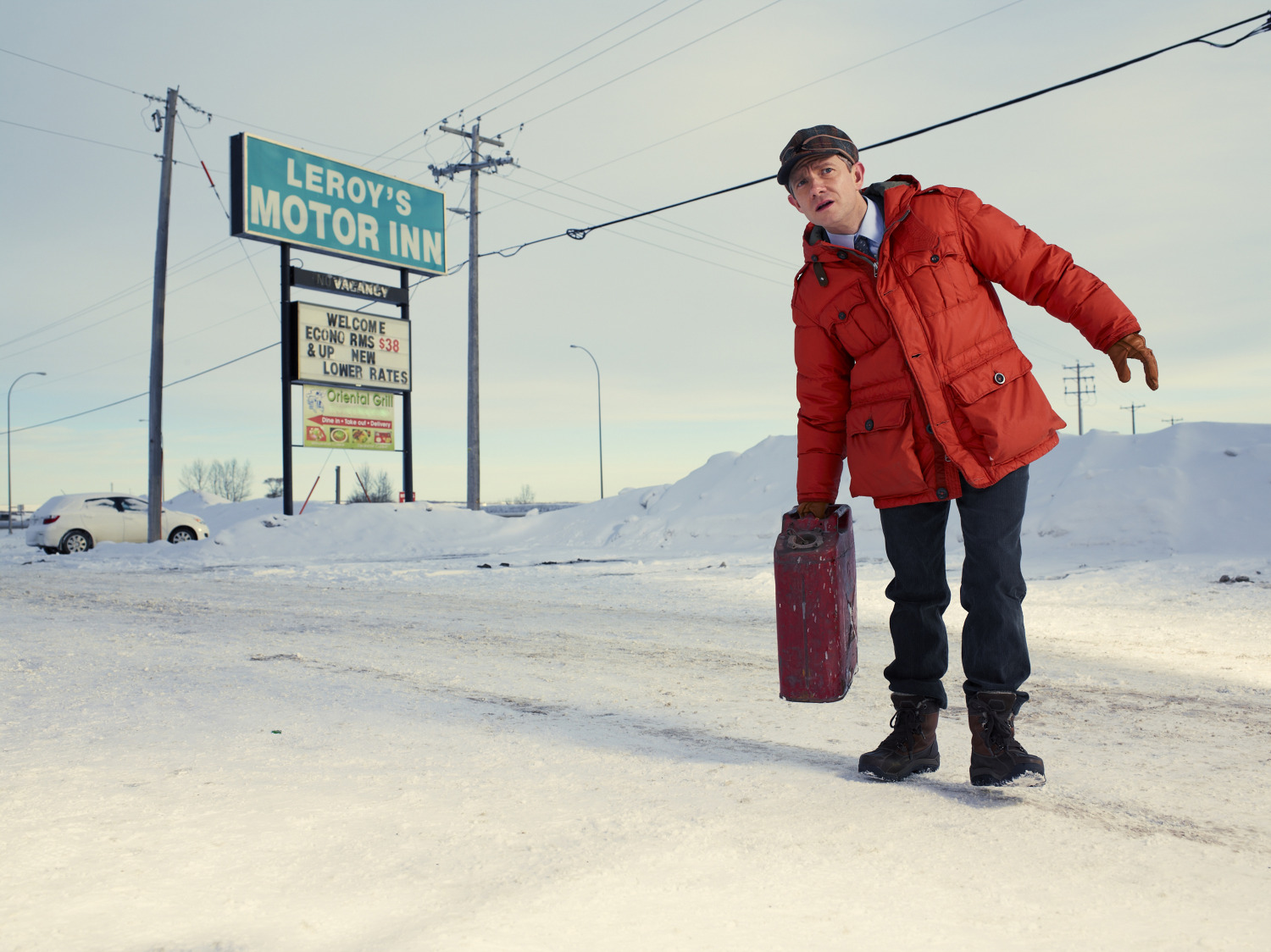
Clever, fun, twisted, and wildly entertaining in the way that fans of not
just “Fargo” but all of the Coens’ work hoped it would be.

Introducing our Streaming Consume Guide, with picks from the work of On Demand, Netflix and more.
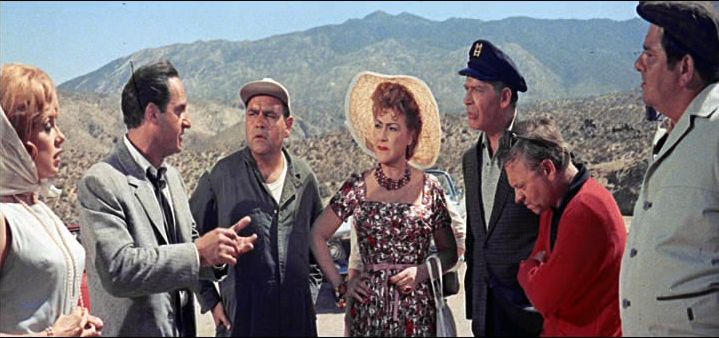
An epic essay on an epic comedy of the 1960s, now given deluxe treatment on Blu-ray and DVD by Criterion.

Memory lane with the Coen Brothers and John Goodman; the uncharacteristic reticence of Ronan Farrow; how our minds mislead us (let us count the ways); Ernst Lubitsch’s pre-code transgressions; Rebecca Miller on the importance of casting directors.

What’s happened to physical comedy? Have we’ve lost the desire to stimulate the part of the brain pratfalls talk to? Max Winter wants answers to these questions, and wonders if the great silent comedian Harold Lloyd can provide them.
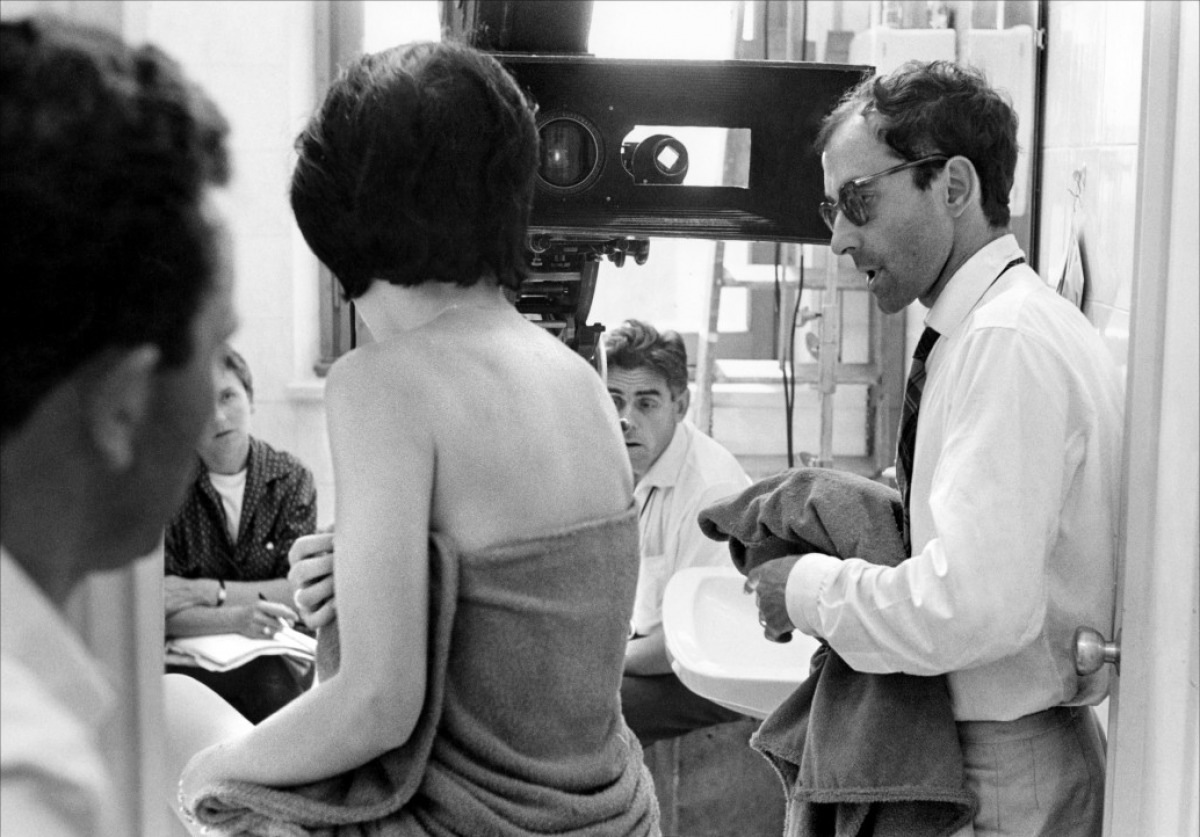
Distribution company Olive Films
has released two obscurities by Jean-Luc Godard, 1976’s “Comment Ca Va” and 1987’s “Soigne ta Droite”
(known in the U.S. as “Keep Your Right Up”) and while these films may
not have the immediate impact of his better-known works, they both
reveal a filmmaker who has spent his career challenging himself, his viewers
and the very medium of cinema itself in ways that are oftentimes
fascinating and frustrating in equal measure.
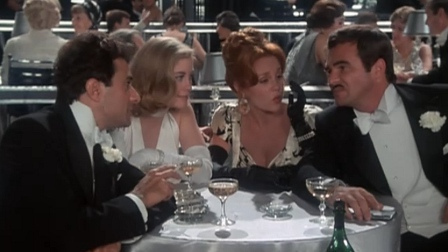
Peter Bogdanovich’s movie musical “At Long Last Love” developed one of those reputations as a career-killing stinker, but in hindsight, it’s a pretty darn good mix of 1930s tunes with the slightly more realist sensibility of later musicals. And it’s a project with a crazy history. Now that it is out on Blu-Ray, it deserves another look.

HBO’s Pussy Riot: A Punk Prayer lets us look closely at young women who have been the subject of so much conversation that their personhood has almost been obscured.

With its partly improvised dialogue and eruptions of argument, Mike Leigh’s “Life is Sweet,” now on Criterion DVD, gave viewers was insight into where the director had been, artistically. It also hinted at where he was going: into territory with far more visual and verbal polish.

Fandor.com will present “Sleep Furiously” along with the featurette “Sketchbook for the Library Van,” for a free 24-hour On Demand window on July 29th. Details here. Also playing Aug. 12-18 at Facets Cinematheque in Chicago.
by Odie Henderson
“You’ve got to have characters to make a community.”
What does it mean to a community when a school shuts down? Here in the U.S., it means either the state doesn’t have any money to run it or the kids have burned it down. In Trefeurig, Wales, however, the dissolution of a school is something far more ominous, especially if it is the only school in town. “Sleep Furiously” uses Trefeurig’s school closing as its central event yet only hints at its deeper implications: Youth may be wasted on the young, but the world can’t continue to exist without them.
“Sleep Furiously” is not a conventional documentary. There are no talking heads, no narration, and no explicit point of view, pro or con, toward its subject. Like the Ross Brothers’ “45365,” “Sleep Furiously” is an observation of its director’s hometown, specifically the people who inhabit it. They go about their business and the filmmaker records them. It is only after the final frames are projected that we realize this film is depicting the collateral damage that comes with technological change.
Filmmaker Gideon Koppel returns to Trefeurig, where his parents were refugees from Germany during World War II, but he is not there to interview anyone nor is he there to mourn or celebrate the changing of the tide. He’s just a fly on the wall as the residents go about their daily routines armed with the knowledge that they may be the last to perform them. We meet the townsfolk, all of whom remain nameless, and follow them through a year of seasons. School events and county fairs are shown. Scenes are cut abruptly, and they are sometimes scored (by Aphex Twin) and sometimes silent. There is no explanation for any of this, and I had to be told by another reviewer that one of the people Koppel follows is his own mother. Viewers may find this narrative minimalism frustrating, or even pretentiously arty, but remember: It’s only pretentious if it doesn’t hold your attention. “Sleep Furiously” held mine; I was lulled by its meditative quality and taken aback by the director’s occasional use of the entire canvas of the screen.

“Sexual Chronicles of a French Family” (76 minutes) is available via IFC On Demand.
Let’s play a game. It’s 3 AM and you can’t sleep. A channel roulette session with the remote control stops your TV on a certain network synonymous with softcore erotica. Do you:
a) Roll your eyes and keep flipping the dial before falling asleep to some warped infomercial?
b) Realize you need something more substantial and order “Chicks Who Dig Odienator 29” off the Adult On Demand Channel?
c) Drop the remote and make a date with Rosy Palm and her Five Sisters?
If you answered a, Alex Trebek is here to say “OOH I’M SORRY!!” We’ve got some nice consolation prizes for you as you leave this blog. If you answered b, I thank for your $9.95, but you will also have to leave this blog. Today’s entry is most definitely not your speed. But if you answered c, have I got a movie for you. It’s called “Chroniques sexuelles d’une famille d’aujourd’hui” or “Sexual Chronicles of a French Family,” and you can watch it in the privacy of your own home. I won’t tell, and I certainly won’t cast aspersions. After all, I pitched this movie to review here at The Demanders. After discovering the title, and its French origins, my exact pitch to our editor was “Mmmm! FILTH!” So this sinner casts no stones.
Unfortunately, this sinner has issues with this “Chronicles of Labia,” the least of which is how to review a movie like this. I could take the high road, but if you’ve read this far, you are expecting me to traverse the lowest road possible. To review a comedy, one must admit if it inspired laughter. To review an erotic picture, one must more uncomfortably cop to whether it resulted in the upping of a body part that isn’t a thumb. In that regard, I respectfully submit that this film didn’t do it for me. I expected something a little less squeamish (read: dirtier) than what I got.
“Sexual Chronicles of A French Family” is Cinemax with subtitles, or “Le Çinemax.” It has the same frustrating “hide the good stuff” camera angles as your average straight-to-cable softcore knock-off, and the same repeated positions. In its defense, the film does not contain Cinemax’s ubiquitous bad boob jobs, the ones so dreadful that they turn breasts into triangles, squares and other shapes nature never intended for headlights. The boob job in this film looks fine. “Chronicles” also has a more intriguing plot than any sex film on cable at 3 AM, though this is somewhat squandered.

“Kill List” is available on demand through select cable providers. Check IFC On Demand for availability in your area.
by Kevin B. Lee
Few things bring out the worst tendencies of Hollywood than the genre mash-up, as evidenced by two of last year’s worst films, “Cowboys vs. Aliens” and “Battle: Los Angeles” (aka “Independence Day” filmed as part Iraq War documentary, part video game). The “movie-x-meets-movie-y” mentality seems to inspire little more than z-level creativity in the land of big budgets and small minds. And yet, somehow the British have a better track record at bringing together disparate elements into a compelling whole. One of the best British crime movies, “The Lavender Hill Mob,” is also one of their best comedies. Their most famous horror movie, “The Wicker Man,” is actually a trifecta of horror, crime thriller and musical. And now there’s Ben Wheatley’s “Kill List,” which takes seemingly familiar genre elements and offsets them in ways that can be confounding, but leave an unforgettable impact. And by impact, I’m not just talking about a scene involving a tied-up librarian and a hammer.
Before we delve into that moment, some set-up: Jay (Neil Maskell) and Shel (MyAnna Buring) are an ex-military couple trying to play house in the Yorkshire suburbs. Judging by their opening screaming match they’re having a rough go of it: Jay’s been out of work for eight months, their savings drying up. All they can do to vent their frustrations is hold swordfights on the lawn with their son and host a rollercoaster of a dinner party with Jay’s war buddy-turned-hitman Gal (Michael Smiley), leading to smashed dishes in the dining room, plans for new contract killings discussed over beers in the basement, and Gal’s mysterious date carving a hex into the back of the bathroom mirror.
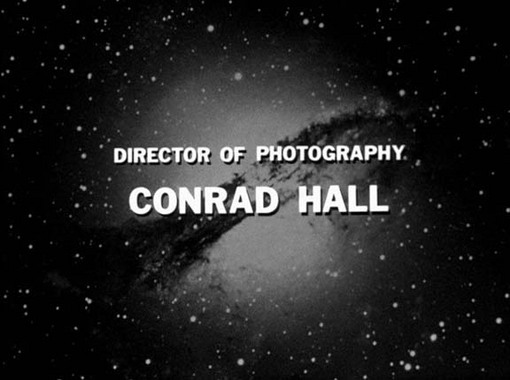
• “The Outer Limits” (original series) is available on Netflix (DVD), Hulu Plus and Amazon Instant Video.
• “In Cold Blood” is available on Netflix (DVD and Blu-ray) and Amazon Instant Video.
• “Cool Hand Luke” is available on Netflix (DVD and Blu-ray) and Amazon Instant Video.
• “American Beauty” is available on Netflix (DVD and Blu-ray) and Amazon Instant Video.
• “Road to Perdition” is available on Netflix (DVD and Blu-ray).
by Jeff Shannon Eyes Wide Open: A Single Artist’s Vision
Ask anyone who’s devoted their life to the study and appreciation of movies and they can probably tell you exactly when they were “bitten by the movie bug,” that moment of personal epiphany that sparked an all-consuming passion for what is arguably the greatest, most powerful medium of artistic expression.
In my case, it was Stanley Kubrick’s “2001: A Space Odyssey” that literally changed my life. That’s an influential milestone I share with many cinephiles who came of age in the 1950s and ’60s, especially those “movie brats” (among them James Cameron, George Lucas and Steven Spielberg) who were drawn to imaginative visions of the future. Because I’d spent most of my childhood outdoors or casually enjoying Disney films and other kid-friendly fare, I didn’t see Kubrick’s visionary masterpiece until it played a return engagement at Seattle’s glorious Cinerama Theater, in 1971, when I was nine years old.
(With its huge, curved Cinerama screen, the Cinerama is still the only theater in Seattle capable of showing “2001” as Kubrick intended. It exclusively hosted the film’s original 77-week Seattle run beginning in April 1968, and the fully restored 70-millimeter print of “2001” had its world premiere there, appropriately enough, in 2001, two years after the aging cinema was purchased and beautifully renovated by Microsoft co-founder Paul Allen. It’s now one of only three theaters in the world — along with the Cinerama Dome in Los Angeles and the Pictureville Cinema in Bradford England — equipped to exhibit three-panel Cinerama, requiring three synchronized projectors for the only seven films created in the three-strip Cinerama process, including 1956’s “This Is Cinerama” and 1962’s “How the West Was Won.” Starting this week [Sept. 30th] and running through mid-October, Seattle’s Cinerama is hosting a “70mm Festival” of 15 films, including “2001,” that originally premiered there.)
Like no other film before it, “2001” opened my eyes to the power of a single artist’s vision and led me to understand the supremacy of a great director. I didn’t know it then, but I’d discovered the basis of auteur theory, and while it would be foolish to deny that film is (to echo that award-acceptance cliché) the most collaborative of all art forms, it’s no contradiction to embrace the Kubrick quote that greets all visitors to kubrickfilms.com, Warner Bros.’ authorized Kubrick website: “One man writes a novel. One man writes a symphony. It is essential for one man to make a film.” (Disregard “man”; Kubrick would’ve been the first to include female filmmakers in his statement.)

“Clinton” premieres in two parts: Monday, February 20th and Tuesday, February 21st on PBS’s “American Experience” (check local listings for showtimes) and will be available thereafter via PBS on demand. Also on DVD and iTunes.
by Jeff Shannon
I should probably state up front that I was, and always will be, a Clinton supporter. Like our 42nd president, I grew up in a home where John F. Kennedy had been revered as a young, dynamic force of change and hope for the future. When you admire a politician’s core conviction, it’s at least somewhat easier to overlook, if not forgive, their foibles and shortcomings. As a young quadriplegic in 1991, I saw candidate Clinton as an impressive-enough carrier of JFK’s torch, a protector of the disadvantaged who had inherited Jack and Bobby Kennedy’s concern for those who found the American dream elusive or entirely out of reach.
That concern was clearly demonstrated by the defining moment of Clinton’s presidential campaign. It’s one of many pivotal moments captured in the two-part, four-hour documentary “Clinton,” the 16th episode of PBS’s “American Experience” presidents series. At the second presidential debate in Virginia in 1992, a young African-American woman in the audience asked candidates Ross Perot, Bill Clinton, and incumbent president George H.W. Bush a question that was then on the minds of struggling Americans everywhere:
“How has the national debt personally affected each of your lives, and if it hasn’t, how can you honestly find a cure for the economic problems of the common people if you have no experience in what’s ailing them?”
That question could easily be recycled as a present-day jab at Mitt Romney, but let’s stick to history: Bush simply didn’t understand the question, and Clinton seized the opportunity to ensure his victory. Stepping toward the audience in a characteristic display of the sincerity that had propelled his fast-moving career, Clinton demonstrated a concise, compassionate grasp of the question’s meaning, and his answer (a reference to the poverty and middle-class struggle he witnessed while campaigning for Congress and Governor in his native Arkansas) left Bush with a classic expression of election-losing dismay.