Rerun: Conan O’Brien guests on Between Two Ferns

Between Two Ferns with Zach Galifianakis from Between Two Ferns


Between Two Ferns with Zach Galifianakis from Between Two Ferns
View image David Mamet. What is “liberal,” what is conservative? What is “brain-dead” and what is “knee-jerk”?
The writer of ” Glengarry Glen Ross” and “Wag the Dog,” the writer-director of “House of Games,” “Homicide” and “Oleanna,” reveals in the Village Voice that he doesn’t think people are “basically good at heart” — a belief he ascribes to liberalism. See “Why I Am No Longer a ‘Brain-Dead Liberal’.” As Austin Powers said of Liberace’s homosexuality: Wow, I didn’t see that one coming.
OK, Mamet wrote the piece to be provocative, and I suppose it is, if only because… well, I would wager that far more people fit Mamet’s definition of “brain-dead” than might fit his definitions of “liberal,” “conservative,” “moderate,” “independent,” “libertarian,” etc., put together. His work had not previously led me to think of him as a “bleeding heart” or “brain-dead,” but there you go: Trust the art, not the artist. (Who knew? “Oleanna” was liberal!) Mamet writes:
… I wondered, how could I have spent decades thinking that I thought everything was always wrong at the same time that I thought I thought that people were basically good at heart? Which was it? I began to question what I actually thought and found that I do not think that people are basically good at heart; indeed, that view of human nature has both prompted and informed my writing for the last 40 years. I think that people, in circumstances of stress, can behave like swine, and that this, indeed, is not only a fit subject, but the only subject, of drama.
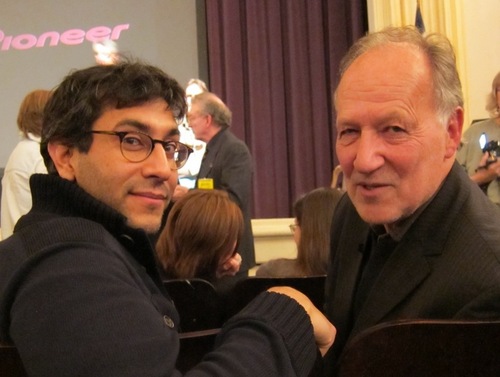
… to write anything last week at CWA where there’s hardly a moment to breathe (gasping at the mile-high altitude aside) between panels, conversations, lunches, parties, receptions (and — for me, anyway — precious sleep). You have to understand: I often go days without actually seeing or speaking to anybody; all this socializing is exhausting for me. I’ll be looking back at the experience this week, but in the meantime, in case you missed it, Roger Ebert writes about the first day’s Cinema Interruptus with Werner Herzog, Ramin Bahrani and “Aguirre, the Wrath of God.”
(Above: Photo by Roger Ebert. And aren’t Ramin’s new frames terrific?)
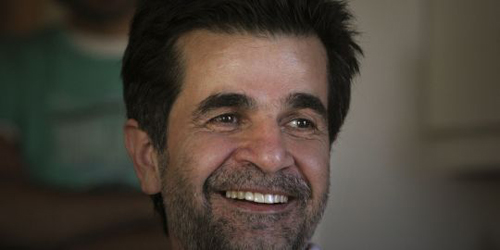
David Bordwell sums up the terrible news from the totalitarian state of Iran about the outrageous sentence given to director Jafar Panahi (“The White Balloon,” “The Circle,” “Offside,” etc.) after he was accused of conspiring to make an “anti-regime” film:
From Tehran comes the shocking news that Jafar Panahi, one of the finest of Iranian filmmakers, has been sentenced to six years in prison. The sentence also bans him from filmmaking for twenty years, forbids him to leave the country, and forbids him from giving interviews to the press, foreign or domestic. Panahi’s collaborator Muhammad Rasoulof was also sentenced to six years in jail. […]
The charges may be simply a pretext for silencing a prominent figure critical of current Iranian society. Panahi’s films do not circulate legally there, and he is widely believed to be in sympathy with liberal forces. The government has sought to eradicate the most visible of these factions, the Green Party. Even Islamic clerics have been swept up in the crackdown. A parallel case to Panahi’s is the attack on Mohammad Taqi Khalaji, a dissident cleric. Last January he was arrested and his computer and papers were seized. He too was incarcerated in Evin prison before being released on bail. Yet he was not formally charged with anything. His personal papers, including his passport, were not returned to him.
You can get some grim satisfaction for knowing that movies still matter in some parts of the world. Films have the power to shock bureaucrats and threaten authoritarian regimes. Instead of being simply “assets” or “content” to be extruded across platforms and shoved through release windows, cinema is in some places taken seriously as political critique.

Or: Once is not enough?
“They love it, they don’t like it, they like it better a second time, they see it a third time and they reverse their opinion.”
— Paul Thomas Anderson on “The Master,” in a Toronto Star interview with Peter Howell
The critics agree! Paul Thomas Anderson’s new film “The Master” is… ambiguous. What they don’t agree on is whether, as we say in the software world, that’s a bug or a feature. Is the movie “demanding” and artfully elusive, challenging audiences by refusing to offer a conventional dramatic catharsis or provide an artificially wrapped-up ending; or is the thing just vague, opaque, muddled? The answer depends on who you ask, what they think of Anderson as a filmmaker and, possibly, what they expected going in: a historical exposé of Scientology, a portrait of post-war/micd-century America, “character study,” an acting duel… Take a look:
View image F&A: A theatrical scene.
David Bordwell weighs in on the Great Debate of August with a substantial post called “Bergman, Antonioni, and the stubborn stylists,” in response to Jonathan Rosenbaum — who gives his verdict on a recent viewing of “Fanny and Alexander.”
First, Bordwell offers his perspective:
Timing aside, there wasn’t much in the piece that hasn’t been said by certain cadres of cinephiles for decades. Back in the 1960s, people called Bergman “theatrical,” “uncinematic,” pretentious, and intellectually shallow. He was even accused of hypocrisy. His spiritual, philosophical films always seemed to depend on a surprising number of couplings, killings, rapes, and gorgeous ladies, often naked. Rosenbaum contrasts Bergman with Bresson and Dreyer, more austere religious filmmakers as well as great formal innovators, and this gambit too is familiar from late-night film-society disputes. Jonathan’s case is news in the good, grey Times, but it’s an old story among his (my) generation.
I think that this generational antipathy has many sources. While Bergman had considerable academic cachet, this may have hurt him with smart-alecks like us. Cinephile priests and professors told us that Bergman was a great mind, but we suspected them of snobbery, for they often disdained even foreign filmmakers who dabbled in popular genres. Kurosawa was admired for “Rashomon” and “I Live in Fear” rather than for “Seven Samurai” and “Yojimbo.” And many of Bergman’s intellectual fans despised the classic tradition of American studio film. Hitchcock had not yet convinced literature profs of his excellence, and Ford was a gnarled geezer who made Westerns. Bergman and his acolytes seemed just too square. Our money was on Godard, especially after Susan Sontag’s magisterial essay on him. […]
Speaking just for myself, I didn’t have a deep love for Bergman, and I still don’t. I was drawn to his early idylls (“Monika,” “Summer Interlude”) and impressed but chilled by the official classics (“Smiles of a Summer Night,” “The Seventh Seal,” “The Virgin Spring”). “Persona,” I admit, was a punch in the face. Seeing it in its New York opening, I felt that all of modern cinema was condensed into a mere eighty minutes. But no Bergman film afterward measured up to that for me, and after “The Serpent’s Egg” I just lost interest, catching up with “Cries and Whispers,” “Scenes from a Marriage,” “Fanny and Alexander,” and a very few others over the later decades.
A new critical thinking meme: This web site features a grating parody of the “Leave Britney alone!” video at the top of the page, and proceeds to explain its purpose:
This site exists to try and help examine the vicious rumor that Glenn Beck raped and murdered a young girl in 1990. We don’t claim to know the truth — only that the rumour floating around saying that Glenn Beck raped and murdered a young girl in 1990 should be discussed. So we’re going to do our part to try and help get to the bottom of this.
Why won’t Glenn Beck deny these allegations? We’re not accusing Glenn Beck of raping and murdering a young girl in 1990 – in fact, we think he didn’t! But we can’t help but wonder, since he has failed to deny these horrible allegations. Why won’t he deny that he raped and killed a young girl in 1990?
UPDATED: Three more trailers (1997 & 2008) added below for comparison.
When Michael Haneke’s movie-star remake of his own “Funny Games” opens Friday, he claims it will pose a direct challenge to American audiences. (In my review, which will appear that day, I call his bluff and propose a few counter-challenges in the same spirit. Two — or more — can play at this funny game!)
If you’ve seen the 1997 version, you’ve pretty much seen the English language one, because it’s virtually a shot-for-shot recreation. Here, from the studio press kit, is what Haneke (whose “Code Unknown” and “Caché” I consider to be masterpieces) has to say about what he’s trying to do with “Funny Games”:
“I’m trying to find ways to show violence as it really is: it is not something that you can swallow. I want to show the reality of violence, the pain, the wounding of another human being….
“Recently a friend and critic who recently watched ‘Funny Games’ said to me ‘now the film is where it belongs.’ He is right. When I first envisioned ‘Funny Games’ in the middle of the 90s, it was my intention to have an American audience watch the movie. It is a reaction to a certain American Cinema, its violence, its naïveté, the way American Cinema toys with human beings. In many American films violence is made consumable….
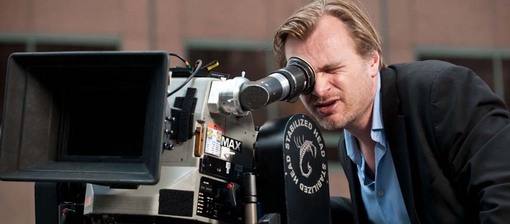
“If you think this movie is mediocre, why have you written so much about it?” That’s a comment I sometimes get — and although I understand where it’s coming from, I don’t think it makes sense if you stop to think about it for two seconds. I usually respond by saying that I don’t see any contradiction there at all. Who hasn’t encountered a movie that, afterwards, is more interesting to talk about than it was to actually sit through? Who would argue that the only movies worth analyzing and arguing about are those you think are successful? When I was 18, one of my college film professors told us something I’ve never forgotten — that you can often learn as much (or more) about film from a bad movie as you can from a good one.
Ignatiy Vishnevetsky raises this same issue in a round-table conversation on “The Dark Knight Rises” at MUBI.com that takes a course similar to the ones we’ve been having here at Scanners:
… I’d be lying if I said that I don’t derive pleasure from trying to crack it and figure out what exactly makes it frustrating or dull. You gotta give credit where credit is due: even when Nolan makes a mediocre film… it’s at least fun to talk about. You can’t say that about many filmmakers — but, then again, it would be even better if the movie was as fun to watch as it is to discuss.
My feelings precisely. One more thing, though, before I get back to this MUBI confab, and that’s the matter of tone and attribution of motive — not to the movie or the characters in it, but to those who take part in the discussion. First, as I said previously, I have nothing worth adding to what’s already been written about the shootings in Aurora, CO — and I’ve avoided reading most of it because, as Dave Cullen wrote in last Sunday’s New York Times, almost everything we think we know about the killer and even the circumstances of the incident itself, is wrong.
The scariest thing about “Paranormal Activity” is how it plays on your fear of being afraid. The funniest — and naughtiest — thing about it is the poster — the shot of the occupied bed in the dark room above the title “Paranormal Activity.” But it turns out that what goes on in and around that bed is indeed what interests the camera. It also suggests to me something Errol Morris raised in his nonfiction film about Abu Ghraib, “Standard Operating Procedure”: Would all this be happening if cameras hadn’t been present to record it?
Hold that thought for a moment, and let’s look at the premise: Katie (Katie Featherstone) has recently shacked up with her boyfriend of three years Micah (Micah Sloat) in a newish San Diego tract home. He’s just bought a new video camera because, well, there are a few things Katie neglected to tell him about herself. Like, for instance, how something — a demon, probably — has been following her since she was eight years old. OK, so here’s the source of the conflict in their relationship now: He thinks that’s kinda neat and wants to get it on video, so he can deal with it and get rid of it and rescue his gal. He sees himself as the Man of the House, the Protector, after all. She doesn’t want to mess with it, and has contacted a psychic (by phone) who tells them that whatever’s following Katie is not human, that demons are not his métier (he’s a ghost guy), and that they should get ahold of this other fellow (a demonologist) who may be able to help them.
Edward Yang in 2001. (AP photo)
Director Edward Yang, perhaps most familiar to US audiences for his 2000 epic “Yi Yi” (which won him Best Director honors at the Cannes Film Festival), died Friday at age 59, another victim of colon cancer. The Shanghai-born, Taipei-raised filmmaker died in Beverly Hills.
In the latest issue of cinema scope, Jonathan Rosenbaum writes:
For $17 you can acquire Edward Yang’s greatest film, “A Brighter Summer Day” (1991) with English subtitles from www.asiafilm.com. On the back of my copy, one can read, “This masterpiece film is not currently being distributed in any video format worldwide, so we are making this available as a service to film lovers. If you know how we can contact Edward Yang to try to distribute BSD on DVD in North America, please contact us at (940) 497-FILM. Thank you and enjoy!” The only problem with all this is that this one-disc edition is perversely subdivided into only two chapters while the $15, two-disc version available from www.superhappyfun.com, also subtitled, has more normal chapter divisions. (The four-disc English-subtitled VCD version, which has no chapter breaks at all, no longer appears to be available.) Also, the asiafilm version is 228 minutes long, whereas IMDb rightly or wrongly lists the film’s original running time as 237 minutes. I can’t vouch for the running time of the two-disc version, except to point out that it starts and ends in the same way as the asiafilm version. (The inferior three-hour version, which Yang was originally talked into editing in order to get the film released in any form, appears to have vanished, like the two-hour version of Jacques Rivette’s “L’amour fou” [1969]; I say good riddance)”Yi-Yi” is available in a Criterion Collection DVD edition.
Here’s a prime example of the kind of cross-pollination on the Internet (and between blogs most of all) that I find so exciting and rewarding. I first learned from Andy Horbal at the movie blog No More Marriages! that Rob at A Film Odyssey had started a discussion about Extended Takes, inspired in part by the ever-ongoing Opening Shots Project here at Scanners. I think I first heard about Andy’s blog from girish, or possibly Dennis at Sergio Leone and the Infield Fly Rule, through whom I also discovered such diverse movie-obsession sites as Zach Campbell’s Elusive Lucidity,” Aquarello’s Strictly Film School, Filmbrain’s Like Anna Karina’s Sweater, That Little Round-Headed Boy, Eric Henderson’s when canses were classeled…, Tom Sutpen’s If Charlie Parker Was a gunslinger… and many others, some of which you will find listed in the right hand column down the side of this blog.
View image
Anyway, so as I told Rob in e-mail, I wanted to respond here with some screen grabs of one of my favorite long takes, and then you over to his place to contribute your own favorites and participate in the discussions. (The problem being, I don’t know how to post screen shots in Comments fields — or if it’s even possible — and this is one you just gotta see, although too few have.)
View image
View image
The movie is Jerzy Skolimowski’s “Moonlighting” (1982), a dark (and dank) comedy about a group of Polish construction workers, led by Nowak (Jeremy Irons), who travel London to do a little off-the-books remodeling at their boss’s flat. Political unrest in Poland makes Nowak’s job as foreman all the more tricky; he withholds information from them, and tries to pretend everything is normal, while carrying an ever-increasing load of fear, guilt and moral responsibility. Ten years later, the Soviet system had collapsed, and you get an eerie sense of why from this movie.
View image
View image
View image
The shot (from a stationary camera; no dollying) begins with Nowak riding his bike toward us, then turning around and riding away. No reason is given for the reversal (the pivotal moment is a pause, almost in close-up), but we know certain decisions are weighing heavily on Nowak’s mind. He heads down the road, and we see a man walking a black dog on the sidewalk. The man and dog begin to cross the street and, just as Nowak is about to disappear around a corner in the distance… a cat jumps into the frame, arching its back at the dog. Man and (reluctant) dog cross to the right; the cat freezes, then continues, bristling, in the opposite direction, left. The cat pauses on the sidewalk, looking at a retaining wall. Just then, Nowak reappears at the end of the street, riding back toward the camera again. The cat jumps. End of shot.
This shot captures the restless, tortuous tensions at work in Nowak’s mind — and in one moment expresses why I love Polish cinema so very deeply. It’s all in the details, the composition, the timing. The absurdity. Moments like this have taught me how to apprehend the world; or, at least, reinforced my existing view — watching Polanski or Kieslowski or Zanussi or Skolimowski has been like coming home, or finding my long-lost twin.
All the time I catch glimpses of weird little things as I’m walking down the street, or through my windshield or in my rear-view mirror when I’m driving, that make me smile or laugh or do a double-take or give me a little chill. And I think: I’ve got to put that in a movie. (Of course, I promptly forget most of these things, but they enhance my enjoyment of life immensely.)
So, either you find this shot funny or you don’t. I gasped with delight the first time I saw it and chuckled for the next few minutes. Maybe you find it simply odd (which it is!) or a little eerie (ditto) or just mundane (instead of inspired). But to me, it’s the essence of movies. Movies!
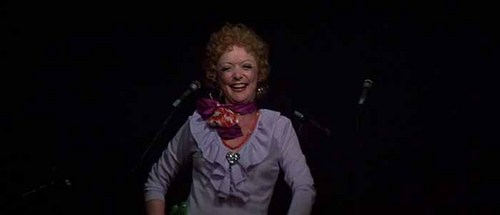
Remembering Robert Altman (February 20, 1915 – November 20, 2006). This piece, revised and expanded from a Scanners post, was published in the German film magazine steadycam in a 2006 tribute issue, “Der Spieler Robert Altman: Zocker, Zyniker, Provokateur, Bluffer, Genie.”
Well, we must be doing something right
To last… two hundred years!
— Haven Hamilton, “200 Years”
It begins with a cheesy, hyper, K-Tel-style TV commercial for itself, segues into a libertarian political spiel by the presidential candidate for the Replacement Party, and then into a rousing Bicentennial anthem sung by a toupeed country-western singer in a white rhinestone-studded outfit.
Enlarge image: Sweeeeeeeet slow-mooooootion.
From Mike Leto, Bethpage, NY:
I agree with you about how opening shots are one of the most important parts in a film. If the opening shot is good then the movie takes hold of me right from the beginning and that can lead to a great movie. I’m glad I saw “Boogie Nights” and “Barry Lyndon” on your list and you made me look back on “Close Encounters of the Third Kind” to make me see how important that opening shot really is. But if I were you, I would need these three great opening shots on my list:
“Aguirre, The Wrath of God” — The first shot sets up the mood for this film perfectly. First, the opening titles tell us that this is a doomed mission but we didn’t even need message. We cut to a mountain covered in fog but as the fog starts to drift away we see a long line of men walking down the side of the mountain. This image, along with the music, sets a tone of failure and desparation before things actually start to go wrong.”Dazed and Confused” — I know what you’re thinking but I happen to think that this film is a masterpiece and the first shot (just like “Aguirre”) sets the perfect mood. When you hear Aerosmith’s “Sweet Emotion” and you see the car making the turn in slow motion it brings us back in time. Not to 1976. But to our teenage years. We don’t have to worry because it brings us back to a time in our lives where the worst thing that happens is that the party got cancelled.
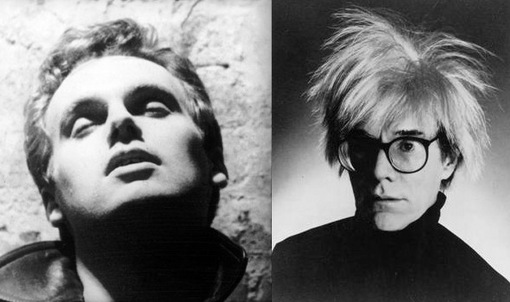
It’s a question to ponder — especially when they’re Andy Warhol movies (whether or not Andy Warhol actually had anything to do with them besides putting his name on them). Consider this story from Reid Rosefelt at My Life as a Blog:
… I was a huge fan of Warhol’s films, despite the fact that I had never seen a single one. Most, if not all of the films had been withdrawn from circulation, or very rarely shown, certainly not in Madison. That didn’t stop me. I read everything I could about them, and I was totally fascinated.
Spotting Warhol standing at an appetizer table, plastic cup in one hand and plate in the other, during a late-1970s party in New York, RR worked up the nerve to approach the artist. It went something like this:
David Bordwell examines the crucial distinguishing characteristics of cinephiles and cinemaniacs, and catalogs the shared habits and competitive strategies of the former, in “Games cinephiles play.”
Which are you? (Not that you have to be one or the other.) DB will help you resolve any cine-related identity crisis from which you may be suffering.
He writes:
… I do see differences. For one thing, most cinemaniacs like only certain sorts of movies–usually American, often silent, sometimes foreign, seldom documentaries. Do cinemaniacs line up for Brakhage or Frederick Wiseman? My sense is not.
Cinephiles by contrast tend to be ecumenical. Indeed, many take pride in the intergalactic breadth of their tastes. Look at any smart critic’s ten-best lists. You’ll usually see an eclectic mix of arthouse, pop, and experimental, including one or two titles you have never heard of. Obscurity is important; a cinephile is a connoisseur.
Actor director writer producer Patrick McGoohan has died at the age of 80. (News story here.) In fond remembrance, I resurrect this essay — the only one I’ve done with voiceover — about the opening of his most ambitious project, the 1960s television series “The Prisoner.” The show is currently being remade for AMC, with James Caviezel in McGoohan’s role as Number Six and Ian McKellen as Number Two.
Here’s a wonderful video essay written by Dipnot.tv film critic, Far-Flung Correspondent, House Next Door contributor, longtime Scanners commenter and International Man of Mystery Ali Arikan, and edited by writer/photographer and Press Play producer Ken Cancelosi. As far as I’m concerned, it makes the case — and does so even without including my personal favorite scene from “Moneyball”! (I think he should have been nominated for supporting actor in “The Tree of Life,” too.)
Ali writes:
There is real mystery to Pitt’s take on Billy Beane. He loves the game, but knows the game is changing. He knows he has to get wins in order to keep his job, and is more than willing to modernize for that reason. But he also knows there is something you can’t calculate about the game of baseball. The scenes of Pitt driving to work or sitting in the locker room show a man who is constantly trying to figure out the odds and knowing deep down that there are some things you can’t figure out.
… He brings to the role an assured quality on overzealous, yet understated, lust for ultimate success that was forged in the fires of years and years of failure. He’s charming and cheeky and funny, and very good looking (despite the hideous early naughties’ haircut and lumbering fashion sense). Pitt brings a subtle comedic take to what could have been a rather boring central role; his various dealings with other managers, his scouts and players, betray genius-level timing and mimicry.
OK, I really wouldn’t mind seeing Gary Oldman win for “Tinker Tailor Soldier Spy,” either — but this was Pitt’s year.
