A miracle of a movie

One of the year’s most subtly extraordinary movies opens in Chicago today: Ramin Bahrani’s “Man Push Cart.” (See Roger Ebert’s review here). As readers of this blog know, I first encountered it at Ebert’s Overlooked Film Festival in May and my experience with it was like falling in love, and not fully realizing it until the final credits were rolling. And that’s exactly what’s great about it: I never felt like I knew where it would go, or that it was straining to fit a traditional narrative structure; I just became absorbed in the daily (and nightly) struggles of this one human life, an almost invisible man in New York City. Roger sees in it “the very soul of Italian Neo-Realism”; I see the purity and minimalism of Bresson and Ozu. We’re both right.

Here’s part of what I filed from the Overlooked:

Alfred Hitchcock supposedly said that while most movies are a slice of life, his were a slice of cake. He’s right about the last part, although most movies are not slices of anything resembling life as most of us experience it. But “Man Push Cart,” the film by Ramin Bahrani, a director born in Iran and raised in North Carolina, is not only an exquisitely realized slice of life but a slice of filmmaking perfection. I didn’t know, as I became absorbed in this portrait of a New York City street vendor whose life is slowly slipping from his grasp (like his heavy pushcart on one occasion), that it would become one of my favorite movies of recent years until moments after its inexplicably magnificent ending.

All I can tell you is that when the moment came, a thought flashed through my mind: “Wow, I would just end the movie right here — wouldn’t that be great?” And then, one more shot, and the movie was over. So, yes, I felt absolutely in synch with the vision of the filmmaker (whose manifest influences include some of my favorite directors: Robert Bresson and Lodge Kerrigan — not to mention Albert Camus’ “The Myth of Sisyphus”), but the film also had me so completely in its spell that it subtly prepared me for arrival at this ending (which, in formulaic conventional movies, would hardly be considered a conclusion at all). It just felt absolutely, ideally right. (Hitchcock also liked to say he played the audience like an organ; “Man Push Cart” is no less masterful, but its method and effects are not the bravura manipulations of Hitchcock but the subtle, underplayed shadings of Bresson or Yasujiro Ozu.)

On the most prosaic level, the story of Ahmad (Ahmad Razvi, a former restauranteur who’d never acted before), a Pakistani-American who pushes (or pulls) his breakfast cart to 54th and Madison every day, could be seen as something of a downer. But, as Roger Ebert is fond of saying, no good movie is ever depressing — because the experience of being in the presence of such artistry is elevating. (A friend and I, in the grips of a paralyzing mutual depression, once made a pilgrimage to “GoodFellas” and the experience — though it’s hardly an upper of a movie — temporarily, at least, lifted us out of our low-seratonin stupor because it was just so exhilarating to watch something so beautifully composed and performed.) “Man Push Cart” is that kind of movie.

I posted an Opening Shot Project entry for “Man Push Cart” here. Please come back after you’ve seen the film and let me know your impressions. It may be my favorite movie of the year.
December 14, 2012

Bardem, Ledger and the truth about movie acting

View image Javier Bardem in an eloquent moment at the SAG Awards. (SAG photo)

Javier Bardem said it beautifully when acknowledging his “No Country for Old Men” directors Joel and Ethan Coen in his Screen Actors Guild Award acceptance speech Sunday night:

“I want to share this with my very good friend, Josh Brolin and Tommy Lee, and Kelly Macdonald, and with a great cast of “No Country For Old Men.” And to dedicate it to the Coen Brothers who ultimately are responsible for all of this. Thank you guys for hiring me, and thank you for taking the hard work of choosing the good takes, instead of the ones that I was really – I mean, where I really sucked.”Bravo to Bardem for publicly acknowledging what every cinematic actor knows but few talk about publicly. If you’ve ever asked yourself, “How can Actor X be so good in one picture and so bad in another?” — Bardem’s got your answer in a nutshell: Any performance is created from many random bits and pieces of film, carefully chosen (we hope!) and assembled from among hundreds of choices and many thousands of possible combinations. Actors may give several very different readings of the same scene, adjusting nuances and emotions or improvising something spontaneous that the director and the editor (n the Coens’ case, the pseudonymous Roderick Jaynes — can’t wait to hear his Oscar speech) must put together from what would otherwise be incoherent scraps.

December 14, 2012

New terror sleeper cell uncovered?

Seven men from now: How many Chicagoans does it take to make up a phony terror cell?

On Monday night’s The Daily Show, Jon Stewart reported on the big press conference called by Attorney General (and Pillar of Integrity) Alberto Gonzales to announce the arrest of seven men for “conspiring to support the Al Qaeda organization” — by, maybe, tossing out the idea of blowing up the Sears Tower. Or something. Except that it turns out the men were a gaggle of losers living in Miami, had no weapons or explosives and no terrorist network connections, and one of them had mentioned the Sears Tower one time. However, one of the, uh, “alleged terrorists,” was familiar with Chicago. (As Maureen Dowd described them on Saturday (“We Need Chloe!”): “[The] Miami gang of terrorist wannabes… look like they couldn’t find the local Sears, let alone the Sears Tower. These guys were so lame they asked an informant for boots, radios, binoculars, uniforms and cash, believing he was Al Qaeda — and that jihadists need uniforms.”)

Observed Stewart: “No weapons, no actual contact with Al Qaeda, but one of them had been to Chicago. By that standard, I believe this [see above] may be a terror cell.” No doubt A— C—–r & Co. would agree. Your Homeland Insecurity dollars at work…

December 14, 2012

Movie critics: Pros and cons

View image Nathan Lee.

Yesterday, Nathan Lee sent out an e-mail to colleagues in which he announced:

In great Village Voice tradition, I was abruptly laid off today for “economic reasons.” My employment at the paper ends immediately: someone else, alas, will be tasked with specifying the precise shade of periwinkle frosting atop the cupcakes in “My Blueberry Nights.”

And so I am, as they say, “looking for work,” though presumably not as a staff film critic as such jobs no longer appear to exist.

In the last 24 hours, Lee’s lamentable departure and the whole moribund notion of “the professional movie critic” have been passionately discussed (at The House Next Door, The Reeler, and elsewhere). But before we get to the latter: Nathan Lee, a member of the New York Film Critics Circle, is a perfervid cinephile (I hope he’ll appreciate that phrase), a writer whose insights and observations are penetrating, often pointed and even more often hilarious. A few highlights:On certain homophobic but ostensibly (and patronizingly) pro-gay reactions to “Brokeback Mountain”: “If I hear one more straight critic complain that ‘Brokeback Mountain’ isn’t particularly gay, I’m gonna spit on my hand, lube up my c—, and f— him in the b—.”

On “Transformers”: “Director Michael Bay never met a rhetorical apocalypse he didn’t love. Dude could film a round of Jenga with greater shock and awe than the collapse of the World Trade Center. There are mini-robots hiding inside his mega-robots. His lens flares have lens flares. He evidently controls the magic hour at a flick of a switch, and flips it willy-nilly for ‘poetic effect.’ In what may constitute the zaniest authorial signature in contemporary cinema, he has a habit of arresting an action set piece in order to indulge outlandishly backlit, monumentally pointless romantic interludes.”

On “Zodiac: “… ‘Zodiac’ is the most information-packed procedural since ‘JFK,’ though far more restrained when it comes to theorizing…. The result is an orgy of empiricism, a monumental geek fest of fact-checking, speculation, deduction, code breaking, note taking, forensics, graphology, fingerprint analysis, warrant wrangling, witness testimony, phone calls, news reports. ‘I felt like I was stuck in a filing cabinet for three hours,’ complained one viewer. Exactly!”

On “”I Now Pronounce You Chuck and Larry”: “Tremendously savvy in its stupid way, ‘I Now Pronounce You Chuck and Larry’ is as eloquent as ‘Brokeback Mountain,’ and even more radical. ‘The gay cowboy movie’ liberated desires latent in the classic western, and made them palpable (and palatable) by channeling them into the strictures of another genre, romantic tragedy. Progressive values were advanced by a retreat to a traditional mode of storytelling, the love that dare not speak its name rendered intelligible through the universal language of the upscale weepy. […]

December 14, 2012

Bye, Sally — Sally Menke, 1953 – 2010

Sally Menke, editor of all Quentin Tarantino’s features, from “Reservoir Dogs” to “Inglourious Basterds,” was found dead in Bronson Canyon early this morning, where she had gone hiking with her Labrador retriever in yesterday’s record-setting 113-degree heat.

“Hi Sally” reels — little messages sent from the set to the editing room — appear as extras on some Tarantino DVD releases, including the above from “Death Proof,” and the one below from “Inglourious Basterds.”

P.S. I’ve read at least one (mis-)appreciation that, unsurprisingly, doesn’t quite seem to understand what an editor like Menke does — attributing structures that were in the script to the “editing.” But it’s not that simple. As Tarantino says in the clip above, he considers the final draft of the script the first cut of the movie, and the final cut of the movie the last draft of the script. Wesley Morris has a much smarter (and beautifully written) appreciation of their collaboration:

December 14, 2012

Can superhero movies be works of art?

Short answer: Sure, but has it hasn’t happened yet?

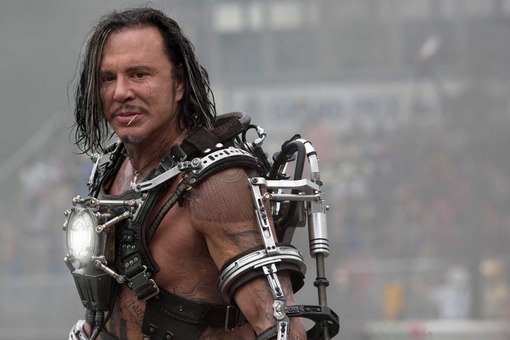
Matt Zoller Seitz says he’s a fan of superhero movies — but that doesn’t mean he thinks they’ve been particularly good. In a piece at Film Salon called “Superheroes suck!” (just to get fans’ attention), published to coincide with this weekend’s opening of “Iron Man 2,” Matt argues that comic-book movies are “Hollywood’s most bankrupt genre.” Even the now-ubiquitous zombie movies have produced a notable list of films he considers “more engrossing, uncompromising and consistently imaginative — and more likely to reward repeat viewings — than pretty much any superhero film made since 1978.” (That would be a reference to “Superman: The Movie,” which I still consider to be the most entertaining and resonant of comic-book movies.)

December 14, 2012

Apes and allegories: What is the meaning of this?!

A horror or science-fiction movie without subtext is like Dr. Frankenstein’s laboratory without electricity. The inner metaphor is what gives it life and resonance. Otherwise, it’s just a story about stitched-together people parts. Or take David Cronenberg’s “The Fly,” a riveting, poignant horror/science-fiction/romance about an ambitious scientist who accidentally gets his DNA mixed up with that of a housefly. Everything about the movie is first-rate, from the direction to the performances to the effects. But what really grabs hold of you is the universal theme: We are all Brundlefly, sentient, self-aware beings whose bodies are going to decay and die. In 1986, a lot of people assumed the subtext was AIDS; Cronenberg later said he was thinking in more general terms about the process of aging. It doesn’t matter. The movie works on those levels.

Cronenberg is particularly ingenious at making the word flesh, and the ways he develops his ideas are often even scarier than the explicit horrors: “The Brood” is a masterpiece about the psychosomatic effects of rage turned inward, and about the legacy of emotional abuse passed down from one generation to the next; “Videodrome” is about technology as an extension of the body and the brain; “Dead Ringers” is about mutant forms of psychological and sexual intimacy; “Naked Lunch” is about a writer who has to internalize his own sexuality before he can create art…. Cronenberg is an organic, visionary thinker, storyteller, filmmaker. His movies have meat on their bones. Other filmmakers whose work strikes me as insubstantial lack this ability to flesh-out their pictures with compelling, animating ideas. Their plots are meticulously plotted, but they’re skin-deep and there’s nothing to sink your imaginative teeth into.

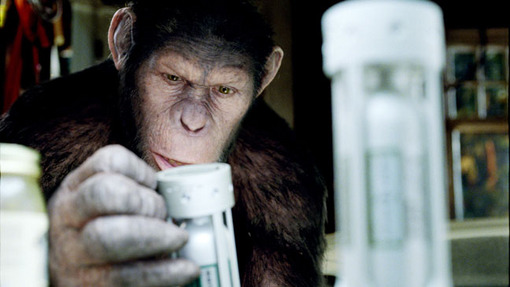
Which brings me to this summer’s hits, “Transformers: Dark of the Moon” and “Rise of the Planet of the Apes,” neither of which I have much interest in seeing. Instead I’m intrigued by a few things I’ve read about them — specifically about their subtext, or lack thereof. In a piece about the racial themes of “The Help” (“Why Can’t Critics Just Get Along?”), David Poland writes:

December 14, 2012

Chigurh: It’s all about the money

View image Just gimme money. That’s what I want.

In an early post about “No Country for Old Men,” I wrote that Chigurh could be seen as the embodiment of capitalism (or materialism) run amok: “Perhaps if Chigurh needs to be reduced to an ’emblem’ of something, it’s ruthless, indifferent force in the single-minded pursuit of any goal (religious, financial, political, genocidal).” The satchel of money is the MacGuffin (and the film doesn’t pay much attention to what happens to it in the end)… but it’s also a satchel full of money.

Sami Pöyry in Tampere, Finland, writes:

It’s not the first time the Coens have made a movie about blind greed but “No Country for Old Men” certainly is their strongest take on this theme yet. Thus it feels very odd to me how this whole sense of impervious capitalism has been neglected in the discussion around the movie.

“No Country for Old Men” is all about money and money taking the place of moral principles. Chigurh sees himself as someone whose job is to make people see their blind greed. The coin toss is there to point out how money in general decides people’s fates. He ends up there just like the coin does, as he states to Carla Jean in the end. Chigurh has principles and is not bound by money — until this point.

December 14, 2012

You don’t even want to know what a scrunt is…

Don’t let a scrunt near that bleedin’ narf!

The ferocious topiary bear-like creatures who inflict near-fatal superficial wounds on a narf in M. Night Shyamalan’s “The Lady in the Water” are called “scrunts.” (I think there’s only one of them in the movie, but it’s hard to tell.) Shyamalan, who improvised this tale for his young daughters before he released it as a movie and a children’s book, may have some explaining to do. According to the Urban Dictionary, a “scrunt” is nasty filthy slang for a … dirty lady and her parts. If you want to learn more, beware: the vulgarism contained in the word “scrunt” (aka the c-word) is part of the definition. According to MSN Encarta, however, “scrunt” is Caribbean slang, an intransitive verb meaning “financially strapped: to be in a poor financial situation.” Like the wolf at the door, if you catch my drift.

You’re in safer waters with narf, which is said to be “a substitute word, does not need to be for a curse word, can be used in any circumstance,” from the TV show “Pinky and the Bean Brain.” BTW, “Tartutic” and “Eatlon” are undefined.

(Thanks, I think, to Jeff Shannon)

December 14, 2012

Opening Shots: ‘Deep Red’

View image: The kind of thing that can ruin a childhood.

From Robert Daniel, Birmingham, AL:

“Deep Red” (Dario Argento, 1975): The scene opens a floor-level shot. We hear a stabbing sound and a loud scream. The knife falls in from the left and the child’s feet rush in from the right. Then the screen goes black for the credits. I guess I counted this as an opening shot because the camera does not move, nor isthere ever a cut. It is one short, continuous take.

The whole giallo is based on this event. It is the murder of a parent in front of the child (whose legs we see). Most of the film happens 15 or so years later, with the child as an adult. The string of brutal and creative murder set-pieces all relate back to what happened in this shot.

The shot is made more effective by the fact that a very eerie child’s nursery rhyme is playing in the background. Rumor has it that the nursery rhyme music was played before in an episode of “Davey and Goliath”!

JE: Thanks, Robert — and thanks for sending in the frame grab, too. I can’t believe I haven’t seen this major Argento (one of those embarrassing gaps for me), but it’s been in my Netflix queue for a long time. I’m gonna have to bump it up to the top now.

December 14, 2012

jim’s annotated best favorite movies of 2008 part 2

… continued from here…

5. “Wendy and Lucy” (Kelly Reichardt, heartbreaker). A couple bad breaks and a stubborn act of unkindness push a girl and her dog over the edge, from a marginal migratory existence into near-invisibility. Wendy (Michelle Williams) is driving to Alaska with her dog Lucy to find work in the fishing industry, probably in a cannery. (Note to Eastern critics who found this notion strange or fanciful: It’s not even unusual. Many people, especially young people, in the Pacific Northwest head to Alaska for good-paying seasonal work.) Only a few acts of kindness manage to keep her from falling off the map entirely. This (almost) opening shot (again, I present only a chunk from the middle) is scored to the humming in her head, and represents a perfect miniature of the movie as a whole: Wendy and Lucy walking in the woods, playing fetch, moving in and out of the frame, passing through light and shadow, occasionally disappearing behind trunks and thickets, then emerging on the other side. (Christopher Long has a beautiful appreciation of the shot and the film at DVDTown.)

December 14, 2012

Matt Zoller Seitz: Rocking the House

View image Matt Zoller Seitz.

Matt Zoller Seitz, long one of my favorite film writers and the pioneering architect of the priceless House Next Door, is moving into full-time filmmaking. That’s great news, and sad news for those of us who always look forward to his byline — and, especially, the wit and insight that unspools beneath it. I want to compile a little “best of” sampling for Matt, just in case you haven’t been following him, but I’m a little in shock right now. When I consider the exceptional, collegial atmosphere among our extended network of movie bloggers, and how much we learn and grow through exposure to one another’s work, there’s nobody of whom I’m prouder to consider myself a “colleague.” You can read more about Matt’s plans at the House:

Well part of it is… you know I produced a feature film, a low-budget thriller, a few years ago and then went on and directed a little movie myself. I have been working on projects that are in various stages of completion since then and it’s been slow going for a variety of reasons. But I would like to concentrate on that exclusively. I want to concentrate on filmmaking exclusively for a while and see how it goes because I’ve never given it my all. The two features that I’ve been associated with were done while I had a full-time job and a part-time job. So my thinking is, “well if I am not doing anything but filmmaking, what might I be able to accomplish?”Whatever it is, I’m there. We’ll catch up some other time. Meanwhile, we can all be glad that Keith Uhlich is in the House.

Yesterday, Matt posted a beautiful short film called “Some Other Time” in memory of his late wife Jennifer Dawson. The moment I saw the title I knew he’d chosen the version — the greatest recording of one of my two or three favorite songs — and he’s set the music to movie with grace and understated eloquence.

This day was just a token,

Too many words are still unspoken.

Oh, well, we’ll catch up

Some other time.

Just when the fun is starting,

Comes the time for parting,

But let’s be glad for what we’ve had

And what’s to come.

See and hear it here…

December 14, 2012

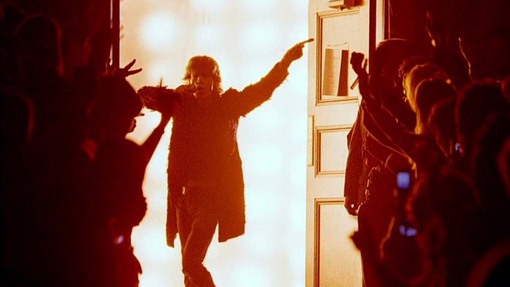
Scorsese and music as storytelling: Shine a Light

Watching Martin Scorsese’s Rolling Stones concert movie “Shine a Light” (2008) for the first time the other night, it struck me that Scorsese has always been extremely good at shooting and cutting musical sequences not only as if they were action set-pieces, but as narratives. Whether it’s the big-band saxes and brass blowing the camera across the ballroom like a balloon in “New York, New York,” or Harry Nilsson’s “Jump Into the Fire” feeding the coke-fueled paranoia of Henry Hill in “Goodfellas,” or the opening beats of the Ronettes’ “Be My Baby” (cut, cut-cut) launching us into Charlie’s troubled psyche at the start of “Mean Streets,” Scorsese uses the instruments of cinema the way a musician would.

Music videos are typically cut to the rhythm (which quickly becomes tedious) and are designed to tease the viewer/listener with frustratingly brief glimpses of tantalizing images. Space and time are deliberately fractured. This has the effect of keeping the viewer hooked, always looking for that next feel-good visual fillip. In contrast, watch (and listen to) what Scorsese does in “Shine a Light.” He’ll pick a moment — the strum of a guitar or a glance from one of the players — as punctuation, to get from one shot to the next. (Also, the sound is mixed like a movie: Whoever’s on the screen is usually brought forward in the mix for the duration of the shot.)

December 14, 2012

Opening Shots: ‘The Good, the Bad and the Ugly”

An empty landscape, an endless, desolate (and TechniScope-horizontal) landscape…

… suddenly replaced by another enormous sun-baked landscape, and the long shot is instantaneously transformed into a close-up of…

… a human face, staring into the camera — and, by extension, into the distance off-camera. It’s a variation on the signature Leone shot, and for him these faces (Clint Eastwood, Lee Van Cleef, Eli Wallach — and in other movies Henry Fonda, Charles Bronson, Jack Elam, Woody Strode…) were landscapes, and landmarks, as characteristic of his stylistic world as the buttes of Monument Valley were for John Ford. — JE

We’ve had several excellent appreciations of how the opening shot of Sergio Leone’s “The Good, the Bad, and the Ugly” works, each with its own unique angle, if you will. Here are a few — beginning with Roger Ebert’s 2003 Great Movies review:

A vast empty Western landscape. The camera pans across it. Then the shot slides onto a sunburned, desperate face. The long shot has become a closeup without a cut, revealing that the landscape was not empty but occupied by a desperado very close to us.

In these opening frames, Sergio Leone established a rule that he follows throughout “The Good, the Bad and the Ugly.” The rule is that the ability to see is limited by the sides of the frame. At important moments in the film, what the camera cannot see, the characters cannot see, and that gives Leone the freedom to surprise us with entrances that cannot be explained by the practical geography of his shots.

There is a moment, for example, when men do not notice a vast encampment of the Union Army until they stumble upon it. And a moment in a cemetery when a man materializes out of thin air even though he should have been visible for a mile. And the way men walk down a street in full view and nobody is able to shoot them, maybe because they are not in the same frame with them.

Leone cares not at all about the practical or the plausible, and builds his great film on the rubbish of Western movie clichés, using style to elevate dreck into art. When the movie opened in America in late 1967, not long after its predecessors “A Fistful of Dollars” (1964) and “For a Few Dollars More” (1965), audiences knew they liked it, but did they know why?

December 14, 2012

That was the fest that was

An image from “The Host”: It all depends on how you look at it.

I kinda wish I’d had girish’s Toronto. I saw some great stuff — “Pan’s Labyrinth” and “The Pervert’s Guide to Cinema” being my favorites, and was also impressed with “Volver,” “Shortbus,” “The Wind That Shakes the Barley” and a few others. Not bad, but (as I wrote earlier) not as overwhelming as last year. I steered away from most of the big commercial titles (except for “Borat”!) and concentrated on some of the high-profile foreign and “specialty” films, including some that had attracted attention at Cannes. In other words, titles I thought readers of Scanners would be particularly interested in.

Girish, on the other hand, followed his bliss and… well, here’s his assessment of his Own Private Toronto:

Of the eight TIFFs I’ve attended, I think this year’s was probably the strongest. Unlike last year, I took my laptop with me and fully expected to blog the fest, but it turned out that many of the films I saw were not so casually bloggable. I’m still trying to figure out how to think about many of them.

Of the twenty-five films I saw in Toronto, there were two flat-out masterpieces: Jia Zhang-ke’s Chinese diptych “Still Life”/”Dong”; and Apichatpong Weerasethakul’s “Syndromes And A Century” from Thailand. Other favorites: Pedro Costa’s “Colossal Youth” (Portugal); Alain Resnais’s “Coeurs” (France); Nuri Bilge Ceylan’s “Climates” (Turkey); Abderrehmane Sissako’s “Bamako” (Mali); Sophie Fiennes’ “The Pervert’s Guide To Cinema” (UK); Hong Sang-Soo’s “Woman On The Beach” (S. Korea); Bong Joon-Ho’s “The Host” (S. Korea); Jafar Panahi’s “Offside” (Iran); etc.

I had most of those on my “want to see” list, but they got bumped by other screenings or time I spent blogging from the fest. I’m hoping I’ll be able to catch up with many of these (and I’ll have to look up that Mali film in the catalog).

So, out of the “10 days, 352 films, and 27,747 minutes” of the 2006 TIFF, has anybody else had time to digest/recover? How was your Toronto?

December 14, 2012

1. Ten 2. Best 3. Lists

There is none so blind as he who will not see. It’s true. Ray Stevens sang it in the hit single “Everything is Beautiful (In Its Own Way).” I have no idea why I just mentioned that.

MSN Movies has published its main movie contributors’ lists of the year’s best films (and, yeah, we cheated freely — our lists don’t all contain ten titles). Here you’ll find lists from me and (in alphabetical order) some other names you may recognize: Sean Axmaker, Gregory Ellwood, David Fear, Richard T. Jameson, MSN Movies chieftan Dave McCoy, Kim Morgan and Kathleen Murphy. As is my custom, I don’t make what I see as artificial and qualitatively meaningless distinctions between categories (documentary, “foreign language”) because, the way I see it, a feature film is a feature film, and a doc or a movie from somewhere else in the world is every bit as much a product of conscious and unconscious artistic decision-making, skill, planning, determination and luck as any other kind of picture with a running time of around an hour or more. (That, arguably, is a meaningless distinction, too. Heck, “Simon of the Desert” and “Wavelength” are only 45 minutes long, “Sherlock, Jr.” is 44, ” and “Un Chien Andalou” is only sweet 16!)

I’m cooking up a different sort of list I want to do for Scanners and RogerEbert.com, but if you want to see my faves (as of my deadline last week — and nothing I’ve seen since then would change my rankings), use the link above and/or check after the jump. Please see my post about listmaking in general, below… and please, as always, feel free to post your own lists and responses in the comments section!

December 14, 2012

He’s Here: The Legend of Pete Seeger

View image Pete Seeger singing “If I Had a Hammer” at a Student Nonviolent Coordinating Committee Rally in Greenwood, MS, 1963. From “Pete Seeger: The Power of Song.”

(A brief review of Jim Brown’s documentary, “Pete Seeger: The Power of Song,” opening in select theaters around the country in the next few weeks, and in Seattle September 21.)

I’m a-goin’ to Berlin

To Mister Hitler’s town

I’m gonna take my forty-four

And blow his playhouse down.

— “Round and Round Hitler’s Grave” by Woody Guthrie, Millard Lampell and Pete Seeger (recorded by the Almanac Singers in 1942)

“It’ll be a little soggy but we’ll keep slogging.

We’ll soon be on dry ground.”

We were waist deep in the Big Muddy

And the big fool said to push on.

— “Waist Deep in the Big Muddy” by Pete Seeger (performed on “The Smothers Brothers Comedy Hour,” 1968)

Pete Seeger is an American legend, in a class with Paul Revere (he rang out warning), Johnny Appleseed (he sang out all over this land), and Paul Bunyan (he had a hammer — and an ax). Like all three, he’s attained mythical stature, and like the first two, he’s for real.

View image Bob Dylan singing “Only a Pawn in Their Game” at the same 1963 SNCC rally shown above. From “Don’t Look Back.”

Seeger may not always have been in synch with his times, but he has always been timeless, carrying the American folkloric tradition out of backwoods and into the mainstream. He sang old songs and gave them new life: the 1886 song “Goodnight, Irene” was adapted by Leadbelly and became a surprise commercial hit for the Weavers in 1950; ten years later, “We Shall Overcome” was revived, revised, and sung by Seeger at the first meeting of the Student Nonviolent Coordinating Committee in Raleigh, NC, and became the anthem associated with Martin Luther King, Jr., and the civil rights movement.

Seeger has been able to take songs of the past and bring them alive in the context of the present. “Round and Round Hitler’s Grave” (collected in a songbook, called “Anti-Fascist Songs of the Almanac Singers: Timely American songs based on timeless worksongs, patriotic ballads, cowboy ballads, spirituals, etc., from America’s folklore”) is of its moment in 1942. (Woody Guthrie later added a verse about Goering.) But “Big Muddy” — which begins, “It was back in nineteen forty-two” — was an anti-Vietnam war song, and is now an anti-Iraq occupation song. Could Seeger ever have anticipated that his ballad would become a relevant protest song again in his lifetime? Perhaps only in the sense that he understands mankind’s uncanny ability to keep repeating the same historical mistakes.

Seeger’s own songs — “If I Had a Hammer,” “Turn, Turn, Turn,” “Where Have All the Flowers Gone?” — well, they sounded like traditional classics the first time you heard them, didn’t they? Whether speaking (singing) to a particular time and place, or in general about the state of human beings and the planet we live on (and often both at the same time), Seeger’s work is ageless.

So, don’t expect just the usual muffled, scratchy old clips from Jim Brown’s “Pete Seeger: The Power of Song.” The images may be from the past, but the sound is vibrant and present. It begins with a quintessential Seeger singalong, and you could swear you’re sitting in the middle of the audience, surrounded by voices. As Bob Dylan says, Seeger had the ability to coax out the singer in everybody.

The paths of so many American folk legends cross in this film: Leadbelly, Woody Guthrie, Johnny Cash, Dylan, Joan Baez, Bruce Springsteen — and the last four appear in interviews, as do Seeger and members of his family. While the movie is an unabashed celebration of the life, music, politics, and humanitarianism of Pete Seeger, it’s just as much a tribute to Toshi Seeger, the Japanese-American woman who married Seeger in 1943. She’s the one, as somebody observes, who “allowed Pete to be Pete.”

“The Power of Song” reflects the essential qualities of its eponymous hero: enthusiastic, idealistic, patriotic (but not nationalistic), shamelessly earnest, maybe (as the subtitle indicates) even a little corny. And I mean that as an expression of admiration and affection. Seeger may have gone in and out of fashion — blacklisted from television for 17 years because of his brief affiliation with the American Communist Party, hailed as a prophet during the folk revival of the 1960s — but he’s never been “fashionable.” He is who he is. And aren’t we lucky to have lived to hear him?

December 14, 2012

“This is where he wanted to be, this is where he is…”

Roger and Chaz Ebert on opening night. Roger gets his own La-Z-Boy recliner in the back of the Virginia for the duration of the fest! (Thompson-McLellan photo)

Three cheers for Roger Ebert, for the 9th Overlooked Film Festival (aka Ebertfest, now in progress) and for technology! I wrote and filed the following story for Thursday’s Sun-Times, sitting on the stairs to the balcony in the Virginia Theatre in Champaign, IL, Wednesday night — between 7:30 and 8:30. Had my PowerBook G4, which I typed on. Then transferred the story (via synch) to my Treo 680, and wirelessly e-mailed it to the paper in Chicago. More about Ebertfest soon — I’m kind of in the middle of things, and I’m waiting to borrow a cable or card reader to retrieve my own photos; for some reason mine can’t read the XD card….

“It’s my happening and it freaks me out!” said Chaz Ebert on behalf of her husband, Sun-Times film critic Roger Ebert, on stage at opening night of the ninth Roger Ebert Overlooked Film Festival in Champaign-Urbana. The line (memorably quoted by Mike Myers in the first “Austin Powers” movie) is from the Ebert-penned screenplay for Russ Meyer’s 1970 cult classic “Beyond the Valley of the Dolls,” which is among the titles in this year’s festival.

It was Ebert’s first public appearance since he suffered complications from surgery last June, and it brought down the full house at the Virginia Theatre in Champaign. As he announced in a message featured in the Sun-Times and on his web site (rogerebert.com) Tuesday, Ebert is not able to speak now, pending further surgery, so Chaz had to do the talking for him. As Ebert wrote on a pad before the screening, “After we go onstage, Chaz will read one line from me that will say it ALL.”

View image Jim Emerson, Boy Reporter, at Roger’s first public appearance — a reception at the house of U of Illinois President Joseph White (and his wife Mary and dog Webster) Wednesday night. Roger’s head is in the lower left; Mark Caro of the Chicago Tribute is also comfortably seated on the floor at the right. (Thompson-McLellan photo)

Chaz recounted how the festival was nearly cancelled late last year, when Ebert was in the hospital and the pace of his recovery was uncertain. But Festival Director Nate Kohn visited Ebert in his Chicago hospital room with a message from Mary Susan Britt, the festival’s Associate Director: “The festival passes sold out in a little over a week in November. You have to get out of that hospital bed and come down to Champaign-Urbana.”

“At that moment,” Chaz said, “Roger made a commitment. If it was at all possible, he would be here tonight…. This is where he wanted to be, this is where he is, this is where he’s staying,” she said, and the crowd responded with a standing ovation.

Through his wife, Ebert reminded the audience of the personal importance of Champaign’s Virginia Theatre, the restored movie palace in which the Ebertfest films are screened. “I saw ‘Gone With the Wind’ here, and my father saw the Marx Brothers on this very stage.”

December 14, 2012
subscribe icon

The best movie reviews, in your inbox