Are YOU Kevin Smith’s friend?

View image: From The Onion

New York Magazine reports on “How Kevin Smith Reinvented Movie Marketing.” By manufacturing a dust-up with a TV movie critic just before the opening of his film and getting lots of free publicity? Sure. But also, by listing 10,000 of his MySpace “friends” in his credits:

Smith’s newest addiction is MySpace: “I think it has a lot to do with growing up fat, ’cause you’re always trying to find acceptance and credibility. I’ve been on since March and I’m closing in on 50,000 friends. So I feel like, Wow, that’s kind of cool.��? The Weinstein Co. hatched a plan to promote ‘Clerks II’ by putting the names of the film’s first 10,000 MySpace friends in the credits. They thought the contest would go for weeks. They had the names in two hours.

Smith feels a compulsive need to win over an audience with the sheer tonnage of his verbiage; there were no short answers to my questions. Even though he’s now a 35-year-old father who lives in his pal Ben Affleck’s old house in L.A., Web surfers still have access to insanely intimate details of his life: One blog post this month touched upon his predilections for cunnilingus, anal sex, and picking his nose.

Meanwhile, The Onion lists Smith’s “career highlights,” including:2004: Got honey-mustard sauce all over favorite bowling shirt, but was able to learn from the experience and grow as a director.This may be the definitive test to see whether Smith has a sense of humor. About himself.

December 14, 2012

Local hero

View image The most famous phone box in the world.

After the screening of Bill Forsyth’s long-unavailable masterpiece “Housekeeping” at Ebertfest (about which more later) somebody asked him why he used the word “moving” in a key piece of dialog rather than novelist Marilynne Robinson’s word-of-choice, “drifting.” Forsyth said he didn’t remember for certain, but imagined it was because “drifting” was simply “too on-the-nose,” too “poetic” sounding. Actress Christine Lahti, who played the character speaking the line in question, and who joined Forsyth on stage (neither of them having seen the movie, or each other, for 21 years) confirmed that “drifting” works beautifully on the page of a novel, but wouldn’t have sounded right if spoken aloud on the screen. So much artistry is reflected in that simple explanation. What seemed at first like kind of a dumb, nit-picky question was justified by the answer.

Forsyth spun another tale of adaptation that mirrored the oblique and inevitable comic structure of one of his movies:

December 14, 2012

Rescuing “articulate” from the Language Police

“I mean, you got the first sorta mainstream African-American who is articulate and bright and- and- and clean, and a nice lookin’ guy. I mean, it’s — that’s a storybook, man!”

or

“I mean, you got the first sorta mainstream African-American, who is articulate and bright and- and- and clean, and a nice lookin’ guy. I mean, it’s — that’s a storybook, man!”

What Joe Biden said of Barack Obama — it all comes down to one li’l comma.

Or a pause that is the equivalent of a comma.

I guess I’m a little behind on this story. A Scanners reader (thanks again, Matthew!) posted a comment with this link from Language Log that gets into more detail about what Biden said (including an actual recorded excerpt of the interview, so you can hear for yourself) versus what the New York Observer reported he said. It’s so interesting I thought it deserved a separate top-level post.

From Mark Lieberman at Language Log:

But there’s also a linguistic and a journalistic point here. Senator Biden’s word sequence corresponds to two different sentences with very different meanings, and the Observer misquoted him by omitting the comma.

I don’t know whether the Observer misrepresented Biden’s statement out of ignorance, carelessness, or malice. Maybe [reporter Jason] Horowitz and his editors don’t know the difference between the two types of relative clauses; maybe they didn’t bother to think about the difference in interpretation in this case; or maybe they know the difference in general, thought about it in this case, and decided that it would make a better story to present the wrong version.

Again, let me emphasize that I do not know what Biden was thinking when he said what he said. As I wrote before, I’m sure that some people use “articulate” (intentionally or not) to express their mild surprise that some African-Americans have a command of the English language.

But having listened to the Biden interview excerpt, and considering the context of his remarks (sizing up his opponents for the Democratic presidential nomination), I agree with Lieberman that what Biden most likely meant was: Obama (the storybook political phenom behind “Obama-mania” — a phrase that returns “about 105,000” results on Google) is the first African-American candidate who has a serious shot at the nomination because he is articulate and bright and clean and nice-looking. (I’m more disturbed by the word “clean,” but I assume he’s talking about the first-term senator’s lack of negative baggage, not how often he showers. But I don’t see how any of those adjectives in the second part of his sentence can be construed as prejudicial — especially in politics. I welcome Joe Biden to say the same things about me, as long as he’s sincere.)

In this context, if you can’t describe a man like Senator Barack Obama, former president of the Harvard Law Review, as “articulate” (as in “Expressing oneself easily in clear and effective language: an articulate speaker”), then the word has no real-world meaning — unless you honestly think Biden was attempting to point out that his fellow senator is “Endowed with the power of speech.” Look: With Obama in the race, Biden doesn’t have a chance at the nomination, anyway. I would love for Obama to be our next president. How refreshing it would be to have someone in the White House who expresses himself easily in clear and effective language. Or who knows how to pronounce “nuclear.” Or who knows the difference between “dissemble” and “dissasemble”…

“I know what I believe. I will continue to articulate what I believe and what I believe — I believe what I believe is right.” — President George W. Bush, Rome, Italy, July 22, 2001

December 14, 2012

The 100-Year-Old Contrarian

Selznick, Rossellini & Fellini, by Rossellini & Maddin.

Brad Damaré of Ann Arbor, MI, was kind enough to point me to a marvelous YouTube post of the entire 16-minute 2005 collaboration between Guy Maddin (“The Saddest Music in the World”) and Isabella Rossellini: “My Dad Is 100 Years Old” (in English, with Italian subtitles). In this personal tribute to Roberto Rossellini, the subject of recent retrospectives and the father of neorealism (and more), Isabella creates imaginary conversations between herself, her papa, producer David O. Selznick, Federico Fellini, Alfred Hitchcock, Charlie Chaplin and her mother, Ingrid Bergman — with the actress/daughter playing all the parts. (My delight in her performances is only enhanced by Isabella’s recent appearances as Alec Baldwin‘s volatile ex-wife on “30 Rock.”)

Through his daughter, papa Rossellini expounds on his contrarian theories of film — not as dreams or distractions, manipulations or entertainments, but as works that engage the viewer’s conscience. As is often the case on YouTube, the soundtrack slips out of synch partway through, but it’s not all that distracting. In some ways it’s perfectly appropriate (I wouldn’t put it past Maddin to have come up with the effect deliberately), since Italian films were shot without sound (MOS) into the 1960s, with little attention to precisely matching looped dialogue to lip movements.

December 14, 2012

Film criticism mash-up: Exciting and new!

Another exercise in Godardian film criticism (making a movie as a critical response to another movie): This one’s simple and straightforward (existing footage; new soundtrack), but it makes its points unimprovably. I don’t mean to pick on “Bobby” (which opens November 23), but after the work-in-progress press screening in Toronto I compared it to an Irwin Allen disaster movie:

It’s “Earthquake” with the RFK assassination as the disaster. It’s “Airport.” It’s “The Towering Inferno.” A whole bunch of familiar actors play “colorful” characters swarming around the hotel, and their day will culminate in the death of a Kennedy…. Why turn this traumatic national event into a Hollywood soap opera? The performances are fine for this kind of glitzy manufactured melodrama (“Where Were YOU When They Shot RFK?”), and on that level it’s swell, trashy fun. It’s just that the whole concept is inappropriate.Last week, I said the movie turns the Ambassador Hotel into “Neil Simon’s California Suite with Assassination.” But the filmmaker/critic whose work is embedded above has an equally valid take — and impeccable comic timing.

(Tip: David Poland, who rescued the clip after it was pulled off of YouTube.)

December 14, 2012

Where does ignorance come from?

Rep. Joe Barton (R-TX) posted this YouTube clip of himself asking a stupid question at a congressional hearing. How stupid? Well, just watch. And consider that Barton finds the Energy Secretary’s accurate scientific response bewildering. (Listen to Barton’s follow-up: How does he think oil “got to Alaska”?) The accompanying intro reads: “When Rep. Joe Barton asked the Nobel Prize winning Energy Secretary, Dr. Steven Chu, where oil comes from – he got a puzzling answer.” Barton surpasses Ted Stevens and his Internet “tubes” on this one. Jon Stewart, it’s all yours…

Oh, and Rep. Barton, please read this short Scientific American article. It’s only four paragraphs, but I warn you that, if you’re really interested in learning the answer to your question, it may take more than six seconds of your time: “Why is oil usually found in deserts and arctic areas?”:

December 14, 2012

Why the Enterprise matters (and the rest is anti-matter)

.syn{font-family:Arial;font-size:11px;padding:5px;width:470px;background:#585858;border-top:1px solid #777777;color:#ccc;} .syn a {color:#ccc;}

Star Trek | Movie Trailers

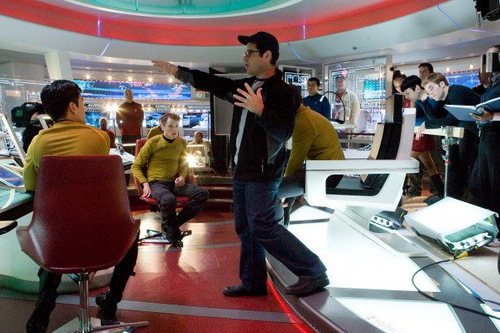
A few notes on the obnoxious visual style of the otherwise mildly enjoyable new “Star Trek” movie:

Let us agree on one thing: No lens flares on the bridge of the USS Enterprise, OK? It’s stupid, it’s distracting, it’s ugly, it’s a pointless waste of cinematic energy, and (like much of the overactive camera- and CGI-work in the new “Star Trek” movie) it makes multi-million dollar sets and effects look unbelievably chintzy.

“Star Trek,” Gene Roddenberry’s great humanistic science-fiction enterprise (original network TV series, Earthdate 1966-69; original Kirk/Spock movie series, 1979-91), always featured cool technology (phasers, transporter room, warp drive) but it wasn’t mainly about the science and it certainly wasn’t about sophisticated eye candy. The characters were the primary special effects and the best scenes took place on the main set, the cockpit of the ship.

“Star Trek” offered a hopeful, Kennedy-esque vision of mankind’s noblest space-travel aspirations — motivated by goodwill, curiosity and a thirst for knowledge to seek out new life and new civilizations. We felt the future was in good hands because Kirk, Spock, McCoy, Uhura, Sulu, Chekov, Nurse Chapel and the crew were good people.

J.J. Abrams’ “Star Trek” reboot movie gets some things right, beginning with fresh and appealing faces as the rookie Enterprise crew on the ship’s maiden voyage. (John Cho as Sulu! Yeah!) But, damn, could this movie use a director. (I know, I said the same thing last summer about “TDK,” and I meant it then, too.) Abrams began as a screenwriter (“Regarding Henry,” “Forever Young,” “Armageddon”) and has become a one-man network television franchise as a series creator and producer (“Felicity,” “Alias,” “Lost”). But if you ever want to see what a movie directed by someone with the soul of a producer looks like, start with the works of Irvin Winkler (“Guilty By Suspicion”) and then catch this one.

Don’t get me wrong — it’s a fairly pleasurable if less-than-engaging trip, but Abrams has no idea of what to do with the camera other than to keep reminding you that it’s always there, always screaming “Hey, look at me!,” always obtrusively inserting itself between you and whatever it is you’d rather be looking at. I came away from this movie feeling frustrated, like I’d spent the whole time trying to peer over, under, or past a camera operator who was constantly standing in my way, blocking my view of the action. (See clip above. Actors: fun. Camerawork: annoying beyond all logic. However, there is a good reason Spock is so full of emotion in this scene — and it’s not just because he has a headache from that Costco lighting, which was on Kirk’s dad’s ship, too.)

December 14, 2012

An even dumberer list

That’s right — it’s on their list. So are “Amelie,” “American Pie,” “The Dresser” and “Dumb and Dumber.”

A “panel of experts” has compiled for The Guardian a list of 1000 Films To See Before You Die. Apparently, there’s no rush. I mean, it’s not films you “must see” — just films “to see.” That explains some of the choices. At least it’s not restricted to British films, or even English language films. From the introduction:

Out of these million-plus movies, our team of experts has picked what we believe is the essential 1,000 – those that best sum up the dazzling achievement and variety of the movies.Just don’t plan on dying in the next few days, because they’re publishing the list alphabetically, one day (and a few letters) at a time. Told you there was no hurry. As I write this, The Committee’s selections for A through G have appeared.

P.S. The list, so far, is partly redeemed by the presence of “Devil in a Blue Dress,” “Dazed and Confused,” “The Decline of Western Civilization II: The Metal Years,” “Dig!,” “Boogie Nights,” “Bring Me the Head of Alfredo Garcia” and “Le Boucher.” And it cites the right “Crash” — the David Cronenberg one. (“Dead Ringers,” too.) On the other hand, there’s the smug, frat-boy-naughty “Clerks,” the gooey “Ghost” and “The Faculty” — which just makes me want to throw something out of something else or at something else.

December 14, 2012

The silence of the monks

View image A theory of relativity: “Into Great Silence.”

From my review of “Into Great Silence” at RogerEbert.com:

We get a lot of movies about noise these days: gunshots, screams, explosions, fist thunks, thunderous roars, revving engines, squealing tires and those deafening sonic swooshes that accompany nearly every corporate logo before the feature even gets started. But we don’t experience many moments of silence at the movies (and I’m not just talking about the audiences). “Into Great Silence,” though devoid of narration, musical score or much at all in the way of dialogue, encourages us to listen closely: to the sound of snow falling in the mountains, a nocturnal prayer whispered in a small wooden cell with a knocking tin stove, a bell rope pulled in a chapel. Nobody yells. Nothing detonates.

The images also open up to us gradually and quietly. We’re not bombarded with fusillades of shots: “Look at this! Now this! Now this!” “Into Great Silence” unfolds with its own gentle, unforced rhythms, designed, as German filmmaker Philip Groning has said, to be less a “documentary” than a meditation.

Groning spent six months living with the monks of the eremitical Carthusian order at the Grand Chartreuse Charterhouse, or monastery, in the French Alps. He brought with him only a camera and basic sound equipment — no crew, no lights — to capture the daily lives, prayers and routines of this most ascetic of Catholic orders, which was founded by St. Bruno in 1084. The monks, who have taken a vow of poverty, subsist on very little. They pray aloud at times and sing solemn Gregorian chants, but they rarely speak, except on their Monday walks. If cinema had existed more than a thousand years ago, this is quite like what it may have recorded.

I must confess my fondness for contemplative movies of this sort. The less frenetic onscreen activity you are forced to endure, the more you’re able to notice. And the form of “Into Great Silence” is ideally suited to its subject. The monks lead a regimented existence (you can see a typical weekday schedule, and learn about their history, at their official Web site, www.chartreux.org), but time is allotted for the introspection and reflection that are essential to their devotion. You’re given the opportunity to contemplate details, including ones you may overlook in the rush and routine of your own everyday life.

Continue reading at RogerEbert.com

December 14, 2012

The Worst Movie Posters of the Decade

Jordan Gray — a graphic designer, filmmaker and scanners reader — has posted his choices for the Worst Movie Posters of the Decade. (Others’ picks for the best of the decade can be found here, here and here.)

To the right is his choice for the second-worst one-sheet design of the ’00s. JG writes:

Just try to look at this and not laugh. It’s not even remotely convincing that these 3 actors were in the same region of the world when their photos were taken. Look at the alignment of the billing block. What? Absolutely nothing about this makes any sort of design sense.

Three attractive (though not necessarily recognizable) faces and a poster that’s ugly in every way. The positioning of the names at the top is likely somebody’s awkward solution to a contractual obligation that Uma Thurman receive top billing. Relative size and arrangements of faces and names are often written into all parties’ contracts these days, presenting designers with… nightmares like this. Who could possibly have approved such flagrantly bad work?

December 14, 2012

Are Movies Going to Pieces?

View image Pauline Kael.

“I love subtextual film criticism, especially when it’s fun, when a guy knows how to write in a readable, charming way. What I love the most about it is that it doesn’t have a f—ing thing to do with what the writer or the actor or the filmmakers intended. It just has to work. And if you can make your case with as few exceptions as possible, then that’s great.”

— Quentin Tarantino, in Sight & Sound, February, 2008

Quentin Tarantino is a big fan of Pauline Kael, who may have encouraged more people to articulate their love for movies than anyone of her generation. She wasn’t necessarily all that big on what he calls “subtextual film criticism,” but she knew how to write in a readable, engaging and idiosyncratic style. The titles of her collections of reviews and essays, with their suggestive sexual and romantic overtones — “I Lost It at the Movies,” “Kiss Kiss, Bang Bang,” “Deeper Into Movies,” “Reeling,” “When the Lights Go Down” — told you everything about her approach to movies. I don’t remember her using the word “film” or “cinema” much, unless it was to deride them as vacuous or pretentious. Though she became most famous and influential while writing for an upper-caste, urban(e) institution, The New Yorker, that reeked of calcified East Coast provincialism, she presented herself as an ardent movie populist. (Kael came from the northern coast of California.)

In November, 1964 — that would be about 43 years ago, for those keeping count — she published an essay for The Atlantic Monthly called, “Are Movies Going to Pieces?” in which she asks a lot of questions we’re still asking today (see recent Scanners post and discussion, “Moviegoers who feel too much,” and Stephen Whitty’s column in last Sunday’s Newark Times-Ledger,” Critic’s Choice”).

View image “If I say I am a film critic, you will agree.”

Standard disclaimer-cliché: I obviously don’t concur with all that Kael says here (but at least at this point in her career she was willing to admit to feeling some ambivalence!). One of the things I’ve always found fascinating about her is that, even when I believe she’s dead wrong, she unwittingly includes much of the evidence to make a case against her right there in her review. It’s not that she didn’t observe what was there, but that she drew such different conclusions from it. Also, her favorite rhetorical trick is the false dichotomy. It’s fun to consider her arguments, but are we really forced to make such dramatic (or simplistic) either/or choices: “The Eclipse” or “His Girl Friday”? “Art” or entertainment? Right brain or left brain? Herman J. Mankiewicz or Orson Welles? George W. Bush or Osama bin Laden?

“Are Movies Going to Pieces?” (1964). Most of these excerpts are from the middle and the very end:

I trust I won’t be mistaken for the sort of boob who attacks ambiguity or complexity. I am interested in the change from the period when the meaning of art and form in art was in making complex experience simple and lucid, as is still the case in “Knife in the Water” [Roman Polanski, 1962] or “Bandits of Orgosolo” [Vittorio De Seta, 1960], to the current acceptance of art as technique, the technique which in a movie like “This Sporting Life” [Lindsay Anderson, 1963] makes a simple, though psychologically confused, story look complex, and modern because inexplicable.

December 14, 2012

The evolution of a hat

View image Figure #1.

View image Figure #2.

(My final contribution to the Close-Up Blog-a-thon at the House Next Door, which just wrapped.)

Warning: This post (and the short film montage/hommage I put together to accompany it, above) may contain spoilers.

Jesus, Tom, it’s the hat.

Take a look at the four shots from Joel and Ethan Coen’s “Miller’s Crossing” on this page: three close-ups of the same hat and a long shot of another one with a body under. The hat in all three close-ups, hat belongs to Tom Reagan (Gabriel Byrne). The other one is on the head of his boss and friend, Leo O’Bannon (Albert Finney). But let’s re-wind a little bit.

The movie is set into motion with a close-up of three ice cubes plopped into a glass tumbler. We don’t see Tom, our main character until the next shot, where he appears behind the bald head of a man (Johnny Casper, played by Jon Polito) who’s delivering a lecture into the camera — or just past it — about friendship, character, ethics. Tom is the one who put the cubes into the glass and poured himself some whiskey. He crosses the room out of focus, moves past the camera, and when we see a reverse angle, he’s standing behind and to the side of Leo. His tumbler of whiskey is in the frame, but his head isn’t. When we finally do get a look at his mug, he’s not wearing a hat. Meanwhile, Casper’s henchman, the cadaverous Eddie Dane (J.E. Freeman) stands behind his boss, holding his hat. And wearing one. It’s a sign of respect.

View image Figure #3.

View image Figure #4.

When Tom leaves the room at the end of the scene, he puts on his hat. Then there’s this strange credits sequence, like a dream in a forest, with a canopy of autumnal branches overhead. On the forest floor, a hat falls into the foreground of the frame, the title of the film appears (Figure #1), and the hat blows away into the distance. In the next close-up, Tom is roused from a stuporous slumber. He sits up and feels his head, for his hangover and for his hat.

“Where’s my hat?” Tom asks.

“You bet it, ya moron,” says the friend who woke him up. “Good thing the game broke up before you bet your shorts.”

Turns out, the hat left with Mink and Verna. Together, they are the link between Tom’s hat and his shorts. We’ve already heard, in the opening scene, that Mink (Steve Buscemi) is “the Dane’s boy.” Mink appears only in one brief scene at the Shenandoah Club, explains the whole movie (“as plain as the nose on your — Turns out he’s also involved with “the Schmatte,” bookie Bernie Birnbaum (John Turturro), who also happens to be the brother of Verna (Marcia Gay Harden), Leo’s twist and Tom’s secret squeeze and the subject of Johnny Casper’s opening rant.

Got that, or do I have to spell it out for ya?

OK, here’s the deal:

December 14, 2012

The Eleven Worst Ambiguous Movie Endings

Everybody hates it when they don’t explain everything that happened by the time the movie is over. What we need at the end is not open-endedness but clarity, loose-end tying-up, closure. We need more movies like “Psycho” (unfortunately Simon Oakland has passed, but Larry King is still with us) and “Mulholland Dr.” — movies that take a little time to explain exactly what happened so we’re not left feeling stupid all the way home. You know what they say: The difference between a comedy and a tragedy is where you end the story. Well, the same goes for the ending: The difference between a good ending and a bad ending is how good the ending is. Here are eleven of the most outrageously unsatisfactory ambiguous endings in movie history:

“Gone With the Wind” (1939) Scarlett O’Hara says, “I’ll go home. And I’ll think of some way to get him back. After all… tomorrow is another day.” That’s not the ending of a movie — that’s the beginning of act three! Put up or shut up, Scarlett. Clark Gable has just said the word “Damn” at you and that’s it? If tomorrow is such another day, then bring it on!

“Casablanca” (1942) What do you mean Ingrid Bergman goes off with Paul Henreid and all Bogart’s left with is the barest hint of a homosexual future with Claude Rains? At the end he puts her on a damn plane (something about how she doesn’t amount to a hill of beans) and he and Rains walk off into the fog together as Bogart says, “Louis, I think this is the beginning of a beautiful friendship.” Whoa! What the hell happened then? What if “Brokeback Mountain” ended right after Heath Ledger threw up? What kind of ending would that be? And how does Peter Lorre figure into it?

December 14, 2012

“Blow-Up” corpse pays tribute to Antonioni

Click to blow up image From “Blow-Up”: A blow-up image of… what?

“Until the film is edited, I have no idea myself what it will be about. And perhaps not even then. Perhaps the film will only be a mood, or a statement about a style of life. Perhaps it has no plot at all, in the way you use the word. I depart from the script constantly. I may film scenes I had no intention of filming; thing suggest themselves on location, and we improvise. I try not to think about it too much. Then, in the cutting room, I take the film and start to put it together, and only then do I begin to get an idea of what it is about.” — Michelangelo Antonioni to Roger Ebert in 1969

I can think of no better tribute to the late Michelangelo Antonioni than this 1999 letter to Ebert:

A friend recently sent me your column in the Nov. 8, 1998 Denver Post about the movie “Blow-Up.” As I actually played the blow-up in that fine movie, I thought you might enjoy knowing the behind-the-scenes story of how the film was made (or not made, in fact). Your column proclaims it to be a great film, and I am not trying to discret that opinion. But it is nonetheless an unfinished work, and it raises the fascinating question of how much of the “art” of a final film is intentional — or accidental.

My name is Ronan O’Casey, and I played Venessa Redgrave’s gray-haired lover in the film. The screenplay, by Antonioni (“just call me Michelangelo”), Tonio Guerra, and Edward Bond, told the story of a planned murder. But the scenes depicting the planning of the murder and its aftermath — scenes with Vanessa, Sarah Miles and Jeremy Glover, Vanessa’s new young lover who plots with her to murder me — were never shot because the film went seriously over budget.

The intended story was as follows…

December 14, 2012

A.O. Scott on criticism: “This is not a progressive kindergarten.”

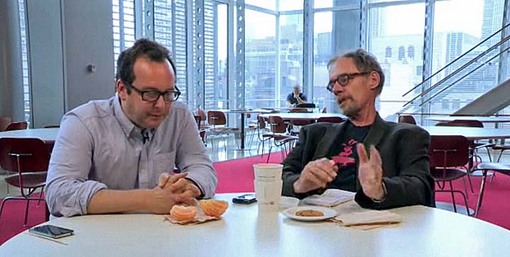
David Carr interviewed A.O. Scott on the subject of movie criticism in a “Sweet Spot” video posted on the New York Times’ ArtsBeat blog last Friday. I urge you to follow that link, watch the seven-and-a-half-minute conversation and let me know what you make of it. Carr plays the clown, but I’m not sure how much of it is intentional because most of what he says is so ignorant, and he doesn’t even attempt to support it or invest thought in the conversation. Scott, as you know if you read him regularly, is quite eloquent and calls bullshit on some of Carr’s more outrageous fabrications.

To help pin down my own thoughts (following up on years of writing about this very subject, including a series of recent posts and comment threads — “Avenge me! AVENGE ME!,” “The Avengers & the Amazing ‘Critic-Proof’ Movie,” “Continuing to argue for the irrelevance of my own opinions,” “Cannes and Cannes-not: On being a movie geek”), I’ve tried to label the various formal and informal fallacies of logic at play here, and link to Wikipedia definitions of them. Of course there are so many (in the conversation and in the list on Wikipedia) that I may have mislabeled some, in which case please let me know.

So, it begins:

December 14, 2012

Restoring your faith in America

BAD WORD WARNING: In a world where people are stupid enough to mistake a childrens’ lightbox toy displaying the likeness of a cartoon character (which looks no more sinister than any random Pac Man-era video-game pixel blob) for a bomb — and then blame other people for their own ignorance — the only proper response to this…

… is this:

That’s right: The Aqua Teen Hunger Force marketing campaign had been under way in ten cities for ” a few weeks” by the time some non-basic-cable-subscribing Luddite in Boston freaked out the whole of Beantown by mistaking a wall-mounted LiteBrite for a bomb.

View image The Mooninite in question.

Kids: Do not take your Etch-A-Sketches out of your room, or you may be arrested as a terrorist. Or a hoaxter. Because, goodness knows, anyone in their right mind might easily mistake a plastic rectangle with a picture on it for an improvised explosive device and start a citywide panic via TV news before the authorities have the slightest idea of what’s going on. That’s called Homeland Security. Don’t mass outbreaks of unnecessary panic and fear make you feel secure? What’s the root word of “terrorism” again?

Wil Wheaton is right:

You know, if the goal of terrorists and the whole point of terrorism is to scare the sh-t out of us so badly that we leap ten feet in the air whenever someone says “boo,” then the terrorists are clearly kicking our national asses.And if “The Departed” doesn’t win an Oscar, it’s the fault of the city officials and broadcast media of Boston for perpetuating this hoax about a hoax and making everyone in the world want to avoid acknowledging that Boston exists. Again. People are too embarrassed and infuriated to even want to think about the laughingstock town of Boston now — and it’s right in the middle of Oscar voting time! (That makes about as much sense as the whole “terrorist hoax” canard, doesn’t it?)

Evidently, this is a conspiracy by Bostonians to spread fear and uncertainty — terror, if you will — that Martin Scorsese may not win his long-deserved Oscar. Why did he have to shoot — er, I’m sorry, film — the movie in Boston, for heaven’s sake?!?! All Boston politician and broadcasters who have perpetuated and promoted this hoax should be arrested, fined, and forced to watch the Cartoon Network 24/7 for 60 days, until well after the Governor’s Ball. And they should be forced to apologize — to the Mooninites, Turner Broadcasting, and to all the people of the world, for being so reckless and irresponsible.

This is just one of many, many times to come when I will dearly miss Molly Ivins. She would have had a ball with this.

December 14, 2012

“Thomas Kinkade has won and we, all of us, have lost”

As far as I’m concerned, that’s the sub-head of the year — for the first section of Greg Ferrara’s perfectly observed (and, for me, exhilaratingly cathartic) Cinema Styles blog post, Five Years, Five Peeves, Five Reasons to Go On. It’s so sharp (and not just when I happen to share his point of view) and funny that I feel like offering an annotated response. You should read the whole thing (I couldn’t even get past the first item without stopping to leave an enthusiastic comment), but I will refrain… sort of. There’s a lot to consider here. Lemme just hit some of the highlights:

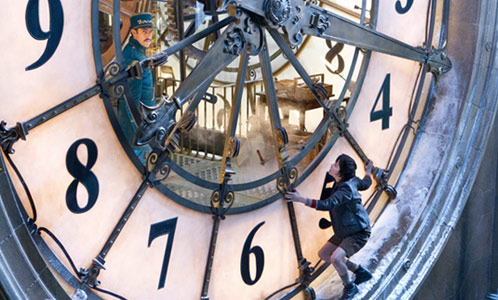
I have a problem with a lot of modern cinema. I don’t like the way most of it looks, I don’t like the way it’s edited (too choppy and frenetic) and I don’t like the way it’s acted (so painfully naturalistic that a wide range of performances are thoroughly interchangeable). And I have that feeling with a frighteningly high percentage of modern movies. But mostly, I have a problem with the way the movies look. And when I say I have a problem, I mean even with movies I like. We all know I don’t like CGI very much (I even do a series on special effects before CGI took over) and this is a big problem because it’s now everywhere, in practically all movies. Take “Hugo,” directed by Martin Scorsese. I use this movie as an example because it was a movie I liked and thus, I can assure you it is not me reacting to a movie I hate or using it as an excuse to hate the movie. No, I liked “Hugo” but I hated most of the look of it.

For months, even before it was released, I found myself feeling a strange reluctance to see “Hugo.” I still haven’t seen it, but I plan to do so in the next week or so — though I’m surprised to find that I am not looking forward to the latest Martin Scorsese Picture. Why? I hadn’t quite put my finger on it until I read Greg’s piece. It’s because I hate the frothy, cotton-candy look of the stills I’ve seen. I compared the look of “Avatar” to Thomas Kinkade and Thai restaurant fiber-optic flower lamps (remember Michael Atkinson’s priceless protest: “What, am I a forest animal, unthinkingly hypnotized by shiny objects?”).

December 14, 2012

Opening Shots: ‘Nights of Cabiria’

View image

View image

View image

From John Hartl, film critic for MSNBC, Seattle, WA:

“Nights of Cabiria��? (1957)

The opening scene in Federico Fellini’s greatest film presents a pattern that will be repeated in the story of Cabiria, a shrimpish streetwalker who is as feisty as she is gullible. She and her boyfriend of the moment, Giorgio, scamper across a vacant field in front of some appallingly character-less Roman apartments. She’s happy and uninhibited, but he seems impatient and calculating. As they approach a canal, he grabs her purse, shoves her in the water and runs away. A small boy hears her cries, and he and his friends rescue her just as she’s about to drown. Several adults join the rescue party, gracelessly turning her upside down as they expell the water she’s swallowed, and finally she starts breathing again. Offended and embarrassed by the kindness of strangers, she walks off in a huff.

Life rarely gets better for Cabiria, who doesn’t have much more luck in her dealings with celebrities, religion or a theatrical hypnosis session in which she bares her soul for an audience of still more strangers. Played with tremendous spirit by Fellini’s wife, Giulietta Masina, she has a habit of falling for traitorous losers, throwing money at them, then waking up to find herself surrounded by people she’s never met. The opening scene is almost a prophecy, yet it’s never depressing because Cabiria doesn’t know how to give in to despair. In the end, she achieves a state of grace in the midst of her most ruinous folly.

December 14, 2012

The Worst Movie of the Decade Relay

As near as I can tell, this particular discussion got started when Sara Libby wrote a short piece at True/Slant called “Worst Movie of the Decade: ‘Crash’.” She said:

It’s been called a “feel-good” racism movie — one that leads people to believe they’re on the right side of racism, when in fact they’re just having their buttons pushed and their preconceived notions re-affirmed. […]

Bad movies get made all the time. But what infuriated me about “Crash” was that so many people mistook it for something profound when it was truly the opposite. It shouts at the top of its lungs: “I’M SUBTLE! I’M NUANCED!” and so many people somehow agreed.

December 14, 2012
subscribe icon

The best movie reviews, in your inbox