The summer of our mega-discontent?

Among my friends and neighbors the most-discussed movie of the summer has been “Roman Polanski: Wanted and Desired.” I’ve heard tell that some other movies have opened, too, and I saw some of them. I saw “Speed Racer,” but only because I was reviewing it. And I saw “Iron Man” and “Pineapple Express” and last week I saw “The Dark Knight.” Just saw “Tropic Thunder,” too. I pretty much liked all of them except “Speed Racer,” which was at least stimulating to write about and discuss. But I’d say only “Pineapple Express” is a work of true genius. Meanwhile, the most ambitious and accomplished movie of the year so far (and I’m only 4/7ths of the way into it) is HBO’s “Generation Kill.” Next on the list of movies I really want to see is “Man On Wire,” the documentary about the guy who walked a tightrope between the World Trade Center towers. And “Wall-E.” I’m excited.

But the way Stephanie Zacharek at Salon.com sees it, millions of moviegoers may be suffering from a malaise. She asks: “Are you suffering from blockbuster fatigue?”

December 14, 2012

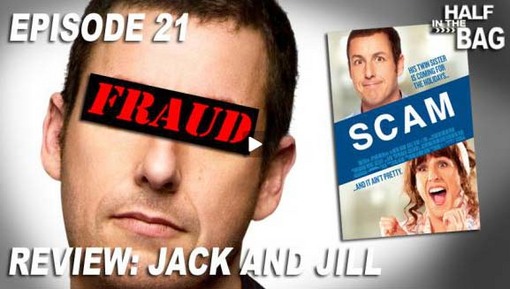
Adam Sandler’s house of cruelty

“Through my films I’m eventually trying to one day tell the truth. I don’t know if I’m ever going to get there, but I’m slowly letting pieces of myself out there and then maybe by the time I’m 85, I’ll look back and say, ‘All right, that about sums it up.'”

— Adam Sandler, interview clip used in the 2012 Oscar broadcast

What if those schlocky Adam Sandler movies that you either think are funny or you don’t really aren’t just schlocky Adam Sandler movies that you either think are funny or you don’t? What if they don’t have much to do with movies at all, but are more like leveraged derivative instruments (I don’t actually know what those are) or synthetic collateralized debt obligation (CDO) transactions, devised by accountants to provide maximum returns with minimum effort — that promise investors profits for next-to-nothing? Ultra-low-budget production values and minor league actors, writers and directors (except for Sandler himself, who gets $25 million-plus up-front plus a heavy chunk of the gross), subsidized by egregious product placements, make for maximum risk minimalization.

As a moviegoer and a critic, all I care about is what’s on the screen — or isn’t. But there’s so little on the screen in Adam Sandler movies, that I confess I’m bewildered at what some claim to see in them. So, if you’re curious about, say, how the production cost of the average Adam Sandler comedy jumped from about $30 million to about $80 million overnight… well, just keep reading.

The so-called ” flop” of “That’s My Boy” this past weekend (Sandler’s second after “Jack and Jill” — almost a trend!) has been greeted with schadenfreude in some quarters, but it disregards the likelihood that financial arrangements have long been in place that ensure a Sandler movie has to really, seriously tank before it winds up actually losing money.* Who knows — there may be the equivalent of credit default swaps that protect Sony and Happy Madison from disappointing returns. I wouldn’t be surprised to learn that there are investment devices that allow the backing companies to actually make money by placing wagers predicting the underperformance of a given movie, just to hedge their bets. Everybody wins, right?

December 14, 2012

Compatibility and taste: Bad sneakers and a piña colada, my friend

Somebody named Michael Jones — essentially the same Mr. Jones Bob Dylan wrote about years ago — appeared on HuffPo recently with a piece called “That Steely Dan Moment” — you know, about a discovery of musical taste that makes you wonder if you could ever love the person who possesses it. The twist is that he’s the one who falls short and doesn’t know it. Turn up the Eagles, the neighbors are listening, Mr. Jones.

Anyway, I wouldn’t have paid attention except that his story (who knows where or when it originally appeared if it was on HuffPo) reminded me of an article my friend Julia Sweeney did for the February, 1993, issue of SPIN magazine that was written and edited by the staff of “Saturday Night Live.” It probably wasn’t an entirely original idea then, either, but it was called “Men, Music & Me,” and in it she discussed her assessments of collegiate and post-collegiate boyfriends — using their cinematic and musical tastes as a guide. (Please also see my entry on Carl Wilson’s book, “Let’s Talk About Love: A Journey to the End of Taste.”)

December 14, 2012

Opening Shots: Another Woman

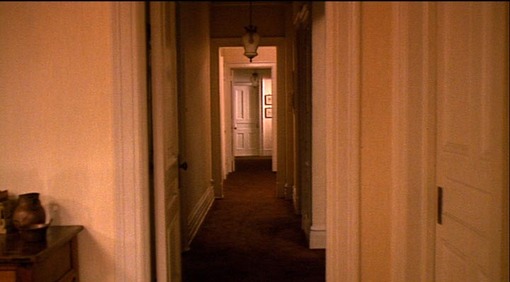
Woody Allen’s “Another Woman” (1988) begins with a shot that is the whole movie in miniature. As followers of the Opening Shots Project know, that’s one of my favorite approaches, and I think “Another Woman” is one of Allen’s best movies.

A woman (Marion Post, played by Gena Rowlands) appears at the far end of a dark hallway and strides toward the camera, passing in and out of light. She is wearing a long coat, and she puts a scarf around her shoulders as she walks. She’s a woman who knows where she’s going. We don’t get a good look at her until she moves into medium close-up, adjusts an earring and comes face to face with herself in the mirror. (Bergman reference intentional.) Her reflection is obscured from our point of view, but for a moment we see her look directly into her own eyes.

Marion, who has recently turned 50, thinks she knows herself and what kind of life she has led. But what she encounters when she steps out the door will overturn her establish notions of who she is and what she has done with her life: her memories of the past, her marriages, her lovers, her friendships, her relationships with her own family… Everything she though was solid and certain is swept out from under her feet and she goes into free-fall. With wit and insight, the movie details her unexpected investigation into what she’s made of herself. And as the illusions crumble around her, she notices her mother’s tear stains on the last line of a favorite poem, Rainer Maria Rilke’s “Archaic Torso of Apollo,” which reads: “… for here there is no place that does not see you. You must change your life.”

December 14, 2012

Misinterpreting the Tomatometer

Last week Slate ran a story about the “Hollywood Career-o-Matic,” which claimed to use data from Rotten Tomatoes to chart the trajectories of Hollywood careers. Interactive feature: Just enter the name of an actor or director and it will instantly generate a graph showing that person’s critical ups and downs.

For example, here’s one for M. Night Shyamalan, with each dot representing the Tomatometer score for the features he has directed:

Slate concludes that, according to Rotten Tomatoes data, the Best Actor in movies is Daniel Auteuil, with John Ratzenberger the best American actor, since he’s voiced a character in every Pixar movie. Best Actress: Arsinée Khanjian. Worst Actress: Jennifer Love Hewitt. Best Director: Mike Leigh. Worst Director: Dennis Dugan (veteran of Adam Sandler movies such as “Happy Gilmore,” “I Now Pronounce You Chuck and Larry,” “You Don’t Mess With the Zohan” and “Grown Ups”).

Yes, this is all so silly that the mind boggles, but let’s start with the premise itself: What is the correlation between reviews and careers in Hollywood? Adam Sandler and Michael Bay wouldn’t look much more impressive than Shyamalan if you looked only at reviews. And the Slate piece is riddled with misconceptions about the Tomatometer:

December 14, 2012

Internet Meme Timeline

Internet Memes on Dipity.

Don’t forget your memes. And don’t play in puddles unless you’re wearing your rubbers. And wash behind your ears.

(tip: David Pogue)

December 14, 2012

TIFF 2007: Abortion in demand

View image The negotiation.

When it comes to grim accounts of healthcare issues and bureaucracy in Romania, photographed in long takes with a hand-held camera, the 2007 Cannes Palme d’Or winner “4 months, 3 weeks and 2 days” plays like a screwball comedy next to last year’s relentless three-hour endurance test, “The Death of Mr. Lazarescu.” (A test, by the way, that I failed.) That’s not to say it’s any less harrowing; it’s just shorter and, in my view, less distractingly theatrical. (The cinematographer is the same — Oleg Mutu — so the difference may be in the director.)

Here, the long takes (sometimes entire scenes) don’t keep reminding you that they’re being filmed by somebody walking around with a camera. The work is steady, controlled, disciplined. And, like several impressive films at this year’s Toronto Film Festival (including “No Country for Old Men,” “Chop Shop,” “Persepolis,” “Paranoid Park”) it chooses just the right moment to cut to black at the end. (That’s a favorite device of mine, and it seems to be quite popular about now.)

As you may know, Cristian Mungiu’s film is about an abortion, which virtually guarantees it will be “powerful.” But what makes the movie work is the portrayal of the characters: Otilia (Anamaria Marinca), the central character, helps her passive-aggressive roommate Gabita (Laura Vasiliu) arrange for an illegal, hotel-room “probe” procedure performed by a cut-rate black market abortionist who goes by the name Mr. Bebe (Vlad Ivanov).

But this isn’t just another story about women victimized by men in a repressive and bureaucratic political system (although it is that, too). The most infuriating character in the whole piece is Gabita, who is so irresponsible and “helpless” that she deliberately puts Otilia at risk again and again, by forcing her to take all the risks except for the actual procedure itself. You wonder how the weak and utterly blank Gabita ever even survived to reproductive age, and whether she would have done anything at all if Otilia hadn’t stepped up to take responsibility. (Gabita seems like the type who would just give birth and then walk away from the baby — whether in the hospital or in an alley somewhere.)

This in no way excuses the ways Mr. Bebe exploits the situation, but during a painful, protracted negotiation in the hotel room, your sympathies are — for a while, at least — more with him than Gabita. She has failed to follow any of his instructions (meeting him in person, reserving the room), which makes him justifiably distrustful in a country where performing an abortion carries a stiff prison sentence. But he eventually crosses a line, from understandable paranoia to cold manipulation of the situation.

“4 months…” is a sharp political commentary about free-market forces in a socialist bureaucracy where nearly everything is regulated by the government. In certain respects, Mr. Bebe is simply an entrepreneur, a man who identifies a need and fulfills it to make a profit. Pure capitalism, supply and demand. Meanwhile, the government keeps its citizens’ social, economic and private lives wrapped in a binding of red tape.

I’d love to see a Bordwellian Average Shot Length analysis of this film. Fortunately, the long takes don’t call attention to themselves. One such shot at a dinner table, during a birthday party at the home of Otilia’s boyfriend, is composed with the boyfriend’s mother on the left, Otilia in the center, the boyfriend slightly behind her, and his father on the right. Olilia has just left Gabita in the hotel room after the abortion. She doesn’t want to be here, and she’s thoroughly distracted. The conversation and activity (eating, smoking, drinking) go on all around her, and she remains relatively immobile in the frame. She is in the action, but not of it, and the camera communicates her distress and unease with subtle effectiveness.

“4 months…” is an impressive film. But it does not reflect well on the Cannes jury that it was chosen for the Palme d’Or over the Coen brothers’ “No Country for Old Men.” That seems almost inconceivable. One is a good movie; the other very nearly defines the essence of movies.

December 14, 2012

Annotated Transcript: In the Cut, Part I: Shots in the Dark (Knight)

In “In the Cut Part I: Shots in the Dark (Knight),” I sought to pinpoint any and all possible reasons for the confusion I’ve always felt while watching part of an action sequence in “The Dark Knight.” Some dismissed it as nitpicking (which is their prerogative), that criticism should be limited to looking at a movie in real time. But I felt I should go beyond the familiar critical generalizations (“Adjective!” “Adverbly adjective!”) and try to locate precisely what I found disorienting and understand why I found it that way.

A few others, unfortunately, became confused about what I actually said or did not say in the 19-and-a-half-minute video, so I thought, for the record, I should publish a transcript to make it easier to reference. (Then I can just send links to those who misunderstand or misrepresent.) I don’t write out a script for these essays — I watch the movie, record what I want to say and then edit my remarks. So this, to the best of my ability, is an annotated transcription (with certain passages in bold for emphasis) of the narration in the finished video:

TITLE: “It’s quite easy to over-cut a sequence: make it visually exciting and lose track of what is happening and who the characters are….

“Where you can’t follow action, it’s not just action, it’s the whole movie you can’t follow. Action is very difficult, it has to be very carefully planned and conceived.”

— Lee Smith, editor (“The Dark Knight,” “Inception”), interviewed in The Australian, October 30, 2010

[More from that interview here.]

NARRATION: The thing is, what he’s talking about there is, I think, one of “The Dark Knight”‘s most painfully obvious shortcomings. Its visual grammar is a mess and sometimes that results in scenes that are just incoherent.

So, when I saw that quote about action from the editor of “The Dark Knight,” I thought maybe I should go back and take a close look at one of the movie’s most famous action sequences and look at it like an editor, and try to figure out what information was being conveyed, shot by shot, and what it was that maybe I was missing…

December 14, 2012

Blue, red, purple and Colbert: Better maps

Mark Newman of the Department of Physics and Center for the Study of Complex Systems at the University of Michigan has created some electoral cartograms of the United States that reflect the reality and complexity of our voting patterns much more effectively than those misrepresentative red state/blue state maps to which we have become accustomed. This one, for example, is based on 2008 results by county and population. Note that there’s a lot of purple. You won’t see this balance on Fox News, where the “real America” is supposedly bright screaming red. (In fact, the pure-blue population centers are much larger than the pure-red ones.)

Newman writes of the above: “As this map makes clear, large portions of the country are quite evenly divided, appearing in various shades of purple, although a number of strongly Democratic (blue) areas are visible too, mostly in the larger cities. There are also some strongly Republican areas, but most of them have relatively small populations and hence appear quite small on this map.”

(tip: Andrew Sullivan)

Click below for my own newly redrawn map of Colbert Nation.

December 14, 2012

Who matters?

View image Whose films matter today?

Andrew Sarris, quoting himself, reminds us of what a big deal the late Michelangelo Antonioni — and Euro-movie staples Ingmar Bergman, Francois Truffaut, Alain Resnais, Jean-Luc Godard, et al. — were in the late 1950s and ’60s, at least in metropolitan centers like New York:

My own 1961 review in The Village Voice continued in the same vein. “As long as the great foreign films continue to trickle into New York at the present snail’s pace, the enthusiasm of discerning moviegoers will have to be concentrated on one phenomenon at a time. 1959 was the year of ‘Wild Strawberries’ and ‘The Four Hundred Blows,’ 1960 belongs to ‘Hiroshima, Mon Amour’ and ‘Picnic on the Grass’ [Jean Renoir]. So far this year it has been ‘Breathless,’ but now it is time for another blast of trumpets. Beginning April 4 at the Beekman Theater, ‘L’Avventura ‘will become the one first-run film to see in New York. The sixth feature film of Italian director Michelangelo Antonioni, ‘L’Avventura’ will probably be even more controversial than its French and Swedish predecessors, which have been conveniently misunderstood as problem tracts of old age, childhood, juvenile delinquency, miscegenation, nuclear warfare, or what have you.

“With ‘L’Avventura’ the issue cannot be muddled, Antonioni’s film is an intellectual adventure, or it is nothing. The plot, such as it is, will infuriate audiences who still demand plotted cinema and potted climaxes. A group of bored Italian socialites disembark from their yacht on a deserted island. After wandering about a while they discover that one of their number, a perverse girl named Anna, is missing. Up to that time, Anna (Lea Massari) has been the protagonist. Not only does she never reappear, the mystery of her disappearance is never solved. Anna’s fiancé (Gabriele Ferzetti) and her best friend (Monica Vitti) continue the search from one town to another, ultimately betraying the object of their search by becoming lovers. The film ends on a note of further betrayal and weary acceptance, with the two lovers facing a blank wall and a distant island, both literally and symbolically.”

So when exactly did I tire of Antonioni to the point of Antonioniennui? I am not sure. It may have been about the time of “The Red Desert” (1964), which I disliked, and well before “Blow-Up” (1966), which I liked enormously, unlike the late Pauline Kael, who dismissed it with a yawn.

It must be noted that at the time I waxed rhapsodic about “L’Avventura,” I had not yet seen any of his five previous films…. “L’Avventura” was received here like a smashing debut film, and from then on it seemed just like more of the same, only less so, with “La Notte” (1961), “L’Eclisse” (1962) and most exasperatingly of all, “The Red Desert.”…

Whose films today spark similar sensations, and love-or-hate debate? Living directors about whom your opinion really seems to matter, whose films are considered “must-sees” by serious moviegoers? The Coens? Quentin Tarantino? Brian DePalma? Steven Soderbergh? I’m asking. I don’t think film festival mega-stars like Lars von Trier or Abbas Kiarostami or Wong Kar-Wai are nearly well-known or influential enough to have this kind of impact, on movie fans in general or on other filmmakers. Are any of the candidates European?

ADDENDUM: Another way of looking at it: Is there a filmmaker whose style is so recognizable that it could be parodied — and mainstream moviegoers, from their 20s to their 40s, would know what was being parodied, as was the case with Bergman, who was lampooned by the likes of “SCTV,” Woody Allen, and “Bill and Ted’s Bogus Journey”? (Then again, could a television comedy show as smart and aware of the diversity of culture and pop culture as “SCTV” exist today? Actually, such a thing did exist not all that many years ago on HBO: “Mr. Show with Bob and David.”)

December 14, 2012

The Narnicles of Chronia: Prince Capsicum

View image Lesson for the kiddies: Don’t take Turkish Delight from an icy Tilda Swinton and don’t be fooled into thinking this seemingly innocent underground-dwelling creature has your best interests at heart. Got that?

My review of “The Chronicles of Narnia: Prince Caspian” is at RogerEbert.com. Here’s an excerpt: 

… Character is not destiny in the “Narnia” pictures. Destiny is. Which creates some moral and dramatic dilemmas for the viewer. With all the dramatis personae Lewis has crammed into his filagreed fantasies, few of the players have the opportunity to leave much of an impression, or acquire significance, beyond what the tale demands of them. (Who’s that badger again?) They do what is asked of them — in the story and by the story. And once we realize that even the leads are predestined to play their parts in fulfilling prophecies, and that all they have to do to meet the requirements is to abide by (or guess) whatever certain mystical authority figures want them to do, the tension deflates a bit.

The moral options, as set forth in the movies so far, are fairly clear-cut: believe the beautiful lion and the friendly beavers; don’t trust the sepulchral ice queen bearing Turkish Delight or the hideous dark demons extolling the forces of hate. What could be simpler? A child could do it. And what kind of lesson does that communicate to the child who can? That it’s easy to tell right from wrong? Not a wise maxim.

What responsibilities do the Sons of Adam and Daughters of Eve (how does that work?) bear for their own decisions, and the consequences of their actions, if everything can eventually be set right by some deus ex machina — the healing properties of supernatural potions, or the corrective powers of magic lion’s breath? What becomes of free will, of meaning itself?

December 14, 2012

The Stepford Critics?

View image It takes a Village of Damned Critics. Are there more where he came from?

Are movie critics too much alike? Not just in their opinions, but in their very approach to movies, or their writing styles? In March, Andy Horbal, formerly of the film criticism blog No More Marriages! and now writing at Mirror/Stage, observed, “When looked at side-by-side at sites like Metacritic and Rotten Tomatoes most movie reviews reveal themselves as guilty of a shocking degree of sameness.”

Of course, 10 or 20 years ago, virtually nobody outside a newspaper’s local circulation area would have any idea of what its movie critic said about a particular film. I wonder: Are aggregation sites like RT and Metacritic revealing sameness, or influencing it, or creating an illusion of it? Could this appearance of uniformity have something to do with the little chunk-ettes these sites choose to excerpt from the reviews — not unlike the (even shorter) ones studios choose to use in ad campaigns?

In early February, preparing for his contribution to my Contrarianism Blog-a-Thon, Andy was in the winter of his discontent about film criticism in general:

I’m frustrated by the film blogosphere. I’m also frustrated by journalistic film criticism, and the primary problem in both cases is what I see as a plague of sameness. Additionally, I’m frustrated by the imitative quality of much blog writing: specifically, the way film blogs imitate journalistic film criticism which, as I said, frustrates me itself.As I’ve written before, I think these are golden days for film criticism — in large part because of the unprecedented explosion of writing now easily accessible on the web: not only the writing of big, established critics and scholars, but the distinctive voices and perspectives of many bloggers who in the past would not have had access to a publisher, or an audience. At our fingertips we have not only considerations of new movies, but vast archives of writing, from the present and the past, about the whole history of movies.

This has never been possible before, when you’d have to make a trip to the library to physically search for newspapers and magazines, perhaps in bound volumes or on microfilm. Now, no matter how small a town you live in, as long as you can get on the Internet, you have access to much of what was once available only in big-city libraries. And, if you have a mailbox, you can watch or rent more movies on DVD (through NetFlix, for example) or on cable or satellite TV (Turner Classic Movies, On Demand, premium channels or any number of pay-per-view services, including Amazon Unbox) than you’d ever have had the opportunity to see in any major city over the course of several years. (How many times were “Le Samourai” or “Madame de…” or “Celine and Julie Go Boating” or even “La Dolce Vita” actually projected on screens in your town during the 1970s, ’80s or ’90s? They and many thousands of others are now available everywhere, all the time. That is revolutionary — beyond anything we could ever have predicted in the 1970s, when we saw these films in 16mm student film series or film societies. Or, if we were lucky, in 35 mm at rep houses, but even then the prints were often dirty, scratchy, choppy or multiple-generation dupes.) All this access also allows us to correct the millions of errors contained in pioneering works of film criticism that were, of necessity, based on old notes or faulty memories. The movies are more alive to us than ever.

I hold movie bloggers (and web sites) to a higher standard than I do daily newspaper critics, because they have luxuries of time and space and choice that the pros don’t: 1) they don’t have to write on deadline about something they’ve seen only once before it is released; 2) they can take the time (if a film is on DVD) to be sure they quote it correctly (not just rely on memory or notes hastily scribbled in the dark), and even provide clips or frame grabs to illustrate their points; 3) they can include hyperlinks to related sources of information and opinion; 4) they get to pick and choose which movies they actually want to write about, instead of being limited to what we used to call “the review treadmill” of whatever happens to be opening this week; 5) they are not subject to the many, many constraints of conventional print journalism, including limited word counts, layout restrictions, editorial concerns about writing for a “broad” or “mainstream” readership, and so on.

There’s a lot of amateurism on the web — which can be refreshing and stimulating (especially when, as Andy points out, the writers do not try to imitate some mythical “professional” style, and instead write in their own voices), or it can be embarrassing and stultifying (when ignorance combines with arrogance and a dull or strident writing style). At the same time, there are a plenty of reviewers holding jobs with major newspapers or magazines whose stuff isn’t up to the standards — of readability, accuracy, knowledge, or basic interest and engagement — that I would consider “professional” quality, either. Yet some bloggers have all this and more. In most cases, they’ve got everything but longtime professional (i.e., paycheck-cashing) experience writing about movies. (Just try reading some of those reviews you find on RottenTomatoes for some excellent negative examples. Next time you read a printed review, ask yourself if you think this writer actually likes his/her job. Or movies. You may have discovered one of those former sportswriters or feature reporters who’ve been unceremoniously shifted over to the “movie beat.”)

December 14, 2012

The Basterds who would not die!

As a number of online critics have noted, Quentin Tarantino’s “Inglourious Basterds” has inspired some of the most exciting critical discussion of the year. I’m grateful to Dennis Cozzalio at Sergio Leone and the Infield Fly Rule, who has been a big part of that discussion, for pointing out one of the most penetrating pieces on the movie yet, “For Bravery: Das Unheimliche and INGLOURIOUS BASTERDS” by Chris Stangl at The Exploding Kinetoscope.

Although I think he misinterprets something I wrote (and I’ll get to that later), he’s a superb writer who has an affinity for Tarantino’s work and an ability to articulate it compellingly.

Stangl offers inspired analysis of the structures and character games in Tarantino’s films; the invocation of decadent “Nazisploitation” (from “Ilsa, She-Wolf of the SS” to Visconti’s “The Damned”) among the layered movie textures in “IB”; Tarantino’s use of deep focus “to impart as much information as possible in a shot”…

December 14, 2012

Talking Heads > American Psycho > Christian Bale > Tom Cruise > Miles Fisher > Mad Men

A series of connections:

Director Mary Harron, on working with Christian Bale to develop the character of Patrick Bateman in “American Psycho”:

“We talked about how Martian-like Patrick Bateman was, how he was looking at the world like somebody from another planet, watching what people did and trying to work out the right way to behave. And then one day he called me and he had been watching Tom Cruise on David Letterman, and he just had this very intense friendliness with nothing behind the eyes, and he was really taken with this energy.”

(Also see: “Dexter” for a similar sociopathic study.)

Miles Fisher as Tom Cruise in “Superhero Movie”:

December 14, 2012

Tinseltown Trash Alert!

The lovely Mses Griffin and Sweeney in “It’s Pat: The Movie” (which has a helluva opening shot!)

OK, I don’t usually get into the tabloid “news” (that much) — this is, after all, a site devoted to the in-depth appreciation of cinema in all its manifestations (while understanding the realities of the entertainment business) — but this is just too much: Three irresistible trash stories all hitting the wires in one day! Where is Kathy Griffin when I need her?

Tom and Nicole: Never Married!

BBC: In fact, Kidman didn’t need an annulment for one simple reason: in the eyes of the Catholic Church her 10-year union with Tom Cruise, a renowned Scientologist, never happened.

Rush Limbaugh Busted for Illicit Viagra Possession!

AP: Rush Limbaugh could see a deal with prosecutors in a long-running prescription fraud case collapse after authorities found a bottle of Viagra in his bag at Palm Beach International Airport. The prescription was not in his name. [Dare we ask whose it was? We always knew not enough blood was getting to his head.]

Barbara Walters Upstaged by Some Old RuPaul Impersonator!

AP: “I love Star and I was trying to do everything I possibly could — up until this morning when I was betrayed — to protect her,” Walters told The Associated Press.

December 14, 2012

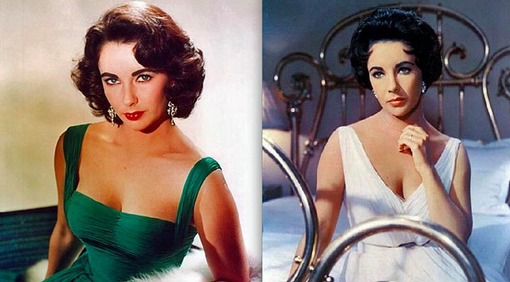
Elizabeth Taylor, pagan goddess

Camille Paglia is known for being both brilliant and wacky (possibly wacko) — often at the same time, which is probably when she’s at her most inspired. A founding contributor at Salon.com (and co-star of “It’s Pat: The Movie”), Paglia spoke on the phone to Salon editor Kerry Lauerman yesterday after the news of Elizabeth Taylor’s death, and offered up an extraordinary tribute. I just wanted to share some of it with you. Lauerman begins by quoting something Paglia wrote about Taylor in Penthouse in 1992:

“She wields the sexual power that feminism cannot explain and has tried to destroy. Through stars like Taylor, we sense the world-disordering impact of legendary women like Delilah, Salome, and Helen of Troy. Feminism has tried to dismiss the femme fatale as a misogynist libel, a hoary cliche. But the femme fatale expresses women’s ancient and eternal control of the sexual realm.” Paglia takes it from there:

Exactly. At that time, you have to realize, Elizabeth Taylor was still being underestimated as an actress. No one took her seriously — she would even make jokes about it in public. And when I wrote that piece, Meryl Streep was constantly being touted as the greatest actress who ever lived. I was in total revolt against that and launched this protest because I think that Elizabeth Taylor is actually a greater actress than Meryl Streep, despite Streep’s command of a certain kind of technical skill. […]

December 14, 2012

Ecstatic truth

View image Werner Herzog with Roger Ebert at Ebertfest 2007.

“Can you imagine 4,000 years passing, and you’re not even a memory? Think about it, friends. It’s not just a possibility. It is a certainty.”

— Jean Shepherd, 1975

In the past 72 hours, I have read two extraordinarily personal pieces of film criticism that have moved me to tears. The first is Roger Ebert’s “Letter to Werner Herzog,” and (just now), David Bordwell’s “The adolescent window.” Both miraculously distill the essence of cinephilia (or, a lifetime of intimacy with the arts and popular culture in general) into a single, eloquent piece of writing. Roger’s is, of course, devoted to his enduring relationship with the work of a single artist over many years, while David’s (though focusing on Jean Shepherd) traces a lifelong multi-media love affair with books, magazines, radio, TV, movies….

What does it mean, what does it feel like, to connect with another’s sensibility (and recognize something of yourself) in a film, or a book, or a voice? Each man approaches these questions from his own angle.

Roger Ebert directs his letter to Werner Herzog, who dedicated his most recent documentary, “Encounters at the End of the World,” to Roger Ebert. Ebert writes of Herzog’s “belief that the audience must be able to believe what it sees”:

Not its “truth,” but its actuality, its ecstatic truth.

You often say this modern world is starving for images. That the media pound the same paltry ideas into our heads time and again, and that we need to see around the edges or over the top. […]

Your documentary “Little Dieter Needs to Fly” begins with a real man, Dieter Dengler, who really was a prisoner of the Viet Cong, and who really did escape through the jungle and was the only American who freed himself from a Viet Cong prison camp. As the film opens, we see him entering his house, and compulsively opening and closing windows and doors, to be sure he is not locked in. “That was my idea,” you told me. “Dieter does not really do that. But it is how he feels.” […]

In one scene you can foresee the end of life on earth, and in another show us country musicians picking their guitars and banjos on the roof of a hut at the South Pole. You did not go to Antarctica, you assure us at the outset, to film cute penguins. But you did film one cute penguin, a penguin that was disoriented, and was steadfastly walking in precisely the wrong direction—into an ice vastness the size of Texas. “And if you turn him around in the right direction,” you say, “he will turn himself around, and keep going in the wrong direction, until he starves and dies.” The sight of that penguin waddling optimistically toward his doom would be heartbreaking, except that he is so sure he is correct. […]

I have started out to praise your work, and have ended by describing it. Maybe it is the same thing. You and your work are unique and invaluable, and you ennoble the cinema when so many debase it.

David Bordwell recalls the “Law of the Adolescent Window,” that time in our lives (roughly between ages 13 and 18) when the world, and the world of culture, opens up to us in ways that make indelible impressions:Whatever called out to you when your window opened… is likely to retain its bright purity throughout your days. What’s kitsch or cheesy or retro to others is precious to you.

Make no apologies. It’s not mere nostalgia or guilty pleasure to revisit these creations. You can return to them as to old friends. Encountering them again, you remember when you took it for granted that anything was possible in your life. Their sharp, shining lines fitted your range of vision, and mostly they still do.

Your taste was unerring. These teenage passions represent a big chunk of the finest part of you. In some secret place you are still as uncomplicated as you were then.

Go ahead. Tell us. What ecstatic truths have you seen through your window?

December 14, 2012

When comedy happens

I had just begun working on a piece about how comedy is the the only adequate response to the modern world, and the most profound approach to exploring and understanding the modern human psyche… when this happened. The folly and tragedy of human existence, and the indifferent and inhospitable relationship of the universe to human needs and desires, can be plumbed only by the sharpest and most penetrating comedy, without which tragedy loses its meaning and its deepest pain. And sometimes it just happens without comedy writers needing to make anything up. Or is it the other way around? Miss Congeniality. Elle Woods. Tracy Flick. Could this be an example of life imitating comedy?

Maureen Dowd in The New York Times takes a lighter comedic view:

So imagine my delight, my absolute astonishment, when the hokey chick flick came out on the trail, a Cinderella story so preposterous it’s hard to believe it’s not premiering on Lifetime. Instead of going home and watching “Miss Congeniality” with Sandra Bullock, I get to stay here and watch “Miss Congeniality” with Sarah Palin. […]

This chick flick, naturally, features a wild stroke of fate, when the two-year governor of an oversized igloo becomes commander in chief after the president-elect chokes on a pretzel on day one.

The movie ends with the former beauty queen shaking out her pinned-up hair, taking off her glasses, slipping on ruby red peep-toe platform heels that reveal a pink French-style pedicure, and facing down Vladimir Putin in an island in the Bering Strait. Putting away her breast pump, she points her rifle and informs him frostily that she has some expertise in Russia because it’s close to Alaska. “Back off, Commie dude,” she says. “I’m a much better shot than Cheney.”

[UPDATE: Now comes news from the McCain-Palin campaign that there’s an unmarried, pregnant 17-year-old daughter in the pro-family Palin household. You can’t make this stuff up. Reuters reports that the minor is “about five months pregnant and is going to keep the child and marry the father, according to aides of Republican presidential candidate John McCain.” Damn right she will. It’s written into the GOP platform!]

Quite often, the behavior of public figures displays a cosmic humor beyond anything a comedy writer could actually have gotten away with. In this case, the joke would seem too crass and cynical if it weren’t for real. Now its crassness and cynicism give the humor real bite. A week ago if some film or television writer had proposed this preposterous scenario (old politician chooses Alaskan creationist former small-town mayor and beauty contest winner as running mate), it would have just seemed mean and a little desperate. Now? Well, see “Ham Sandwich McCain’s Actual Choice for Veep.” It no longer seems so far-fetched.

Now you have to wonder: Why didn’t he choose someone more qualified? Like Harriet Miers?

When it comes to experience, Dan Quayle was the natural choice — but his Y chromosome made him ineligible in the all-important tokenism category. (Brownie could bring his hurricane ineptitude to the table, but he’s still sporting a scrotum so that won’t play.) The main attribute McCain’s running mate needed was that she be able to play up her sisterhood with Senator Hillary Clinton, the veteran politician so long beloved and revered by the Republican Party. That and she had to have spunk. The convention is in Minneapolis, and she’s gonna make it after all.

Once comedy of this magnitude has occurred, and satire has been rendered superfluous, the really brilliant comedians have only to recognize the situation for what it is. I’m tremendously grateful, then, that Jon Stewart, with his unerring eye for future casting opportunities, and Samantha Bee, with her sharp-as-a-tack “lady brain,” found exactly the right words to summarize the genius behind this unprecedented decision.

(Transcript below, after the jump.)

December 14, 2012

The Miracle of Trudy Kockenlocker

Trudy: “You certainly helped me out by taking me out tonight!”

Betty Hutton died earlier this week. She was 86. Her most popular movies were probably “Annie Get Your Gun,” the 1950 Irving Berlin musical (directed by George Sidney) in which she played the title role of Annie Oakley; and the lumbering Cecil B. DeMille circus spectacle, “The Greatest Show on Earth” (Best Picture Oscar winner for 1952), in which she played a sexy trapeze artist.

View image Norval: “Except for getting into the Army I can’t think of anything that makes me more happy than helping you out.”

View image Noval: “I almost wish you could be in a lotta trouble sometime so I could prove it to ya.”

But Hutton achieved immortality in 1944, as Trudy Kockenlocker (aka Mrs. Ignatz Ratzkywatzky) in Preston Sturges’ “The Miracle of Morgan’s Creek.” The shot sampled at right is, in my opinion, one of the greatest in movie history. Not because it’s a long dolly shot (in 1944!) that takes us all the way from the Kockenlocker’s front door to the town movie theater (although, yes, that’s part of it), but because it allows two splendid comic actors, Hutton as Trudy and Eddie Bracken as Norval Jones, to preserve the comic integrity of their repartee, without any cuts to destroy the rhythms of their performances.

View image Trudy: “We can’t send them off maybe to get killed and — rockets’ red glare, bombs bursting in air — without anyone to say goodbye to them, can we?”

View image Trudy: “How about the orphans? Who says goodbye to them?”

When they leave the house, Norval thinks he’s taking Trudy to a triple-feature at the movies, because her father (William Demerest) has forbidden her to go to a dance for departing soldiers. Between the front porch and the ticket booth, Trudy makes a personal appeal to the smitten, 4-F Norval, combined with a call to his patriotic duty and pity for orphan soldiers who haven’t got any family to say goodbye to them, to talk Norval out of the date, and his car keys. He goes to the pictures, she goes to the dance, and… nothing is ever the same after that.

View image Norval: “What a war!”

Later, when Trudy breaks the news to him that she is indeed in terrible trouble and needs his help again (after all, he did say he almost wished she’d get into awful trouble sometime so he could help her out of it — and now he’s certainly got his wish), their walk takes a different route. They don’t turn at the corner to go past the garage to the theater, but continue walking down the same street, and this time the shot is broken up into several components (including two optical “close ups” that appear to be inserted in order to combine two different takes). But it still feels like one fluid take because it’s three long shots joined with the two close-up inserts and one brief tracking shot where they change direction and start walking toward the camera.

View image “Papa don’t preach to me, preach to me…”

Three years later, in the Technicolor Musical “The Perils of Pauline,” directed by George Marshall (“You Can’t Cheat an Honest Man,” “Destry Rides Again,” “My Friend Irma”), Hutton sang this song, “Papa Don’t Preach to Me,” which could have been sung by Trudy Kockenlocker herself…. Or maybe that was the Madonna version. Anyway, watch the YouTube clip.

Now papa don’t preach to me, preach to me,

Papa don’t preach to me.

Let my heart break while it’s young

Papa don’t preach to me, preach to me,

Papa don’t preach to me.

Let me fling ’till my fling is all flung!

… I strolled through Paris

Today with Maurice.

The Rue De La Paix

Means “The Street of the Peace”!

December 14, 2012

Toronto: Beware catalog spoilers!

There’s nothing I hate more than a review that’s mostly plot description — unless it’s a movie that’s mostly plot. To me, movies are primarily about images, and after that, behavior, emotions, ideas, and so on. If there’s a story in there, swell, but for me, story is the MacGuffin, the excuse that seems important when you’re watching the movie, but which turns out to be just a tiny part of the experience when it’s over.

So, I’ve always tried to avoid anything beyond the most basic statement of a film’s premise, and perhaps a description of its main characters, when writing about movies. Which is why I’m so disappointed that so many of the entries in the 2006 Toronto International Film Festival catalog ($34.17 Canadian — though the US exchange rate is practically even now) give away far too much.

I know it’s tough to write these things (I did it for years in Seattle). You have to describe enough to make the movie sound enticing enough to potential ticket-buyers. But this is a festival, and one of the glories of a festival is getting to see something that hasn’t already been pre-sold and ruined by giveaway trailers and TV spots. So, to cite just one example, if anybody’s intending to see “Day Night Day Night” in Toronto, don’t read the catalog description!

December 14, 2012
subscribe icon

The best movie reviews, in your inbox