Opinions: Are they really worth a damn?

Do you agree that Kathryn Bigelow’s “The Hurt Locker” is a terrific movie? Well, Nile Gardiner of the Daily Telegraph also thinks so. Does that mean you agree with him? He says that it’s one of “The Top 10 Conservative Movies of the Last Decade.” Here’s the way he sees it:

What is refreshing about the film is its willingness to portray the US military presence in Iraq in an overwhelmingly sympathetic light, and the al-Qaeda-backed enemy as barbaric and fundamentally evil. There are no shades of gray in “The Hurt Locker,” and this is a strikingly patriotic motion picture that has been embraced by an American public weary of the anti-Americanism churned out by Hollywood in its portrayal of the War on Terror – from “Rendition” and “Lions for Lambs” to “Redacted” and “In the Valley of Elah.” “The Hurt Locker” is by far the best conservative film of 2009, and one of the greatest of the decade.

I hope this example persuasively illustrates several things (and why Kathryn Bigelow and James Cameron got divorced is not among them¹):

December 14, 2012

Bill Maher attempts to corroborate his theory that Americans are stupid by behaving like one

“If u get a swine flu shot ur an idiot.”

— Bill Maher, Twitter, September 26, 2009

“This is not a liberal versus conservative issue. This is a science versus nonsense issue.”

— Thomas H. Maugh II, Los Angeles Times health blogger

Bill Maher may as well believe in Creationism, for all he knows about science or religion. (See above.) The problem I’ve always had with him is that, no matter what position he may take up, his reasoning is likely to be manifestly unsound. Listen to him talk and most of the time you soon realize he doesn’t know what he’s talking about. It doesn’t matter if you eventually “agree” with his stance because he’s reached it for invalid reasons.

Take his latest anti-vaccine pronouncement, made to Bill Frist on Maher’s HBO show: “I would never get a swine flu vaccine, or any vaccine. I don’t trust the government, especially with my health.” OK, fine. If Maher doesn’t “believe” in vaccines, or the ability of the U.S. to provide a working one, he’s free to pass and to keep himself quarantined if he gets sick so he doesn’t infect anybody else. When he reaches Medicare qualification age (he’s 53) he can choose not to take advantage of it or any other health insurance he doesn’t believe in and pay cash for his hospitalizations and medical treatments. But telling people (like young people and pregnant women) who are at high risk from serious flu complications not to get vaccinated because he doesn’t “believe” in vaccines or doesn’t “trust the government”? That’s sick.

December 14, 2012

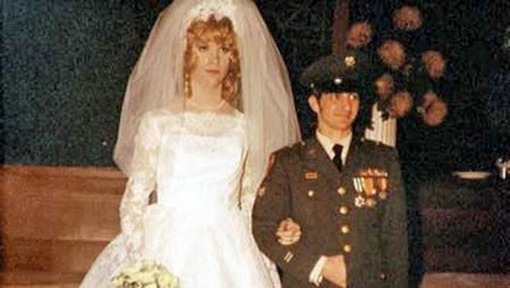
Quiz: What movie did this couple inspire?

Does this photo ring any (wedding) bells with you? Can you tell me who these people are and what movie they inspired? I’ll let you think about it and I’ll get back to you…

UPDATE: Answer after the jump…

December 14, 2012

“This is my happening and it freaks me out!”

Enlarge image: Messrs. Meyer and Ebert at the time of their collaboration.

Yes, “Beyond the Valley of the Dolls” is available on DVD at last. Dennis Cozzalio has a fine assessment of Russ Meyer’s busterpiece over at Sergio Leone and the Infield Fly Rule — and an appreciation of the commentary track by “BVD” screenwriter Roger Ebert, as well:

And now it seems that time, and film critics and film audiences, may finally have caught up with Ebert and Meyer. Last week’s DVD release of “Beyond the Valley of the Dolls” (in tandem with the straightforward Mark Robson-directed 1967 adaptation of “Valley of the Dolls”) provides a chance to see the candy-colored Panavision psychedelia, the free-associative montage, and the unbridled energy that powers Meyer and Ebert’s play(boy/Pent)house sensibility to greater advantage than it has probably ever been seen.

December 14, 2012

Glen Hansard slags the Once DVD cover

View image “I put together the DVD cover and the poster originally. And then they took it and f–king bastardized it.”

Academy Award-winning Irish songwriter Glen Hansard (the Academy urges us to identify Oscar-nabbers that way for the rest of their lives) speaks out about the lousy/cutesy DVD image manipulation on the cover of the US edition of “Once.” (Previous Scanners discussion here.) He’s waiting for the Criterion edition. From an interview at Pitchfork:

GH: Oh, man. They f–kin’ killed it. You’re right. They have us holding hands, which we never do in the film! Those legs aren’t mine. Those legs are like three times longer than my legs. It’s a completely new body. They literally just used my face. I’m wearing a hat in the original picture, so they Photoshopped my head. If you look at my head, my head looks totally weird, because whoever did the Photoshop job was sh-t. My head looks really weird, they took my hat off, and they gave me an entirely new body. It’s completely bizarre.

December 14, 2012

Juno about the fuzzier Oscars? Presenting… The Muriels

View image In 3-D, you’d swear Muriel was nibbling your proboscis. By the way, that’s not her real phone number.

Although you probably think they are a reference to the 1963 Alain Resnais film,¹ or Bette Davis’s bald uncle, The Muriel Awards are in fact named after Paul Clark’s guinea pig. The one named Muriel.

The 2007 Muriel Awards are chosen by an elite body of web-based life forms who are united in their love of movies. Among them is Dennis Cozzalio, whom I have been meaning to congratulate on his handsomely redesigned blog, the renowned and beloved Sergio Leone and the Infield Fly Rule. (Admire the new logo! Steal his Oscar predictions! Compare them to Roger Ebert’s! Compare them to Ali Arikan’s and his drawing of Daniel Plainview!)

Meanwhile, over at Silly Hats Only, Paul is handing out the Muriels to the deserving… Muriel recipients. (We’re not supposed to say “winners,” are we?) Acting as his own Price-Waterhouse and Jon Stewart combined, he began handing them out February 13 and will continue until February 29, at which point his presentation will actually be longer than the Academy Awards. (I think that’s a Bruce Vilanch joke that Whoopi didn’t use. Or maybe she did.)

Among the categories announced so far are 50th Anniversary Award for Best Film, 1957 (“The Seventh Seal”), 25th Anniversary Award for Best Film, 1982 (“Blade Runner”), 10th Anniversary Award for Best Film, 1997 (“Boogie Nights”) — and the Less-Than-First Anniversary Muriels for Best of 2007 go to…

December 14, 2012

Opening Shots: ‘Raiders of the Lost Ark’

View image

From Edward Bowie, US Army:

I have a counter-intuitive nomination for best shot: The opening segue from the Paramount “mountain��? to the unspecified Andean mountain in “Raiders of the lost Ark.��? Indicative, I think, that what we are about to see is “…only a movie!��?

View image

Perfect for the “just for fun��? spirit that Lucas and Spielberg intended for their paean to the Saturday serial while demonstrating the technical wizardry that gives their “effects��? movies their dazzle (and their point.) Relax, get out the popcorn, their won’t be a quiz….a masterpiece!

View image

JE: Nothing counter-intuitive about this one — it’s intuitive all the way! I recall seeing it the weekend it came out with a friend and film professor of mine. We took in a matinee double-bill — first “Clash of the Titans,” followed by “Raiders.” Within the first few seconds, I remember her leaning over and whispering: “Isn’t it great to see somebody knows how to make MOVIES?!?!” Yep, it is.

View image

Watching this shot repeatedly (I like to get my hands dirty, as it were, while getting frame grabs), I thought of a couple basic principles of improv comedy: 1) always add information to the scene; and 2) always say “yes” — never contradict what somebody else has brought into it. Of course, this shot is anything but improvisational; it’s artfully choreographed all the way — and Spielberg is saying “yes” and adding information second by second.

December 14, 2012

Opening Shots: ‘Little Murders’

View image Rise and shine…

What do we have here? It’s the opening shot of one of my favorite 1970s comedies, a dark absurdist urban paranoid masterpiece called “Little Murders” (1971) written by Jules Feiffer (“Carnal Knowledge”) and directed by Alan Arkin (as was the second, successful run of the play in New York in 1969; the first staging a year earlier closed in a week). As you might guess, it’s a movie about windows and frames. Look out any window, and there’s another one looking right back at you — with a telescope, a camera, maybe even a gun. After a while, you don’t want to know what’s out there. You shut off the TV, bar the windows and bolt the door just to keep the madness… out?

Elliott Gould plays Alfred, a listless, benumbed photographer who shoots piles of dog shit. That’s his subject. In this shot, Alfred is somewhere outside the window, getting beat up. That’s Patsy (Marcia Rodd) in bed. The sounds of Alfred’s mugging are drifting in her window, but that’s not what awakens her. It’s the phone — another call from the heavy breather (in an era where “obscene phone calls” were the latest in pornographic technological phenomena). But although the image may at first remind you of Kitty Genovese (the murder victim whose screams were ignored by neighbors in Queens), Patsy intervenes. And that’s the way it all begins.

Arkin jump-cuts into the scene a few times as the credits appear, in a way that reminds me of the percussive cuts of Harvey Keitel waking up (to the Ronettes’ “Be My Baby”) at the start of “Mean Streets” (1973). By the end of the film, the windows will be flung open again, to let the fresh air in… and the sniper rifles out.

P.S. Roger Ebert’s original 1971 review of “Little Murders” gets at why I think it’s such a good, and disturbing, comedy. It doesn’t tell you when it’s OK to laugh:

Arkin said, shortly after the film was released, that he’d only seen his movie once in a theater, and he was afraid to go again. When he saw it with an audience, he said, he thought it was a flop because there was no pattern to the laughs. People were laughing as individuals, almost uneasily, as specific things in the movie touched or clobbered them.

That’s my feeling about “Little Murders.” One of the reasons it works, and is indeed a definitive reflection of America’s darker moods, is that it breaks audiences down into isolated individuals, vulnerable and uncertain. Most movies create a temporary sort of democracy, a community of strangers there in the darkened theater. Not this one. The movie seems to be saying that New York City has a similar effect on its citizens, and that it will get you if you don’t watch out.

December 14, 2012

The Ultimate Movie Metaphor

The Rube Goldberg contraption in this OK Go video for “This Too Shall Pass” is one of the best visual metaphors I’ve seen for the way a well-put-together movie works. If something misfires or doesn’t go right, the cumulative payoff is diminished. Anywhere along the line, the whole thing could come crashing to a halt or just veer off course and peter out. It has nothing to do with narrative; it’s about construction, creating momentum (and anticipation and suspense) and the interactions between many details that ultimately make the thing whiz and whir and tick. I’m not yet crazy about the song itself, but I have a feeling it’s going to grow on me…

(tip: MattRosenDP, @GregMitch)

There’s also a four-part film showing how they did it, starting here:

December 14, 2012

Feliz Dias de los Muertos!

Both images above from the opening credits of John Huston’s “Under the Volcano” (1984), newly released on Criterion DVD.


Todo el trabajo y ningún juego hacen Jim un muchacho embotado.


Todo el trabajo y ningún juego hacen Jim un muchacho embotado.


Todo el trabajo y ningún juego hacen Jim un muchacho embotado.


Todo el trabajo y ningún juego hacen Jim un muchacho embotado.


Todo el trabajo y ningún juego hacen Jim un muchacho embotado.


Todo el trabajo y ningún juego hacen Jim un muchacho embotado.


Todo el trabajo y ningún juego hacen Jim un muchacho embotado.


Todo el trabajo y ningún juego hacen Jim un muchacho embotado.


Todo el trabajo y ningún juego hacen Jim un muchacho embotado.


Todo el trabajo y ningún juego hacen Jim un muchacho embotado.


Todo el trabajo y ningún juego hacen Jim un muchacho embotado.


Todo el trabajo y ningún juego hacen Jim un muchacho embotado.


Todo el trabajo y ningún juego hacen Jim un muchacho embotado.


Todo el trabajo y ningún juego hacen Jim un muchacho embotado.


Todo el trab y n nge ju pl g ma de l del y

December 14, 2012

Opening Shots: Silent Light

View image “Stellet Licht,” Heilige Licht.

From Paul Clark at ScreenGrab.com:

Despite the sensational buzz for Carlos Reygadas’ “Silent Light” at Cannes, I approached the film with a bit of trepidation when I got a chance to see it in Toronto. I didn’t much care for Reygadas’ previous features, Japon and Battle in Heaven. I could see that he was a talented director, but his attention-grabbing tactics and leaden symbolism made it feel like he was trying too hard. A director who films a shot of a man writhing in agony next to a horse’s corpse is just aching to be taken seriously as an artist.

But all of my doubts melted away during the glorious opening shot of “Silent Light.” The film begins with an image of a starry sky, with nothing but chirping crickets on the soundtrack. The camera then tilts slowly downward until we see the horizon in the distance. After this, the sun slowly rises, and we begin to make out the rolling hills, and a few trees. As the sun continues to rise, the soundtrack begins to teem with life- chickens, cows, and the like- and we see a farm. All the while, the camera ever-so-slowly pushes forward toward the horizon, as the sun rises higher and higher above the hills.

If I wasn’t sure before whether Reygadas was worth taking seriously, this shot put my misgivings to rest. Simply put, it’s a stunner, partly because Reygadas makes it feel so effortless. It’s an extremely patient shot, taking at least five minutes, and in this time he acclimatizes us to the deliberateness of the film’s world. “Silent Light” is set in a Mennonite community in Mexico, far removed from fast-paced modern life, where people speak slowly and aren’t prone to snap decisions. The film’s opening shot prepares us for this beautifully.

December 14, 2012

Unfairly balanced

In his latest column, Nicholas Kristof poses some important questions that undermine the myth of “fair and balanced” journalism. He recounts the story of the photo above, taken by Portland Press Herald photographer Gregory Rec on Friday, September 10, showing local Muslims gathering to pray for Eid al Fitr, marking the end of Ramadan. It appeared on the front page — the kind of image accompanied by a feel-good story about “faith and forgiveness” (as the headline said), that has provided the traditional, benign, pro-religion front-page news-feature in American papers for decades. No problem there.

The problem was the date of the paper.

The day of this issue’s publication, was September 11. And some readers were outraged that these images of American Muslims praying should appear on the anniversary of a deadly attack by radical avowed Muslims nine years earlier. If they’d waited for the next day’s (September 12) paper, with coverage of the memorials that took place on September 11, they might have found the balance they were looking for, but on September 11 the paper was bombarded with complaints.

December 14, 2012

In the Cut: Salt action previsualization

Thanks to Joshua Frankel, who worked closely with director Phillip Noyce and stunt coordinator/director Vic Armstrong on the animated storyboards for the sequence I examined in “In the Cut Part II: A Dash of Salt,” for sending me his previsualization sequence, above. As he explains on his site:

created previsualization animation for several major sequences in Salt. The film was not based on a book or other pre-existing property and the director, Phillip Noyce, had a lot of freedom to craft the story. Phillip worked with our team in previs to experiment with story options and push every moment in the film to be as unexpected and exciting as possible….

What is previsualization animation?

We build scale versions of the characters and sets inside the computer and create virtual cameras with lenses that match exactly the lenses being used by the cinematographer. I then work with the director to block in the actions, design camera moves and cut together a rough edit. We are able to do quite a bit of experimentation before anyone walks on set. The previs becomes a foundation for the sequence that the director can then build upon throughout the rest of the filmmaking process.

Compare with the sequence in the finished film, below:

December 14, 2012

Letter: In defense of (some) Christians

From Nathan Marone, Chicago, IL:

I am an evangelical Christian from Chicago. I’ve been very interested in your blogs concerning “The Da Vinci Code” (naturally). Much of what you say is true. There are many Christians who don’t really read the Bible much, or for that matter any literature that seriously deals with their faith. The subject of Church history eludes most Christians, and the complexities of academic theology can often be too much for them (and me sometimes, for that matter). I wish that this weren’t true, but sadly it is.

But I want to take the opportunity to defend some Christians.

If the Church were to reach my ideal, we’d all know Greek and Hebrew, know Church history pretty well, understand the various opinions on theology and philosophy… and then make sense of it all. But there are a few reasons that this does not happen. 1) People are lazy. It’s easier to be ignorant and believe. Much easier. Even the Bible acknowledges in Ecclesiasties that “with much knowledge comes much pain.” 2) I’m not sure that everyone has even the time to know all of the things that we ideally would have them know. Many Christians have jobs, families, and other obligations in life.

December 14, 2012

TIFF: Who shot Bush?

A “news photograph” from “Death of a President.”

“Death of a President,” the documentary-style speculative fiction about the assassination of the 43rd President of the United States, is seamless, intelligent and maybe even necessary to an understanding of George W. Bush’s role in the world today, and his place in the wider scope of history. Especially when public awareness of the facts about his administration lags so far behind what has already been documented.

Written and directed by Gabriel Range, this very convincingly staged television “documentary” falls into a tradition of fictionalized British films (going back to Peter Watkins’ famous “The War Game” and “Punishment Park” in the early 1960s) that use nonfiction techniques to explore contemporary social and political issues. Range himself made a film in 2003 called “The Day Britain Stopped,” about what might happen if public transportation came to a standstill. Before that, he made “The Menendez Murders” (2002), described as another form of docu-drama.

The scenario is a familiar one: What would happen if a much-hated world leader was killed in office? Since the failed assassination attempts on Adolph Hitler, fictions imagining how things might have changed with the elimination of one powerful figure have fascinated historians and the public. How could they not?

We all know that three four U.S. presidents have been assassinated, and that every president faces that threat every day. Gerald Ford, one of our most benign chief executives, survived two murder attempts in the month of September 1975 alone — and he was never as divisive and generally reviled as Bush Jr., whose methods and ideology have been vilified as Hitlerian in real-life speeches and demonstrations that we’ve all seen already. (I’m speaking only about the real-life hatred the man has evoked worldwide, not the aptness of the Nazi comparison or whether such virulence is justified by his words and actions in office.)

December 14, 2012

“Zodiac”: Digital and analog

View image Cracking the cipher of a cracked cipher: The Zodiac Killer.

Over at MCN, Larry Gross has an intriguing take on David Fincher’s “Zodiac” which I saw over the weekend. (As usual, I put off reading anything about the movie until after I’d seen it, including Manohla Dargis’s dead-on review.) Gross, the screenwriter of “We Don’t Live Here Anymore” and “True Crime,” begins with this:

“Zodiac” is an important postmodern work. It’s an authentically “new” and even experimental thing attempting, to quote from Susan Sontag’s essay “Against Interpretation,” to put content in its place. It’s very very much a film constructed on a 21st century conception of information as a non-substantive, purely relational digital phenomenon, and the fact that it was shot on video and exists immaterially as digital information is thus not a merely decorative issue but crucial to its meaning.I said something kind of similar recently about the “digital dimension” of David Lynch’s “Inland Empire” that is quite different from “Zodiac”:…”Inland Empire” unfolds in a digital world (a replication of consciousness itself — hence the title), where events really do transpire in multiple locations at the same time (or multiple times at the same place), observers are anywhere and everywhere at once, and realities are endlessly duplicable, repeatable and tweakable.”Zodiac,” on the other hand, impressed me as very much an analog film. Yes, it was shot on HD video (though with few of the showy CGI tricks Fincher played with in “Fight Club” and “Panic Room” (2002)), but the narrative, technique and structure of the film are inexorably linear and chronological.

The two effects shots that stand out — following a taxi from directly above as it moves through the streets to an intersection where a murder will take place; and a time-lapse view of the construction of the Transamerica pyramid building — both emphasize the unity of time and space, one as a measurement of the other. Scene after scene in “Zodiac” begins with a timecode that places it not only in a historical context (month, day, year) but in relationship to the previous scene (“two days later”; “three months later”). As I recall (from a single viewing, not knowing what to expect) there are no flashbacks, not even any instances of parallel action. Continuity is strictly linear: this happened, then this, then this… And the movie is just as specific about its geographical coordinates, because the precise location (and the distances between points) is just as important to establishing what happened, and who the killer is, as the exact time when the killings took place. (“Took place” — ha! Good time/place term.)

December 14, 2012

NORAD, 9/11 and United 93

View image: Patrick St. Esprit as Major Kevin Nasypany in “United 93.”

Michael Bonner (an associate producer on “United 93”) has an article in Vanity Fair reconstructing events of 9/11 from 30 hours of previously unreleased tapes from the Northeast Air Defense Sector (NEADS) of the North American Aerospace Defense Command (NORAD) . Bonner concludes that the situation was more chaotic and uncertain than the Pentagon would later claim, and the tapes support that conclusion. He interviews several of the key participants, including NEADS mission-crew commander, Major Kevin Nasypany:

Five years after the attack, the controversy around United 93 clearly eats at Arnold, Marr, Nasypany, and several other military people I spoke with, who resent both conspiracy theories that accuse them of shooting the flight down and the 9/11 commission’s conclusion that they were chasing ghosts and never stood a chance of intercepting any of the real hijackings. “I don’t know about time lines and stuff like that,” Nasypany, who is now a lieutenant colonel, said in one of our last conversations. “I knew where 93 was. I don’t care what [the commission says]. I mean, I care, but—I made that assessment to put my fighters over Washington. Ninety-three was on its way in. I knew there was another one out there. I knew there was somebody else coming in—whatever you want to call it. And I knew what I was going to have to end up doing.” When you listen to the tapes, it couldn’t feel more horrendously true.

When I asked Nasypany about the conspiracy theories—the people who believe that he, or someone like him, secretly ordered the shootdown of United 93 and covered it up—the corners of his mouth began to quiver. Then, I think to the surprise of both of us, he suddenly put his head in his hands and cried. “Flight 93 was not shot down,” he said when he finally looked up. “The individuals on that aircraft, the passengers, they actually took the aircraft down. Because of what those people did, I didn’t have to do anything.”

Related story, from Scripps-Howard via the Seattle Post-Intelligencer: Poll: A third of U.S. public believes 9/11 conspiracy theory.

December 14, 2012

A Concise History of the Made-For-TV Issue Movie

Pandemic flu expert and television historian Dr. Rob Corddry.

Rob Corddry on “The Daily Show,” explains how Monday’s “in-depth investigative report on ABC” called “Fatal Contact: Bird Flu in America” served to inform American citizens of the life-or-death options available to them, should an avian influenza pandemic strike our shores…

Rob Corddry: For Americans who missed the film, they wouldn’t know that one option is to blow your head off in front of your tiny, tiny baby….

Jon Stewart: But, Rob, the Movies of the Week are not really the best way to keep people informed.

Rob Corddry: Jon, TV movies open people’s eyes and shape public policy. Remember how “The Day After” changed America’s mind from being pro- to anti- nuclear war? Or how “The Burning Bed” brought attention to just how flammable beds can be? Or how “Roots” ended slavery?

December 14, 2012

Bette Davis at 104: Still smokin’

April 5 would have been Bette Davis’s 104th birthday. I was reminded of this interview I did with her in 1988, which appeared on my CinePad website 10 years later:

When my former Seattle Times editor called me, a few months after I’d moved to Los Angeles, to say he wanted me to interview Bette Davis, I wasn’t as thrilled as I probably should have been. I realized it was a rare opportunity — she was giving only three interviews to promote the paperback version of her book about recovering from her stroke — but Bette Davis had never been my glass of lemonade.

I just never really got the whole Bette-Davis-As-Icon thing. To me, she was a movie star, a part of Hollywood history (I admired the way she took on the studio bosses when they — and she — were at the peak of their powers), but with the exception of All About Eve (where she really used her movie-star mega-wattage as part of the role), I hadn’t regarded her as a great actress. I mean, she was no Barbara Stanwyck, who was equally adept as a screwball comedienne, a tragic heroine, or a femme fatale.

But of course, I wasn’t about to pass up the opportunity to interview a screen legend; there just weren’t that many of them left. I remember thinking it was kind of funny and appropriate that she was living on the outskirts of West Hollywood (in the Century House on Havenhurst), mecca to the gay men who really worshipped her. But why did they? Was she just a camp figurehead because her brittle, melodramatic style of acting hadn’t aged well? Or was it that she was Larger Than Life, a tough broad who had survived? Probably some of both…

Well, I’ll say this: She sure knew how to be Bette Davis. She was cantankerous and flamboyant, but I also thought there was an undercurrent of playfulness to her behavior. Not that I thought she was “performing,” or putting on a Bette Davis Act; I think she was probably like this most of the time. But I also think she rose to the occasion, somewhat, because she liked the attention, and liked the feeling that she was communicating — albeit through me — to her public.

It was a stellar afternoon…

December 14, 2012

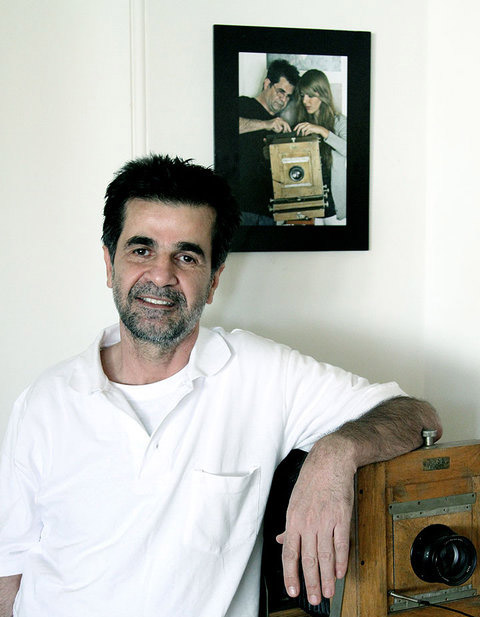
Panahi is home!

He’s still in the bloody dictatorship of Iran, he still faces charges of conspiring to make an anti-regime film… but, for now, he is home with his family.

December 14, 2012
subscribe icon

The best movie reviews, in your inbox