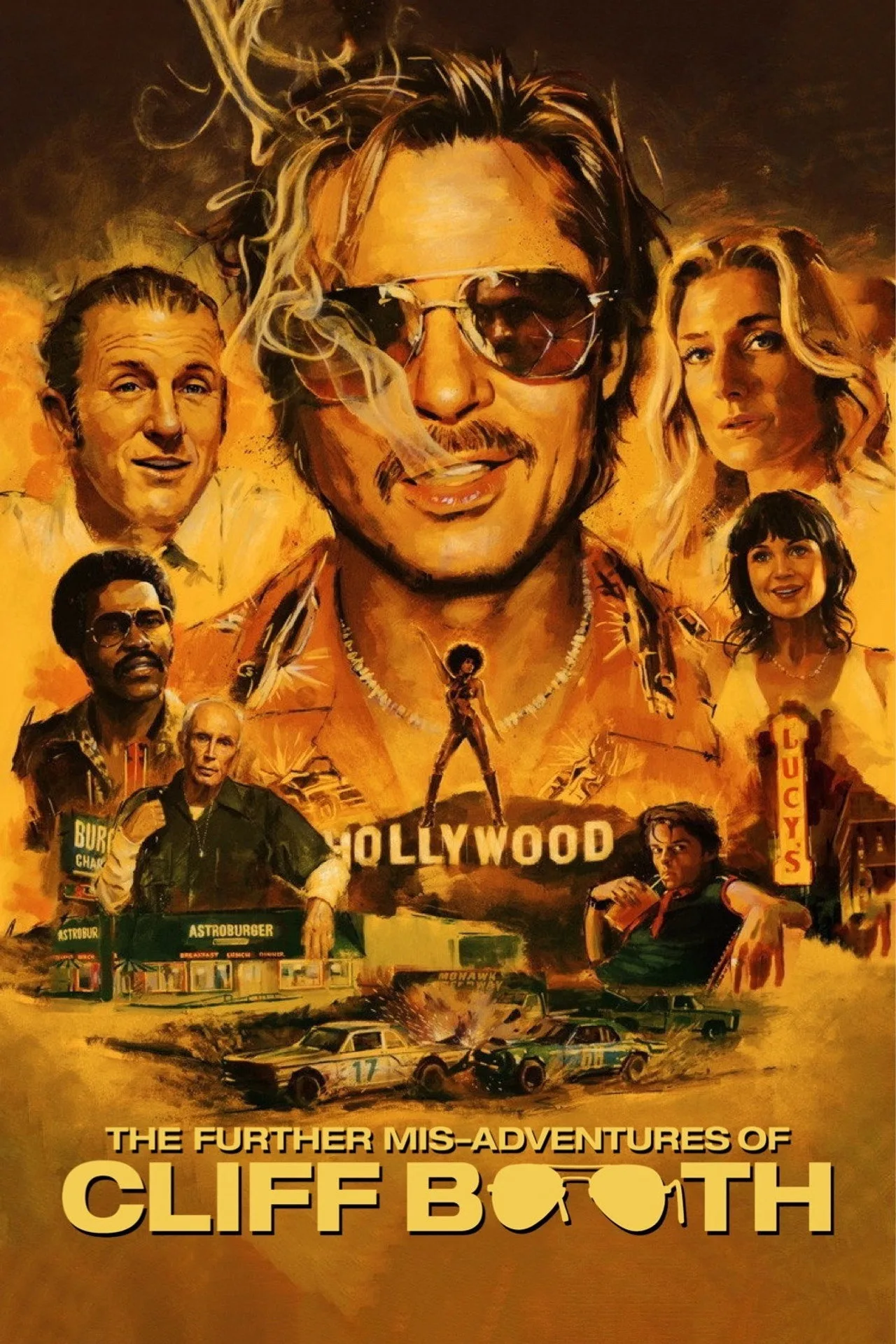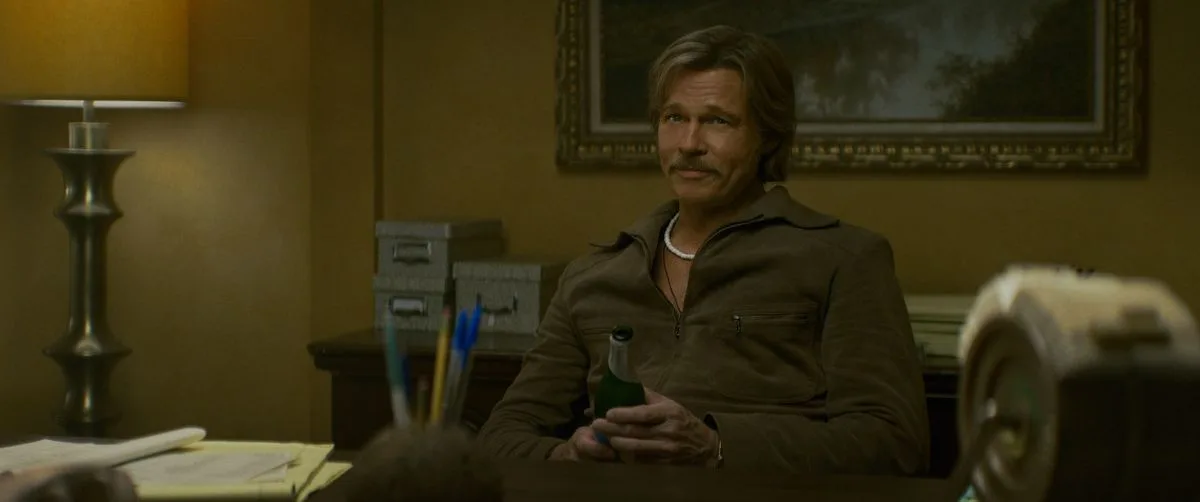
“The Further Mis-Adventures of Cliff Booth” is Quentin Tarantino’s attempt to take the Oscar-winning role of Cliff Booth (Brad Pitt) and turn him into a sort of Raylan Givens character, one that Elmore Leonard used across multiple books, eventually inspiring “Justified.” The belief that it wasn’t just the revisionist history of “Once Upon a Time…in Hollywood” that hooked viewers but the characters populating this hyper-realistic version of the city of angels makes for a film that’s intentionally loose, shaggy, and episodic. Tarantino seemingly thinks that people will be content to just hang with a half-asleep Cliff and a cadre of personalities inferior to the original.
It’s a misfire in several directions, none more so than the incongruity at its center: a writer who specializes in playful, quirky, unpredictable narratives pushing and pulling against one of the most precise filmmakers of all time. Early Tarantino scripts have been directed by others before in hits like “True Romance” and “Natural Born Killers,” but Tony Scott and Oliver Stone knew how to amplify QT’s voice, often through booming loudspeakers. David Fincher, on the other hand, often feels like he wants to quiet it, shaving down the quirky potential of an ensemble that only occasionally comes to life because he’s fundamentally interested in different things about this story than its creator. It’s well-made, because of course it is, given Fincher knows no other way. But it’s also shockingly leaden and even boring at times, a mash-up of two voices that never find harmony.
Pitt reunites with the director of “Seven,” “Fight Club,” and “The Curious Case of Benjamin Button” to pick up Cliff Booth’s story in 1977, eight years after the action of the 2019 first film in what is now an unexpected franchise. What is basically the prologue features Booth working as a projectionist at the New Beverly, working a deal for a Hollywood director whose Oscar was stolen by a local hustler. The film playing at the Bev is QT’s version of Blaxploitation, a shallow parody called “Soul Brothers Die Hard!” that instantly gives “Mis-Adventures” a bit of an atonal rhythm. This is supposed to be such a hit that its star “Hot Rod” Harrison (Yahya Abdul-Mateen II) is a rising property in Hollywood, but something’s off with the writing, direction, and editing from jump, and that’s before the entire scene gets a bit sophomoric in the number of times Cliff relishes using “cocksucker” as an epithet.
As Cliff drives his target to the bus station, there’s a glimpse of what works best about “Mis-Adventures,” Fincher’s commitment to historical veracity as the car zooms through a Los Angeles with no traffic lights. As one would expect, “Cliff Booth” is often marvelous on a production-design level, though even that common Fincher asset feels hampered by dull, flat cinematography from Erik Messerschmidt, who brought much stronger visual language to “Mank” and “The Killer.” This movie isn’t quite “Ozark Dark,” but some scenes feel purposefully under-lit, perhaps to hide Pitt’s age, or just because that’s the new inexplicable mandate for so many Netflix projects.
There’s really only one mis-adventure in the film, and it centers on an actor named Charlie Peters (Scott Caan, knowingly looking so much like his dad did in this era that it’s startling), a star who’s famous for doing his own stunts, and who happens to be working with Hot Rod on a new project. Charlie’s aide, Karen Crosby (Elizabeth Debicki, movie MVP by some stretch), reaches out to Cliff to set up a meeting with the height-challenged actor. Why does he need Cliff, a stuntman, if he does his own stunts? Well, it turns out that Charlie has gotten himself in a world of trouble that includes his wife Toni (Carla Gugino, totally wasted here) and a pair of Filipino assassin brothers (Matt Groove & JB Tadena); he needs Cliff more as a fixer than a stuntman, and that’s something that Mr. Booth knows how to do.
“The Mis-Adventures of Cliff Booth” is at its best when it’s actually trying to be a hangout movie, which feels like what Fincher and Pitt are most interested in. The Oscar winner has fun in relatively plotless scenes watching TV with his dad (a sharp Peter Weller) or flirting with the fantastic Debicki. The relationships between Cliff & Charlie and Cliff & Karen naturally recall those with Rick Dalton and Sharon Tate, but Tarantino & Fincher don’t ever really do enough with those connections. Sometimes life just repeats itself. Although maybe that’s point enough.
Whatever the reason, it makes for a film that aggressively recalls the former more often than it should, including multiple conversations about the “hippies” from the climax and, yes, more than one about the controversial Bruce Lee fight, but to little discernible thematic end. It’s not really about a man who’s changed eight years later or even one who lives in the past as much as one who’s become a legend mostly just by being around. Cliff is the guy that everyone thinks they’ve met before, but they probably just heard a story about. He’s a fringe player in the Hollywood history books, but isn’t everyone?
Fincher seems interested in these historical, thematic undercurrents of “Cliff Booth,” along with ideas about the darkness lurking under the Hollywood sign, but Tarantino just wants to play in the sandbox he created, right down to an early sighting of a Big Kahuna Burger. There are even echoes of other Tarantino projects, including a scene from Charlie’s past that recalls “Inglourious Basterds” and what feels like remnants of what was almost Tarantino’s 10th film, “The Movie Critic,” in Debicki’s role.
Quentin Tarantino told The Hollywood Reporter, “I love this script, but I’m still walking down the same ground I’ve already walked. It just kind of unenthused me.” Bringing in one of the best directors of his era to find new life in this charted territory was a smart move, but the truth is, you never feel Fincher’s enthusiasm for the project either. It would be extreme to say that it was a for-hire gig; Fincher doesn’t do that kind of thing, and he’s found ways to make other people’s stories his own before with great films like “Gone Girl” and “The Girl with the Dragon Tattoo.” But you can feel Fincher’s creative passion in so much of his work that its absence here is notable.
“The Mis-Adventures of Cliff Booth” is arguably most interesting when you can sense Fincher knocking on the support beams of the house Tarantino built, but it doesn’t happen enough. It’s intriguing to consider how much both men have been inspired by the filmmakers of the era in which this movie is set—and Elmore Leonard, for that matter—but they’ve used those lessons in such different ways. It’s not unlike watching someone dance who can’t hear the rhythm of the music being played behind them. Elmore Leonard would be bored.
In theaters for two weeks, starting on November 25; on Netflix on December 23.