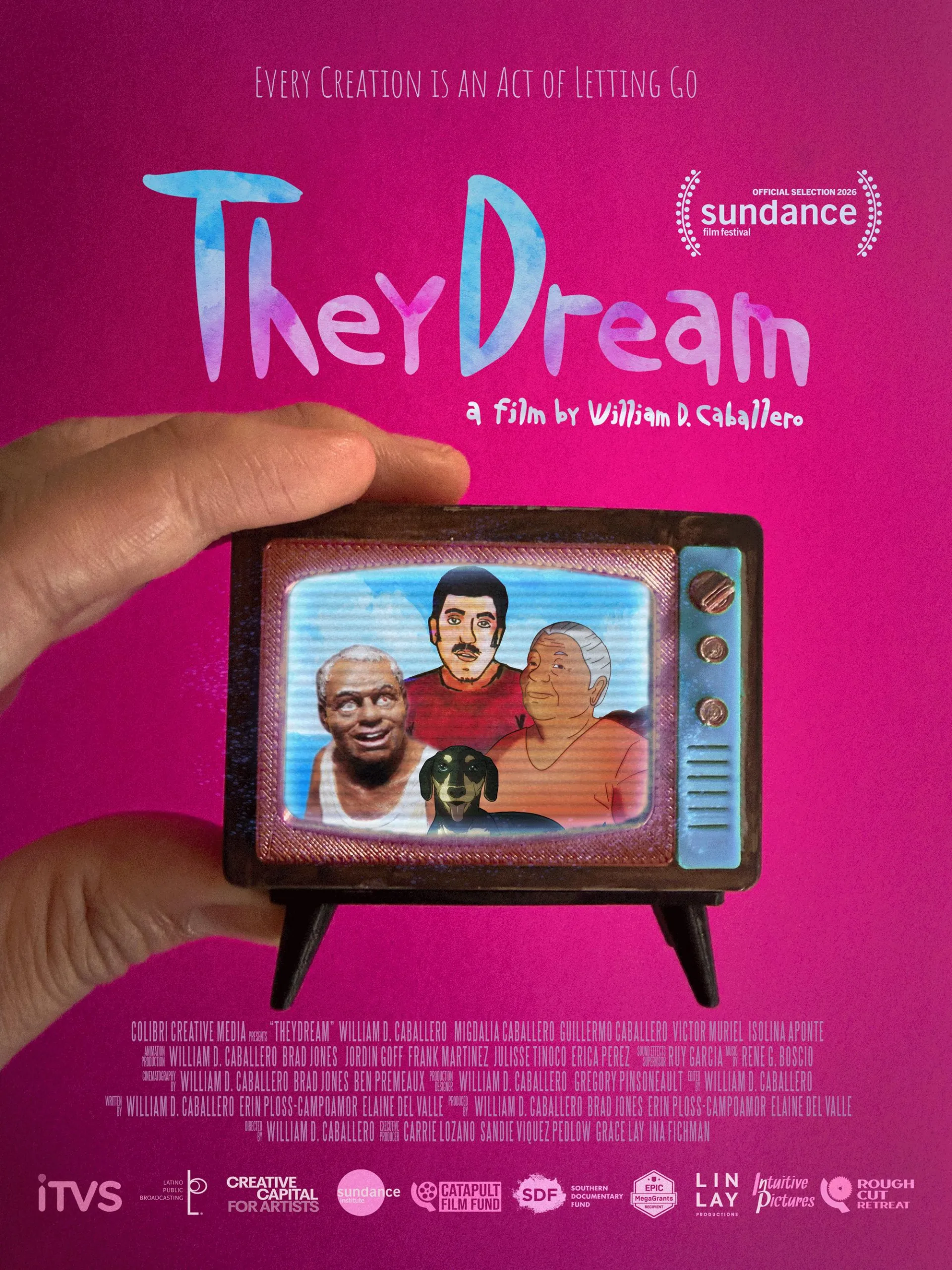
Early on in William D. Caballero’s personal documentary, “TheyDream,” in a conversation with his mother, the director says, “I want this to be a film that makes you feel really good, really happy, about yourself, and honors people in our family that are no longer with us.” It’s an earnest sentiment, especially for someone translating his own family’s conversations and experiences into a feature film, and it serves as a thesis for Caballero’s film.
For about an hour and a half, “TheyDream” literally puts Caballero and five of his family members—his mother, father, grandmother, grandfather, and even his dog—on display for the world to see. This includes everything from truly heartwarming moments, like simple games between parent and child, to some fairly harrowing beats of life, like his grandmother falling and leaving a voicemail calling her daughter for help.
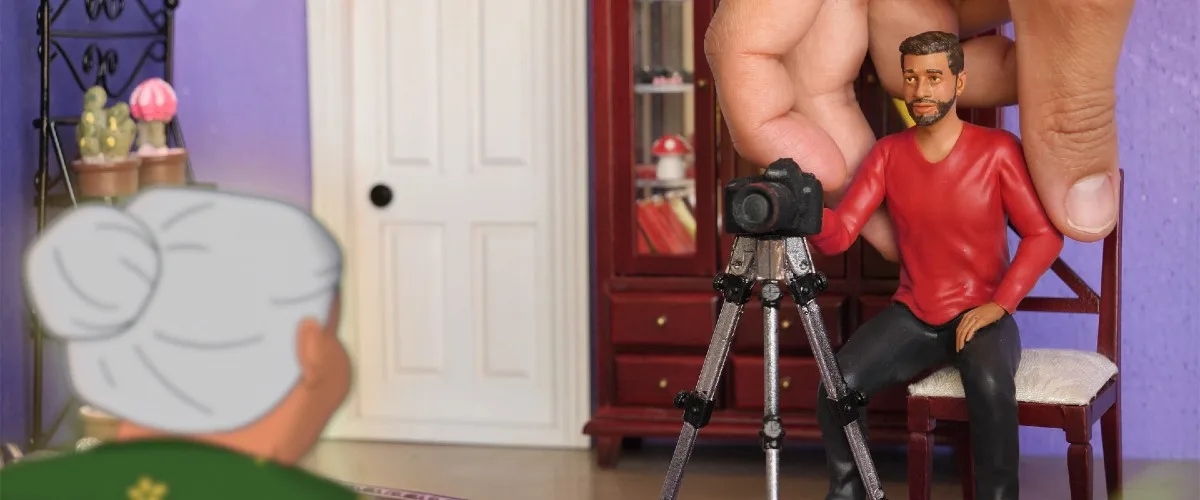
Most of these brief flashes of personal life come through in audio recordings Caballero made of his family, rendered lovingly through a variety of animation styles: plenty of rotoscoping, some model building and stop-motion movement, and flashes of both 2D and 3D animation. This mélange of animation creates truly lovely sequences and creative set-ups, many of which are brought to life on a rotating platform.
This rotating set often functions as a winding road to showcase a contemplative drive, but in one particularly creative set-up, à la Carousel of Progress, it takes us from their family home (in which William and his father played Simon Says), to an alley with needles and insulin bottles, to a dialysis waiting room, to the actual dialysis center. It’s not just creative but a smart and economical setup for William’s interviews with his father about his dialysis treatments before passing, openly discussing the struggle as well as the relationships he made there.
These overwhelmingly personal stories make up about half of “TheyDream,” with the other half largely focused on Caballero and the only surviving member of the featured collective, his mother, conversing and processing their shared grief. Overall, it is relatively unstructured, bouncing through ideas, reenactments, and the filmmaking process without a clear purpose, but every glimpse into how William works with his family is charming. Most rewarding are those beats when he has to direct his mother over and over again to capture her performance and movements, timed to his grandmother’s voice, so he can rotoscope her.
At some point through the film, though, a sense of discomfort began to wash over me as I watched some of the footage presented: should I, as a viewer, even be watching some of the stories being placed on screen? More bluntly: should anyone other than the filmmaker and his family be experiencing some of these stories? Some of these conversations are so private and uncomfortable that they belong close to home (arguably in a therapist’s office) and not with an audience to sit in on, like how Caballero frequently cuts back to his mother crying with guilt over not being there as a caretaker for one family member over another.
As beautifully up front some of these scenes can be, others border on exploitative; a word that sounds a bit harsh in such a disarmingly personal film, but one you can’t help but consider when analyzing how Caballero presents these intimate beats. Take a late-act reveal of what Caballero’s final recorded conversation with his father was: Caballero revealing he’s bisexual to his father and getting into an argument about his homophobia, just seconds after discussing Trump’s racism and how awful he is to immigrants.
Regardless of the filmmaker’s intent, the way this is presented doesn’t feel like an attempt to actually understand his father (as he positions himself as doing throughout) but rather a way of chastising him for his outdated perspective. (That Caballero contrasts it with photos of his mother at a pride parade feels a bit cruel.) Perhaps this is all about showing “both sides” of the people we love, as we never want to whitewash the ways our own family members can cause harm. But it also feels like something that should have remained personal rather than public; the kind of story that feels less like something to grow from and more like something designed to garner sympathy when placed in a work of art.
This wrestling between what personal stories are compelling to witness and what details should be kept out of the public eye isn’t necessarily a new conversation to be had when it comes to documentary filmmaking (or even reality television), but in an era when so many filmmakers have leaned into documenting these histories as a means of both personal and cultural storytelling, the question of what belongs on screen for the world needs to be asked. For all its engaging craftsmanship and declarations of tribute, William Caballero’s “TheyDream” ends up feeling too personal to share.