The category of Small but Significant Missteps that Take You Right Out of the Story includes these egregious offenders:
- People who end phone calls with neither party saying goodbye.
- Characters who answer “Nobody” when asked, “Who was at the door?”
- Motorists who look at their passengers for so long we fully expect the vehicle to fly right off the road.
- Customers who walk into a pub and order a generic “beer” without specifying what kind.
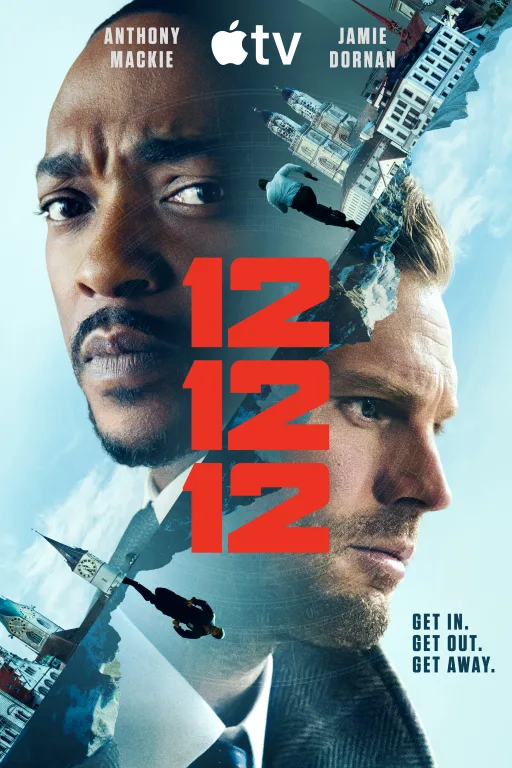
In the opening moments of the slick and impressively mounted but meandering and overstuffed Apple TV thriller “12 12 12,” we’re subjected to one of the most irritating examples of all: people who have extended conversations suitable for a tavern during a crowded church service, with all the extras staring straight ahead and nobody telling them to…shut…up.
We’re in Zurich, Switzerland, on Christmas Eve, and while the choir sings and the mass is in progress, master thief Paul Galvin (Jamie Dornan) tells his hotheaded older brother, Bobby (Jack Kesy), a long anecdote about their misspent youth. At one point, Bobby, sitting in the pew behind Paul, gets up, joins his brother, and even hands over a gun he wasn’t supposed to be holding.
Come on, man.
I know: It’s a relatively small thing, but I just can’t understand why someone involved in the production wouldn’t realize how false the scene rings. Of course, even after a wobbly start, an eight-part series has plenty of real estate to bounce back and draw us in—but the dizzying, time-hopping structure and the sheer ludicrousness of the centerpiece heist make for some tough sledding. “12 12 12” has some well-staged set pieces and a handful of intriguing supporting players, but the leads are rooted in overly familiar stereotypes, the con-within-the-con feels like a warmed-over Euro take on “Ocean’s 11,” and the twisty multiple payoff is moderately satisfying at best.
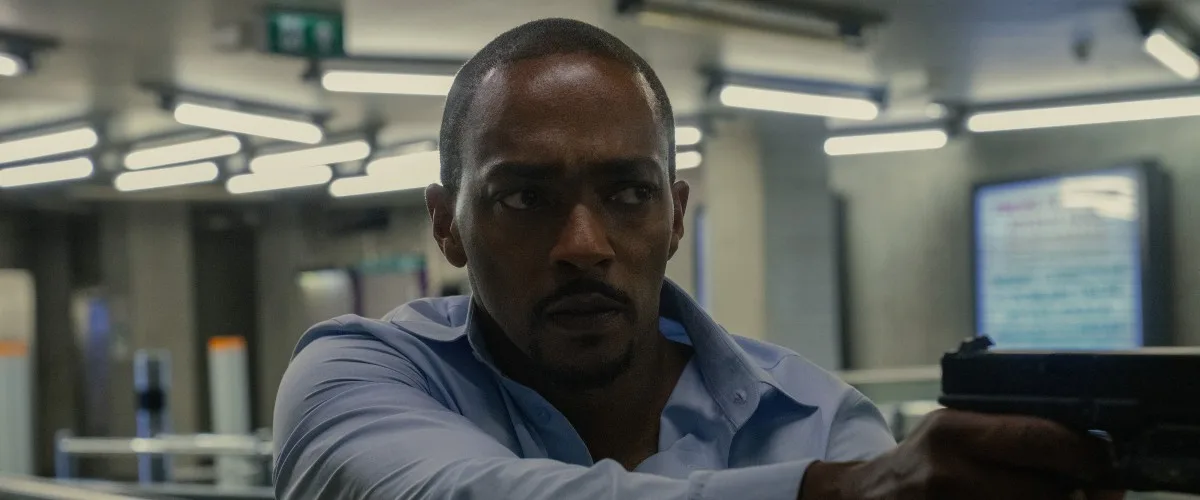
Anthony Mackie’s FBI Agent Jack Strickland explains the title of the series in voice-over: “A high-asset robbery, professionally conceived, is 12 months in planning, 12 hours in execution. A robber who is not caught in 12 days is not caught at all.”
Well, I suppose that’s true, except for when it’s not. Most real-world heists take far less than 12 hours, and many investigations have only just begun at the 12-day mark. (Kinda reminds me of the old TV/Movie procedural myth that says a kidnapping must be solved in 48 hours or the case will go cold.)
Mackie is a formidable actor, but his tightly controlled and quietly forceful persona doesn’t really gel with this character. Strickland is a former hotshot agent who is reeling after a tragedy involving a colleague in New Jersey, and he’s now relegated to a cubbyhole office in Switzerland as he obsesses about capturing his white whale, i.e., Jamie Dornan’s Paul Galvin.
In another example of the series’ reliance on overused tropes, Paul is now retired from a life of crime and living a quiet, straight life in France with his pregnant partner, Severine—but just when he thinks he’s out, he gets pulled back in. Remember Paul’s older brother Bobby from church? He’s a powder keg borderline psychopath who not only has stolen Paul’s secret stash, but has gotten mixed up with a ruthless crime boss (Jeanne Balibar) who will have Paul’s entire family killed if Paul doesn’t agree to mastermind an elaborate theft of some $800 million in Swiss Franc banknotes from the obligatory Underground Bank Vault that Cannot Be Penetrated.
And away we go. The series regularly relies on a triple-screen format reminding us of the “12 12 12” gimmick, and then expands to home in on a particular moment along the timeline, e.g., “THE PLANNING, MONTH 2,” or “THE HEIST, HOUR 2.” It doesn’t really amp up the dramatic stakes and, in some cases, lessens the surprise factor, as we already know what’s going to happen to certain characters down the road. Paul assembles the usual team of specialists who will risk everything for the payoff of a lifetime; Bobby keeps going rogue and saying things like, “Paulie, I’m your big brother, I don’t take orders from you,” and the gang speaks in hushed terms about Strickland, calling him “The Holy Ghost,” mostly because it’s part of the ongoing theme of religious symbolism, which looks and sounds cool, but that’s about as far as it goes.
The heist tests the limits of credulity but makes for some good old-fashioned tension, with characters soaked in sweat and racing against time and unexpected pitfalls, but one escape in particular goes beyond anything approaching believability. Some of the side characters, including a compromised bank security official played by Bernd Hölscher and a corrupt accountant played by Wilfried Hochholdinger, seem more grounded than the leads.
Dornan can be captivating in the right role, but Paul comes off as a bland copy of Clooney’s Danny Ocean. And the more we learn about Mackie’s FBI agent character, the less sympathy we have for him. That time-shifting story structure gimmick creates more convoluted complexity than sophisticated reveals, and it can’t mask the derivative DNA of the series.
Full season screened for review. Currently streaming on Apple TV.