The tragedy of Orpheus and Eurydice has been told countless times, with myriad variations that largely end the same way. Its beauty comes from the way people shape-shift such an expected story, molding it to reveal or reflect on something in a new way. Dino Buzzati’s “Poema a fumetti,” in 1969, was one such case: a graphic novel that turns Orpheus into a popular singer, taking his guitar down to the underworld with him on a journey replete with sensual imagery and lyrical tales.
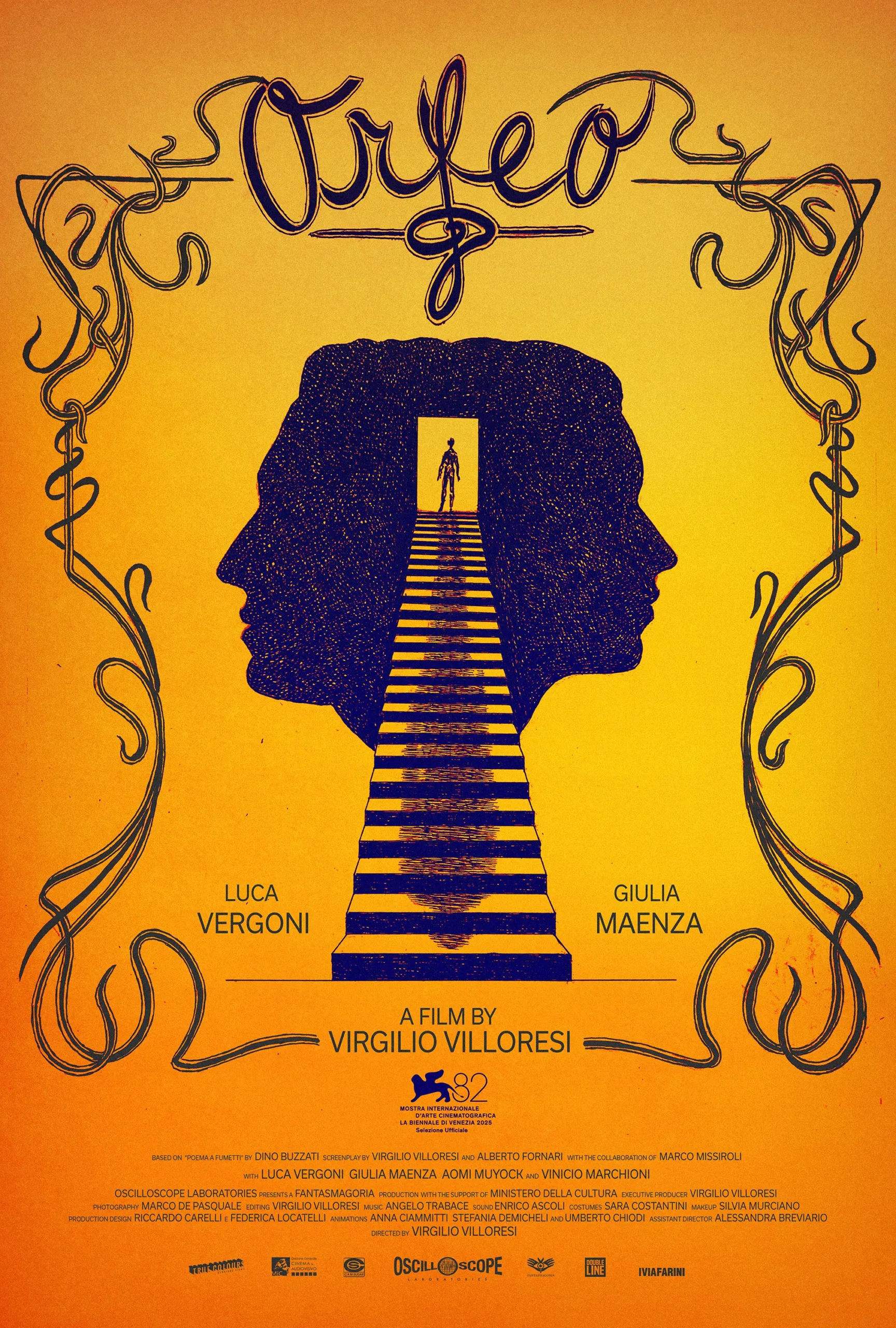
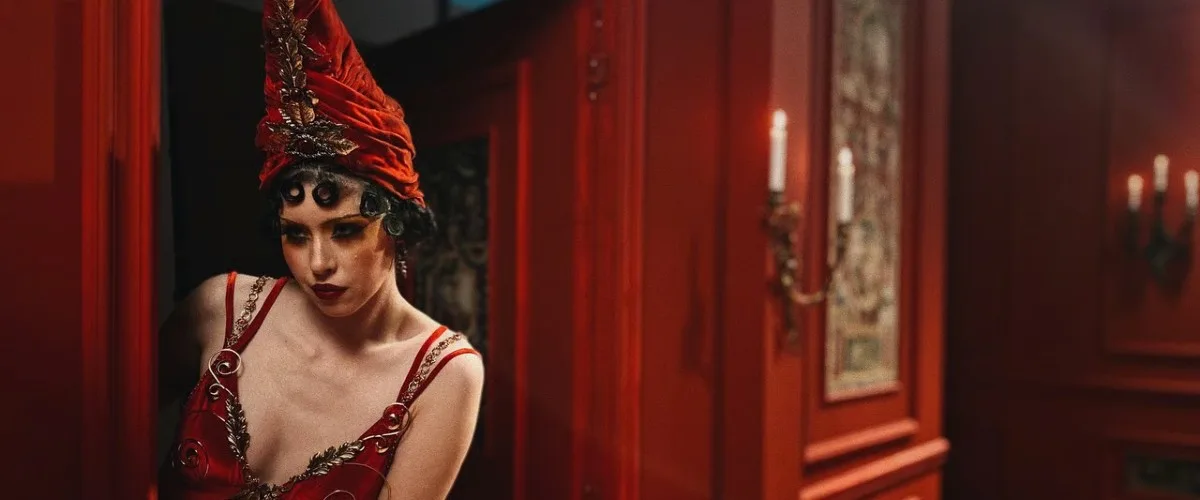
In translating this particular version to screen over half a century later as “Orfeo,” director Virgilio Villoresi shapeshifts the story even further for his entrancing feature debut. Orpheus (Luca Vergoni) is no longer a singer but a somber pianist at Polypus, performing his haunting pieces for an audience. In this club, he meets the beautiful ballerina Eura (Giulia Maenza), and their love blossoms until she simply disappears. When Orpheus sees what looks like Eura crossing through a locked door across the street from his villa, he follows her through the threshold into a surreal afterlife to find and rescue her.
Much of Villoresi’s narrative takes great pleasure in building up the romance between Orpheus and Eura rather than simply limiting it to the tried-and-true journey of his attempt to save her. It’s a film that leans into the inevitability of loss even in the face of undying love and, like Buzzati’s novel, takes the onus off Orpheus by completely eschewing Hades’ challenge that he endlessly fails in mythological tellings.
Orpheus’ failure to rescue her is still present, of course—“It’s an old tale from way back when and we’re gonna sing it again and again,” as André De Shields once sang in “Hadestown”—but there’s a bit of a removal of the overall tragedy of it by removing Orpheus’ own role in his loss from it entirely. Rather than place fate in his hands through the myth’s rule of never turning around to look at Eurydice, these works instead leave fate to the rules of an underworld no one can leave, regardless of their attempts.
But through Villoresi’s imrpessive filmmaking, this softening of tragedy is made easier to stomach given the intoxicating journey he takes us on through both Orpheus’ life and his journey through the underworld. Everything about “Orfeo” embraces artifice, blending animation and live-action in a way that makes the eternally familiar feel a little more unreal. With the whip of a camera, a scene of two humans dancing can lead us to a shot of miniature cut-outs traversing a carefully manicured set in stop-motion. There are shades of, say, Tim Burton and Henry Selick in the film’s playful, haunting design, and it outright pulls from stop-motion legends (Jan Švankmajer, Brothers Quay, Jiří Trnka), replete with a childlike imagination and wonder in how these beauties and monstrosities interact.
The list of visual references and filmmaking tricks that contribute to creating something this absurdly beautiful is endless and makes the film prone to the same age-old “style over substance” critique as other contemporary filmmakers that trade in high stylization (Yann Gonzalez, Nicolas Winding Refn, and Helene Cattet & Bruno Forzani all come to mind), but that’d be an unfair critique here. Not only is he clearly drawing from the pop-art psychedelia of the graphic novel, but Villoresi’s constantly shifting style, paired with the dynamic camerawork and alluring production design, contributes to the way this tale feels like a fractured memory.
Some of the ways Villoresi references the graphic novel come across as relatively pointless when paired with the changes he’s made, seemingly existing merely to make a savvy viewer clock the panel he explicitly recreates. These are only brief distractions, though, and in a film as short as this one, it’s refreshing to see how willing it is to let the viewer luxuriate in its beauty and sweeping emotion. Much of this is due to Angelo Trabace’s compositions, which feel at once as ethereal as the animated worlds we’re presented with and as intimate as the piano Orpheus himself plays, serving as an extension of his own ache.
“Orfeo” may not be as emotionally gutting or satisfying as some of the best renditions of Orpheus and Eurydice’s myth. But it’s easy to get lost in the beauty of Virgilio Villoresi’s debut, despite both the source text and a decision about what to prioritize in adaptation. This film understands that some of the most affecting tales can come from sidelining “realism” and embracing fantasy. For all the studios these days boasting of their dedication to the craft of cinema, few are as willing to put all that ambitious, handmade elegance on screen in this way.