“America is not a country, it’s a business.”
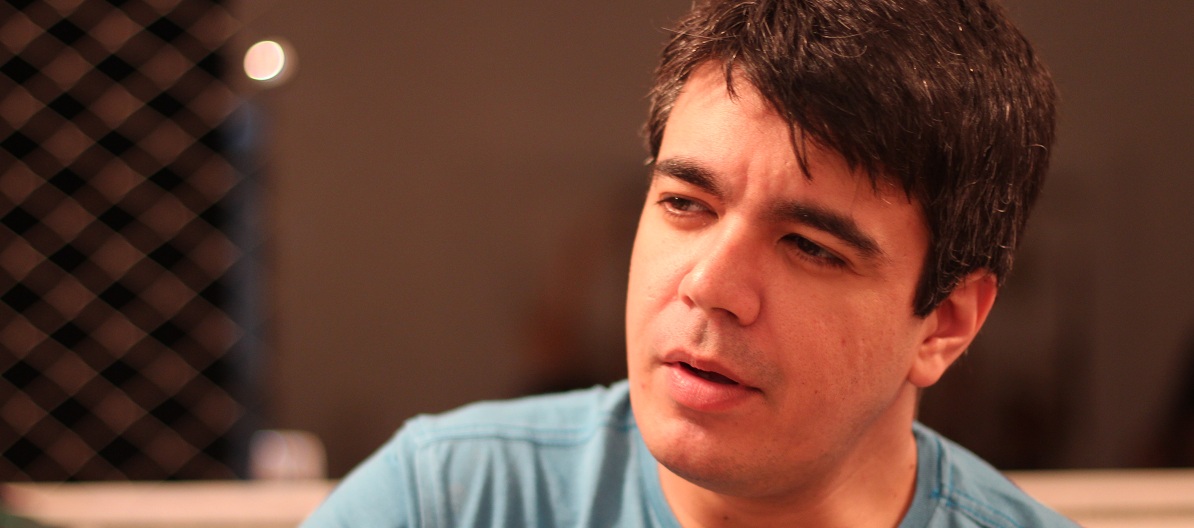
So says professional killer Jackie Cogan at one point in Killing Them Softly, the third film by New Zealander Andrew Dominik – and considering the filmmaker’s efforts to establish a connection between the events in the movie and the economic crisis started in the late 2000s thanks to the greed and lack of scruples of Wall Street, it is easy to see Cogan as an ordinary employee of any company complaining about the lack of vision of his bosses and, on the other hand, the big bankers as Armani-dressing versions of the violent mobsters who inhabit the crime section of the newspapers. More than that: fearful due to the financial disaster caused by their colleagues in Wall Street, the bad guys presented by Dominik are miles away from those gangsters who used to throw hundred dollar bills on the ground or distribute tips in exchange of a smile; instead, here they need to haggle prices with professional killers and negotiate with theirs superiors before approving a sum of a thousand dollars for framing someone.


December 14, 2012

Dear Mr. Robert Zemeckis Sir

Dear Mr Robert Zemeckis Sir,

My name is Forrest. Not Forrest Gump, but Forrest Narayan. I am ten years old.

I have two brothers and their names are Marty and Satyajit and Marty is twenty years old and Satyajit is six and three quarters.

December 14, 2012

The world has changed, Mr. Bond

Sam Mendes’ “Skyfall” (2012) provides us with one of the best of all the twenty-something James Bond films. It is full of toys, though a different set of toys than we might expect, placing far more focus on the heroes’ stories than the villain’s plotting. Is there even a real Bond-girl in this movie? And, what about the Bond car? It seems strangely familiar. Rather, whatever traditional Bond characters and trinkets this film skips or skimps on, it replaces with gigabytes of substance. Like you, I have seen all the Bond films – most of them multiple times – even though some of them are just not that good. But, they are James Bond movies, so it becomes almost a duty to the Queen keep up with them as times continue to change. This one, thankfully, is fantastic.

December 14, 2012

James Cameron’s great double feature

The first two “Terminator” movies were to me what “Star Wars” was to previous generations. Every kid wanted to be Eddie Furlong. The prospect of having a badass mother who didn’t freak out when you grabbed a gun was overwhelming. On top of that young John Connor had his very own Terminator to command!! When I first watched those movies it was the violence of the first film, the special effects of the second and the time travel paradox of both that kept me up most nights in awe. I must’ve watched them a hundred times and I still give them credit for kicking off my interest to science fiction and the many mind boggling philosophical ideas that come hand in hand with the genre.

December 14, 2012

We know what you’ll be doing

Watching Steven Spielberg’s “Minority Report” (2002) again through Blu-ray made me muse on how much my life with movies has changed during the last 10 years. When I watched it with my father at one of the big movie theaters in my hometown on one summer day of 2002 July, we were not yet familiar with multiplex theaters, and I watched movies mainly through VHS while infrequently going to theaters. DVD was slowly attracting my attention and I eventually bought a DVD-ROM drive for my computer in 2002 October. And I was not particularly interested in downloading movies from Internet; why do I have to watch movies in my small dorm room when I can enjoy them at big theaters?

December 14, 2012

Salvation by Slugfest

Religion takes you from darkness into light, and David Fincher’s deeply religious “Fight Club” grows darker and darker still. Here, piety is anarchy; anarchy is destruction; self-destruction is ecstasy. It plays whimsical department store music while its broken shark teeth chew at you. Its sound, consistent plot leads straight to an abrasive, perhaps annoying schizophrenia. It is the Bodhisattva, Satyagraha, and the Masnavi mashed up and played backwards with the wrong device. This movie is the anti-movie, and it enjoys every moment of it.

December 14, 2012

The actor as form for the film

A video essay published in tandem with Indiewire

“The human face is the great subject of the cinema. Everything is there.” – Ingmar Bergman

The craggy complexion. The stately ovate chin. Those thin lips deceptively wrapped around that charming smile. That perfect nose. Those clear greenish-brown eyes. That squint.

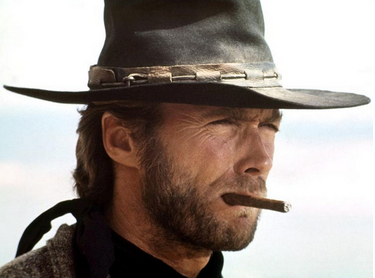
One cannot discuss Clint Eastwood’s iconic stature in film, without mentioning his face. There are others that have been as handsome (Newman), masculine (Gable), striking (Hitchcock), fearsome (Bronson), and symbolic (Wayne). But from a visual standpoint, none of them have been as instrumental as a filmmaking tool or signature. Most actors are cast to fill in a character from the inside out, building an individual based on the personal. But Eastwood himself is a form. An absent presence whose persona is filled primarily by the film’s themes and ideas.

December 14, 2012

The right hand of great directors

Awards season again. Last year, as you may recall, a many months pregnant Natalie Portman received the Oscar for Best Actress for “Black Swan.” Her lithesome acceptance speech, without notes, thanked many colleagues she knew had helped her stand there. As both a lifelong moviegoer and a worker on films, my spirit lifted at these words: “There are people on films that no one ever talks about, that are your heart and soul every day, including Joe Reidy, our incredible A.D…” Along with so many others, I was thrilled by her sentiment — and especially pleased for Joe Reidy.

December 14, 2012

But didn’t they just now meet?

In “Certified Copy,” his most recent movie, director Abbas Kiarostami adopts an intriguing and surprisingly efficient narrative strategy: after structuring the first half of the film emphasizing the realism and naturalism of the situation and of the dynamic between the characters, he changes the internal logic of the movie in the second half in a subtle but clear way, investing from then on in a tone that flirts with fantasy by establishing a fascinating game involving the main couple.

Written by the director himself, the movie begins with a lecture given by the writer James Milles (Shimell), who has just released a book that defends the importance of replicas of great works of art in a general way. Attending the event is the character played by Juliette Binoche, who owns a gallery and seems to be fascinated by Milles, offering to take him on a tour in Tuscany before he leaves Italy. Disagreeing with some aspects supported by the author in his book, she initiates a discussion while they visit museums and restaurants, until something curious eventually occurs and they start to act and talk as if they were a couple with 15 years of marriage.

December 14, 2012

Waltzing with the in-between

“Take This Waltz” materialized out of a humid summer day in Toronto and made me tremble and fall in love… with who or what I’m not sure; the city yes, and maybe the idea of the in-between.

There is something incredibly delicate and beautiful about the thought of in-between: of that space of the possible, of movement, of choices being sought and yet to be made, of freedom and abandon and all the stuff that dreams are made of, but yet to solidify. It is a place of alchemy. Some call it a moment – a fleeting moment.

December 14, 2012

A film improved by butchering

“No good movie is long enough and no bad movie is short enough”. As much truth as this phrase carries it is also a fact that editing choices greatly influence a film’s outcome. One of the best examples to illustrate this point is Guisseppe Tornatore’s “Cinema Paradiso” which was released in 1990 as a 124 minute gem that won Best Foreign Film at the Academy Awards and the unconditional love of everyone I’ve ever discussed it with. Further, it made no sense to learn that a much longer version of the film had been released in Italy a couple of years before to mediocre reviews and box-office results. How could material this good ever be ignored? The answer came years later in a single viewing of one of those DVD editions that includes the complete 173 minute version. As strange as this sounds, I believe that the butchering of Director Tornatore’s original 1988 vision saved his film from utter mediocrity, and took it to an all together higher level.

December 14, 2012

A psychopath and the Female Gaze

I love a black comedy. Always have. You know, all those tragic mishaps that seem to befall Alec Guinness in the English countryside when no one is looking? But then who doesn’t love an Ealing comedy. I also like “Dexter” and for similar reasons; it too, has an air of subversive glee about it, albeit darker and more graphic in nature. The appeal is never about seeing people die, though (where’s the fun in that?). Nor in watching mindless torture porn like Hostel; a genre increasingly viewed as the favorite pastime of failed experiments in parenting, moreover, and thus to be avoided at all costs. I loathe the entire genre aka “Women in Danger” films as Gene and Roger once termed them. American Psycho however, is anything but a slasher film.

December 14, 2012

Framed in Shame

There’s a Someecards meme floating around that reads, “If I don’t have sex with you, I’m a prude. If I use the pill, I’m a slut. If I get pregnant, I’m an idiot. And if I choose abortion, I’m Satan.” That’s the sum of our attitude towards female sexuality, but the movie “Shame” (2011) assures us that men suffering from sex addiction will earn comparable condemnations.

December 14, 2012

A boy’s best friend is his mother

It’s quite easy for someone to enjoy film. Loving film is completely different. For those who see films enjoy them, yet only those who can read film truly love it and understand it as an art form.

Hitchcock is probably the most well known director of all time. There is no absolute answer to what his crowning achievement is. A lot of critics prefer “Vertigo.” Taste varies from one film lover to the other. “North by Northwest”, “Notorious”, “Vertigo”, “Rear Window”, “The Birds”, “Shadow of a Doubt”, “Strangers on a Train”, “Rebecca”, “Suspicion”, “The 39 Steps” and “Psycho” are among his most loved.

The truth is there is no such thing as one ultimate Hitchcock masterpiece, there are only favorites.

December 14, 2012

Our neighbors the sociopaths

While revisiting David Michôd’s “Animal Kingdom” (2010), I wondered what it was like for its passive teenager hero to live with his heroin addict mother at their small home. We can only assume that she definitely could not get the Mother of the Year award, considering the mundane but eerie opening sequence. It’s around afternoon, and her son is watching some TV show, and she seems to be asleep next to him on couch – but we soon learn she died from an overdose.

December 14, 2012

Almodovar’s passionate celebration of cinema: Omar Moore on “Broken Embraces”

Whether or not you believe that “Broken Embraces” is Pedro Almodόvar’s best film, one thing cannot be denied: it’s a film that so passionately celebrates cinema and the filmmaker’s love for it.

Multiple stories frame a complex narrative in “Broken Embraces.” Mr. Almodόvar trains his lens on Penélope Cruz, his muse. She plays Lena, a woman caught between passion and misery in the film, set in Madrid in the early 1990s and 2008. A film director (Lluís Homar) is blighted by the past while also recalling fond memories in the present as he hibernates in the afterglow of a vibrant affair with Lena, whom he directed during the nineties in a comedy. Back then he was Mateo Blanco. Now, in the early 21st century he is Harry Caine – a hurricane of regrets, mysteries and opportunities. There’s Lena’s husband Ernesto (José Luis Gόmez), a billionaire business magnate who has helped Lena pre-marriage and produces Blanco’s film “Girls With Suitcases.” Keeping Blanco in line and on schedule with the film is his agent Judit (Blanca Portillo), and that isn’t an easy task.

December 14, 2012

The Garden of Pleasantville

How do things work in a perfect world? The book of Genesis tells us this much: every living thing lives in harmony, food is plentiful, there is no such thing as pain, and nobody knows the difference between good and evil.

That’s the loophole the serpent uses to convince Eve to eat the fruit from the Tree of Knowledge of Good and Evil. “God said not to because I’ll die,” she protests. “You won’t die,” the serpent says. “You’ll just be wiser, like God, and see things the way he does.” So Eve eats the fruit because she can’t conceive of anything that isn’t perfect, and if God is wise, then wisdom is perfect too. As for Adam, the Bible never really attributes any motive to his deed. He just seems to take the fruit from Eve without question.

December 14, 2012

It’s a bird! It’s a plane! It’s the superhero genre!

Back then, I could watch Max Fleischer’s Superman cartoons forever and never get bored. Today, the case is almost the same. Oh, those films have some of the finest animation I’ve ever seen–even by today’s standards, the animation is phenomenal, right from the fluidity of the movements of the characters to the uncanny weight of the objects. The characters and objects had shadows too.

December 14, 2012

Remembering Mike Wallace

News that the incomparable journalist Mike Wallace has died brought back a story. In a life filled with remarkable and dramatic events, it is perhaps among the most memorable but little told. It happened in Iran in 1981.

In early 1979, the Iranian Revolution burst upon the world, forcing out the widely-hated, long-serving despot, Shah Reza Pahlavi, and bringing the exiled Islamic fundamentalist Ayatollah Ruhollah Khomeini to power. Anger at America, whose policies had supported the Shah and interfered in Iran’s politics for decades, was widespread, as thousands of Iranians demonstrated daily in the streets, and Khomeini denounced “the Great Satan.” That November, revolutionary students stormed the American Embassy in search of C.I.A. files, taking the 52 staffers present hostage. It was a siege that would last a seemingly infinite 444 days, becoming an American sensation on the nightly news (ABC’s “Nightline” was created to cover “the Iran hostage crisis”), and profoundly influencing the outcome of the 1980 Presidential election.

December 14, 2012

The Boulevard of Broken Manhood

I have long had trouble enjoying live sporting events, concerts, and stage shows for three reasons. First, I would tire from watching the show from one single angle. Conditioned by movies, I need the variety of angles, the intimacy of close-ups and the sweep of tracking shots. Second, live events will never have the polish of a polished movie. And, third, (more applicable to large stage shows) the dialogue is always too enunciated and thus distant, even when it is “realistic.”

December 14, 2012
subscribe icon

The best movie reviews, in your inbox