Opening Shots: ‘Ghost World’

From Robb Hamilton, Seattle, WA:

A few weeks ago I took my kids to see “Cars” at a theater off Aurora Avenue in Seattle. Aurora would be a perfect setting for a Clowes/Zwigoff picture: seedy motels, diners, people waiting for buses, adult book stores, etc. We were seeing the movie a week or two after it opened so the crowds had died down. The cast of characters in the lobby getting snacks (the overweight family loading up on jumbo popcorn, the chaperone with the retarded kids, the guy with the NASCAR hat) made me remark to my wife that I felt like i was in a Dan Clowes comic.

View image

The opening shots of “Ghost World” cut back and forth between “Jaan Pehachaan Ho” from the Bollywood movie “Gumnaam” and a camera movement to the back of Enid’s apartment building. We find out at the end of the shot that the movie is playing on Enid’s TV. Terry Zwigoff does a great job of capturing Dan Clowes’ style as well as Enid’s character. All of the inhabitants in the apartments seem brain dead, while Enid’s apartment is pink and blue, filled with thrift store finds, toys and a Pufnstuf poster. Later in the movie Enid is eventually able to escape the dead end that is her life. The opening shots of “Ghost World” drop you right into the pages of a Dan Clowes comic book and more importantly shows the juxtaposition between Enid and her surroundings.

An alley off Aurora Avenue North near 80th — east side of street. Residential facilities on the right; a structure housing the Baseball Barber Shop on the left. Keep heading north for lots, lots more… (A9 Local Search)

JE: Muchas gracias, Hammy! (I recently wrote an appreciation of “Jaan Pehachaan Ho” here.) As you know, I love Aurora and consider it the greatest street in the entire world. (Sorry, State Street — Seattle’s my kinda town.) My theory is that every town in America has an Aurora Avenue (the old Highway 99), a main commercial drag (possibly the former primary arterial route) that takes you past parks, parking lots, and used car lots, and is littered with establishments where merchants provide for the exchange of goods and services of every conceivable type — from birth (diaper services) to death (funeral homes, cemetaries). In LA, it’s Pico Boulevard. In Spokane, I suppose it’s Division. Anybody reading this should know the clogged arterial in their particular burgh. What’s yours? (BTW, if you want to take a simulated drive down Aurora, you can do so right now, thanks to Amazon’s fantastic A9 Local Search, which photographs both sides of streets to help you find just the merchants with the goods and services you require. Here it is: Seattle’s Aurora Avenue North, between Green Lake (and Woodland Park) and 80th.)

The way I look at this opening is much like you describe. The first two shots are really a “title card,” because they are really a suggested frame-within-the-frame image of “Gumnaam” playing on TV (although we don’t know that yet). After the title appears, there’s the first shot proper: a great image down the side of an apartment complex, with the silhouettes of wires and ceramic insulators in the foreground. In the windows receding into the distance, we see the flickering of light from cathode-ray tubes. The camera begins to move toward them. Although the rest of the sequence involves cutting back and forth between “Jaan Pehachaan Ho” and shots that slide past and peer into those windows, it feels like one continuous camera movement. I’ve said it before: It perfectly legitimate to talk about the context for these Opening Shots — as Robert Horton also does for “Cutter’s Way.” More images after the jump…

December 14, 2012

Biggest Acting, Best and Worst: Over the top, Ma!

View image Looming large.

I believe it was Gordon Gecko who proclaimed: “Ham is good!”

The “Wall Street” supervillain (superhero?) was not advocating violation of any dietary laws, of course, but simply stating a fact: Sometimes Big Acting can be quite enjoyable. Other times, of course, it can be cringe-worthy, irritating, risible, embarrassing. Only you can decide which is which. For you.

Take for example the story of Faye Dunaway as Joan Crawford in “Mommie Dearest” — she of “No wire hangers!” and “Eat your meat!” (both precursors of “I drink your milkshake!”). Pre-release publicity reports claimed that Dunaway was giving a serious dramatic performance. But from the very first screenings it was painfully (yet fasciatingly) clear that somebody was going off her rocker — but which actress was it: Crawford or Dunaway?

Performances pitched at the balcony, or the moon, always take the risk of falling somewhere between “tour-de-force” and “trying way too hard,” virtuosity and showboating. And opinions may very about where they come down. (See “A Journey to the End of Taste,” below.) You may wince at the Method nakedness displayed by Marlon Brando or James Dean in some of their most intense emotional moments (“You’re tearing me apart!”). Or you may rejoice at even the most outré dramatic and/or comedic efforts of Daniel Day-Lewis, Sean Penn, Johnny Depp, Bette Davis, Jack Nicholson, Klaus Kinski, Will Ferrell, Robert De Niro, Christopher Walken, Kevin Spacey, Whoopi Goldberg, Al Pacino, Robin Williams, Dustin Hoffman, Barbra Streisand, Nicolas Cage, Ben Stiller, Tyler Perry, Owen Wilson, Gene Wilder… while others find them excruciating, overwrought or unintentionally campy.

The bigger the performance, the bigger the risks. Or maybe not. Just look over the history of Oscar nominations for acting.

December 14, 2012

Two manifestations of genius in music and animation

“What would I give if I could live / Out of these waters? / What would I pay just for one day / Warm on the sand? / Betcha on land, they understand / Bet they don’t reprimand their daughters / Bright young women, sick o’ swimmin’ / Ready to stand!”

“Part of Their World” by Howard Ashman and Alan Menken, from “The Little Mermaid” (John Musker and Ron Clements, 1989).

(reminder: @ryknight)

NEXT…

December 14, 2012

Genital Koons

When I first saw the green penis right in the middle of the Fifth Anniversary Issue of The New York Times Style Magazine, I wonder who thought they were getting away with something. Then I saw the credit at the bottom of the cover: “Artwork by Jeff Koons.” That explains it. (Detail below…)

December 14, 2012

Trix Nix Pix Crix: The death of Variety

What does Variety — once known as “The Showbiz Bible” — think it has to offer its readers? After Monday’s news that the paper has jettisoned (what’s the reverse of “ankled”? I forget…) veteran film critic Todd McCarthy, whose name was synonymous with Variety even before the publication’s reviews had actual bylines, I don’t see much future in the once-essential trade paper. Lay off the people who are your reputation, your authority, your influence, and what’s left? Nothing. There will still be a batch of web and paper pages legally entitled to call itself “Variety,” but so what? It’s like one of those bands that tours under a once-famous name without actually offering the work of any of the names that made it what it was.

How much is that worth to you right now?

December 14, 2012

Loose Canon: Paul Schrader and the end of movies

Paul Schrader

As you probably know by now, writer-director Paul Schrader (whose book “Transcendental Style in Film: Ozu, Bresson, Dreyer” I consider an indispensable part of my film library) has a hefty article in the current Film Comment in which he discusses his abandoned book project, based on the idea of a 60-film cinematic canon.

Schrader writes:

Aesthetics, like the canon, is a narrative. It has a beginning, middle, and end. To understand the canon is to understand its narrative. Art is a narrative. Life is a narrative. The universe is a narrative. To understand the universe is to understand its history. Each and every thing is part of a story—beginning, middle, and end.

The much-debated “end of Art��? is not the end of painting and sculpture (they abound), but the closing of the plastic arts’ narrative. Life is full of ends; species die or become outmoded. There are still horses, but the horse’s role in transportation has come to an end. Likewise movies. We’re making horseshoes. […]

I’ve always been interested in films that address the contemporary situation. Historical films interest me more as history than art. I have, perhaps, 10 years of films left in me, and I’m perfectly content to ride the broken-down horse called movies into the cinematic sunset. But if I were starting out (at the beginning of my narrative, so to speak), I doubt I’d turn to films as defined by the 20th century for personal expression.

I’ve always found Schrader to be a fascinating writer (“Obsession,” “Taxi Driver,” “Last Temptation of Christ”) and director (“Blue Collar,” “Light of Day,” Light Sleeper,” “Affliction”), and I can see how he might view life as a “narrative” (he is, after all, a professional storyteller), but I don’t agree with him. Life isn’t a story. We pattern-seeking animals (my favorite phrase) just find it more comprehensible when we pretend that it is.

Beginnings, middles and endings are more often than not elusive, in life and in movies. When I think of my favorite films in these terms, I wonder: What is the beginning of the story of “Citizen Kane,” or “Mulholland Drive,” or “The Discreet Charm of the Bourgeoisie,” or “Nashville,” or “Taxi Driver”? What is the end? For me, these films are great in part because they don’t insist on neatly defined linear storytelling. (Still, movies do give some kind of shape and structure to experience; lives, as they are lived, don’t have much narrative structure.)

Evolution itself — and I appreciate Schrader’s contention that cinema is evolving into new forms, whatever they may be — resists the beginning-middle-end formulation, because everything is always in a state of flux. Evolution does not start or end — it’s all middle. A species may come into being, and may die off, but other branches will continue to grow and die and change. On the other hand, a story is still a story, no matter what form or language or medium is used to tell it. And storytelling has been around for thousands of years, because that’s a fundamental way we give shape to experience. So, will telling stories with images be all that much different from what we know now — even if the grammar and the language and the form all change?

December 14, 2012

Hurdy Gurdys and Aqua Velvas: Misc. “Zodiac” fax…

There’s something about an Aqua Velva Man.

Don’t worry; no spoilers here.

>> The blue Aqua Velva cocktail that Jake Gyllenhaal’s character orders is named after a popular after-shave lotion of a similar color. The drink consists of vodka, gin, blue curaçao and Sprite or 7-Up. (Today you might even be able to get away with Sierra Mist.) Some variations also include rum and tequila. And, perhaps, a sprig of mint or an orange slice. Other recipes call for Baileys Irish Cream (for that foggy look, I guess). And still one other is made of tequila, blue curaçao, and fruit juices. It’s not necessarily as frou-frou as it seems in the movie (with those fancy glasses, umbrellas, maraschino cherries and all): In WWII, US sailors were said to drink it for its alcohol content (which has since been reduced). A little soapy, perhaps (ingredients: Alcohol 40, water, glycerin, fragrance, menthol), but it went down smooth, evidently…

Aqua Velva

3/4 oz. vodka

3/4 oz. gin

1/4 oz. Sprite

1/2 oz blue curaçao

1/2 oz. Sprite

Shake vodka, gin, blue curaçao and Sprite with ice. Pour/strain into glass and top off with Sprite. Cocktail umbrella and fruit/mint garnish optional.

>> Paul Avery, the San Francisco Chronicle reporter played by Robert Downey Jr., married Margo St. James, founder of COYOTE (Call Off Your Old Tired Ethics), the sex-workers’ rights organization. St. James ran for the San Francisco Board of Supervisors in 1996 and 1998.

>> Avery covered the Zodiac case for the SF Chronicle (which reprints one of the stories featured in the movie here), and Chronicle cartoonist Robert Graysmith (played by Gyllenhaal) wrote the book, “Zodiac,” on which the movie was based. But Avery later co-wrote a book about another famous Bay Area case he covered, the Patricia Hearst kidnapping. Avery and Vin McLellan published “The Voices of Guns: The Definitive and Dramatic Story of the Twenty-two-month Career of the Symbionese Liberation Army, One of the Most Bizarre Chapters in the History of the American Left” (Putnam, 1977).

>> Recording sessions for the haunting Donovan song “The Hurdy Gurdy Man” (and the album of the same name), used to spine-tingling effect in the movie, included John Paul Jones and Jimmy Page and/or John Bonham, who would go on to form Led Zeppelin. Donovan claimed George Harrison wrote part of a lyric for “Hurdy Gurdy Man” when they were in Rishikesh, India, with Maharishi Mahesh Yogi — along with the other Beatles, Jane Asher, Mia Farrow, Beach Boy Mike Love and others. (Another Donovan song, “Wear Your Love Like Heaven” from 1967, was featured in TV commercials for Love’s Baby Soft cosmetics, targeted at teen and pre-teen girls, in 1968.)

>> According to Donovan’s autobiography, “The Hurdy Gurdy Man,” the verse George Harrison wrote was cut from the “Hurdy Gurdy Man” single (to keep it short for DJs), but was used by Donovan on a 1990 live album. The verse (which would have worked perfectly in the movie):

When the truth gets buried deep

Beneath a thousand years asleep

Time demands a turnaround

And once again the truth is found

>> Construction on San Francisco’s famous pyramidal Transamerica building began in 1969 and was finished in 1972. It is still the city’s tallest skyscraper.

>> Although crude fax technology existed in the late 19th century, and a modified form was used by the Associated Press to transmit what were identified as “AP Wirephotos” beginning in 1934, the modern fax machine did not come into general use until the mid-1970s. By the mid-1980s, falling electronics prices and improved phone technology made the fax a ubiquitous office tool.

>> The opening song in “Zodiac” is “Easy to be Hard” (from “The American Tribal Love/Rock Musical,” “Hair”) performed by Three Dog Night — one of the best-selling bands of the late 1960s and early 1970s, whose hit singles included “One” (written by Harry Nilsson; recorded by Aimee Mann for the soundtrack of Paul Thomas Anderson’s “Magnolia”), “Mama Told Me Not to Come” (written by Randy Newman; also used in PTA’s “Boogie Nights”), “Eli’s Coming” (written by Laura Nyro) and “Joy to the World” (written by Hoyt Axton — the guy who buys the gremlin in Joe Dante’s “Gremlins”). The Three Dog Night version of “Shambala” (1973) was featured in a recent episode of the TV show “Lost,” in which an eight-track cassette of the song is found in a crashed VW bus. TDN’s version of “Shambala” was also used on the soundtrack of Rob Zombie’s “The Devil’s Rejects.”

December 14, 2012

Sex and the City: Girls do poop!

View image SJP sports her power flower.

“The weekend opening [of ‘Sex and the City’] also ranked as the strongest ever for a movie carried by a female lead (at least if ticket-price inflation is not taken into account). Paramount’s ‘Lara Croft: Tomb Raider’ was the previous record-holder, with $47.7 million in ticket sales for Paramount during its opener in 2001.

“’I am so excited about the possibilities for movies about women,’ Ms. Parker said.”

— “Gal Pals of ‘Sex and the City’ Knock Indiana Jones From Top Spot,” New York Times, June 2, 2008

Summer’s here and the time is right for fart, diarrhea and masturbation jokes in the theaters. Not just in raunchy male-oriented comedies, but in so-called “chick flicks” — the kind groups of pals attend together after a few cocktails. I’m speaking, of course, about “Sex and the City.” Could it, perhaps, be the long-awaited Judd Apatow(ish) movie for gals? You know, the one about a group of friends who hang out and get drunk or stoned, complain about their relationships (or lack thereof), make dirty scatalogical jokes, and generally prefer one another’s company to that of the opposite sex?

You tell me. Because, sadly, nobody has enough money to pay me to go see “Sex and the City.” I am not the target audience and I know that. I have no objection to it, either. As Roger Ebert succinctly stated at the top of his review “I am not the person to review this movie.” Me, too. I am also not that person.

December 14, 2012

Roman Polanski: Art trumps life?

“You may think you know what you’re dealing with, but believe me, you don’t.”

— Noah Cross, “Chinatown”

Roman Polanski gets under people’s skin. Not just his movies, but there’s something about him that dredges up deep, dark, disturbing feelings. I hope you’ve seen Marina Zenovich’s 2008 documentary “Roman Polanski: Wanted and Desired” (trailer below), the biographical film that recounts the sex charges brought against Polanski in 1977, the resulting media melee, his guilty plea to a lesser charge of unlawful sexual intercourse with a minor, and his escape to France before sentencing. Watching the film, you may find yourself feeling a little like Rosemary Woodhouse, disoriented by the bleeding together of dreams, paranoia, irrationality, ambition, drugs, sex… and movies. (“This is really happening!”) The tagline for the doc was “The truth couldn’t fit in the headlines” — and that’s the case now, too.

December 14, 2012

Prometheus: Alien origins:The skeleton beneath the exoskeleton

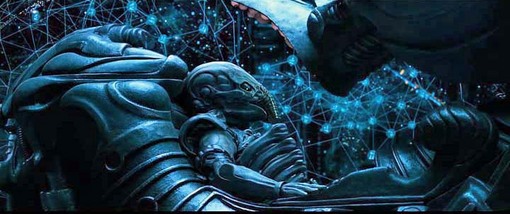
The visceral impact that Ridley Scott’s “Alien” had in 1979 can never quite be recaptured, partly because so many movies have adapted elements of its premise, design and effects over the last three decades — from John Carpenter’s remake of “The Thing” (1982) to David Cronenberg’s remake of “The Fly” (1986) to “Species” (1998) and “Splice” (2009). No movie had ever looked like this. And it still works tremendously — but let me tell you, in 1979 a major studio science-fiction/horror film that hinted darkly of interspecies rape and impregnation was unspeakably disturbing. (It got under my skin and has stayed there. We have a symbiotic relationship, this burrowing movie parasite and I. We nourish each other. I don’t think Ridley Scott has even come close to birthing as subversive and compelling a creation since.)

The thing is, the filmmakers actually took out the grisly details involving just what that H.R. Giger ” xenomorph” did to and with human bodies (the sequels got more graphic), but in some ways that made the horror all the more unsettling. You knew, but you didn’t know. It wasn’t explicitly articulated. Dallas (Tom Skerrit) just disappears from the movie. The deleted “cocoon” scene (with the haunting moan, “Kill me…”) appeared later on a LaserDisc version of the film, and then was incorporated into the 2003 theatrical re-release for the first time. The deleted footage:

December 14, 2012

Margaret: The masterpiece that (almost) got away

Kenneth Lonergan’s “Margaret” was written in 2003, filmed in 2005 and stuck in post-production for six more years. The 150-minute version briefly released theatrically last year was an inchoate masterpiece, perhaps, but a masterpiece nevertheless. The DVD/Blu-ray release, July 10, will feature two versions of the film — the theatrical release and a new “extended cut” by Lonergan that, he says, better reflects his current vision for “Margaret.” As he told Indiewire, “The cut that was released was the cut I delivered. They’re both the director’s cut; they’re just different cuts.”

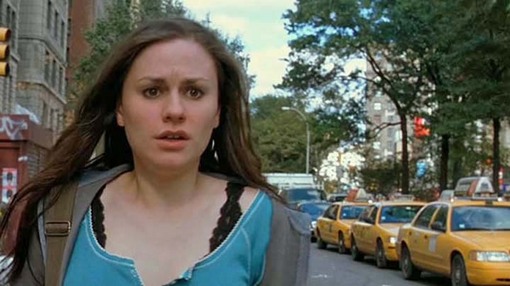
Paul (teenage Patti Benton’s boyfriend in Paul Mazursky’s 1978 “An Unmarried Woman” — a specimen of living, breathing upper-class urban cinema that belongs in the same genus as “Margaret”) would no doubt observe that Lonergan’s movie is “flawed.” (Or, as Patti says: “I liked it. Paul thought it was flawed.”) And it is. “Margaret” rapidly unravels in the last third or so, along with the turbulent world of its teenage protagonist Lisa Cohen (Anna Paquin). I don’t want to get into the plot or characters at all here (I want to wait until I see Lonergan’s “extended cut”), but let me say that this movie features four of the most mesmerizing and complex characterizations I’ve ever seen in any movie: Paquin’s Lisa, Jeannie Berlin’s Emily, J. Smith-Cameron’s Joan and Allison Janney’s Monica (the latter a one-scene cameo).

December 14, 2012

Sarah Silverman is a genius (still)

I’m posting this not just because I’m (still) in love with Sarah Silverman (though I am), and not just because she’s a genius (though, of course, she is), and not just because of the overt political humor in this short film (though The Great Schlep is an inspired idea), but because of how it relates to recent Scanners posts about comedy and understanding what the joke is. (See posts and discussions regarding “Tropic Thunder,” “Juneau,” and David Foster Wallace.)

So, please watch the above movie and then provide your interpretation of it, by considering my questions after the jump…

December 14, 2012

Will “Mean Girl” Palin herself appear on SNL?

And, if she does, how many viewers will be able to tell the difference? Is this gonna be the talent portion?

Bill Zwecker reports in the Chicago Sun-Times:

It’s looking more and more likely that Alaska Gov. Sarah Palin will appear on ”Saturday Night Live” — to have some fun with Tina Fey.

As the comedian’s impressions of the GOP vice presidential candidate draw laughs from Republicans and Democrats alike, a top honcho from the John McCain campaign tells me there’s a debate going on about how to respond.

December 14, 2012

A screenwriter and a neuroscientist on randomness, God and A Serious Man

Whenever I feel a profound connection to a work of art, I can’t help but see signs of it everywhere, all around me. The Coens’ “A Serious Man” is, unsurprisingly, no exception — because it is such a magnificent synthesis of my strongest interests: movies, music, philosophy, religion, morality, mortality (especially as an ex-dead person), mystery, humor, passive-aggressiveness, uncertainty, randomness, coincidence, probability, the new freedoms, sleep…

Screenwriter Todd Alcott has written the most detailed analysis of the Coens’ masterpiece that I’ve yet encountered, and he begins by addressing those who have said they don’t like the movie because it has “a passive protagonist.” Ha! Why, you may as well be talking about the disappearance of the interventionist God between the “Old Testament” (Torah) and the “New Testament”! Indeed, I would argue, that is exactly what you’re talking about. Alcott puts it this way:

December 14, 2012

Angelina Jolie: “We didn’t need dialogue. We had faces!”

The reviews of “Salt,” re-teaming Angelina Jolie with director Phillip Noyce, fell into two distinct camps: those that treated it as an action/espionage thriller, and those that saw it as something rarer: an old-fashioned star vehicle. Of course it’s both, but (as I said in my second paragraph) I think it’s even more fascinating as an examination and appreciation of Jolie’s persona, on- and off-screen.

Kathleen Murphy observed that Noyce “has turned ‘Salt’ into a movie about being a movie star, about gorgeous Angelina Jolie dressing up and down, working up a sweat, displaying her exotic self for our voyeuristic pleasure….”

December 14, 2012

Toy Story 4: Your Mad Men Barbie dolls are here

Oh yes, they’re here at last. Look — how lifelike! (Not to mention “official” and “collectible.”) But Mattel has switched out the original cast just like the Darrins on “Betwitched.” I’m fairly certain that Joan has been replaced by a Hannah-Barbera cartoon character — kind of a cross between Jane Jetson and Wilma Flintstone with a little Agnes Moorehead as Endora thrown in, I’m not quite sure. But she looks so familiar. (Or maybe I’m thinking of a painting by Shag.) Roger Sterling is played by the white-haired guy from “This Island Earth” (1955). Now that Nestor Carbonell has left The Island, his complexion has lightened (but his Natural Man Mascara remains as distinctive as ever) for the role of Don Draper — although he will occasionally be swapped for Bob Cummings. And Betty Draper has been recast as the drunk Lee Remick from “The Days of Wine and Roses.” More images after the jump…

December 14, 2012

Torture porn: Want popcorn with that?

Peet at NegativeSpace knows it when he sees it.

In the 1957 case Roth v. United States, the US Supreme Court held that the First Amendment did not protect obscenity, which Justice William Brennan characterized as a form of expression that was “utterly without redeeming social importance…” and which “… to the average person, applying contemporary community standards, the dominant theme of the material, taken as a whole, appeals to prurient interest.”

In Jacobeliis v. Ohio (1964), Justice Potter Stewart wrote his famous description of pornography:

I shall not today attempt further to define the kinds of material I understand to be embraced within that shorthand description; and perhaps I could never succeed in intelligibly doing so. But I know it when I see it, and the motion picture involved in this case [Louis Malle’s 1958 “The Lovers”/”Les Amants”] is not that.Nine years later, in Miller v. California, Chief Justice Warren Burger offered his famous definition of obscenity:The basic guidelines for the trier of fact must be: (a) whether “the average person, applying contemporary community standards” would find that the work, taken as a whole, appeals to the prurient interest, (b) whether the work depicts or describes, in a patently offensive way, sexual conduct specifically defined by the applicable state law; and (c) whether the work, taken as a whole, lacks serious literary, artistic, political, or scientific value.Today, of course, porn is made for the World Wide Interwebs, and so-called “torture porn” is mainstream multiplex fare. In a post called “The 120 Days of HOSTEL PART II” at The Exploding Kinetoscope, Chris Stangl argues that the phrase “torture porn” is simply a meaningless critical buzzword, “a non-position that allows a critic not to engage the work. It’s critical name-calling.” Stengl writes: “Any review, op-ed piece, or coverage of ‘Hostel Part II’ that includes the phrase ‘torture porn’ as if it were a meaningful genre designation, I will not finish reading. A line must be drawn. We all have our limits.” (Thanks to The House for calling my attention to Stangl’s site.)

I was about to disagree with this (after all, I happen to know torture porn when I see it!) — but then…

December 14, 2012

The 411 on 420

Ryan Van Duzer reports for the Boulder Daily Camera from the heart of pot country: the University of Colorado. Bill O’Reilly’s gonna love this.

December 14, 2012

Sarcastica: Would this help?

Would sarcastic or satirical intent be better communicated on the InterTubes if we had access to backward-italic sarcastic fonts?

From the Sarcastic Font Manifesto:

For too long e-mails, instant messages, web pages and documents have been unable to fully communicate the subtleties of sarcasm. Text delivered without intonation fail to represent the rare form of language where the intended meaning is the opposite of the written word.

Over the internet we yell at each other with ALL CAPS and emphasize with bold and italics, but where is sarcasm? Where is the nuance, the elegance? We say it is time for a change. It’s time for a revolution. It’s time for a new font style….

(tip: Daniel Oxenhandler)

December 14, 2012
subscribe icon

The best movie reviews, in your inbox