A top top 10: 10 critics, 10 best(s) — and why

Ten contributors to MSN Movies cast their ballots for the best films of 2008, unaware of what anyone else would pick. A simple point scale was used to weight the choices. And the result is one of the more surprisingly satisfying year-end consensus-mixes I’ve seen so far. Yeah, I’m one of the participants, and six of my top choices wound up on the aggregate list, but still…

Best of all, each title is accompanied by a micro-mini-essay by one of the critics. It ain’t easy compressing one’s appreciation into nuggets of less than 250 words, but the effort can occasionally yield its own rewards…

MSN Movies Top 10 (bottom to top):(titles link to individual blurbs)

10. Slumdog Millionaire

9. Wendy and Lucy

8. WALL-E

7. Pineapple Express

6. The Dark Knight

December 14, 2012

Palin 2012

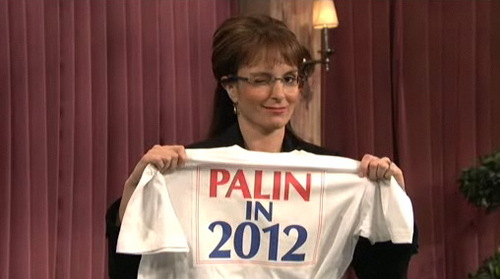
This is has been the script co-written by Sarah Palin & William Kristol (uncredited) all along. And once again John McCain played his part in the scenario, opposite the real Palin (Tina Fey’s) on “Saturday Night Live.” The 2012 Palin rallies (no mention of McCain) are already being held in places like Florida. As I said in my earlier piece, what started out as the “Mrs. Smith Goes to Washington” political narrative has now become “All About Eve” — the rogue diva backstabbing the soon-to-be-washed-up old vet. Does McCain know he’s been cast in the Bette Davis role?

Hang on, Republicans, it’s gonna be a bumpy four years…

December 14, 2012

Hitchcock’s Family Plot Photo Album

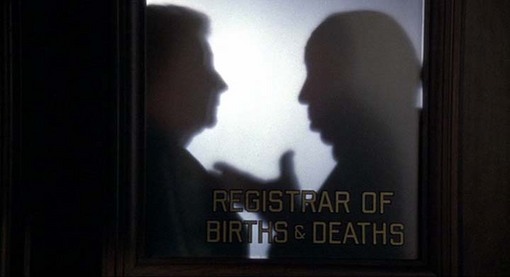
I’ve been enjoying reading Dave Kehr’s book, When Movies Mattered: Reviews from a Transformative Decade, a selection of pieces he wrote between 1974 and 1986. One of them, his choice for best film of 1976, is a review of Alfred Hitchcock’s 53rd and final feature, “Family Plot,” which I hadn’t seen since the 1970s. Boy, did I enjoy the re-visit. The structure (screenplay by Ernest Lehman [“North by Northwest”], based on a 1972 novel, The Rainbird Pattern, by Victor Canning) concerns two couples: a “spiritualist” and her taxi-driver boyfriend (Barbara Harris and Bruce Dern), amateur sleuths trying to track down the lost heir of a rich client; and a pair of slick jewel thieves (Karen Black and William Devane, who sounds — and sometimes looks — so much like Jack Nicholson it’s scary!). Their plots intersect at a point involving a case of… not mistaken identity, but concealed identity.

Kehr wrote: “There are things in ‘Family Plot’ that we haven’t seen in an American film in a long time; things like care, precision, and detail. ‘Family Plot’ is probably the most beautifully crafted, thematically dense film that we’re going to see this year.”

Also, there are some fun Hitchcockian puns/jokes (DK has a lovely account of the spilled white “blood” that becomes a clue). Here are a few of them, just for the enjoyment of it:

December 14, 2012

George Lucas: Give it up

Ever since 1977, George Lucas has been talking about making those “small, personal” movies he’s always dreamed of making. You know, like “Revenge of the Sith.” He did direct a small, personal movie in 1973, it was called “American Graffiti,” and it is his most impressive directorial achievement. Since then, it’s been nothing but “Star Wars” and “Indiana Jones” (with the occasional executive producing jobs on fantasies and friends’ movies, just to lend his name to them).

At MSN Movies I have a small, personal essay that should win me lots of friends. My thesis is that, after the 22-year gap between “Star Wars” and “The Phantom Menace,” Lucas has shown that the “Star Wars” universe is his most personal project. And yet he’s still talking about directing those “little movies.” I say: Don’t bother:

December 14, 2012

Hecklers as critics, critics as hecklers and comics as critics

Psychologists say that depression is rage turned inward. Stand-up comedy, on the other hand, is rage turned back outward again. (I believe George Carlin had a routine about the use of violent metaphors directed at the audience in comedy: “Knock ’em dead!” “I killed!”) In the documentary “Heckler” (now on Showtime and DVD) comedian Jamie Kennedy, as himself, plays both roles with ferocious intensity. The movie is his revenge fantasy against anyone who has ever heckled him on stage, or written a negative review… or, perhaps, slighted him in on the playground or at a party or over the phone or online.

“Heckler” (I accidentally called it “Harangue” just now) is an 80-minute howl of fury and anguish in which Kennedy and a host of other well-known and not-well-known showbiz people tell oft-told tales of triumphant comebacks and humiliating disasters, freely venting their spleens at those who have spoken unkindly of them. At first the bile is aimed at hecklers in club audiences (with some particularly nasty invective for loudmouthed drunken women), then it shifts to “critics” — broadly defined as anybody who says something negative about a figure whose work appears before a paying public. Some of the critics are actually interested in analysis; some are just insult comics who are using the Internet as their open mic. It gets pretty ugly, but it’s fascinating — because the comics, the critics and the hecklers are so much alike that it’s no wonder each finds the others so infuriating.

December 14, 2012

Contrarianism Blog-a-Thon: Let the perversity begin!

JJ Hunsecker is calling YOU to participate in the Contrarianism Blog-a-Thon!

Presidents’ Day Special: What the heck, it’s a three-day weekend for some of us in the States. Now you have an extra day to contribute your contrarian wisdom — through Monday!

And thanks to all those who have already contributed and helped to spread the word. We’ve had submissions from all over the US — and Canada, France, the UK, Ireland, the Netherlands, the Philippines…

>

This weekend we’re saying to hell with the conventional wisdom. We usually say that anyway, but consider the Contrarianism Blog-a-Thon (Friday through Sunday Monday) an excuse to express how you really feel. You know, like Valentine’s Day is supposed to be, only more perverse. (Yes, more perverse!) So, I hope you’re feeling cranky.

Check back here for contributions that are sure to get you riled up or make your head explode with satisfaction as you appreciate the inherent wisdom of the cases made by cine-sthetes from across the blogosphere. Please send your contributions to me at the e-mail link above (jim at scannersblog dot com).

And please feel free to COMMENT on the submissions below. This endeavor requires some back-and-forth, don’t you think?

“For serious critics … the second-best thing to perfection is often the near-miss, the disreputable and even the despised. Next to discovering a new director, planting a flag in an uncharted national cinema or sitting next to Zooey Deschanel at an event, few things please a critic more than polishing a tarnished career or taking on a dubious cause, particularly if everyone else really hated it.”

— Manohla Dargis, New York Times, February 14, 2007

“I deeply believe that taste is a kind of prison for oneself – when a critic finds himself or herself always rigidly repeating the same opinions, the same positions, the same likes and dislikes (that is the kind of bad posture which Pauline Kael bequeathed to criticism). Critics should feel free to bring in their own emotional reactions to films – it is hard to keep them out of writing – but the phenomenon known as the ‘gut feeling’ or gut reaction can become a terrible end in itself: ‘this film makes me angry or it makes me happy, so it’s a rotten film or a great film, and I’m not going to discuss it any further.’ The important thing is always argument, analysis, logic. I have an irrational side (critics need it), but my rational side believes in logical demonstration: if you can prove to me that what are saying about a film makes internal sense, if you can marshal the evidence from the film itself to back up what you say, then I too can be persuaded to disregard my own first gut reaction and explore that film again in a new, more open way.” — Adrian Martin, Cinemascope, January – April, 2007

“There’s nothing I like less than bad arguments for a view that I hold dear.”

— Daniel Dennett

Contrarianism Blog-a-Thon (Feb. 16 – 1819, 2007)(UPDATED: 5 p.m. PST, Monday)

Kristin Thompson: Classical cinema lives! New evidence for old norms

Think classical film style is dead? Think again.

Peet Gelderblom @ Lost in Negative Space: Au Contraire (cartoon)

“The contrarian critic took issue with just about everything…”

Evan Qatsi: “You’ve Got Mail,” Gnosticism and Movie Snobbery

“YGM”: Reprehensible, but fun!

flickhead: It’s boring, but is it art?

“Last November I was sent a DVD screener of Theo Angelopoulos’s ‘The Weeping Meadow,’ and was so horrifyingly bored that I felt that all film in general was no longer worth writing about.”

Pacheco @ bohemiancinema: “Starship Troopers”: In Defense Of…”

“They’ll Keep Fighting, And They’ll Win!”

Piper @ Lazy Eye Theatre: Grandpa Joe The Imposter

“Contrary to what everyone has come to believe, Grandpa Joe is not the sweet, lovable old-man everyone thought he was.”

Squish @ filmsquish.com (The Film Vituperatem): “L’ Age d’or”: Weird & Wacky

“There’s the kind of film that deserves the highest of praise, and there’s the kind that needs to be strung up and beat like a piñata until its guts give its treasures…. but sadly this movie isn’t worth any of these intense emotions.”

Peet Gelderblom @ Lost in Negative Space (encore!): Boys like Peet are not afraid of wolves

“The best animated picture of 2006 wasn’t made by Pixar, Disney, DreamWorks, Blue Sky, Warner Bros. or Sony Pictures…. Hell, it wasn’t even released in the US last year.”

Oggs Cruz @ Oggs’ Movie Thoughts: “The Fountain”

“I viewed the three storylines of ‘The Fountain’ as existing in different dimensions…”

Brian Thomson @ stereoroid.com: Jackassism

“The shopping cart, a harmless symbol of domestic consumption, becomes a

conveyance; delivering its contents to the terminal checkout…”

C. Jerry Kutner @ Bright Lights After Dark: Why Murch’s “Touch of Evil” Doesn’t Make the Cut!

“I can’t imagine that Welles would have approved this evisceration of his work…. If you want to see the superior Second Studio Cut, you would have to know someone who has it on videotape or laserdisc.”

Bob Westal @ Forward to Yesterday: The Big Sleep — A Confession

“I am a filmnambulist. And it’s not just austere minimalists who can lull me into one of my cinematic siestas. If I’m tired enough, I can sleep through any universally acclaimed auteur.”

Jeremy Mathews @ The Same Dame: Contradicting the Contrarian

“If nothing else, the contrarian serves to push those in the majority to really express themselves, instead of standing around agreeing with one another.”

Kenneth R. Morefield @ the matthew’s house project: Contrarianism, “Munich” and Effective Arguments

“…I think that the usefulness of a contrarian review depends more upon the ethos of the reviewer than the rhetorical style or technique of his or her argument.”

Kenneth R. Morefield (redux!) @ All Things Ken: MacGuffins of Men

“In this day of marketing hype and review saturation, the difference between a contrarian review and an assenting review is often little more than a matter of which the viewer trusts more — the consensus opinion or his or her own two eyes.”

Campaspe @ Self-Styled Siren: Do the Contrarian: “Once Upon a Time in the West”

“… Leone’s camera doesn’t seem to care if we ever get interested or not. Again and again we return to the basic pattern of long shot (flat, sun-bleached, not terribly interesting desert) to close-up (flat, sun-creased, not terribly expressive face), close-up to long shot.”

Dennis Cozzalio @ Sergio Leone and the Infield Fly Rule: Nuts to “Brazil”

“… [T]oo much the showman, or the eager kid who wants to shock his parents by playing with poop and get pats on the back for it, Gilliam wears his depressive inclinations on his court jester’s sleeve. He wants credit for being a scatological imp and a serious buzz-kill at the same time.”

Harry Tuttle @ Screenville: Outlandish Dargis Empire

“This is a gameplay of course, as Dargis is a great critic and my tentative analysis is pretentious. Nitpicky mode intentionally exaggerated. For the fun of being contrarian, at least let’s not bash a little helpless reviewer, let’s go for the best and see where it takes us.”

Ted Pigeon @ The Cinematic Art: Transcending Time and Space: The Guilty Pleasure and the Problem With Film Criticism

“Which brings me back to the “Guilty Pleasure.” Such an idea only exists within an understanding of cinema as plot, and “content.” We then become conditioned to like certain genres and dislike others on the grounds of the kind of narrative they may embody. Coming from the approach that form creates content, we can open ourselves up to understanding that any plot or narrative can be executed effectively and interestingly in the medium of moving images we know as cinema. Viewers should not feel guilty for enjoying something.”

GD Williamson @ Where the Green Ants Dream: An Odyssey Through Contrarianism in Society

“This is why an American Contrarian, whether that’s Chomsky or White, is usually so angry and so fearful of dark conspiracies who push ‘their’ influence on the general public (and thereby reduce the influence of whichever Contrarian is complaining about it?). Britain, meanwhile, breeds people like Xan Brooks and the anonymous author of ‘101 Movies To Avoid’; people who can barely muster the energy to raise their eyelids, but want you to know that they’re dangerous and controversial all the same.”

Reilly Owens: Sancho Panza at the Wedding Feast: Last Action Hero

“Among the many amazing things Alfonso Cuarón’s ‘Children Of Men’ does is hang its story on the acts of an antihero. Not antihero in the classic Bogart sense — although Theo Faron seems to fit that mold: rumpled trench coat, hangdog expression, ‘I stick my neck out for nobody’ attitude. No, this character is something different, a new breed. He goes against the grain of the common action hero; he is a passive hero.”

Robert Humaneck @ The House Next Door: The Unscrupulous Side of Kubrick: “A Clockwork Orange”

“Real horrorshow, yes, but Kubrick’s orchestration of so much mayhem is lacking a much-needed ideological backbone…. Kubrick never takes the necessary next step in subverting the violence he engages us with.”

Tom Shipp (Comment): “Sunset Boulevard”: A Stylish Load of Hooey (My Contrarian Opinion)

“‘Sunset Boulevard’ is a cheap shot exploitation film wrapped in sheep’s clothing. Norma Desmond is a one note caricature beginning and ending the film cartoonish, one dimesional, and completely to blame for everything.”

Steve Carlson @ Blogcritics: “I Spit on Your Grave”

“As it turns out, ‘I Spit on Your Grave’ is not the hateful nadir of cinema. It is, instead, the ‘Unforgiven’ of the rape-revenge genre, in that it is simultaneously the perfect expression of and the eulogy for the genre. It’s as brutal and confrontational a cinematic work as I’ve yet seen; Zarchi reduces the genre ito its barest elements and in doing so asks the audience to consider why they are there in the first place.”

Dan Eisenberg @ Cinemathematics: More Like the Big Snoozefest

“I must have seen ‘The Big Sleep’ at least three times, trying to find out what is so good about it…. And so far I’ve come up empty handed. It doesn’t work as a noir or as a romance. And I’ve tried to make it work. I’ve looked at praises for it to see what I’m missing. Or maybe it’s what they’re missing.”

Neil @ The Bleeding Tree: “The Exorcist”

“Ultimately, the most reprehensible aspect of the movie is its unsubtle metaphor for a single mother raising an out of control child and her responsibility for allowing the Devil as well as ‘the devil’ to take her child’s mind and soul.”

Nobody @ Any Eventuality: Deconstructing “Babel”: “Epic Movie” and the Illusion of Continuity

“I can think of no more pretentious and self-important film than “Babel,” and “Epic Movie” is a devastating critique of the illusion of continuity attempted by Inarritu and Arriaga.”

Piper @ Lazy Eye Theatre (extra!): When Oil and Water Mix it’s “Punch Drunk Love”

“This movie is more than Adam Sandler and Paul Thomas Anderson going against type.”

Jeff Ignatius @ Culture Snob: Conventional Contrarianism: A Practical Guide

“A good contrarian will anticipate the buzz-and-backlash cycle of popular culture and must carefully position an opinion for maximum contrarian durability. Yesterday’s contrarian can quickly become today’s peddler of safe opinions.”

Noel Vera @ Critic After Dark “The Exorcist”: Scary Movie?

“… [After] after all is said and done, ‘The Exorcist’ isn’t exactly the great horror classic it’s all pumped up to be — certainly not one that can’t stand a little revision, and I’ll tell you why: It just isn’t evil enough.”

Andy Horbal @ No More Marriages! Some Possibly “Contrarian” Thoughts On Blogging and Blog-a-Thons

“They’re more valuable for collecting a variety of extant positions on a subject than they are for promoting a discussion on a subject, for moving towards a reconception of that subject. For someone who prides himself on being part of a community focused on conversation this upsets me to a certain degree.”

Andy Horbal @ No More Marriages! (x2!) Why I Like Jonathan Rosenbaum and Armond White

“I did not come here to defend these critics–that would, again, require legwork I haven’t done–but instead to talk about why I’m always interested in their criticism and suggest a possible approach for identifying (or not identifying) them as bona fide contrarians.”

Andy Horbal @ No More Marriages! (x3!) The Black Maria Film Festival

“I’ve been itching to write about the Black Maria Film Festival since I returned from the Pittsburgh screening of their touring program this Saturday, and I offer this post now in the “contrarian” spirit of championing contemporary “unseen cinema.”

Steve Carlson (the sequel!) @ The Ongoing Cinematic Education of Steven Carlson “Freddy Got Fingered,” or: Daddy, Would You Like Some Dada?

“In 1917, Marcel Duchamp signed a urinal and called it art. In 2001, Tom Green waggled a horse’s penis and called it a movie. The line of separation between the two actions is a lot thinner than would seem apparent.”

Pacheco @ bohemiancinema (he’s back!): “Any Given Sunday”: In Defense Of…”

“‘Any Given Sunday’ didn’t polarize the way ‘Natural Born Killers’ did, and after Oliver Stone made Alexander, the public’s new punching bag, his football opus seemed to fall off the radar, which I would argue is an even worse place to be.”

Pyko Moose @ Confessions of a Flick Junkie: A Pervert’s Guide to Faith: “The Good, The Bad, & The Ugly

“But the film does not so much function as a criticism of faith as a meditation on its nature. In the opening shot we witness the creation of Man: First a landscape, still and silent in its endless deadness. A dog howls somewhere beyond our range of perception, calling into existence (and into frame) an ugly, twisted face….”

Counter-arguments & subjects for further investigation:(These pieces weren’t necessarily written in response to Contrarianism Blog-a-Thon posts, but nevertheless contribute to further exploration of some of the posts above…)

Chris Cagle @ Category D: A Film and Media Studies Blog: Post-ClassicismA response to Kristin Thompson’s post, above.

CK Dexter, Scanners Comment: Re: Taste into Theory & “You’ve Got Mail”

“Of course there are good and bad movies…. Those who say otherwise do so in bad faith, as part of a pragmatic social contract in which I graciously grant you your own private You’ve-Got-Mail’s so that you, in return, will grant my own egregious lapses in taste an equal amount of tolerance.”

Matt Zoller Seitz @ The House Next Door: Theo Angelopoulos’ “The Weeping Meadow”(For HarryTuttle’s Contemplative Cinema Blog-a-Thon, January 2007)

“It finds a cool-headed but empathetic visual analogy for the way we tend to envision history: as anecdotes about masses of unknown people moving from place to place, enduring unimaginable suffering, then shaking off the pain, reinventing themselves and moving on.”

girish: On Film CriticismA terrific ongoing discussion in response to the Adrian Martin piece quoted above.

jmac @ girishshambu.com/blog: Comment

“There is such CONFORMITY in writing movie reviews, and furthermore, most people seem to ACCEPT this PROSAIC approach to WRITING a review. It’s horrible!!!… Manohla Dargis’s review was the first step in introducing some CREATIVITY to the NYT movie section…. I actually think that Manohla Dargis’s review of ‘Inland Empire’ was beautiful.”

J. Hoberman, Village Voice: L’Age d’or

“Thanks to his mastery of montage, Buñuel naturalizes Dalí’s images into a duplicitous rhythm of normality and outrage. The film suggests instances of sex and violence far more extreme than any actually represented while contriving effronteries so offhanded you can’t believe you’ve actually seen them.”

Kim Newman, Empire Magazine (UK): “Once Upon a Time in the West”

“Leone showed with ‘Once Upon a Time in the West’ that it was possible to honour the Western tradition while raising the artistic bar to such a level that nobody has made a better Western since. In fact, nobody has made a better Western, period.”

Preparatory postings:

Peet Gelderblom: The contrarian fallacy: Armond White vs. the Hipsters

David Bordwell: Indie Guignol

Dennis Cozzalio: Julie Andrews: Governess of Goodness or Nanny from the Netherworld?

Scanners: Do the Contrarian (Part I)

Scanners: Do the Contrarian (Part II)

Jim Emerson: The Big Lie

Yes, long before “Crash” there were movies that claimed to do one thing while actually doing the very opposite…

December 14, 2012

Catherine O’Hara: Queen of Comedy

View image Catherine O’Hara, the funniest person on the planet, with John Michael Higgins, who’s no slouch himself.

Please note that, in the list of Categories in the column at right, there is one topic that still has no entires. That is “Oscars.” Because, really, after last year what’s even left to joke about? And it’s only November.

Nevertheless, I have a couple of Chicago Sun-Times/RogerEbert.com reviews this week, and one of them is of Christopher Guest’s “For Your Consideration”:

Hey, I heard Catherine O’Hara is so splendid in Christopher Guest’s latest ensemble comedy, “For Your Consideration,” she’s a shoo-in for an Oscar nomination.

It’s true — she is that good. And she’s long overdue. (I would already have given her an Oscar, an Emmy, a Grammy, a Peabody, a Nobel and a People’s Global Golden Choice Award for her performances as Lola Heatherton and Dusty Towne in the 1982 SCTV “Network 90” Christmas special alone.)

Also: “Fur: An Imaginary Portrait of Diane Arbus”:Perhaps the two biggest problems with “Fur: An Imaginary Portrait of Diane Arbus” are the last two words of the title. This through-the-looking-glass “Beauty and the Beast” fable has little to do with Diane Arbus, the famous photographer, or with her work, which is not seen in the film. As a Lewis Carroll title card explains, this “is not a historical biography” but instead “reaches beyond reality to express what might have been Arbus’ inner experience on her extraordinary path” to becoming an artist. Sure. All that’s missing is a sense of who Arbus was, and how the fictional journey depicted in the film is reflected in (or, rather, distilled from) her art.Meanwhile, over at The Onion, the question is considered: “Are Oscar Prognosticators Evil?.”

December 14, 2012

Into the Great Big Boring

When I was a child I was taught that it was unacceptable to call something — a movie, a song, an activity — “boring” because: 1) it doesn’t make sense (a thing can’t be boring, unless perhaps it is a drill bit; a person feels bored); and 2) it’s indefensible, since the quality of “boringness” cannot be isolated or identified as an element of the thing itself; it’s a feeling and it is yours).

So, saying something is “boring” is not exactly like saying something in a movie is “funny” or “moving” — though, again, I’d prefer to place the responsibility for a response on the “feeler” rather than on the object — because at least you can describe how something is presented or intended to be received as humorous or touching, even if you don’t think it is. (Yes, there are exceptions to that, too.) I mean, a joke or a gag or an emotional situation can be objectively analyzed, but there are no agreed-upon cultural standards for evaluating “boring.”¹

“Boring,” I believe, is more like the word “entertaining” — too vague to be of much use in a critical vocabulary. So, I might say I found something about a movie “tedious” or “engaging” or some other thesaurus word, but I’ll attribute the emotion to myself and my taste, and even then not without a serious attempt to describe what I’m talking about, and to give at least one specific example.²

But now, “boring” is hot, at least in overheated Interwebular film criticism circles, since the publication of Dan Kois’ New York Times Magazine piece called “Eating Your Cultural Vegetables,” in which he says:

December 14, 2012

‘Breaking and Entering’ (It’s a metaphor)

View image So, Jude Law says to Robin Wright Penn: “Maybe that’s why I like metaphors.”

My review of Anthony Minghella’s “Breaking and Entering” is in the Chicago Sun-Times and on RogerEbert.com:

The title of Anthony Minghella’s dour “Breaking and Entering” is a metaphor. How do we know this? Well, for one thing, there’s a burglary right at the start.

And the central character himself, Will Francis (Jude Law), demonstrates a fondness for metaphors in his dialogue. He’s so fond of them that he even tells us he is fond of them in a climactic speech: “I don’t even know how to be honest anymore. Maybe that’s why I like metaphors.” Then he goes on to describe a metaphor, where a circle represents his family, but it’s also an enclosure or a cage, and he wants to feel comfortable in it but sometimes he feels trapped in it and sometimes he feels excluded from it. […]

In the press notes, Jude Law spells it out: “The argument is: Is it worse to steal somebody’s computer or is it worse to steal somebody’s heart?” That’s not even a decent metaphor (although, to be fair, the film is not about organ theft). It’s simply an algebraic formulation: a > b or b > a, where “a” is “computer,” “b” is “heart” and the nature of the relationship is “worse”?

Expressed in those terms, “Breaking and Entering” Full review at RogerEbert.com

December 14, 2012

The Shamus, Mr. Shoop, & blogger catch-up

Pop quiz!

I’ve spent the summer going to cardiologists and gastroenterologists, how about you?

I like a hemochromatosis screening in June

How about you?

I dig a cardiac catheterization balloon

How about you?

I love an MRI

And a CAT scan, too

I love endoscopies

Holter monitor EKGs

How about you?

Oh, it’s been fun, fun, fun till the doctor takes the Ambien away! Unfortunately, I couldn’t come up with a good rhyme for “ventricular tachycardia” that scanned. “Gastric carcinoid” is also tough. But I’ve really had all those things — and a colonoscopy and seborrheic dermatitis and daily zombifying doses of Coreg and more — just since May! Unfortunately, this has put me far, far behind in my movie blog coverage.

For example, did you know that the terrific critic Michael Atkinson, late of the Village Voice, has joined the blogosphere? Welcome, Michael! You’ll find him at Zero for Conduct.

And, weeks ago, TLRHB, the splendid blogger formerly known as That Little Round-Headed Boy, transformed himself into The Shamus over at bad for the glass: a culture blog. The Shamus writes about noir and “Chinatown,” of course (BTW, I own the domain name badforglass.com — and egbertsouse.com and sitonapotatopanotis.com, too, for that matter), movies, records and record covers, television, cartoons, and all forms of pop culture. I’d love to link to a favorite post or two but… I can’t. As The Shamus explains:

If you like a post, copy it today. It may not be here tomorrow. The Shamus doesn’t play by the blog rules. The template will change. Often. No archiving. One other thing: I don’t roll on Shabbas. And Walter, will you put down the god-damned gun?I’ve been meaning to link to this post by the invaluable girish (The Cinema in Your Head) since the end of May, but where does the time go? Who knows, maybe one day I’ll even get around to writing about it myself.

Our beloved David Bordwell has a wonderful piece about the tactile pleasures of studying films frame-by-frame — not on DVD, but on archival equipment that encourages the practice of Watching movies very, very slowly. A snippet:

Viewing on an individual viewer has both costs and benefits. Sometimes details you’d notice on the big screen are hard to spot on a flatbed. But with your nose fairly close to the film, you can make discoveries you might miss in projection. (Ideally, you would see the film you’re studying on both the big screen and the small one.) In addition, of course, you can stop, go back, and replay stretches. Above all, you get to touch the film. This is a wonderful experience, handling 35mm film. Hold it up to the light and you see the pictures. You can’t do that with videotape or DVD.And because it’s summer quarter, our Man For All Seasons, the fantastic Dennis Cozzalio at Sergio Leone and the Infield Fly Rule, has posted another pop quiz: Mr. Shoop’s Surfin’ Summer School Midterm. Questions this time around include:

2) A good movie from a bad director

6) Best movie about baseball

7) Favorite Barbara Stanwyck performance

8) “Fast Times at Ridgemont High” or “Dazed and Confused”?

13) “Salo: The 120 Days of Sodom” — yes or no?

20) Name a performance that everyone needs to be reminded of, for whatever reason

Oh, and so much more. PLUS two extra credit questions suggested by recent posts at Scanners!

Also, for a taste of the best of past quiz responses, be sure to sample Professor Corey’s Honor Society, Part 1, Part 2 and Part 3.

And do not neglect to read Dennis’s defense/appreciation of Martin Scorsese’s misunderstood magnum opus, “New York, New York.” As I posted in the comments section: “New York, New York” (after the “Happy Endings” sequence was restored) is a masterpiece. I think it would make a nice (loooong) double-bill with “La Dolce Vita” because both movies are about performance — creating scenes, playing to the crowd, adopting roles, in public and in private. Those brutal hyper-emotional Scorsese confrontations against mockingly artificial backdrops — genius. And your selection at this time is a fine tribute to the recently departed Laszlo Kovacs, whose fluid “NY, NY” camerawork is positively musical.

* * * *

I’m mad about polyps

Can’t get my fill

Needles in fingertips

They give me a thrill

Holding breath for the ultra-sound

Pooping in Sensurround™

May not be new

But I like it, how about you?

December 14, 2012

Petraeus/Broadwell: It’s the technology, stupid

Writer-director-producer David Simon (creator of “The Wire,” “Generation Kill,” “Treme”) has a piece at Salon headlined: “Media’s sex obsession is dangerous, destructive,” in which he eviscerates Roger Simon (no relation) for his Politico column, “Gen. David Petraeus is dumb, she’s dumber.” And The Week offers a round-up of trashy “journalistic” misbehavior, ” The David Petraeus affair: Why the media’s coverage is sexist.” I don’t know. “Sexist” seems like an understatement. Puerile, snotty, crass, raunchy, snide, scary, onanistic, stupid, instructive, pointless — it’s all those things, too. At the very least.

December 14, 2012

The Dark Room

Please consider this my contribution to the For the Love of Film (Noir) blogathon, now in progress.

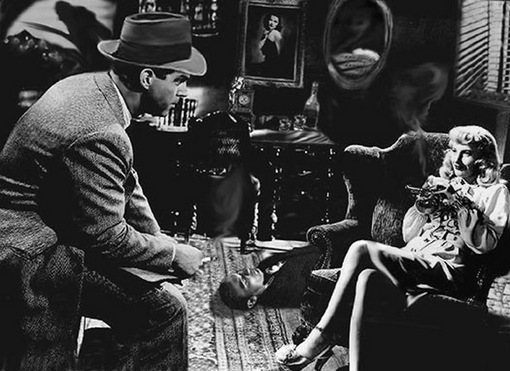
This room is haunted. By shadows from out of the past… and by my failure to ever complete the thing. I notice I had pledged to finish it by September, 1999. Looks like the date may have slipped. There’s one way to enter The Dark Room, and that’s to go through here. (There is, in the tradition of noir, no way out — except through the gift shop.) I originally thought of it in 1995 as a film noir feature for the CD-ROM movie encyclopedia I was editing, Microsoft Cinemania. But it wasn’t something we could do in the Cinemania format at the time. Not until I left Microsoft and launched Jeeem’s CinePad in 1998 did I try to build the thing myself.

There are (at least) three ways to explore The Dark Room, as explained in the room. But two of them you can do from right here: 1) Take a look at what’s going on in the room. How many of the elements (and the films from which they’ve been lifted) can you identify? Leave ’em in comments below. 2) If you like to spin stories (and webs), maybe you’d like to come up with a noirish tale or situation based on what you see in this image. What’s the rumpus? Who’s the dead guy? Who’s doing what to whom? How did things come to this (is it time for a narrated flashback?), and what will happen next? Again, if you feel like letting your imagination roam, please share your scenarios in comments.

December 14, 2012

Pop notes: 101 essential movies

You must remember this: one of the movies’ iconic images.

Further reflections on the 2006 Conference on World Affairs in Boulder, CO: John Lennon said life is what happens to you when you’re making other plans. Life is also the process of finding connections between everything that happens to you (there he goes with that “We’re all pattern-seeking animals” thing again!). So, last week at the CWA, three panels I was on ran together in my head in ways I think are interesting. But then, it’s my head we’re talking about, so I’m probably inclined to think my digressions and free-associations are interesting, otherwise I wouldn’t have spent so much time mucking about with them.

December 14, 2012

Veteran’s Day: The skin beneath the uniform

“When in uniform I have to be the exact same as everyone else, I need to look exactly like them.”

— a soldier in “Tattooed Under Fire”

As a person of ink (and I’m not just referring to the stuff that runs through my newspaperman veins, but to my eight tattoos — so far), I know how intimately tattoos can project images of who you are (or were at the time of the tattooing) from the inside out. And how they conversely shape your identity through the incorporation of symbols, literally internalizing them under your skin. My tattoos are me, as much as any other part of my mind or body. They are physical memories, ideas made flesh. Beginning Wednesday (11/11/09), Veteran’s Day, PBS stations will be showing a documentary about Fort Hood soldiers and their skin art called “Tattooed Under Fire.” I haven’t seen it in advance (my TiVo is set to record it tonight), but Mary Elizabeth Williams wrote at Salon.com just a few days ago:

“This is Fort Hood, and it goes on for miles and miles and miles.” Director Nancy Schiesari’s riveting documentary, “Tattooed Under Fire,” about the River City parlor in Killeen, Texas, and the soldiers who patronize it, was already being hailed as one of the great unreleased films of the year when it finally got picked up to air this month on PBS. But in a grim piece of poetic timing, suddenly the world is looking to understand how the largest military base in the country could become the site of one its worst mass murders, an attack that left 13 dead and 30 injured.

Trailer and showtimes after the jump…

December 14, 2012

Hurdy Gurdys and Aqua Velvas: Misc. “Zodiac” fax…

There’s something about an Aqua Velva Man.

Don’t worry; no spoilers here.

>> The blue Aqua Velva cocktail that Jake Gyllenhaal’s character orders is named after a popular after-shave lotion of a similar color. The drink consists of vodka, gin, blue curaçao and Sprite or 7-Up. (Today you might even be able to get away with Sierra Mist.) Some variations also include rum and tequila. And, perhaps, a sprig of mint or an orange slice. Other recipes call for Baileys Irish Cream (for that foggy look, I guess). And still one other is made of tequila, blue curaçao, and fruit juices. It’s not necessarily as frou-frou as it seems in the movie (with those fancy glasses, umbrellas, maraschino cherries and all): In WWII, US sailors were said to drink it for its alcohol content (which has since been reduced). A little soapy, perhaps (ingredients: Alcohol 40, water, glycerin, fragrance, menthol), but it went down smooth, evidently…

Aqua Velva

3/4 oz. vodka

3/4 oz. gin

1/4 oz. Sprite

1/2 oz blue curaçao

1/2 oz. Sprite

Shake vodka, gin, blue curaçao and Sprite with ice. Pour/strain into glass and top off with Sprite. Cocktail umbrella and fruit/mint garnish optional.

>> Paul Avery, the San Francisco Chronicle reporter played by Robert Downey Jr., married Margo St. James, founder of COYOTE (Call Off Your Old Tired Ethics), the sex-workers’ rights organization. St. James ran for the San Francisco Board of Supervisors in 1996 and 1998.

>> Avery covered the Zodiac case for the SF Chronicle (which reprints one of the stories featured in the movie here), and Chronicle cartoonist Robert Graysmith (played by Gyllenhaal) wrote the book, “Zodiac,” on which the movie was based. But Avery later co-wrote a book about another famous Bay Area case he covered, the Patricia Hearst kidnapping. Avery and Vin McLellan published “The Voices of Guns: The Definitive and Dramatic Story of the Twenty-two-month Career of the Symbionese Liberation Army, One of the Most Bizarre Chapters in the History of the American Left” (Putnam, 1977).

>> Recording sessions for the haunting Donovan song “The Hurdy Gurdy Man” (and the album of the same name), used to spine-tingling effect in the movie, included John Paul Jones and Jimmy Page and/or John Bonham, who would go on to form Led Zeppelin. Donovan claimed George Harrison wrote part of a lyric for “Hurdy Gurdy Man” when they were in Rishikesh, India, with Maharishi Mahesh Yogi — along with the other Beatles, Jane Asher, Mia Farrow, Beach Boy Mike Love and others. (Another Donovan song, “Wear Your Love Like Heaven” from 1967, was featured in TV commercials for Love’s Baby Soft cosmetics, targeted at teen and pre-teen girls, in 1968.)

>> According to Donovan’s autobiography, “The Hurdy Gurdy Man,” the verse George Harrison wrote was cut from the “Hurdy Gurdy Man” single (to keep it short for DJs), but was used by Donovan on a 1990 live album. The verse (which would have worked perfectly in the movie):

When the truth gets buried deep

Beneath a thousand years asleep

Time demands a turnaround

And once again the truth is found

>> Construction on San Francisco’s famous pyramidal Transamerica building began in 1969 and was finished in 1972. It is still the city’s tallest skyscraper.

>> Although crude fax technology existed in the late 19th century, and a modified form was used by the Associated Press to transmit what were identified as “AP Wirephotos” beginning in 1934, the modern fax machine did not come into general use until the mid-1970s. By the mid-1980s, falling electronics prices and improved phone technology made the fax a ubiquitous office tool.

>> The opening song in “Zodiac” is “Easy to be Hard” (from “The American Tribal Love/Rock Musical,” “Hair”) performed by Three Dog Night — one of the best-selling bands of the late 1960s and early 1970s, whose hit singles included “One” (written by Harry Nilsson; recorded by Aimee Mann for the soundtrack of Paul Thomas Anderson’s “Magnolia”), “Mama Told Me Not to Come” (written by Randy Newman; also used in PTA’s “Boogie Nights”), “Eli’s Coming” (written by Laura Nyro) and “Joy to the World” (written by Hoyt Axton — the guy who buys the gremlin in Joe Dante’s “Gremlins”). The Three Dog Night version of “Shambala” (1973) was featured in a recent episode of the TV show “Lost,” in which an eight-track cassette of the song is found in a crashed VW bus. TDN’s version of “Shambala” was also used on the soundtrack of Rob Zombie’s “The Devil’s Rejects.”

December 14, 2012

Sex and the City: Girls do poop!

View image SJP sports her power flower.

“The weekend opening [of ‘Sex and the City’] also ranked as the strongest ever for a movie carried by a female lead (at least if ticket-price inflation is not taken into account). Paramount’s ‘Lara Croft: Tomb Raider’ was the previous record-holder, with $47.7 million in ticket sales for Paramount during its opener in 2001.

“’I am so excited about the possibilities for movies about women,’ Ms. Parker said.”

— “Gal Pals of ‘Sex and the City’ Knock Indiana Jones From Top Spot,” New York Times, June 2, 2008

Summer’s here and the time is right for fart, diarrhea and masturbation jokes in the theaters. Not just in raunchy male-oriented comedies, but in so-called “chick flicks” — the kind groups of pals attend together after a few cocktails. I’m speaking, of course, about “Sex and the City.” Could it, perhaps, be the long-awaited Judd Apatow(ish) movie for gals? You know, the one about a group of friends who hang out and get drunk or stoned, complain about their relationships (or lack thereof), make dirty scatalogical jokes, and generally prefer one another’s company to that of the opposite sex?

You tell me. Because, sadly, nobody has enough money to pay me to go see “Sex and the City.” I am not the target audience and I know that. I have no objection to it, either. As Roger Ebert succinctly stated at the top of his review “I am not the person to review this movie.” Me, too. I am also not that person.

December 14, 2012

Roman Polanski: Art trumps life?

“You may think you know what you’re dealing with, but believe me, you don’t.”

— Noah Cross, “Chinatown”

Roman Polanski gets under people’s skin. Not just his movies, but there’s something about him that dredges up deep, dark, disturbing feelings. I hope you’ve seen Marina Zenovich’s 2008 documentary “Roman Polanski: Wanted and Desired” (trailer below), the biographical film that recounts the sex charges brought against Polanski in 1977, the resulting media melee, his guilty plea to a lesser charge of unlawful sexual intercourse with a minor, and his escape to France before sentencing. Watching the film, you may find yourself feeling a little like Rosemary Woodhouse, disoriented by the bleeding together of dreams, paranoia, irrationality, ambition, drugs, sex… and movies. (“This is really happening!”) The tagline for the doc was “The truth couldn’t fit in the headlines” — and that’s the case now, too.

December 14, 2012
subscribe icon

The best movie reviews, in your inbox