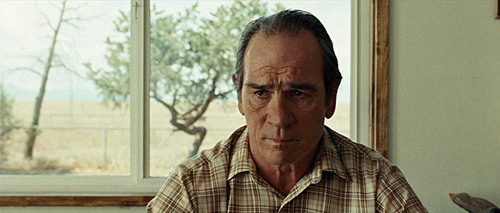
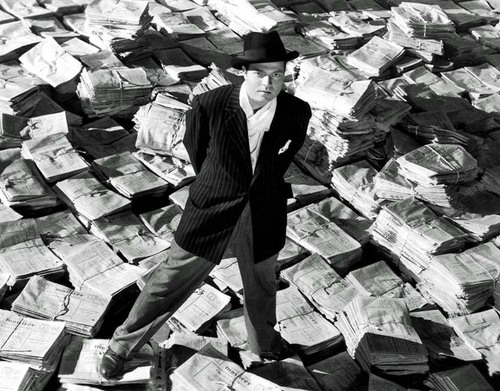
Close Up: The movie/essay/dream

Words are linear. Movies not so much, even though they are encoded onto strips of celluloid or served up as streams or spirals of digital bits.

The web is not so linear, actually. Hyperlinks in all directions are more like the interconnected synapses of the human brain than any other technology or art form I can think of. But sometimes when I try to convey something about my experience of movies — filtered, as always, through reflections and contrasts between images, memories, themes, styles — what I really want to do is make a movie about it. That seems like the shortest, most direct way from imagination to articulation. The movie itself (as Godard famously suggested) is the criticism, the analysis.

When I put together the images and commentary for my previous post, “Close-Ups: A free-association dream sequence,” in celebration of the Close-Up Blog-a-thon at the House Next Door, that’s what I was getting at. I just didn’t have the tools to fully express what I wanted to say. Strike that. I had the tools, right here on my MacBook, but I didn’t know how to use them.

One weekend and three long nights later, here’s what I wanted to say. I will resist the temptation (you don’t know how much I am tempted) to analyze my own cinematic essay, but I want you to watch it for yourself first. I’ll translate it from web into movie and back into language later. This is a direction in which I want to move my film criticism.

Oh, and it’s not a “literal” interpretation of the post. Some things just work differently on the motion picture screen than they do on the computer screen. Think of the first post as the original set of annotated storyboards, from which I felt free to depart whenever it felt right. The idea was not to overthink it, just to go with the flow and see where it led, like the ant-hole in hand / armpit / sea urchin / top of head sequence in “Un Chien Andalou.” Enjoy — and please leave comments, critiques, interpretations and questions! Just be sure to stay all the way through the end credits — a minute or so of the six-minute running time….

UPDATED 10/19/07: While looking for a frame grab from “Black Narcissus” to honor the late Deborah Kerr, I discovered the source of an indelible mirror-image (you’ll see) that I’d previously been unable to locate. It’s now been incorporated into the movie.

December 14, 2012

Same scary dude funding Fox News andthe inaccurately labeled “Ground Zero Mosque”

The Daily Show With Jon Stewart

Mon – Thurs 11p / 10c

The Parent Company Trap

www.thedailyshow.com

Daily Show Full Episodes

Political Humor

Tea Party

Because this is a blog about critical thinking, and everyone in the world needs to see and appreciate this “Daily Show” clip, “The Parent Company Trap.”

Everybody should also read Nicholas Kristof’s column, “Taking bin Laden’s Side”:

In short, the proposed community center is not just an issue on which Sarah Palin and Osama bin Laden agree. It is also one in which opponents of the center are playing into the hands of Al Qaeda.

These opponents seem to be afflicted by two fundamental misconceptions.

The first is that a huge mosque would rise on hallowed land at ground zero. In fact, the building would be something like a YMCA, and two blocks away and apparently out of view from ground zero. This is a dense neighborhood packed with shops, bars, liquor stores — not to mention the New York Dolls Gentlemen’s Club and the Pussycat Lounge (which says that it arranges lap dances in a private room, presumably to celebrate the sanctity of the neighborhood).

December 14, 2012

Movie dialog that leaps off the page

WARNING: Your eyes and ears will be be exposed to the fully spelled-out and pronounced f-word if you play the above clip.

I love typography. If you’ve read previous posts on “Helvetica” and Trajan, the Movie Font, you know that.

Thanks to Dennis Cozzalio and Larry Aydlette for calling my attention to these lively and imaginative animations that breathe Kinetic Typographical life into great (and even not-so-great) chunks of movie dialog.

Above: Some choice words from “The Big Lebowski,” written by Oscar-winners Joel and Ethan Coen. In Helvetica.

Below: The rules of “Fight Club.”

There’s more…

December 14, 2012

The Dirty Harry scene

View image “Dirty Harry” (1971). This poster design wasn’t actually used for the original release, though Critic Gary Giddins noted that this was the “DH” poster on display in Eastwood’s Malpaso office in 1988. Typeface: Is that a Helvetica font?

In celebration of the DVD release of David Fincher’s Director’s Cut of “Zodiac” (only a few minutes longer — I’m not sure what has been changed or added see below), here’s a scripted scene, from an undated draft, that you won’t find in any version of the movie:

INT. MOVIE THEATER — NIGHT

Graysmith and Toschi sit in the dark while “Dirty Harry” unspools on the screen in front of them.

MOVIE POLICE CAPTAIN (O.S.)

He calls himself the Scorpio Killer. From what we understand, he’s planning on targeting a school bus full of children.

CLINT EASTWOOD (O.S.)

That’s not gonna happen.

THE AUDIENCE around Graysmith and Toschi burst into APPLAUSE.

ON SCREEN — The final scene. Clint has cornered the SCORPIO KILLER. Holding his Magnum .44 on him.

CLINT EASTWOOD (CONT’D)

… maybe I fired five bullets, maybe I fired six. In all the confusion, I lost count. So the only question is, do you feel lucky? Do you? Punk?

A beat. Apparently the Scorpio Killer feels lucky and goes for his gun. Clint blows his head off.

People cheer again. Graysmith and Toschi exchange a look…

And then BURST OUT HYSTERICALLY LAUGHING. At the absurdity of it all. They get some looks, but that only makes them laugh harder. They can’t stop. Doubled over. Tears run down their faces. A release of all the built up tension…

What a beautiful, ambiguous scene. I wonder if they could have made it work on film without having to spell it out.

In “Zodiac” itself, Toschi (Mark Ruffalo) goes into the lobby for a smoke, and Graysmith (Jake Gyllenhaal) approaches him for the first time. He shyly introduces himself and, awkwardly, tells Toschi how the movie ended. Toschi makes a defensive remark along the lines of, “So much for due process…” The movie (like “No Country for Old Men”) never allows its characters or its audience even a vicarious catharsis. It’s all about not knowing — and having to live with the knowledge of not knowing…

UPDATE: 1 Day Later: January 9, 2008: Please see Zac’s comment below for exact notations on the differences between the theatrical and director’s cuts of “Zodiac.” (I cannot imagine a more fitting response to the movie than this kind of detective work!)

Also: In Fincher’s commentary on his movie’s “Dirty Harry” scene, he says that Toschi (on whom Steve McQueen modeled his performance in 1968’s “Bullitt”) was “amused” at the Hollywood take on Zodiac, and that people began to say things to him like, “Guess Dirty Harry solved your case!” Fincher suggests maybe the Eastwood movie provided a kind of artificial closure for the public that they would never get in life, and that perhaps they began to lose interest in Zodiac afterwards because of it. (Four “Dirty Harry” sequels were released between 1973 (“Magnum Force”] and 1988 [“The Dead Pool”].) Fincher recalls that, as he and his family were moving away from the Marin area in 1976 (when he was about 13 or 14), he wondered if they’d ever caught the Zodiac.

As Mr. Peel observes below, Eastwood’s voice and likeness are conspicuously absent from “Zodiac.” Even a shot of the standee in the lobby is chopped at the neck.

December 14, 2012

Pick your villain

Following up on “Former President Jar Jar”: David Edelstein considers the proper cinematic representation of Dick Cheney — Fu Manchu, Voldemort, Palpatine, Richard Nixon, Elmer Fudd, Fritz Lang’s Dr. Mabuse (whose cousin Rotwang was recently referenced here) — though Mabuse perhaps bears more resemblance to Heath Ledger’s Joker:

Dr. Mabuse. Like Cheney, the Teutonic arch-fiend controls a vast criminal network while lurking in the shadows. He wields hypnotic power, unnerving subordinates and enemies alike with his implacable demeanor. Called on to surrender in the name of the state, Mabuse cries, “I am the state!” Unlike Cheney, however, he creates chaos intentionally rather than by accident, through the use of incompetent party loyalists and their inbred progeny. Also, he does not hide behind the rule of law, and, again, he never perverts or violates the Constitution of the United States.

Andrew Sullivan is having a contest (“Nixon Without The Conscience,”) asking readers to submit “classic movie scenes that depict Cheney.” One of the first submissions is this one (after the jump) — although, above all, I believe it serves as a powerful reminder of what a terrible, amateurish over-actor Tom Cruise has always been — in this case, especially his right hand. Torture? See if you can watch this without cringing:

December 14, 2012

Title for a Movie

Ad on a Poster.

Chuck Klosterman has a story in Esquire magazine called “The ‘Snakes on a Plane’ Problem: The tragedy of the best-titled movie in the history of film.” The truth is, I don’t think “SOAP” is such a great title, just a generic one. I can think of a lot of others I think are funnier or more effective or more creative — from “Eraserhead” to “Beneath the Valley of the Ultra-Vixens” to “O Brother, Where Art Thou?” to “Talladega Nights: The Legend of Ricky Bobby” and the upcoming “Borat: Cultural Learnings of America for Make Benefit Glorious Nation of Kazakhstan.”

But Klosterman has some smart things to say about “SOAP” and what it means at this point, when it is not yet a movie (and a product that won’t be screened in advance — make of that what you will) but is really only a marketing phenomenon. He writes:

“Snakes on a Plane” is like the Wikipedia version of a movie. A year ago, New Line Cinema planned to change the title to the ultraforgettable “Pacific Air Flight 121,” but everyone who cared (including its star, Samuel L. Jackson) freaked out. That reaction was understandable; the one thing everyone seems to agree upon is that “Snakes on a Plane” is a funnier, more expository, paradoxically intriguing moniker.

A while ago, I wrote that the problem I had with “SOAP” was that I had heard so much about it (and, really, what more is there to say after those four words?) that I felt like I’d already seen it. Klosterman envisions the movie’s — or, at least, the title’s — appeal as “irony in reverse” — a picture designed to be cheesy so that the audience can feel superior to it:If a film never takes itself seriously and originates as satire, everything is different; its badness means something else entirely. “SOAP” doesn’t fit into either category: It doesn’t take itself seriously, but it’s not a satire. It will probably be unentertaining in a completely conventional way. Which, apparently, is what people want. They want to see “Snakes on a Plane” in order to tell their friends that it’s ridiculous, even though a) that’s the only thing everyone seems to know about this movie, and b) that’s been the driving force behind its marketing campaign. It’s not a bad movie that’s accidentally good, and it’s not a good movie that’s intentionally bad; it’s a disposable movie that people can pretend to like ironically, even though a) it’s not ironic and b) they probably won’t like it at all. The only purpose of “Snakes on a Plane” is to make its audience feel smarter than what it’s seeing. Which adds up, since that’s part of the reason people like reading the Internet.

I wish this movie were still called “Pacific Air Flight 121.” Really. That would be so much worse, but so much better.

What a blessed relief it will be on Friday, when there’s actually a movie to respond to. Not that I intend to see it. As far as I’m concerned, it may as well be called “Kitties on a Plane.” I just don’t think snakes are inherently scary or creepy — not like, say, “Patchouli on a Plane,” the thought of which makes me sneeze and feel nauseous — although I suppose poisonous ones or constrictors are to be avoided in the overhead bin or the seat pocket in front of you, especially when the “Fasten Seat Belt” sign is illuminated. But I feel like someone should pay me if I have to hear Samuel L. Jackson say that m—–f—-n’ line again.

December 14, 2012

Dina Martina’s Tried-and-True Oscarrific Recipe Blog-h’ors-d’oeuvres!

Dina sez: Taste and rate. Four stars! (photo by David Belisle)

– – CLIP-‘N’-SAVE – –

Once again, it’s that very annual Dina time of year, when it wouldn’t be Oscar Time without Dina Martina and it wouldn’t be Taco Time, either!

ANNOUNCING: The very first second Oscar Recipe Blog-h’ors-d’oeuvre (pronounced like “blog-a-thon,” only more like “blog-or-derve”), hosted by Scanners and Our Lady of Perpetual Mojo, the World’s Foremost Hostess-in-Absentia, Dina Martina! This Sunday, more than a billion people around the globe will be serving one or more of Dina’s Governess’s Ball’s Recipe’s… (below). And that means you. (For more Dina Martina Oscar Entertaining Party Hints, see above.) They are easy to make, easy to serve, easy to eat, easy to enjoy, and fully digestible. (And bloggorhea is rarely a problem, except in rare cases.) After it’s all over and you have your Faye Dunaway moment, please return here to give us a report of how tickled you and your guests were to consume Dina’s salacious gustatory delights! Or share your own family secrets! And, recipes. Did you embellish? Did you improvise? Did you remember ice cubes and condiments? Let us know: Now thru Monday, February 26, 2007 25, 2008!

* * * Dina Martina’s all-new 2007 2008 Oscar Party Blog-h’ors-d’oevres * * *

* * Serving Suggestions & Requirements * *

by Dina Martina

Dina’s Academy Award Meaty-O-Rites

Ingredients:

3 lbs. Ground beef

1 can pitted black olives

1 can green olives

1 clove garlic

1 + tbsp. Worcestershire sauce

oregano (to taste)

1 can Snack Mate cheese in a can

December 14, 2012

TIFF: Kids at play

“Beauty is overrated”: Patrick Wilson to Kate Winslet in “Little Children.”

What are your expectations about the second feature directed by Todd Fields (Nick Nightingale in “Eyes Wide Shut”) after “In the Bedroom”? Ditch them — a smart thing to do before watching any movie. If “In the Bedroom” was the child of Chabrol (specifically “La Femme Infidel”), “Little Children” takes a sample of Todd Solondz’s DNA. I don’t think it’s giving away anything too important to say that “Little Children” is a melodramatic tragi-comedy (co-written by novelist Tom “Election” Perratta, based on his novel), and that the title refers not so much to wee ones who have been born recently as to the immature young adults who are now faced with raising their offspring.

It’s a funny, frustrating, even infuriating film — and at Toronto people seemed to either love it or hate it. I know I did. It just depended on the scene. I think I appreciate it more now, 24 hours later, than I did the moment it was over. It’s an odd film, with a wryly intrusive, deep-voiced narrator who appears to be standing just behind the screen reading excerpts from the novel.

December 14, 2012

Hollywood vs. New York: Isn’t it romantic?

Kirby Ferguson of GoodieBag.tv (whom you may remember from “Trajan is the Movie Font”) has composed a spectacular image overture, “Hollywood vs. New York,” which he describes as, “Four decades of celluloid New York annihilation distilled into one musical montage.” Think of it as the opening of Woody Allen’s “Manhattan” without the spoken narration, even as it echoes in your memory: “Chapter One. He Adored New York City. He idolized it all out of proportion.” Uh, no, make that, “He romanticized it all out of proportion…”

(tip: @theauteursdaily)

December 14, 2012

Opening Shots: The Producers (1968)

From Raymond Ogilvie:

“The Producers,” Mel Brooks first film, uses its first shot to break taboo by sexualizing old women. The character Max Bialystock is based on a producer Brooks worked for as a young man. This producer would, like Max, make love with old women to get funding for his plays. But Mel Brooks, whose films “rise below vulgarity,” doesn’t end his taboo-breaking here. He goes on to apply the same gleeful irreverence to ex-Nazis, homosexuals, and voluptuous foreign blonds. Indeed, if the studio had not objected, Brooks would have called this movie “Springtime for Hitler.”

Cold open on a frosted glass window with the legend, “Max Bialystock, Theatrical Producer.” Behind the glass, two silhouettes kiss and giggle mischievously. The man, the taller of the two, excuses himself for a moment, putting up his finger to tell the woman to keep quiet. Slowly he cracks open the door and peeks out. Here is Max Bialystock, theatrical producer, played by the tall, portly comic actor Zero Mostel. He’s checking to see that there are no witnesses to his clandestine love affair.

December 14, 2012

Putting NYFF in its place

From “Syndromes and a Century.”

Manohla Dargis (one of my favorite critics) does a fine job of putting the New York Film Festival into perspective in today’s New York Times. This is very much the kind of realistic historical and aesthetic evaluation I’ve been hoping somebody would write, ever since I posed my own questions about the role and relevance of today’s NYFF, in posts and comments here and here. Dargis writes:

Good, bad and sometimes just blah, most of the selections in the coming week support Mr. Peña’s assertion that the festival represents something like the state of the art. Too bad the fine art has to share precious shelf space with white-elephant frippery like “Little Children��? and “Marie Antoinette.��? Along with the similarly audience-friendly film “The Queen,��? which was released in theaters the day after it opened the festival, these selections feature the bulk of the recognizable faces in the event. All three are red-carpet bait, the sort of star-gazing entertainments that attract the mainstream-media attention that is so crucial for festivals from Cannes to Los Angeles. All three are also being released by a studio or studio division, and are among the small set of English-language films that will dominate awards chatter until the Oscars in February.

Given the increasing competition for the audience’s attention, it would be easy to justify putting any one of these three in the festival: films like “The Queen��? sell tickets (and newspapers), and probably make board members happy. But it is harder to justify programming all three in a festival with just 25 slots in its the main section. The New York Film Festival isn’t a grab bag; it’s an elitist event for film lovers willing to shell out as much as $40 a show. In a D.I.Y. world with too many choices, including an estimated 600 film festivals, some of which have seriously deep pockets and no qualms about pandering to their audiences, elitism is a virtue. It’s also this festival’s greatest strength.

The public’s appetite for serious work of the sort that has defined the New York Film Festival since its inception in 1963 has diminished, at least in theatrical terms. The generation that watched Jean-Luc Godard’s “Masculin Féminin��? at the festival in 1966 and continues to get to Lincoln Center this time of year, still sometimes frequents its local art-house theater. Not so, apparently, that generation’s progeny: a similarly large and dedicated younger audience for filmmakers like Mr. Weerasethakul [“Syndromes and a Century,” also shown in Toronto], whose films show at prestigious festivals the world over, racking up ecstatic reviews along the way, has yet to emerge in America. That said, the vanguard of fiercely engaged cinephiles blogging online about the latest in Korean cinema suggests that a new generation of passionate filmgoers could emerge with more nurturing.

There are a multitude of complex, interconnected reasons why foreign-language cinema has taken such a hit, including its displacement by American independent film in the public’s over-multimedia-stimulated imagination. In this climate small distributors are finding it difficult to take chances with challenging, difficult, thoughtful (each adjective another kiss of death) foreign-language films, even when individual titles come equipped with glowing notices and the imprimatur of a world-class festival like Cannes. When even well-received American independent films like “Old Joy��? and “Mutual Appreciation��? are facing a tough market ride, it becomes increasingly difficult for a director like Mr. Weerasethakul to get a toe in the distribution door. His films don’t look, sound or play like the usual Hollywood or Sundance fare; they are, like their director, sui generis.

It’s great that “Syndromes and a Century,��? which has yet to find an American distributor, is on the menu this year; too bad that the entire program isn’t similarly adventurous. It has always been the case that some good films, like Jia Zhang-ke’s “Dong��? and Tsai Ming-Liang’s “I Don’t Want to Sleep Alone,��? both of which showed at recent festivals, don’t make it into the New York lineup. [“Dong,” shown in Toronto, is a companion piece to “Still Life,” which won the Venice festival this year and was belatedly added to the Toronto line-up, but neither “Still Life” nor “Dong” is in NYFF.] Festival programming is always a matter of timing, taste, desperation, politics and logistics, not to mention worthiness. But if the New York Film Festival is going to remain relevant in these difficult movie times, it needs to work harder to secure the best, and it needs to nurture a new audience, not just dine out on the faithful. Whether it scales up or retains its modest proportions, it needs to embrace the very exclusivity that makes it occasionally maddening and generally indispensable.

Brava! As a recent NY commenter here at Scanners recently reported, the NYFF is running a trailer for itself saying something like: “Some people accuse us of being selective and having high standards, but that’s what our audience expects from us.” I’m all for elitism — as long as it implies having standards. Simply having a small number of slots does not alone make a festival “selective” or “elitist” or “prestigious” or “exclusive.” It makes it limited. And that’s fine. Telluride (held over Labor Day Weekend) doesn’t have all that many slots, either. A festival is defined by what its programmers do to fill the slots that are available. As a film festival programmer myself (from the epic Seattle International Film Festival to the “exclusive” Floating Film Festival), I know how hard it is to program these events, whether you have hundreds of showings or only a few, so I am fully sympathetic. But any festival needs to figure out its identity and its role in the film culture (based, in part at least, on its location and its desired audience). I think Dargis’s assessment of NYFF is right on.

December 14, 2012

Jason Reitman’s question pie

Now engaged in a marathon publicity junket for his new film “Up in the Air,” director Jason Reitman (“Juno,” “Thank You For Smoking”) has been flying around the country doing interviews. Lots of interviews. Gang-bang interviews (as they are known in the trade) and one-on-ones. Through the magic of Twitter, he published two pie charts listing the most-asked questions. (Thought experiment: Imagine being asked the same questions over and over for days or weeks and answering them so that you sound like you care what you’re saying.)

Roger Ebert has posted his questions here. After the jump: The 11-20 most-asked questions, and my own Venn diagram!

December 14, 2012

Between a critic and a crank

Tony Kushner knows the difference. He responds to Clive James’ playground insults (see How Not To Write About Film) in kind, with a scathingly funny (and totally accurate) letter to the New York Times. The Pulitzer-winning writer of “Angels in America” and co-screenwriter of “Munich” says:

In his review of Phillip Lopate’s anthology “American Movie Critics” (June 4), Clive James, wanting to demonstrate to critics how to “take down” a film they don’t like, pans “Munich.” He accuses the film’s writers of not knowing “half enough about politics.” No instances of our semi-ignorance are provided; not one line of the script is cited….

I, having been taken down, will run for cover in a moment, but first I would like to respond to James’s devastating analysis. I do so know more than half enough!… Since “Munich” isn’t mentioned in the anthology, his attack isn’t merely vague, it’s utterly gratuitous. After using up an awful lot of paper and ink sharing his opinions of real film critics, James exposes himself as the sort of writer who slags the people behind the art because he can’t summon the substance or wit to articulate his unhappiness with the art itself — or, I suspect, in the case of “Munich,” with the politics he feels the art expresses. That’s the difference between a critic and a crank.

December 14, 2012

Endings

Excellent op-ed piece by philosophy prof Tom Dodd Todd May in the New York Times (“Happy Ending”) about the ending of “No Country For Old Men”:

The harm of death goes to the heart of who we are as human beings. We are, in essence, forward-looking creatures. We create our lives prospectively. We build relationships, careers, and projects that are not solely of the moment but that have a future in our vision of them. One of the reasons Eastern philosophies have developed techniques to train us to be in the moment is that that is not our natural state. We are pulled toward the future, and see the meaning of what we do now in its light.

December 14, 2012

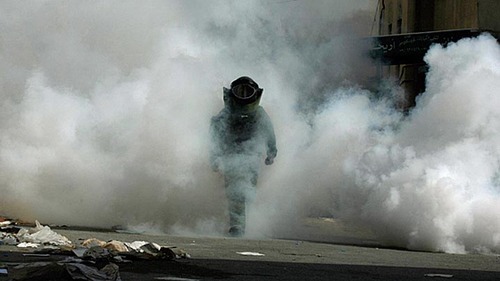
That’s Jeremy Renner in the bomb suit

Ray Pride reports on the filming of Oscar favorite “The Hurt Locker” (just out on DVD) at Movie City Indie:

There are scenes inside the blast suit and simply crossing the frame where the character feels fully fleshed out, I tell [director Kathryn Bigelow and writer Mark Boal] during an abbreviated interview in Chicago last July. As a past collaborator of Bigelow’s, the writer-director Walter Hill liked to insist, character is revealed through action. [Lead actor Jeremy] Renner reveals character with every bit of his body. “I know! And he’s in a bomb suit, no less,” she laughs. “It was so hot,” Boal adds, “it was hard for Jeremy to be in that bomb suit all of the time. The thing weighs like 85 pounds, it’s a real bomb suit. Naturally, you’re like, well maybe we can get a stunt guy to do some of this walking stuff and save Jeremy so he doesn’t die. The sets are really long and he’s walking up and down, we thought, shit, what if he gets heatstroke? He’d had heatstroke before. It’s what 100 degrees outside? We tried, I probably grabbed every white guy in Jordan to audition for [Bigelow]: actor, non-actor, soldier, worked at the U. N., whatever.”

“They studied his gait,” she says, “they’d watch his walk. Couldn’t do it.” “We couldn’t get a double,” Boal continues. “Just put on the suit, walk down the street, that was the job.” “Every single time, it was Jeremy,” she says. “I tried it, everybody tried it!” “There’s that kind of almost jauntiness to his gait, and cadence, that was unreplicatable. It was also part of that character.”

December 14, 2012

Chaz has news on Roger’s recovery

Roger Ebert directs the show at the 2006 Overlooked Film Festival.

Roger Ebert’s wife Chaz sent an update on his recovery for publication on RogerEbert.com. Chaz writes:

Roger was making good progress and was ready to go to his next phase of treatment, which would have been physical therapy to regain his strength. Well last night Roger had minor surgery, so today, as you can imagine, he feels a bit less cheerful. The doctors remain optimistic about his recovery, however, and say that the physical therapy will be delayed for only a few days.

As I said before, the most frustrating aspect is that his progress is not always linear. But the doctors told us right from the start to expect this non-linear recovery. They said that there will bumps in the road along the way that seem like setbacks, and then he will reach a point where he will make a rapid recovery. Darn that surgery! Please excuse me if I don’t sound like my usual cheerleader self, but if you had seen him last week, even yesterday, when he was doing so well. We were secretly back to using his computer. He wanted to surprise everyone with messages.

Her full letter is here.

December 14, 2012

At least newspapers are more profitable than movies or music!

Barron’s reports, “This Dying Medium Has Plenty of Life”:

Recent hysteria over the imminent demise of daily newspapers is misplaced. As an economic matter, most newspapers still are far more profitable than other, higher-profile consumer media. As a policy matter, those calling for government subsidies or other protections ignore the true state of the marketplace of ideas: It has never been so vibrant.

Newspapers do face a genuine crisis, but the nature of this crisis is misunderstood. […]

Doing worse doesn’t mean doing badly. Until recently, many newspapers had profit margins exceeding 30%. By 2008, the industry’s average margin had fallen to the mid-teens. The speed and magnitude of this decline have resulted in wrenching changes in the way these historically stable businesses must operate.

The continuing drama shouldn’t distract from real earnings power. Many newspapers still have almost double the profitability of other media sectors, such as movies, music and books — which have long struggled to achieve margins of even 10%.

One note: Does it seem peculiar to anyone that the word “even” is used to characterize a 10% profit? Since when is profit of any size something to sneeze at?

(tip: Daily Dish)

December 14, 2012

King of the mash-ups

“Life’s a laugh and death’s a joke it’s true. / You’ll see it’s all a show, / Keep ’em laughing as you go. / Just remember that the last laugh is on you…”

“For life is quite absurd / And death’s the final word. / You must always face the curtain with a bow. / Forget about your sin. / Give the audience a grin. / Enjoy it. It’s your last chance, anyhow…”

Over at a film odyssey (check out that beautiful logo!), movie blogger and “Fight Club” Opening Shots contributor Robert Humanick mashes up two movie mash-ups from YouTube, both set to Eric Idle’s uplifting, send-’em-out-whistling curtain number from the great “Monty Python’s Life of Brian”: “Always Look on the Bright Side of Life.” The first cuts footage from Mike Judge’s “Office Space” to the tune, providing encouragement to disheartened cubicle gnomes with martyr complexes the world over.

The other uses footage of Idle singing the song in “Life of Brian,” intercut with gruesome footage from Mel Gibson’s “The Passion of the Christ.” Either way, it’s a revelation.

December 14, 2012
subscribe icon

The best movie reviews, in your inbox