Prescient words of wisdom from Cary Grant

“When I find myself in a position like this, I ask myself: ‘What would General Motors do?’ And then I do the opposite!”

— Johnny Case (Cary Grant) in “Holiday” (1938). Screenplay by Donald Ogden Stewart, based on the play by Philip Barry. Directed by George Cukor.

December 14, 2012

High rollers and lowlifes

James Bond (Daniel Craig) in “Casino Royale.” With every move he makes, another chance he takes. Odds are…

What accounts for the movies’ fascination with gambling? That’s a question I mull over in a survey of pictures (from “Gilda” to “Barry Lyndon” to “Casino” to “California Split” to “The Cooler”) about the addictive alchemy of luck, chance, fate and skill at MSN Movies. Making a movie is itself a grand gamble. You never know how it’s going to turn out, and the results have as much to do with circumstance as they do with talent or craftsmanship. An excerpt from “High Rollers”:

Gambling does not rank among the “seven deadly sins.” It doesn’t have to. Just about all the capital vices can be found in the psyche of the gambler, and not just in the usual suspects, greed and envy. There’s also plenty of room for gluttony (overindulgence, addiction, substance abuse); wrath (rage, vindictiveness); sloth (indifference, jadedness, existential apathy); lust (licentiousness, dissolution); and, the deadliest of all sins: pride (hubris, arrogance, usually expressed in the form of cheating, or a misplaced belief in a dubious “system” designed to beat the odds).

The grandest “Casino Royale” — the ultimate gamble — is, of course, the game of life itself: a series of cosmic wagers in which the stakes vary wildly from day to day, bet to bet. Some people seem to go “all in” all the time, some ante up just enough to get them through each hand they’re dealt, and others are perpetual folders who try to opt out of the game entirely in order to avoid risking too much.

But since the time of Oedipus the central question has always been: How much of the outcome is governed by free will and how much by predestination? The answer depends on the (rigged?) nature of the game you’re playing, and whether the winners and losers are predetermined, either by some higher interventionist power (appeased by superstitious rites, such as blowing on dice or disingenuously proclaiming the need for new footwear for one’s tot), or by a simple calculation of the odds that invariably favor “the house.”

Although one can only play the hand one is dealt, a poker or blackjack player retains a small degree of influence over his fate, as some game variables are subject to decision-making based on statistical knowledge and experience. Those who gamble on a roll of the dice or a spin of the wheel, however, rely on pure chance. Or, as it is known in gaming circles, “luck.”

The odds of winning are never better than 50-50 (red or black in roulette), which is why most gambling stories — and gambling movies — are either about chance, or about cheating. As in the 1946 classic film noir, “Gilda,” with Glenn Ford and Rita Hayworth, these tales are of the men and women who learn to “make their own luck.”

The only way to increase your luck without trickery is with skill — by learning to read the odds based on the cards that have already been played, or by learning to read the people who play them. In Curtis Hanson’s new “Lucky You,” hot-headed poker player Huck Cheever (Eric Bana) has to learn how to do both if he wants to woo songstress Billie Offer (Drew Barrymore). As his father, L.C. (Robert Duvall), tells him: “You’ve got it backwards, kid. You play cards the way you should live life, and you live life the way you should play cards.”

That’s the lesson movie gamblers are always trying to learn. Everybody has a “tell” — a little unconscious tic that reveals when they’re bluffing. In David Mamet’s “House of Games,” renowned psychoanalyst Margaret Ford (Lindsay Crouse) thinks she understands human behavior until she is schooled by Mike (Joe Mantegna) in the ways of gamblers and con men who avoid being understood. The big gamble comes down to a matter of pride — and the skill and intuition to fool the other players.

In the most recent “Casino Royale” film, the hubris of James Bond (Daniel Craig) costs him a high stakes game, and nearly costs him his life. Every scene in the movie involves a bet, a bluff, or a calculated risk. Whether the game is espionage, romance, the stock market, or poker, the rules are basically the same: Outwit, outplay and outlast your opponents….

Continue reading at MSN Movies…

December 14, 2012

Final shots: In dreams… and waking up

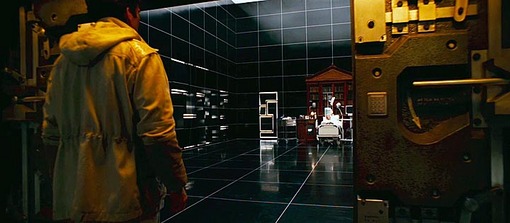
Looks like people still feel like discussing “Inception” and its relationship to other Christopher Nolan movies… Among the observations most frequently made in the hundreds of comments here (and they’re still coming in) are those to the effect that the dreams in the movie aren’t supposed to be particularly dreamlike because: 1) they’re controlled, architecturally designed experiences; 2) not everyone has the same dreams; and, 3) they are supposed to be “realistic,” so that the dreamer doesn’t know he’s dreaming.

Now, I’ve only seen “Inception” once, and I suppose all of these suppositions may be valid, given the world Nolan has created for the film, but rather than mollify my reservations about the movie, they only deepen my sense of dissatisfaction. Why would Cobb (Leonardo DiCaprio) and Arthur (Joseph Gordon-Levitt) guide their new architect Ariadne (Ellen Page) through such nifty surreal dreamscapes as the exploding neighborhood cafe, the origami Paris and the Escher staircase if she’s not allowed to create any such environments herself? Why would Nolan intentionally stick the movie’s most tantalizing images up front, instead of saving them for when the real action gets underway? Wouldn’t it have made for a better story (and better showmanship) if the dreams got more spectacular as the movie went along? Wouldn’t a chase through the streets of a folded city be more dazzling than, say, regular old gridlock (even if somebody does throw a runaway locomotive into the middle of it)?

This is what @dcairns gets at in a most illuminating Shadowplay post:

December 14, 2012

Precious Based on the Movie Female Trouble by John Waters

My previous post, Impressions Based on the Hype for the Movie Precious Based on the Novel Push by Sapphire, was an account of exactly that — how even limited exposure to advance word for the movie over 11 months, from Sundance in January to theatrical release in November, created expectations that made me not want to see it. What follows are my impressions when I finally did.

* * * *

UPDATE (12/24/09): “I didn’t have the sensibilities of your ordinary filmmaker, let alone your ordinary African-American filmmaker. My heroes were John Waters, Pedro Almodóvar, and actors that were part of that world. Different.”

— Lee Daniels, June 2009

* * * *

None of us is immune to movie publicity, unless we’re lucky enough to see the picture well in advance of its theatrical release (perhaps at an early film festival screening) — or stay away from publications, television, radio, the Internet and any form of communication with other people until we can see it. In the case of “Precious Based on the Novel Push by Sapphire,” I reluctantly came to feel that I knew all-too-well what to expect: a grueling torture-fest of a movie that would culminate in an equally manipulative upbeat ending.

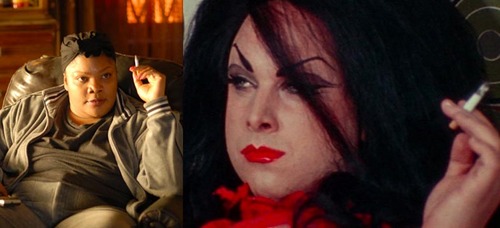
Turns out, it is all that, but it’s also something else I hadn’t anticipated: funny. Yes, it’s a rags-to-redemption “social problem” movie, but at the same time it’s a consciously camped-up fairy tale, complete with Evil StepMother. It’s a showcase for two heartfelt bravura performances (by Mo’Nique and Gabourey Sidibe) and an often laughably overwrought melodrama — not just because of the horrors it depicts but because it’s fully aware of how shockingly high it stacks the decks against its heroine. “Precious” is a virtual remake of John Waters’ 1974 “Female Trouble,” which makes for a crazy, volatile clash of tones and textures.

December 14, 2012

Opening Shots: ‘Altered States’

View image

View image

View image

“Altered States” opens with the image of a fluorescent, egglike shape surrounded by darkness. It is a window. From below, in comes a floating human figure (William Hurt as Prof. Eddie Jessup), who appears to be immersed in liquid. Surrounded as he is by the dark oval frame of the window, he resembles an embryo inside a mother’s womb. The camera slowly tracks back to reveal that Jessup is inside a horizontal tank in an empty room. As it tracks back even further, the viewer detects the edges of a second window, rectangular this time. In front of that window sits a bearded scientist in a laboratorium, who carefully monitors the room with the tank holding Eddie Jessup.

In the film, science tries to discover the essence of the Self by use of altered states of consciousness. The opening shot prepares the audience for this very process by taking the viewer through different layers/windows of counsciousness: from the symbolic birth of the Self, via self-awareness, to self-examination; from subjectivity to objectivity. The soundtrack amplifies this trajectory, going from bubbly water effects and steady breathing through an oxygen mask, to the buzz of lab equipment and clicking of buttons.

Peter Gelderblom

founder / contributing editor

www.24LiesASecond.com

JE: Beautifully done, Peter! I love the use of sound in this shot, too: From the very first moments you have this feeling of being immersed in an individual’s interior consciousness — which is where the drama of the movie really plays out.

December 14, 2012

#CNNFail: The revolution is being Tweeted and Facebooked

Saturday afternoon. Conservative/libertarian columnist, comic, blogger and self-proclaimed geek Robert A. George tweets and posts on Facebook: “Cripes! Iran is falling apart and even CNN Int’l is showing a packaged piece on a water-skiing squirrel!! #tcot #iranelection.”

This is the world we live in. BBC had some real breaking news from Iran, which reportedly caused the Ahmadinejad regime to kick some of its reporters out of the country, block its satellite feeds, and otherwise hamper its coverage. But most of the real news was coming directly from the cell phones and laptops of Iranian citizens who found ways to circumvent Ahmadinejad’s attempts to block access to unprocessed, “unofficial” information, especially on the Internet and sites like YouTube.

On Twitter, where #CNNFail and #Iranelection were top topics, tweets relayed options for bypassing government censorship:

PLEASE RT Functioning Iran proxies 218.128.112.18:8080 218.206.94.132:808 218.253.65.99:808 219.50.16.70:8080 #iranelection

good Web proxy!: http://orcade.ncad.fr/poxy-0.5b2/ #iranelection

CNet reported:

Even as Twitter became the best source for rapid-fire news developments from the front lines of the riots in Tehran, a growing number of users of the microblogging service were incredulous at the near total lack of coverage of the story on CNN, a network that cut its teeth with on-the-spot reporting from the Middle East.

For most of Saturday, CNN.com had no stories about the massive protests on behalf of Mir Hossein Mousavi, who was reported by the Iranian government to have lost to the sitting president, Mahmoud Ahmadinejad. The widespread street clashes–nearly unheard of in the tightly controlled Iran–reflected popular belief that the election had been rigged, a sentiment that was even echoed, to some extent, by the U.S. government Saturday.

On Facebook and Twitter, many Iranians — and supporters worldwide — changed their profile pictures to the image above in solidarity. In an international gesture of protest, people were encouraged to wear green — color of candidate Mir Hossein Mousavi’s opposition party, which claims to have actually won the election — on Monday.

UPDATES: Marc Armbinder offers advice on how we should always approach news, whether from newspapers, radio, network television, websites, blogs or Twitter: “Follow The Developments In Iran Like A CIA Analyst.”

Armbinder again: “The Revolution Will Be Twittered”:

Why hasn’t Mousavi been arrested or killed? Iran’s regime is thuggish, but I don’t think it wants to risk further alienating Europe or China. And I surmise that because the Iranian government knows that the opposition — maybe we should call them the silent majority? — has ways of communicating and organizing outside of their control. Mousavi would become an instant martyr. Twitter, Facebook, blogs — and the mainstream media — are all colluding to keep hope alive for the Iranian people.

Tweeted (and Re-Tweeted) news flashes and “official news” from Fars News late early Monday (PST) below. Compare and contrast:

December 14, 2012

Zoom, zoom

Few movie mannerisms annoy me as much as the gratuitous zoom, which modish hack directors have been using since the 1960s to underline and over-punctuate their shots. For a number of years (particularly in the late ’60s to mid-’70s), the ubiquitous zoom, having no correlative to any function of the human eye, was most often deployed as a cheap substitute for actual camera movement. And yet, in the hands of, say, certain French New Wave filmmakers, the zoom could feel refreshingly free and spontaneous, like guerilla documentary footage. Or it could signify varying degrees of counter-cultural psychedelic grooviness, from “Laugh-In” to “Easy Rider” to… “Austin Powers.” (Meanwhile, directors such as Altman and Kubrick have been known to use the zoom’s telephoto properties with purpose and intelligence — though the former used it to open up the frame and the latter to lock it down.)

Any device can be used or misused, but not even such egregious clichés as the now-ubiquitous snatch-and-grab and shaky-cam techniques, or the endlessly circling twirly cam, irritate me as much as the wanton zoom. Which is why I found this passage from Glen Kenny’s piece on the Duplass’s movie “Cyrus” to be both amusing and gratifying. (It doesn’t matter if you or I have seen “Cyrus,” or how zooms are used in that film; it’s the precision of Kenny’s bullshit-detector argument that I appreciate.) He observes:

December 14, 2012

Borat: For Make Milgram Experiment

Your typical Cannes bathing beauties.

Borat (Sacha Baron Cohen, currently appearing as Jean Girard in “Talladega Nights: The Ballad of Ricky Bobby”) has a movie coming out in November with a title as good as “Ricky Bobby.” It’s called “Borat: Cultural Learnings of America for Make Benefit Glorious Nation of Kazakhstan,” and people who have seen it are raving about how subersively smart and revealingly funny it is.

Cohen and his characters (particularly hip-hop dimwit Ali G) are huge in Great Britain, and Naomi Alderman has an analysis of what makes Borat run in the UK Guardian:

Sacha Baron Cohen’s latest film is due for release in November, but the storm of protest has started early. Already the film, in which Borat, a fictional Kazakh reporter, spits out food given to him by Jews on the ground it may be poisoned, and refuses to fly “in case the Jews repeat their attacks of 9/11”, has been called “disgraceful” and “disgusting”.

I first encountered the character of Borat in a clip from his HBO TV show which has circulated widely on the internet. Baron Cohen, as Borat, stands in front of an audience at a redneck bar in Arizona and announces that he will sing “a song from my country”. He then sings, “In my country there is problem, and that problem is the Jew. They take everybody money and they never give it back.” The chorus is particularly catchy: “Throw the Jew down the well (so my country can be free).” [Clip and lyrics here.]

I am a Jew. I’ve written about my community in a way that is critical but none the less, I hope, affectionate. I love the Jewish community with all its flaws and insecurities. And I think that Borat’s song may be the funniest thing I have ever seen in my life. It is funny because it is ridiculous, because it parodies the most stupid kinds of anti-semitism, because the viewer is in on the joke. And, like the best humour, it is funny because it is viscerally, nauseatingly terrifying. It contains images every bit as unsettling as Leni Riefenstahl’s “The Triumph of the Will.” It is funny because it is true….

The reason it is unsettling to hear Borat sing “Throw the Jew down the well” is because of the reaction of those listening. Some sit in mute astonishment and horror. But some join in. Some sing along, smile and stamp their feet. One woman even – unprompted, mind you – puts her fingers to her forehead to make horns when he sings, “You must take [the Jew] by his horns.” Borat is unsettling not because his opinions are outlandish but because he reveals how many ordinary people share them….

Borat is shocking because we cannot help but imagine ourselves in the place of his hapless victims and because we understand – though not, perhaps, consciously – that we might have acted precisely as they did. We too might have remained silent when Borat suggested “hanging” homosexuals, or nodded politedly at the suggestion that a Humvee is suitable for “running over Gypsies.” Not because we fear for our lives if we disagree but, perhaps, to avoid embarrassment. Borat is funny because he is shocking, and he is shocking because he reveals the truth.

After watching the clip, I’m not so sure that at least some of the people in the crowd weren’t in on the joke — particularly the lady who makes the horns, because she seems aware she’s on camera and has evidently decided to play along. Complete “Throw the Jew Down the Well” lyrics after jump…

December 14, 2012

Griffin Mill and ‘The Return of the Player’

He’s baaaaack. And he’s miserable.

Michael Tolkin, who wrote the novel and screenplay on which Robert Altman’s “The Player” was based, has published a sequel in which studio executive Griffin Mill, now 52, is trying to get out of Hollywood. Tolkin has this to say about the state of movies, in a New York Times interview:

“The movies haven’t been very good the last three or four years, they really haven’t,��? he said. “Everybody knows that. At least that, maybe more. And what they were will never return.��?

The source of all this creative- industrial- complex angst is the death of what he both eulogizes and parodies: the classic journey-of-the-hero story structure, analyzed by Joseph Campbell in the 1940’s, popularized a generation ago by George Lucas through “Star Wars,��? spouted and shorthanded by studio executives ever since, and all but trampled to death, Mr. Tolkin said, by nearly every subsequent action movie and thriller that Hollywood has turned out.

Or as Griffin puts it: “Physics cracked the atom, biology cracked the genome and Hollywood cracked the story.��?

What he’s talking about, of course, is the ubiquity of screenwriting guru Robert McKee’s story structure techniques, satirized in “Adaptation.” with Brian Cox playing McKee.

December 14, 2012

László Kovács: In Memory

View image

László Kovács (May 14, 1933 – July 22, 2007)

Kovács emigrated to the United States with his lifelong friend Vilmos Zsigmond, who became another great Hungarian-American cinematographer.

View image

For me, perhaps the most indelible image in Kovács’ work is the last shot of “Five Easy Pieces” (Bob Rafelson, 1970), a long stationary take of a gray, rainy stretch of Pacific Northwest highway, stuck in the muddy pavement outside an isolated gas station. The only camera movement is a slight pan. All the loneliness, frustration and alienation of the whole movie culminates (in a diminuendo, if that’s possible) in this damp, atmospheric image.

View image

Other notable Kovács films include:

“Psych-Out” (Richard Rush, 1968)

“Targets” (Peter Bogdanovich, 1968)

“Easy Rider” (Dennis Hopper, 1969)

“That Cold Day in the Park” (Robert Altman, 1969)

“Getting Straight” (Rush, 1970)

“Alex in Wonderland” (Paul Mazursky, 1970)

“The Last Movie” (Hopper, 1971)

“What’s Up, Doc?” (Bogdanovich, 1972)

“The King of Marvin Gardens” (Bob Rafelson, 1972)

“Paper Moon” (Bogdanovich, 1973)

“Shampoo” (Hal Ashby, 1975)

“Close Encounters of the Third Kind” (Steven Spielberg, 1977 — additional photography)

“New York, New York” (Martin Scorsese, 1977)

“The Last Waltz” (Scorsese, 1978 — additional photography)

“Ghostbusters” (Ivan Reitman, 1984)

“Mask” (Bogdanovich, 1985)

“Say Anything…” (Cameron Crowe, 1989)

“Radio Flyer” (Richard Donner, 1992)

“My Best Friend’s Wedding” (P.J. Hogan, 1997)

December 14, 2012

The Best Movies Since Last Tuesday (So Far)

Google “best movies of 2011 so far” (without the quotation marks) and you’ll get approximately 19-and-a-half million results, which is just about what this whole obsessive-compulsive list-making thing feels like to me. “Ten-best” (and “ten-worst”) mania used to be an annual phenomenon among movie fans and critics; now it happens every few months. Perhaps it’s a symptom of what Simon Reynolds calls “Retromania,” reflecting the brevity of pop-culture nostalgia cycles (is the first decade of the 21st century now officially “retro”? Oooh, remember those cool circle touchpads on old-skool iPods?) and the “museumification” and “curation ” of virtually everything that can be collected, commodified, categorized, chronologized, hierarchically ranked or otherwise pigeonholed. (I sometimes enjoy lists, too, but while I occasionally make artisanal ones — even bespoke ones — I do not curate them.)

Seems I’ve been running across those headlines since May, at least: “Best Movies of 2011 (So Far),” and “Worst Movies of 2011 (So Far).” Here’s a sampling of critics and outlets that have published such lists: Metacritic, Moviefone, Roger Ebert (best and worst), IndieWIRE’s The Playlist, JoBlo.com, somebody at the Huffington Post, Christy Lemire and Ignatiy Vishnevetsky at “Ebert Presents: At the Movies (both best and worst), Dennis Cozallio at Sergio Leone and the Infield Fly Rule, Paste magazine, Awards Daily (the name of which says exactly where I fear we’re headed), CinemaBlend.com, Glenn Kenny at MSN Movies and FilmFan, Peter Travers at Rolling Stone, RopeofSilicon.com, IFC.com, beliefnet’s Movie Mom, Fandango… STOP already!

December 14, 2012

Prof. Irwin Corey’s Foremostly Authoritative Spring Break Movie Quiz

View image The Professor is IN!

“Kiss today goodbye, and point me t’ward tomorrow….” Yes, Dennis at Sergio Leone and the Infield Fly Rule has published his latest irresistible quiz: Prof. Irwin Corey’s Foremostly Authoritative Spring Break Movie Quiz.

So you may as well just click on that link and kiss today goodbye. (Actually, you can probably do it in a half-hour or so, but what would be the fun of rushing?) Don’t forget, can’t regret what you do for love, eh?

December 14, 2012

Yeah, yeah, oh yeah…

I remember seeing this on “The Smothers Brothers Comedy Hour” (my favorite show for a while). I saw so much I broke my mind. And then, many years later…

December 14, 2012

The Rise and Rise of the Celebritocracy

Alec Baldwin, the Cable News Celebrities’ Menace to Society.

From a 2003 interview with Toby Young, celeb interviewer, memoirist and author of “How to Lose Friends and Alienate People”:

“I have this idea for a dystopian satire. It’s set in the immediate future, and it’s going to be about the moment when ordinary Americans turn on the celebrity class. There’s going to be a sort of French Revolutionary-style bloodbath where A-list celebrities are strung up from lampposts and lynched on street corners. The storming-the-Bastille moment is going to be when the looky-loos outside the 2023 Academy Awards kind of break through into the Kodak Theater and start lynching A-list movie stars on live TV.” (Only 15 minutes ’til the first VF Oscar party reference, I note.)

“And it sets off a chain reaction across the United States,” he continues, leaning in, conspiratorially. “And there’s a scarlet pimpernel figure, who’s kind of a second rate English talent agent based in Los Angeles, and in the pre-revolutionary era, he couldn’t get anyone to return his calls. But in the post-revolutionary era, he figures out a way to get celebrities to safety. And the way he does that is, the only country where celebrities are still safe is Britain, because they’re such craven starfuckers that the revolution doesn’t actually affect them. And the way he smuggle celebrities out of Los Angeles is by disguising them as flight attendants on Virgin Atlantic. They occasionally get spotted. They get rumbles in mid-air and tossed off the plane. I need to come up with the right word to describe this celebrity apocalypse. If I can come up with the right word, I’ll be in business. My father wrote a similar book in the 1950s called ‘The Rise of the Meritocracy,’ which is about a bloody revolution in which a kind of meritocratic overclass overcame and coined the term ‘meritocracy.’ I want to coin a similar word to describe a society in which celebrities are the kind of governing class.”

Don’t we already live in a celebritocracy? Not in the sense that the National Inquirer and the Star and People and Vanity Fair and cable news continue to inflate the importance of celebrities (including wannabes from the media like Anna Wintour or Graydon Carter or A– C——). That kind of thing has been going on for a long time.

What I’m fascinated by is the insistence by some of the media entertainers (from Sean Hannity to Wolf Blitzer) that the lives and political views of celebrities really are as important as those of elected officials! It’s just amazing. Quote from a reader at Andrew Sullivan’s Daily Dish blog:

… [T]he actor Alec Baldwin was on a radio show in NYC a short time ago when conservative radio hosts Sean Hannity and Marc Levin called in to hurl insults against him. During the course of the 7-minute battle, Levin, out of nowhere, suddenly seeks to mock Baldwin as “Brokeback Alec.”

Which, when you think of it, makes no sense. You can love or hate Alec Baldwin. But to hurl the epithet “Brokeback Alec” at him – at an actor who was married to, and had children with Kim Basinger, who has had any number of relationships with any number of starlets — to call him “Brokeback Alec” is as nutty, as counterintuitive and just plain silly, as to hurl that [“faggot”] epithet against Edwards!

[Sullivan responds]: Mark Levin anti-gay? I listened to the exchange. Levin called Baldwin a “butt-boy” as well as “Brokeback Alec.”

This is hilarious! Well, OK, pathetic. But it reveals the priorities and reasoning abilities of lightweights like Hannity and Levin when they feel they have to call in to a talk show to hurl nonsensical names at an actor. (BTW, “30 Rock” is really funny most of the time. It’s a TV sitcom. Starring Alec Baldwin. I hope Hannity and Levin will call in to randomly question Jim Belushi’s sexuality the next time he does promotion for “According to Jim.” Then they can go on Ellen DeGeneres’s show and accuse her of having a hankering for man-flesh!)

What Hannity and Levin and other celebritalkers don’t get is that they themselves are just celebrities, famous for being on TV or radio. (And, I suspect, some acting talent.) If Toby Young’s “revolution” ever comes about, they’ll be the first ones to go — not because they’re “A-list” (they’re certainly not), but because, like Paris Hillton or Zsa Zsa Gabor, they’re famous just for being famous. They’re at the bottom rung of celebrity along with reality TV personalities (maybe above William Hung but below Rob and Amber), yet their entire careers depend on them pretending to be serious ideologues. (Except for Rush Limbaugh, who admits to just being an “entertainer” who makes stuff up in character that he’s not stupid enough to actually believe himself. Is that worse?)

December 14, 2012

“The Sopranos”: Eighty-Sixed

“In the midst of death, we are in life, heh? … Life goes on…”

— Paulie Walnuts, Episode 86

Meantime life outside goes on all around you.

— Bob Dylan, “It’s Alright Ma (I’m Only Bleeding)”

Some will win, some will lose

Some were born to sing the blues

Oh, the movie never ends

It goes on and on and on and on

— Journey, “Don’t Stop Believin'”

Have another onion ring. Pop the first DVD of Season One into the player and press “play.” “The Sopranos” is… I’m not going to say “over.” Think of it as complete at last, a perfect whole. It’s finished but it’s not over. Life goes on.

It’s not uncommon for a long-running show to get self-reflexive in its final episode: “The Mary Tyler Moore Show,” “St. Elsewhere,” “Newhart,” “Seinfeld,” “Six Feet Under,” to give a few famous examples. And no show has ever displayed more awareness of itself as a show than “The Sopranos.” Not even “It’s Garry Shandling’s Show,” the sitcom about being a sitcom. “The Sopranos” has always been a serial mob movie about being a serial mob movie in a culture where everybody’s seen a lot of mob movies (and remakes of mob movies) and even low-level Jersey mobsters imagine themselves acting like the mobsters in the movies. And in its last seconds (which made my heart leap and had me laughing and crying at the same time), “The Sopranos” accomplished what I hoped it would, as I wrote earlier: “… I want [series creator David] Chase to come up with something I didn’t anticipate, but which feels right for “The Sopranos.” He’s done it before. But now I’m afraid in a different way: I really, really want the ending to live up to the show.”

December 14, 2012

Opening Shots: ‘The Wire’

View image

This summer a friend is introducing me to the HBO series, “The Wire,” beginning with the first season on DVD. Sunday nights, we eat a big ol’ fresh-grilled meal (like steak, ribs, kabobs, pork loin, salmon, scallops wrapped in prosciutto, asparagus or broccoli sauteed in olive oil, garlic and crushed red peppers)… I’m sorry, what was I saying? I kept hearing from friends that “The Wire” was something great, as good as (some say even better than) “The Sopranos” or “Deadwood.” Well, we’re only three episodes in (we also watch a “Freaks and Geeks” — all new to me — after each episode), but I’m hooked.

View image

“The Wire” is about Baltimore police (homicide and narcotics) and their investigation and surveillance (hence the title) of a city-wide drug operation run by one Avon Barksdale, a shadowy figure said to be based on a real Baltimore dealer. All threads seem to lead back to Barksdale, but the cops don’t even have a photograph of the guy.

View image

The first image of the first episode of the first season is a close up of blood on the pavement. It lasts only a few seconds, but the camera slowly moves up the trail of blood toward its source, the body of a drug-related homicide victim. The liquid catches the flashing lights of police cars and seems to illuminate with electrical sparks like… wires. Only the middle-ground of the shot is in focus — where it comes from and where it leads are still blurry. We don’t know it yet, but the whole season has been set up for us.

December 14, 2012

Is it time for best movies of the decade already?

Yes it is, I’m afraid. Or almost. Good grief, I know, it’s not even Thanksgiving yet and they’ve already got the festive “Best Of” decorations up in the stores! And I know lots of critics who’ve been told by their editors to start working on their big ’00s lists — so, reluctantly, I’ve begun to ponder mine, as well. I haven’t even taken a first stab at it but I can tell you this: It will probably not resemble the Top 100 list published a few days ago in the Times of London. Oh, sure, I can conceive of putting together some kind of list that includes “Crash” (#98), “Bowling for Columbine” (#77), “The Diving Bell and the Butterfly” (#28), “Slumdog Millionaire” (#6) and the like — but such a ranking would not be comprised of movies that I hold in high esteem. (Have any of the decades’ movies plummeted in reputation more dramatically than “Columbine” and “Crash”?)

If you want to page through the Times’ list, you can go ahead and start here. It’s not all so bad. Meanwhile, here are the top 20 — with links to things I’ve written about some of the titles:

December 14, 2012

Babs, Henry and Long Duk Dong:Cleaning up after the Oscars

I said just about everything I had to say about the Oscars in a dozen or so tweets I filed the evening of the broadcast, in between juggling manual updates for a couple of stories on RogerEbert.com (including Roger’s live-tweets of the show) and approving Oscar comments on Roger’s blog. I think I got out of my chair two or three times between 3:30pm and 9:30pm PST.

So, yeah, I made a few observations — like this:

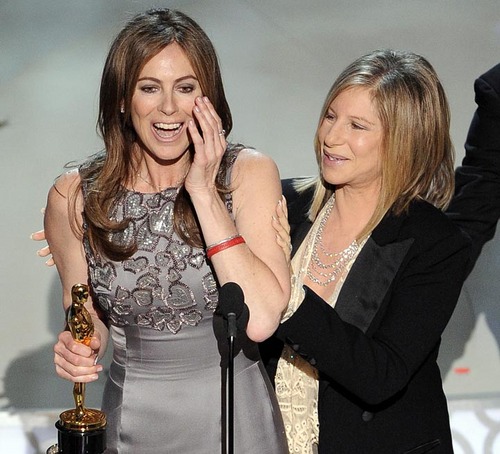
Instead of playing “I Am Woman” after Kathryn Bigelow’s win, why didn’t they play “Papa Can You Hear Me?” for Babs? #oscars

And this:

Elinor Burkett’s Oscar performance marks the official arrival of the word “Kanye” (or “Kanyed”) as a verb. http://j.mp/9XIwqy #oscars

And this:

Has “Based on the Novel Push by Sapphire” become the new “Electric Boogaloo”?

December 14, 2012

How we all became Richard Nixon

Here’s Adam Curtis’s six-and-a-half-minute documentary segment on how, over the last 50 (75?) years or so, we have become a culture of increasingly paranoid weirdos. (Satirical, too.) It reminded me of “The Power of Nightmares: The Rise of the Politics of Fear” (2004), the essential documentary about the politics that led up to 9/11, and how they continued afterwards. And then I realized why: They’re both Adam Curtis films! From the intro to “Power of Nightmares”:

December 14, 2012

Stages of a Cinephile

View image Defining moments — in movies, and in a movie-lover’s life.

A comment by Anonymous at Girish’s on the stages in the life of a cinephile contains more truth than I’d like to admit:

1. Ages 6-13/ marvel at the lights, learn about adult life, eat sugar/Disney, Spielberg, John Hughes

2. Ages 14-19/ age of discovery, excitement and inspiration/ Rear Window, Bicycle Thief, early Godard

3. Ages 20-26/ O.C.D. attempt to see everything by every major director/ Dreyer, Ozu, late Godard

4. Ages 27-33/ burn out period, start seeing films rarely and complain about how bad movies have gotten, sell your old videos/ Straub, Snow, Dziga Vertov Group

5. Ages 34-41/ burn out continues, fall asleep in one two many Sokurov films, stop watching art films and start watching blockbusters again, become a faux-populist and develop inane arguments about movies you’ve never seen

6. Ages 42-45/ watch only Reality TV and Internet porn, get drunk alone, send mass emails linking to Armond White reviews

7. Ages 46- /after therapy and anti-depressants repeat steps 3-6.

In my case, stage 1 began at age 3 (at a drive-in with, yes, Disney’s 1961 “101 Dalmatians”). Stage 3 lasted until about age 37, and stages 4 and 5 were condensed, though I’m not sure I ever became a neo-populist, since I never disliked popular movies just because they were popular. (No comment about stage 6.) My real “crisis of faith” in movies was from about 1998 – 2003.

BTW, the book “Defining Moments in Movies,” edited by Chris Fujiwara, that inspired this comment is delicious and nutritious cinemaniacal brain candy. Once you start tasting, you’ll just want more and more. As Fujiwara explains in his introduction, the 800-page, still-studded nibble-book (organized by decade, 1890 – 2000+) “is designed to highlight film scenes, or events in the history of cinema, that the [62] contributors (who include film critics, film historians, writers in other fields, and academics) regard as profound, essential, illuminating, or significant…” — “a network of visions and preoccupations, an anthology of cinephilic passions, a casual encyclopedia of cinematic events.” In fact, Fujiwara’s intro is a worthy “moment” itself.

December 14, 2012
subscribe icon

The best movie reviews, in your inbox