Holy theology! Holy film!

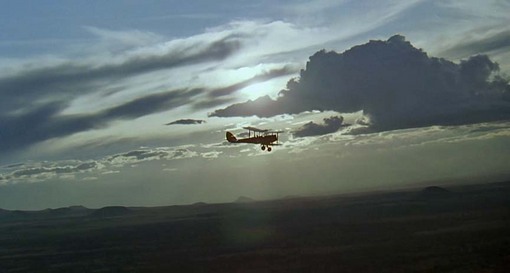
View image A non-god’s-eye-view from the final sequence of Michelangelo Antonioni’s “L’Eclisse.”

In the discussion about my hypothetical Athiest Film Festival (before the deaths of Ingmar Bergman and Michelangelo Antonioni), I was trying to get at the difference I see between Bergman’s theological sensibility (seeing/defining the world in terms of man’s relationship with god, even if that relationship involves god’s silence, indifference, death or nonexistence) and a view in which god is not only not a default position, but not even a question. This, I think, is closer to Antonioni’s aesthetic and philosophical outlook, at least as far as his films express it.

There’s an excellent, and long overdue, article in the New York Times Magazine today (“The Politics of God”), which is primarily about how the West has (catastrophically?) failed to comprehend that, even in modern times, “theological ideas still stir up messianic passions, leaving societies in ruin. We had assumed this was no longer possible, that human beings had learned to separate religious questions from political ones, that fanaticism was dead. We were wrong.”

The piece, by Columbia University humanities Professor Mark Lilla, is adapted from his upcoming book “The Stillborn God: Religion Politics and the Modern West,” but the passage that got me thinking about the Atheist Film Festival (and the “Banana as Atheist’s Nightmare”) again was this one:

Theology is, after all, a set of reasons people give themselves for the way things are and the way they ought to be….

Imagine human beings who first become aware of themselves in a world not of their own making. Their world has unknown origins and behaves in a regular fashion, so they wonder why that is. They know that the things they themselves fashion behave in a predictable manner because they conceive and construct them with some end in mind. They stretch the bow, the arrow flies; that is why they were made. So, by analogy, it is not difficult for them to assume that the cosmic order was constructed for a purpose, reflecting its maker’s will. By following this analogy, they begin to have ideas about that maker, about his intentions and therefore about his personality.

In taking these few short steps, the human mind finds itself confronted with a picture, a theological image in which God, man and world form a divine nexus. Believers have reasons for thinking that they live in this nexus, just as they have reasons for assuming that it offers guidance for political life. But how that guidance is to be understood, and whether believers think it is authoritative, will depend on how they imagine God. If God is thought to be passive, a silent force like the sky, nothing in particular may follow. He is a hypothesis we can do without. But if we take seriously the thought that God is a person with intentions, and that the cosmic order is a result of those intentions, then a great deal can follow. The intentions of such a God reveal something man cannot fully know on his own. This revelation then becomes the source of his authority, over nature and over us, and we have no choice but to obey him and see that his plans are carried out on earth….

My question is: By what authority does anyone claim to know, and be able to interpret, the intentions of such a God? It’s always puzzled me how many leaps of faith a person has to take before even getting to the idea of a deity… which may be one reason why, if I had to compare, I’d have to say Antonioni’s films do speak to me more deeply and personally than Bergman’s.

(Of course, when it comes to movies, you can usually just substitute the term “auteur” for “God” in that quotation above.)

See Martin Scorsese’s eloquent appreciation of Antonioni for more…
December 14, 2012

What is up with that Seinfeld guy?

Is this guy is incredibly depressing, or what?

So, what was the deal with Jerry Seinfeld at the Oscars, smoothly delivering a chunk of some old act before presenting the documentary feature award? Who does this guy think he is, and why was he invited? What does he have to do with films or documentaries, besides having once starred in a feature-length advertisement for himself (and American Express commercials before Ellen DeGeneres)? Was he auditioning to be Oscar host next year, hoping to follow in the footsteps of Johnny Carson or something? What is up with that? Doesn’t he have enough money and get enough attention? Next year will they ask Michael Richards to comically complain about how the subtitles, and the amount of dermal melanin in the actors, make him uninterested in seeing some or all of the Best Foreign Language Film nominees? Ho-ho!

John Sinno, the Seattle-based Oscar-nominated director of “Iraq in Fragments,” has written an open letter to the Academy about Seinfeld’s snide, extended putdown of docs at this year’s Oscars:

I had the great fortune of attending the 79th Academy Awards following my nomination as producer for a film in the Best Documentary Feature category. At the Awards ceremony, most categories featured an introduction that glorified the filmmakers’ craft and the role it plays for the film audience and industry. But when comedian Jerry Seinfeld introduced the award for Best Documentary Feature, he began by referring to a documentary that features himself as a subject, then proceeded to poke fun at it by saying it won no awards and made no money. He then revealed his love of documentaries, as they have a very “real” quality, while making a comically sour face. This less-than-flattering beginning was followed by a lengthy digression that had nothing whatsoever to do with documentary films. The clincher, however, came when he wrapped up his introduction by calling all five nominated films “incredibly depressing!”

While I appreciate the role of humor in our lives, Jerry Seinfeld’s remarks were made at the expense of thousands of documentary filmmakers and the entire documentary genre. Obviously we make films not for awards or money, although we are glad if we are fortunate enough to receive them. The important thing is to tell stories, whether of people who have been damaged by war, of humankind’s reckless attitude toward nature and the environment, or even of the lives and habits of penguins. With his lengthy, dismissive and digressive introduction, Jerry Seinfeld had no time left for any individual description of the five nominated films. And by labeling the documentaries “incredibly depressing,” he indirectly told millions of viewers not to bother seeing them because they’re nothing but downers. He wasted a wonderful opportunity to excite viewers about the nominated films and about the documentary genre in general.

To have a presenter introduce a category with such disrespect for the nominees and their work is counter to the principles the Academy was founded upon. To be nominated for an Academy Award is one of the highest honors our peers can give us, and to have the films dismissed in such an offhand fashion was deeply insulting. The Academy owes all documentary filmmakers an apology….

I have to agree with Sinno. This wasn’t like Chris Rock taking a gratuitous swipe at Jude Law (only to be “corrected” by the utterly humorless and pompous Sean Penn). Sure, Seinfeld was doing his obnoxious putz routine, playing the Philistine. His schtick was slick, and his jokes (though hackneyed and predictable) pandered to the prejudices of the crowd in the room and the general audience watching on TV. But his bit was, no question, lengthy and dismissive — in a year when the documentary nominees were, for the most part, better movies than those in the Best Picture category. The docs deserved so much better.

Sinno’s letter continues after the jump…

December 14, 2012

Eyeless in Monument Valley, Part II

Above: That gritty Hollywood literalism and/or naturalism: “Off-putting to the contemporary sensibility.”

I was wrong. Last night, just before going to bed, I read Stephen Metcalf’s “Dilettante” column, “The Worst Best Movie: Why on earth did ‘The Searchers’ get canonized?”. This did not make it easy for me to get to sleep, so I dashed off a preliminary response in which I harshly characterized Metcalf’s piece as an “inexcusably stupid essay… about a classic John Ford Western.” But now, re-reading the column in the light of day, I realize that Metcalf was hardly writing about “The Searchers” at all. And nearly every observation he does make about the film itself is cribbed from something Pauline Kael wrote (see more below). He’ll just fling out an irresponsible, non sequitur comment like, “Even its adherents regard ‘The Searchers’ as something of an excruciating necessity,” and let it lie there, flat on the screen, unexplained and unsupported. So, while I stand by my claim that what Metcalf has written is stupid and inexcusable (for the reasons I will delineate below), I don’t think it has much to do with “The Searchers.”

Instead, Metcalf is reacting to his own perception of the film’s reputation (and in part to A.O. Scott’s recent New York Times piece admiring “The Searchers”), using the movie to snidely deride people Mecalf labels “film geeks,” “nerd cultists” and:

… critics whose careers emerged out of the rise of “film studies” as a discrete and self-respecting academic discipline, and the first generation of filmmakers — Scorsese and Schrader, but also Francis Ford Coppola, John Milius, and George Lucas — whose careers began in film school. (The latter are later characterized as “well-credentialed nerds.”) The fault, then, in Metcalf’s mind, is not so much in the film as in those who brazenly take film seriously as an art form. Using “The Searchers” as an anecdotal, ideological bludgeon, Metcalf attempts to attack the impudent and insidious notion that movies are worthy of serious study and artistic interpretation. Holy flashback to Clive James!

December 14, 2012

TIFF: A-maze-ing

View image Not for the wee ones.

Guillermo del Toro’s “Pan’s Labyrinth” is that rarest of cinematic rarities, a fully and flawlessly realized fantasy film. It’s also, as of today, my favorite movie of the dozen or so I’ve seen in Toronto. Layers of imagery and storytelling fold back on themselves to create a completely formed world. And, best of all, it’s a fairy tale that has not been prettified or bowdlerized for kids. It stakes out imaginative territory much closer to the fantastic visions of Bergman or Cronenberg than to those of C.S. Lewis or Tolkien. (The R rating for “graphic violence and some language” should tell you something. I think the film earns its R — though I’m sure there are plenty of kids under 17 who will love it — but I’d prefer that the R be attributed to “gruesome imagination.”)

It’s 1944, after the Spanish Civil War, and the fascists under dictator Francisco Franco are fighting the insurgents (or rebel “freedom fighters,” as the film portrays them). A little girl named Ofelia is taken by her pregnant mother to live with her evil fascist stepfather, Captain Vidal, at a military installation in an old mill in the forest, next to an ancient stone labyrinth. Ofelia longs to join her real father, now dead, and to sit at his side as the princess of a fantasy kingdom. Insects, faeries and a faun appear to her, claiming that she is the long-lost princess they, and her father, have been waiting for.

December 14, 2012

Opening Shots: Brazil

View image

From Raymond Ogilvie, happyreflex:

This is really the second shot, following a brief bit of above-cloud photography. Let’s not be too picky.

It starts with a TV set turning on. A suitable enough opening that many films have used. We know that when the movie starts with some TV, always with a healthy dose of analogue noise, we’re being greeted by a commentary on the movie’s world before we enter it. The TV set itself has a retro-futuristic design; the kind that was popular at least from the 20s into the 50s. All smooth curves, no sharp angles. Red and blue lights outside blink on and off, casting subtle glows onto the scene.

View image

The TV shows a commercial from Central Cervices. An imposing logo and a happy little jingle: “Central Services. We do the work, you do the pleasure!” And already we don’t trust them! It’s a very Orwellian thing. We’ve lost freedom of choice in this society, and that’s exemplified here by Central Services. All our home repair needs are now taken care of by official government employees, who can be as inefficient, bureaucratic, and unaccountable for their own blunders as they please. The customer comes last.

View image

Now here’s the Central Services spokesperson. He’s here to tell us about how we can replace our old, unsightly ducts with newer, more fashionable unsightly ducts. They just get in the way and clutter up your living space, don’t they? The ducts are just like the bloated, bureaucratic government: they exist only for their own benefit. The public is an afterthought. You’ll see just how little the bureaucracy cares about human beings when the innocent Mr. Buttle is wrongly arrested and accidentally killed during interrogation, and no one feels any remorse: they just don’t want to be stuck with the paperwork.

December 14, 2012

Sudden impact

View image A stunning shot from “The Bourne Supremacy” that does preserve spacial integrity: It begins from the inside of the car, looking out the rear window.

View image A whip-pan to driver Bourne puts us in the passenger seat.

“[‘The Bourne Ultimatum’] has been described as bare-bones but it’s actually quite flashy. All the crashing zooms (accompanied by whams on the soundtrack), jittery shots, drifting framings, uncompleted pans, freeze-frame flashbacks, and other extroverted devices call attention to themselves.”

— David Bordwell

View image A beautiful example of indirection: Bourne is still looking in the rear-view mirror at the cop cars that are chasing him. His attention is not focused on the road ahead of him — or the side-street visible to us out his driver’s side window, as he passes through the intersection.

View image The police car is already trying to brake/swerve to avoid collision, but Bourne’s attention is still behind him.

It is possible that there are four non-moving-camera shots in “The Bourne Ultimatum.” That’s how many I thought I saw, anyway. I wasn’t taking notes, but I believe the only shots that weren’t shaking, dollying, zooming, tilting, panning, refocusing or some combination of all those things are: two consecutive shots as Bourne breaks into Daniels’ CIA office in Madrid; a high-angle flashback image of Bourne sitting in a chair in The Room; a shot from behind the desk of a committee in a hearing room. There could be a few more tripod (or non-telephoto, carefully hand-held) shots — a brief establishing shot of Turin (which may have been taken from a hovering helicopter), a really quick interior or two during a chase through some buildings in Tangiers, a couple dark underwater night shots where there are no fixed visual bearings — but that’s out of approximately 3,200 shots (by David Bordwell’s count) in a 105-minute movie. They really stood out. Bordwell determined the average shot length in the film to be about 2 seconds, and the stationary shots I couldn’t help but notice were probably in the one- to three-second range.

View image Bourne turns his head away to look back. He doesn’t see what’s coming, though we do, and that makes it feel all the more suspenseful and shocking — all in less than a second.

View image Crash. This is a hand-held shot (lasting only 2-3 seconds), but it feels logical and natural, like the head-motion of a passenger looking back and then to the side at the driver, which magnifies the impact.

I sat in the third row, as usual, in a fairly big auditorium at Seattle’s Oak Tree Cinemas (maybe 500-600 seats?), and I found Paul Greengrass’s style in this film to be distracting almost to the point of self-parody. I was a big fan of “Bloody Sunday” and “Bourne Supremacy,” but this one (and “United 93”) didn’t impress me as much. “Supremacy,” I thought, was stronger because it was better at establishing your (and the characters’) bearings. “Ultimatum” made my eyes hurt a little, but I didn’t get nauseous — as some reportedly have. I hung around and listened to ticket-buyers exiting the theater, and while I overheard a couple of say the movie had made them extremely “nervous” and “edgy” (and that’s by no means a negative reaction to a thriller), I didn’t hear anybody complain that they felt like throwing up.

My problem with the film was that the “look-at-me!” technique kept whiplashing me right out of the picture. This kind of camerawork, with its rapid and disorienting glimpses of abstract motion, is often effective during a chase or an action sequence, but Greenglass chose to shoot every moment in the picture this way, including simple dialog scenes around a desk or a table in a cafe. (The repeated use of the back-of-the-head eclipsing half a person’s face in close-up, for no particular reason, was so silly it made me laugh inappropriately.)

People’s heads, of course, are not usually perfectly steady, but we’re not conscious of every single move our eyeballs make, either. If we were, well, we’d probably puke a lot more often. The exceedingly self-conscious camerawork in “Bourne Ultimatum” didn’t feel organic or (as Peter Debruge calls it, “immersive”) to me; it actually felt studied, like a formal strategy that was simply being pursued to the point where it became counter-effective. Maybe that’s in part because of what I’d already read about the movie — and also because of my customary vantage in the third row, I don’t know.

December 14, 2012

The return of ‘Bloody Mary’

View image: “Only women bleed, only women bleed…” — Alice Cooper (1975)

View image: The Super Best Friends in 2001.

Readers responding to the news that the banned “South Park” episode “Trapped in the Closet” is scheduled (again) for its first repeat showing since November of 2005 have also tipped me off (in Comments — thanks, DVC) that the “Super Best Friends” episode was rebroadcast this week, and the world failed to end. In this 2001 show, various religious figures (including Jesus, Buddha, Muhammad, Joseph Smith, Krishna, Moses and Lao Tsu) were depicted as superheroes who team up to fight the evil David Blaine, except for Buddha who doesn’t believe in evil. According to Wikipedia, it was also repeated in syndication in April 2006 — despite Comedy Central apparently refusing to show a cartoon depiction of Muhammad in “Cartoon Wars, Part II,” which premiered the same month. (Sorry, Danish cartoonists. Next season I would like to see Trey and Matt actually incorporate those Muhammad cartoons into the show: “Cartoon Wars, Part III”?) And the “Bloody Mary” episode, which was withheld from re-airing after protests from the Catholic League (see “Vile ‘South Park’ Episode Pulled,” the League’s own take on the matter) is now scheduled for repeat August 2. C’mon folks, this is a show that began as a cartoon Christmas card about Jesus duking it out with Santa. Could the other kind of “market pressures” (i.e., audiences that actually want to see these shows — and will endure the ads that accompany them as the price of doing so, unless they have DVRs and can zip through them) emerge triumphant at last? Hail, freedom!

December 14, 2012

Fear of fauna: Of horses & men & ZOO

View image From the poster for “Zoo.”

“Zoo,” tagged unfairly at the 2007 Sundance Film Festival as “the horse-f—ing movie,” is pure artsploitation. Although labeled a “documentary” by some, it’s really more of a pristine horror-fantasy about sex — that doesn’t quite have the nerve to face the sex or the horror, and only barely scratches the surface of the fantasy. It starts off almost as if it could become a Val Lewton movie (“Cat People”), but keeps at a distance. Its shadows are viewed as atmospheric effects rather than dark, unknown regions in which a body could get lost. Warily, the movie circles the sexuality of its subjects as if terrified of getting its hands (or whatever) dirty.

It’s based on the Enumclaw Horse Case. In 2005, a man in Washington State died from “acute peritonitis,” internal wounds from having intercourse with an Arabian stallion on a farm where social-sexual gatherings were sometimes held for such purposes.

“Zoo” exploits this sensational, scandalous death with ravishing visuals and an ominous score (like Michael Nyman’s work with Peter Greenaway, minus the wit), but steers away from close examination of the physical, emotional, sexual, political, ethical or spiritual ramifications of zoophilia — the movie’s Love That Dare Not Speak Its Name. The name is spoken, of course, but apart from a few brief, provocative voiceover comments about animal “consent,” or humans who really love their animals wanting to take that love further, to fuse with (or become) other mammals, “Zoo” contemplates man and beast from a cool remove. It’s all nicely theoretical and abstract. And yet we can’t honestly grapple with the implications (moral or otherwise) of what zoophiles do if we avoid confronting what they do, to and with the animals. I expected a little more raw emotion — or, at least, passion — here.

No doubt the movie’s reticence comes in part because the three zoophiles who allowed their voice interviews to be used in the film are understandably hesitant to discuss their sexual activities and what drives them — perhaps especially now that bestiality has been officially outlawed in Washington. “Zoo” could have gained some credibility from a little honest (or even dishonest) eye contact, but almost all interviews take place off-camera, including those with people who were not involved in the case, and not at all in the practice of inter-species sex.

December 14, 2012

The Haneke MacGuffin: What is the mystery?

“It’s important to always try to tell a story in a way where there are several credible possible explanations. Explanations that can be totally contradictory!”– Michael Haneke

(This is a follow-up to a previous post: What is hidden in Caché?)

Andrew O’Hehir at Salon.com asks Michael Haneke about the surface mysteries — the MacGuffins, as I like to think of them — in “Caché” and “The White Ribbon”:

AO: You spoke earlier about using the black-and-white photography and the narration as a distancing mechanism, a way to remind the viewer that the film is an artifact. There’s another sense in which you are challenging the audience. As you did in “Caché,” you lead us part of the way toward a solution of the central mystery: Who is committing these violent acts, and why? And then you seem to suggest that solving the mystery is not actually important.

MH: Those are the least important questions. In my previous film, “Caché,” the question of who sent the videotapes isn’t important at all. What’s important is the sense of guilt felt by the character played by Daniel Auteuil in the film. But these superficial questions are the glue that holds the spectator in place, and they allow me to raise underlying questions that they have to grapple with. It’s relatively unimportant who sent the tapes, but by engaging with that the viewer must engage questions that are far less banal.

December 14, 2012

Has Tarantino produced a “legacy of greatness”?

Quentin Tarantino told a BAFTA audience in London last month that he’d like to remembered for a body of work, like Howard Hawks.

This sparked a discussion between Anne Thompson and Jack Mathews of moviefone.com over at the indieWire-hosted Thompson on Hollywood (cross-posted at Slate Film Salon) — a “dueling blog” about whether Tarantino (who told the New York Times that he worked quickly to get “Inglourious Basterds” ready for Cannes because he “wanted to have a masterpiece before the decade’s out”) can be said to have produced “a legacy of greatness”:

JM — … No question, he has proven his greatness to his hardcore fans, among whose numbers many critics and film scholars can be counted. But in the 16 years since “Pulp Fiction,” he has not come close to matching that film’s brilliance. His movies, while enjoyable to watch, are self-indulgent games for him. If “Inglourious Basterds” is a great war movie, “Blazing Saddles” is a great Western. They’re both fun but that’s all they are.


AT –Wow. Do movies have to educate us?

December 14, 2012

Ben Stein: Worst Person of the Year

Ben Stein, whose spectacularly idiotic “Expelled: No Intelligence Allowed” uses Nazi concentration camps as scenic backdrops for a nonsensical embrace of Intelligent Design, is nominated for a Malkin Award at Andrew Sullivan’s Daily Dish, for saying the following in an interview aired on the Trinity Broadcasting Network:

When we just saw that man, I think it was Mr. Myers [i.e. biologist P.Z. Myers], talking about how great scientists were, I was thinking to myself the last time any of my relatives saw scientists telling them what to do they were telling them to go to the showers to get gassed … that was horrifying beyond words, and that’s where science — in my opinion, this is just an opinion — that’s where science leads you… Love of God and compassion and empathy leads you to a very glorious place, and science leads you to killing people.

Right. Just an opinion he picked up somewhere. I mean, when you think about it, what have those murderous scientists (Darwinists!) done about the leading causes of death in the world before the mid-20th Century: tuberculosis, cholera, influenza, pneumonia… ?

The Malkin Award, named after the blogger Michelle Malkin, is given annually for “shrill, hyperbolic, divisive and intemperate right-wing rhetoric. A[–] C[——] is ineligible — to give others a chance.” You can vote for Stein, or one of his ignominious fellow nominees, here.

But, really, check that reasoning: God Love = Compassion therefore Science = Murder. That’s gotta win some sort of a prize.

Above: Ben Stein on location at Dachau.

UPDATE: He won! And the scientist he was hating on won the equally nasty [Michael] Moore Award.

December 14, 2012

Opening Shots: ‘Petulia’

View image

From Tom Sutpen, If Charlie Parker Was a Gunslinger, There’d Be a Whole Lot of Dead Copycats:

There is no more enigmatic image in the badly underappreciated canon of Richard Lester than the opening shot of his 1968 masterpiece “Petulia.” Outwardly it gives us scant information, it establishes little that could be called functional, it lasts a handful of seconds, no more; yet it instantly sets the tone for a film in which nothing fully belongs to recognizable human reality except the errant bursts of emotion its principals seem to have forgotten they were capable of.

View image

Silent but for the sound of sqeaking rubber wheels, three overdressed, wheelchair-bound whiplash cases are guided through a somewhat dank, inactive, seedy-looking hotel kitchen by impassive attendants. Though Lester’s camera never leaves the front of this odd train as it travels down a long corridor, one neck case following the other, there’s no sense of real movement in the shot (as there would have been had, say, Stanley Kubrick executed it), apart from the wheelchairs and the camera seemingly joined in concord.

View image

The people being transported . . . even the attendants ostensibly doing the driving . . . seem incidental. And the looks on their faces say it all. They could be going to a Coronation, they could be going to the Gas Chamber; they’d probably look the same in either event: Too deadened even for passivity. One almost concludes from the elements of this shot that things, objects, have more life in them, more reflex even, than humans do. Which is wholly consistent with a film where style and manners and form appear to have consumed all of humanity’s natural impulses while its back was turned.

December 14, 2012

Wesley Morris’s Pulitzer Prize-winning hits

(AP photo)

Earlier this week Wesley Morris of the Boston Globe became only the fourth film critic to receive a Pulitzer Prize, after Roger Ebert (Chicago Sun-Times, 1975), Stephen Hunter (Washington Post, 2003) and Joe Morgenstern (Wall Street Journal, 2005).

A few other movie critics have been named as Pulitzer finalists — Stephen Schiff (Boston Phoenix, 1983), Andrew Sarris (Village Voice, 1987), Matt Zoller Seitz (Dallas Observer, 1994), Stephen Hunter (Baltimore Sun, 1995), Peter Rainer (New Times Los Angeles, 1998), Ann Hornaday (Washington Post, 2008), A.O. Scott (New York Times, 2010) — and I’ve read and admired many of them over the years.

I was first impressed by Morris’s writing when he was in San Francisco, where he wrote for both the Chronicle and the Examiner, in the late 1990s. With him and Ty Burr on the movie beat, the Boston Globe now has one of the best critical teams around. And that’s saying something: The New York Times team of A.O. Scott and Manohla Dargis is far and away the finest in that paper’s history.

The Pulitzer submissions from Morris (who’s only 36) covered films and subjects such as “The Help,” “Mission: Impossible – Ghost Protocol,” “The Tree of Life,” “Drive,” the “Fast and Furious” series, “Scream 4,” “Weekend,” “Water for Elephants,” Sidney Lumet and Steve Jobs. A few excerpts to give you an idea of what earned him the prize:

December 14, 2012

The toy that does all the playing for/at you

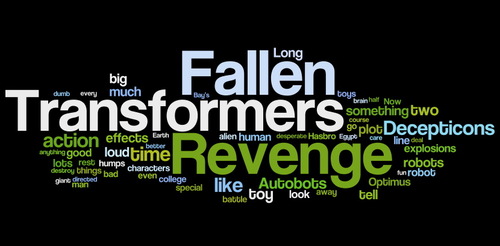
“Transformers: Revenge of the Fallen” (aka “ROTFL” to those who are rolling on the floor laughing about it) reportedly cost somewhere between $200 and $300 million to make, and the only special effects the critics are talking about are the ones of humping dogs. Or maybe they’re humping dog-bots.

Anyway, there’s nothing like an Uwe Boll movie to bring on the critical invective. Did I say “Uwe Boll”? I mean Michael Bay, of course. How did I get those two confused? What I mean to say is that critics who hate this movie don’t just hate this movie, they find it anti-movie.

Why? It’s just a summer screen-filler, isn’t it? Stephanie Zacharek of Salon.com thinks it stinks:

December 14, 2012

Generic Movie Based on the Movie They’ve Been Releasing Every Single Week Since the 1980s

This is pretty much exactly what most new indie and studio movies look like to me. Not just the Oscar-hopefuls and the Sundance selections. And not just the trailers, but the entire movies themselves (which are usually laid out, beat by beat, in the trailers). This one’s funnier, though, because it doesn’t pretend to be anything more than a familiar schematic diagram. Which is exactly what these comfy, risk-averse movies seem to be aiming for.

Starring Robert Pattinson or Adam Sandler, Natalie Portman or Sandra Bullock. Directed by Ron Howard or someone whose only previous work has been on YouTube.

(tip: Max Kleger)

December 14, 2012

Well-Shot and Needs Editing

The other night I had dinner with some longtime film critic friends (mmmmmm, homemade Rogan Gosht!) and we got to talking (and laughing) about the dumb things you overhear people say in movie theaters — whether at critics’ screenings or multiplexes. The funniest kind are those intended to convey some kind of filmmaking savvy or insight but that actually reveal ignorance by saying nothing at all. It’s inexcusable when critics use these buzzwords, and it’s just as embarrassing when affected “laypersons” (“civilians”? “Regular Joes”?) use it, even as inane small-talk. [Clarification: It’s not just empty-headed, it’s the very definition of pretentious.]

In the 1970s and 1980s you always heard people compliment “the beautiful cinematography,” but not so much anymore. (I don’t know if this had anything to do with David Watkin’s magnificent 1986 Oscar speech for “Out of Africa,” but I’d like to think so.) It was the kind of thing someone could substitute for not saying anything at all: “Well, I noticed something about the movie: some of the pictures were pretty!”

Now it’s “well-shot,” which means absolutely nothing — or, rather, could mean absolutely anything — except, maybe, “not well-shot.” It’s almost the same as clichéd small talk about the weather: “Nice day,” “Hot enough for you?,” “It’s not the heat it’s the humidity”… Actually, no, those things have more meaning than “well-shot.” Anyway, it’s one of those things lazy critics habitually throw into the final paragraph of their reviews, which Richard T. Jameson (of Straight Shooting and other venues) has summarized as: “There was also photography and music.” A local semi-reviewer recently invoked the phrase with regard to the shaky-cam work in “The Hunger Games.” He didn’t like the movie… “but it was well-shot.” Which means… what? The focus-puller was doing his job? What, exactly, was “well” about the way it was shot?

December 14, 2012

These guys make Guy Ritchie’s career all the more insignificant

I was recently on a plane from Chicago to Seattle and Guy Ritchie’s “Sherlock Holmes: A Game of Shadows” (2011) was playing. I didn’t watch it (to paraphrase “Night Moves”: “I saw a Guy Ritchie movie once…”) but every time I looked up at the screens, the same thing would happen: The action would speed up and slow down within individual shots. In the days of film, you might call it overcranking and undercranking, but this was digital. You remember “The Matrix.” It was all very 1999.

Shortly thereafter I saw this video (and many others) by Genki Sudo / World Order. I find their movements, accomplished with their bodies in real time and not with camera tricks, mesmerizing (robot moves aside, reminiscent of David Byrne’s “Once in a Lifetime”) and somehow quite moving. They’re getting at something profound about the rhythms of technology and biology and modern rituals. And, as a side effect, they make Guy Ritchie’s directorial career look all the more insignificant.

L to R: Takashi Jonishi, Yusuke Morisawa, Ryo Noguchi (chief choreographer), Genki Sudo (vocal, producer & director, retired Ultimate Fighter), Masato Ochiai, Akihiro Takahashi, Hayato Uchiyama.

December 14, 2012

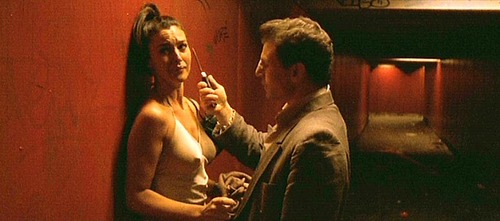
Irreversible: Will he see it or will he pass?

The decision to see a film is irreversible. The decision to not see it — today, right now — is not. It can be put off indefinitely, subject to reconsideration at any time — until you run out of time, permanently — but once you’ve seen the movie, you can’t “urn-see” it, no matter how much you might want to. Innocence cannot be recaptured, virginity cannot be restored. In a suspenseful post at Sergio Leone and the Infield Fly Rule, Dennis Cozzalio faces this dilemma head-on: Should he watch Gaspar Noe’s grueling 2003 “Irreversible”? Sometimes, Dennis writes, he is nagged by the presence of films “that I feel an obligation to get to know, sometimes out of simple curiosity, sometimes because to not know them is to be left out of a conversation that might stretch beyond the boundaries of that one particular film, and sometimes I feel the desire to see a film because people I respect and trust advise me to see it because they hold it in high regard. That sense of obligation reared its head again this past week concerning Irreversible, a movie with a rather proud reputation for being a shocking, unrelenting, formally compelling but ultimately nasty piece of work.”

December 14, 2012

The Favoritest Movies (or Everybody Loves Lieblingsfilme)

View image Just a few of my very favorite stars from “Boogie Nights.”

Yes, I know “favoritest” isn’t a word, but I’m (mis-)using it in the spirit (though not the letter) of the German language, in which you can construct all kinds of nifty words freely and on the spot — like “Nachkriegsjahrzehnte,” which as near as I can tell means “the decade after the war.” All in one word! Wundervoll! Es ist mein neues Lieblingswort! German happens to be the primary language of the excellent film magazine Steadycam, edited by Milan Pavlovic, which has just published a magnificent 50th edition/25th anniversary issue (354 pages, plus a 24-page insert — the size of a film festival catalog!), featuring a massive tribute to Robert Altman and an international poll of “lieblingsfilme” — or, as I prefer to think of them, “favoritest films.” (I’ll take that over “most unique” any time.)

See, these are not just favorite films. They are the 30 most favorite films of the participating critics and filmmakers. (I suggested some online critics be included, so some of my favoritest — including Dennis Cozzalio and Andy Horbal — were also invited to contribute faves.) The last such Steadycam poll was in 1995, and although many of these movies are also on the AFI 100, I really enjoy the eccentricities and idiosyncrasies of these individual and collective selections.

I’ll have more about my 6,000+ words on Lady Pearl in “Nashville” (greatly expanded from a spontaneous Scanners post after Altman’s death last year), but since we’ve been talking so much about the AFI 100 and other lists recently, I thought I’d take the opportunity to share the results of Steadycam’s poll, along with my “30 lieblingsfilme” — as I threw them together the day I submitted my list….

December 14, 2012

Giving in to it: Tiger Woods Voicemail Slow Jam Remix

I tried to avoid it, but it took too much effort. Now I’ve given up, given in. I don’t care about whatever’s going on with Tiger Woods, the pro golfer. I had managed to ignore nearly all references to it, except for a rather amazing Taiwanese news-ish video re-enactment of crash scenarios (below, after jump). But then I accidentally happened upon this, and it made me laugh/cry. Not because it has much to do with that golfer, but because of the skill and wit with which it nails a particular musical style, using an actual “found” voicemail message and transforming it into a hilarious melodramatic narrative. I await the vintage Grand Ol’ Opry version…

December 14, 2012
subscribe icon

The best movie reviews, in your inbox