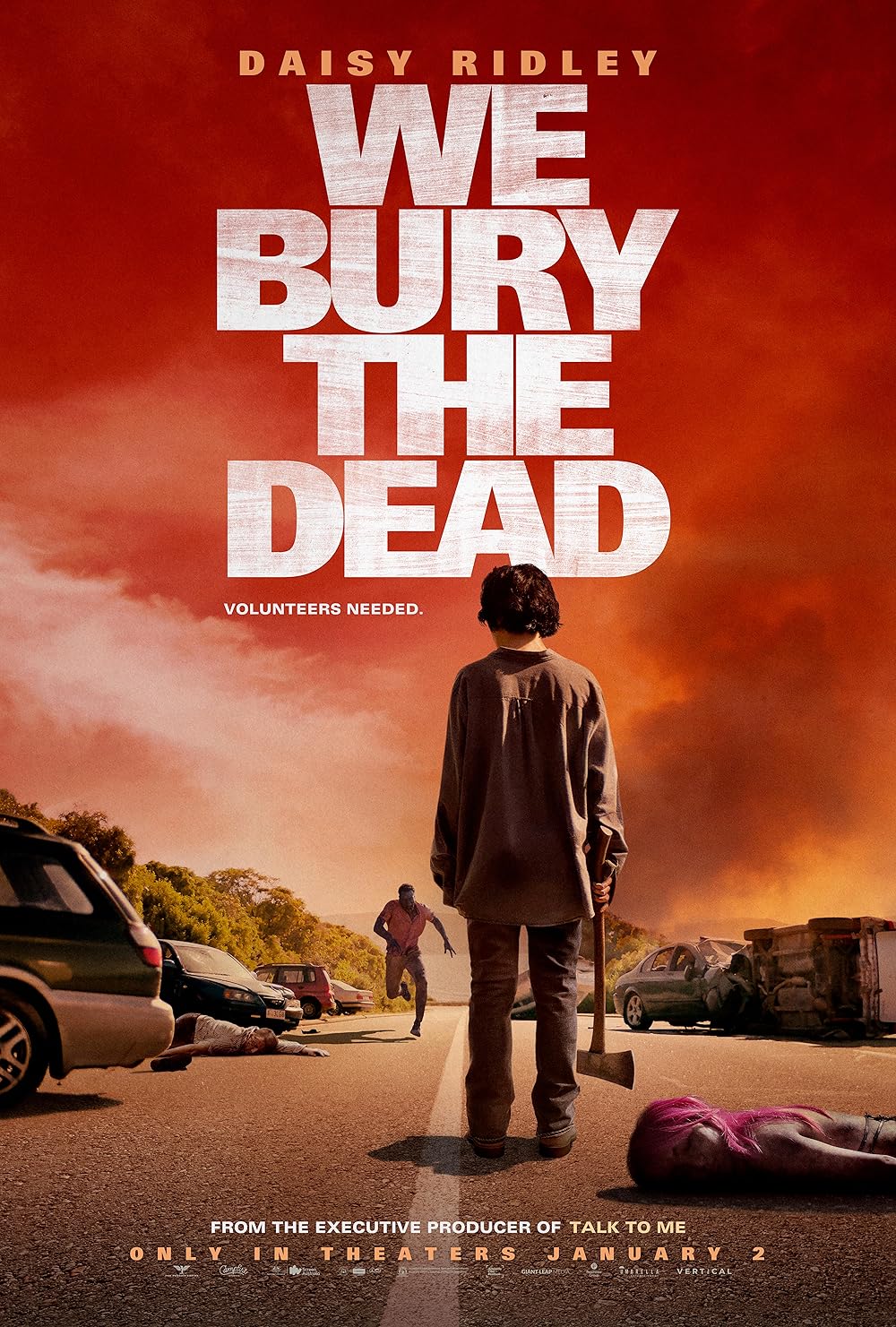
Zombies, as a cultural motif, exhibit the same life force as their avatars in cinema. It’s interesting to contemplate why that might be, and why they keep rising to terrify us. What do they signify symbolically and what itch do they scratch? Disaster movies challenge us to contemplate how we would behave in a similar situation (knock wood), while also expressing the very real fears we live with in a time of climate change and global strife. Our current timeline is zombie-heavy—consider the success of “The Last of Us” and the strangely beautiful “28 Years Later“. Now we have Zak Hilditch’s “We Bury the Dead,” an evocative and eerily mournful piece of work.
Doing something new with zombies has to be a little challenging, but Hilditch, who wrote and directed, manages it. A deadly electro-magnetic weapon of some sort has exploded off the coast of Tasmania, eradicating the entire population of the island. Naturally, the dead were not vaporized. The magnetic pulse was so sudden and devastating that people were frozen in their tracks, just like the residents of Pompeii, who were killed crouching over cooking pots, mid-gesture. The landscape is filled with these once-alive statues of death.
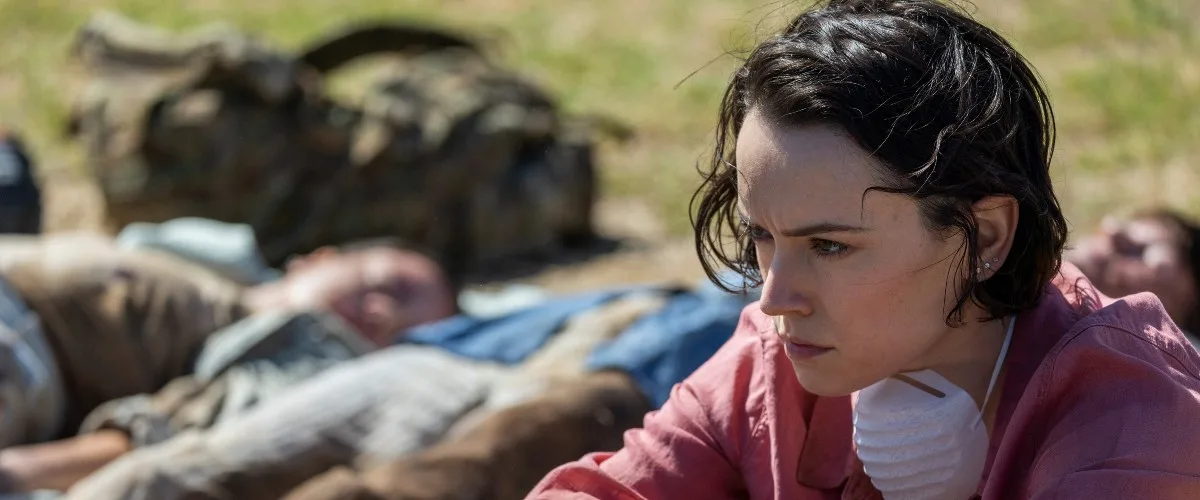
Australia calls for volunteers to handle the grisly cleanup. Many answer the call, including Ava (Daisy Ridley). Her husband Mitch (Matt Whelan) was on Tasmania at the time of the weapon’s detonation, attending a business retreat, and she hopes to find him; she hopes he might have survived.
What can’t be predicted is many of the dead are not really dead. These zombies are definitely frightful as per the zombie code, but in the context of “We Bury the Dead,” they are also loved ones, whom people are mourning. This changes the zombie apocalypse in fascinating ways. A lot of zombie movies focus on the rapacity and hunger of the undead, their ferocious refusal to fully die, etc. Here, though, it’s complicated because they were just alive, they are specific to the cleanup crew, who take on this mournful terrible job, all of them traumatized already to some degree.
The atmosphere is unrelievedly grim, as it would be. The sense of an emptied-out landscape is creepy in the extreme, provoking understandable recent memories of the Covid pandemic, and all those mind-bending shots of Times Square emptied out, the capitals of the world empty, as we have never seen them before. As the cleanup crew goes house to house, looking for the dead, it’s hard to shake off the sense that we too have experienced a similar uneasiness of an empty world, a flash of a terrible future. Cinematographer Steve Annis captures the strangeness of the post-apocalyptic world, calling up humanity’s collective nightmare dating back millennia through Biblical plagues, the plagues of the Middle Ages, or the arrival of the atom bomb. The landscape is a spectacle of desolation drenched in an unnerving silence, managing to be both frightening and sad, a mesmerizing combination.
As Ava goes on her journey, trying to get to the far edge of the island where her husband had been, she is accompanied by Clay (Brenton Thwaites), a reckless person who doesn’t share her personal quest powered by loss. He takes risks, he’s devil-may-care, the opposite of the mournful Ava. (No one is trustworthy in a zombie movie. Beware helpful strangers!)
Ridley’s performance is a moving arc of the different stages of grief. There’s the “magical thinking” phase, as Joan Didion called it: Ava is in a state of sheer unreality that her loved one is not coming back. Throughout, Ava is overtaken by flashbacks of her life with Mitch. All was not rosy with them, and while it’s intriguing, these flashbacks feel obligatory and a little unnecessary. Nevertheless, they flesh out Ava’s grief journey, magnified by the horrible revelation of what has probably happened to her husband.
What “We Bury the Dead” does really well is remind us that the zombies were once-alive. They are someone’s mother, child, husband. In many zombie movies, they are a faceless unstoppable mob, and you want all of them to be put down stat. They’re the ultimate “heavy”. Here, they are still scary, but they are also sad. What happened to them is tragic. “We Bury the Dead” never forgets that.