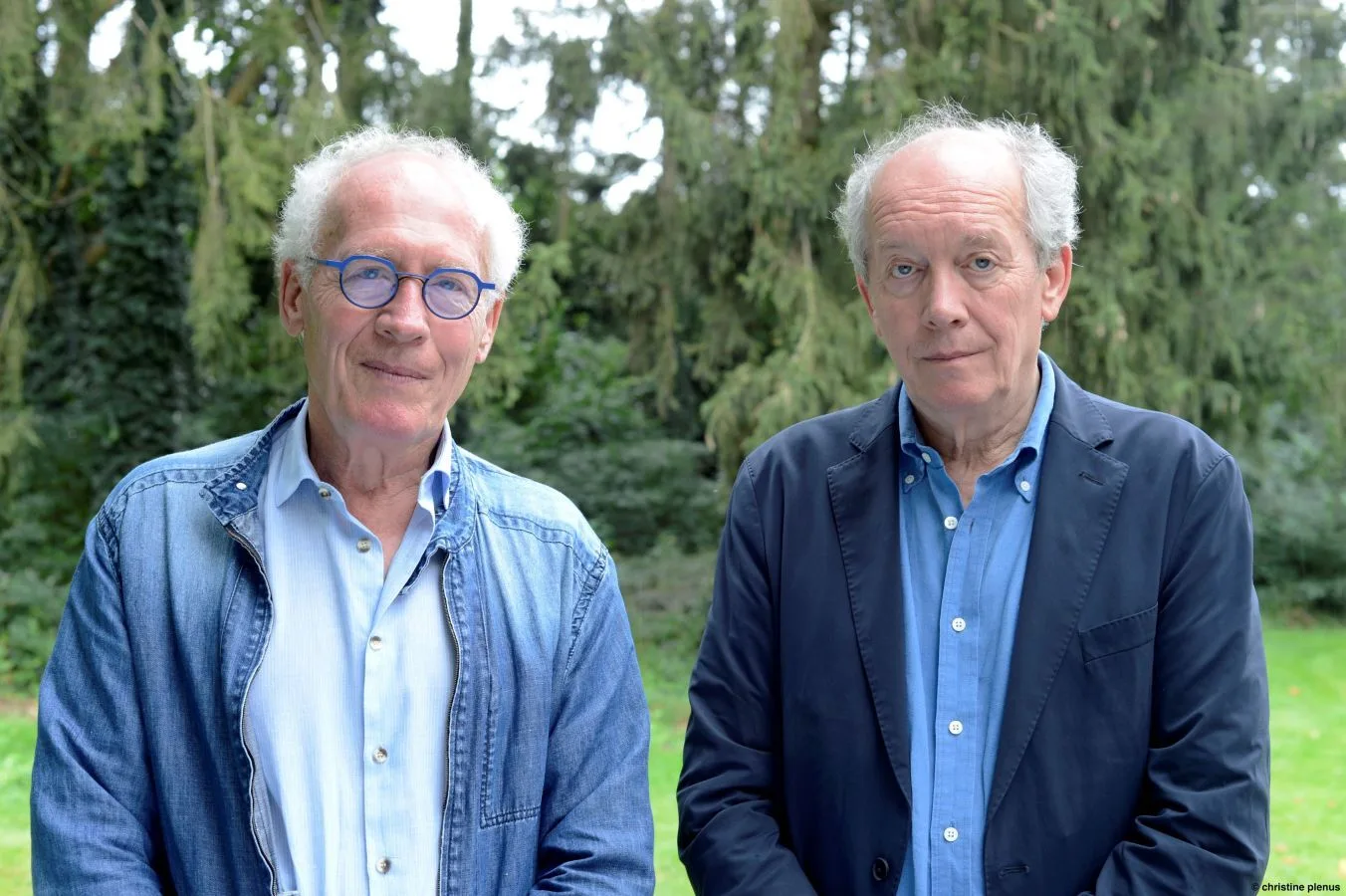
It would be hard to overstate the influence of Jean-Pierre and Luc Dardenne on traditions of realism in European cinema. The Belgian brothers, now in their seventies, have been making compassionate, uncompromising dramas about the social and economic conditions of modern life for nearly 40 years, approaching each with a direct, unvarnished style that’s been imitated far and wide across the international arthouse circuit, if seldom rivaled in its emotional impact.
With their handheld camerawork, use of available light, and aversion to soundtracks or other distractions, their deceptively unadorned style has fashioned an immediate, attentive gaze they’ve habitually directed at people living on society’s margins. It’s both the kinds of characters they choose to observe and the bare realism of their approach that have led some critics to consider them among cinema’s great humanists.
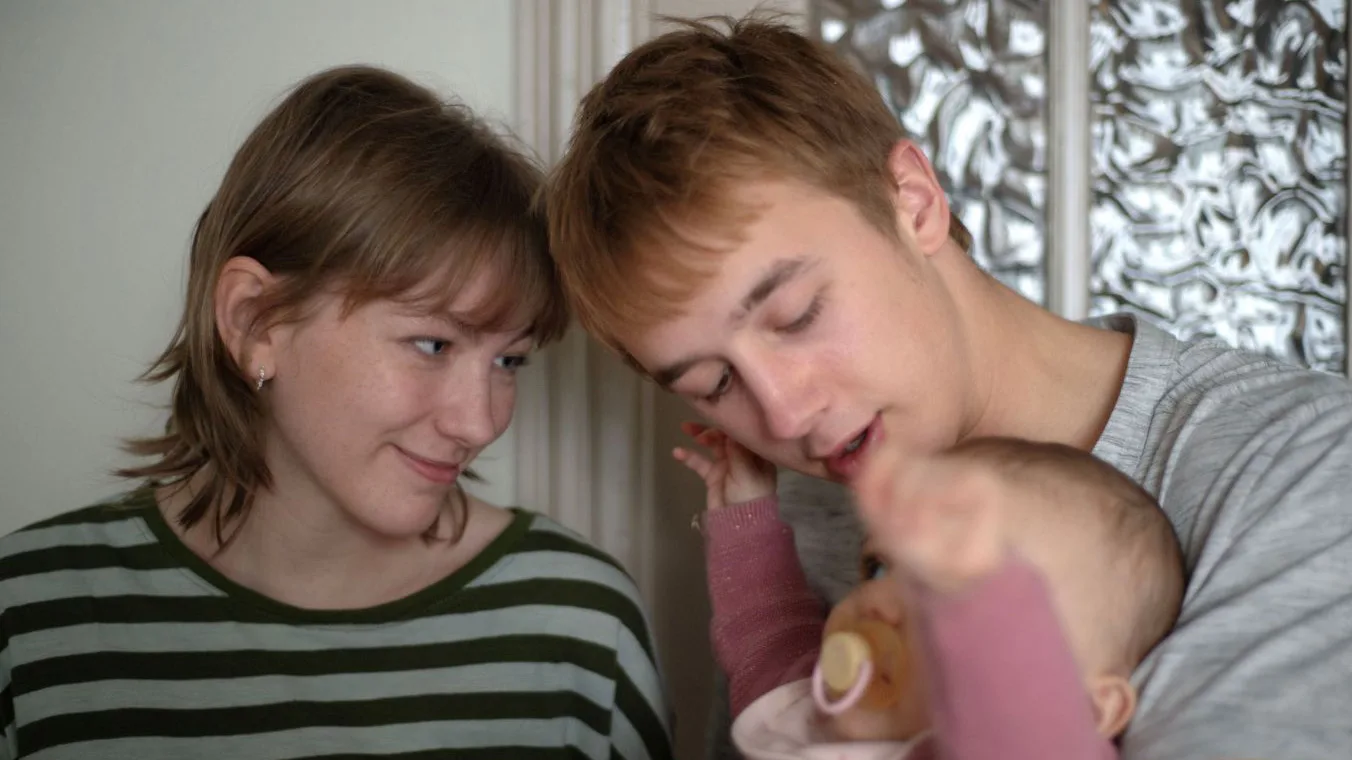
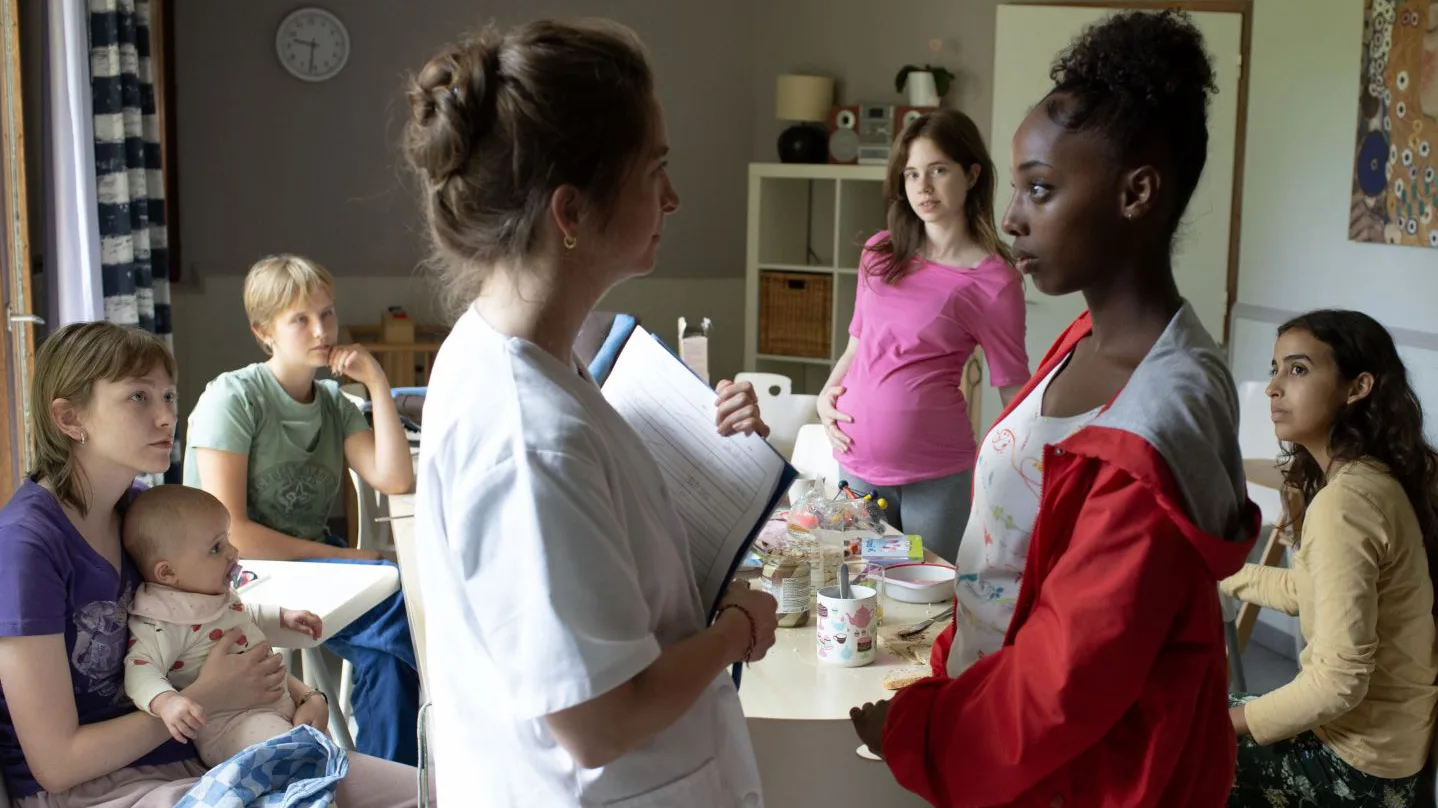
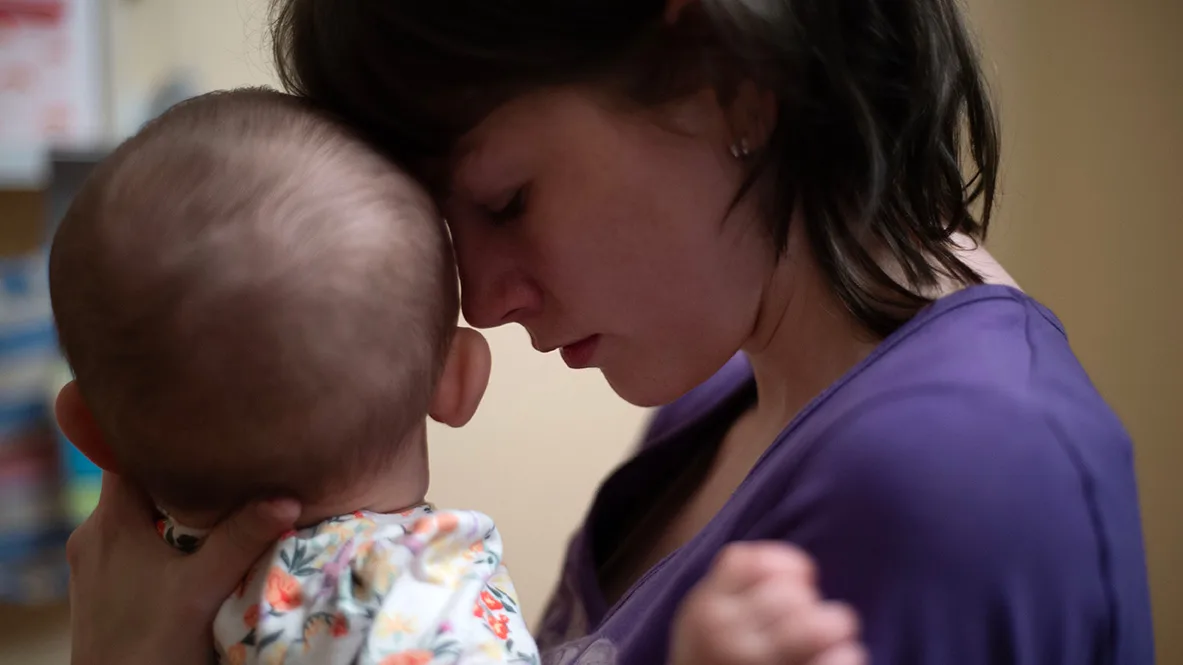
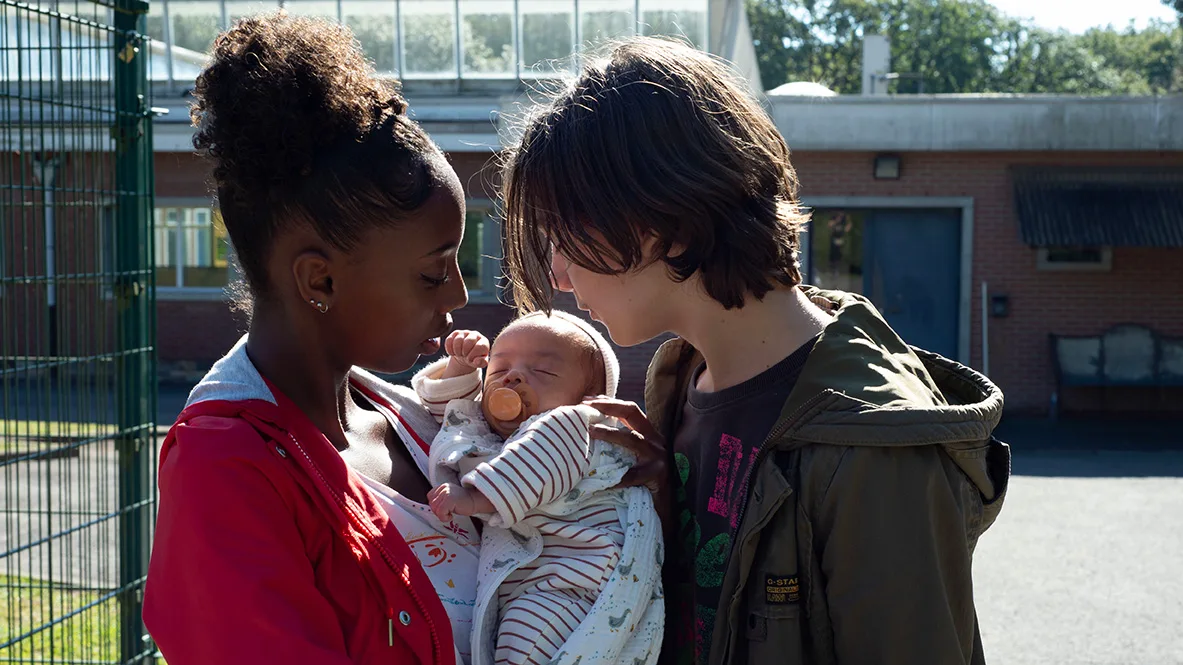
“Young Mothers,” the Dardennes’ latest, is set in the Seraing suburb of Liège, a post-industrial region that’s long served as a geographic and socioeconomic anchor for their filmmaking. Centered on a home for young mothers, the film follows five teenage women navigating early parenthood amid precarity. As Jessica (Babette Verbeek), Perla (Lucie Laruelle), Julie (Elsa Houben), Ariane (Janaïna Halloy Fokan), and Naïma (Samia Hilmi) learn to care for their newborn babies and themselves, they also forge an unexpected kind of sisterhood inside the home, one that proves uniquely nurturing as all five grapple with their own senses of abandonment and uncertainty.
Winner of Best Screenplay at last year’s Cannes Film Festival, where the Dardennes previously won the Palme d’Or for “Rosetta” and “L’Enfant,” “Young Mothers” (in U.S. theaters this week via Music Box Films) bears similarities to both award-winners in how it draws intensely naturalistic performances from its lead actresses while empathetically observing the way maternal instincts and paternal responsibilities are complicated by economic desperation.
In Chicago last fall for the Chicago International Film Festival, where they attended a special screening of “Young Mothers,” the Dardennes sat down with RogerEbert.com to discuss their career-defining desire to bear witness to the post-industrial circumstances of their hometown, the fluid construction of their latest film, and memories of working with the late Émilie Dequenne on “Rosetta” nearly 30 years ago.
This interview, conducted with the aid of a translator, has been edited and condensed.
You’ve remained close to home throughout your career, with most of your films revolving around your hometown suburb of Seraing, along Belgium’s Meuse River. I’m curious to start by asking broadly about making films there, in this place you’ve observed for so long. It used to be a fully industrialized area; today, it is full of abandoned steel factories.
Jean-Pierre Dardenne: In our youth, before we started making movies, it was still an industrial city, though it was already near its end by the 1960s. Those are the memories we have of our youth and our entire adolescence, when our entire personhood was shaped. Along the Meuse River, that is where steel plants saw their glory days, and later declined. We left this place to pursue our studies because we could hear the clock ticking—and when we came back, in our twenties, with the idea of making documentaries, this urban and industrial decline was already underway.
Luc Dardenne: As the years went by, the city became more unstable and de-industrialized, with buildings being emptied, factories closing, and entire streets being abandoned. There was a lack of community spirit as well; the city was being emptied not only of buildings that had become dilapidated but also of its inhabitants. We saw this at an early stage in our careers, as we were starting to make documentaries. And we never intended with those films to rebuild the city of our memory, to find the city that it had been before. We took it for what it was, not as we remembered it.
What did you observe at that time about the impact of decline and de-industrialization on the people living in Seraing? As trade unions decayed, communities disappeared, and families struggled, the poverty and hardship you’ve depicted in your films have been a multi-faceted crisis. Religion, family, class solidarity, and hometown pride—none of these have the power they used to. Do you see your films as wrestling directly with this loss?
JPD: When we came back to Seraing, it was clear to see that the population was declining as well. Not only the city but the social structure was starting to crumble and become dismantled. An influx of drugs had a role to play in this as well. In the lower part of the city, which tended to be the most blue-collar area, most of the immigrant families that had lived there—such as Italians and Poles—moved to other suburbs or even farther away. They simply weren’t there anymore; most had left, except for the poorest. And in this lower part of the city, many of the industrial buildings were converted into housing for incoming immigrants. It wasn’t only a desertion but also a complete shift in the population.
LD: This is what we see in our film “La Promesse (The Promise).” There’s a parallel between what happened at the level of the nuclear family and what happened in the city; the sense of unity, of oneness, was lost. Before, for example, you had a family where the father worked, and the son more or less followed in his father’s footsteps. He met and married a woman who was a bit like his mother. But after, the father is unemployed. The son has a father he has never seen working. He now goes to school to learn a trade that no longer exists. But we knew that kind of family. The son doesn’t have much respect for his unemployed father, who is always there, and perhaps works a little bit under the table, but otherwise doesn’t do anything. And the son has been promised a job that has no future. We could see in these families how the future, the horizon, is closed off. And we could see how, as the drugs flowed in, it all started to break down.
That’s really the feeling that we were trying to show in “La Promesse,” because for the first time in our lives, when we went back there, we would see young people who were alone. Not on drugs, necessarily, but alone in the streets. We’d see the emptiness. And we said to ourselves, we have to bear witness to that.
JPD: In the first version of the script for “La Promesse,” we had imagined three generations of characters. You have the grandfather, in his sixties, who had a long tradition of blue-collar solidarity, who observes his own son being extremely aggressive toward migrants, with no sense of solidarity whatsoever. He observes his grandson following his father’s example and tells his grandson, “Your father’s a bastard. He is wrong in the way he sees this new wave of immigration.” But then we realized there were no more grandfathers; they had left, or they weren’t there anymore. So we re-centered the story on a youth who, without any support from previous generations, had to reinvent a dignified way of living.
It’s my understanding that “Young Mothers” started with your observations of a real shelter, where you went to research one character in particular: Jessica (Babette Verbeek), this teenage mother who’s struggling with abandonment issues in her lack of connection to her mother. What appealed to you about this character as the starting point? She would seem to represent this generational rift you just described, for one.
JPD: You’re right that the first version of this scenario—incomplete, but nonetheless—was centered around Jessica. And the key element of that, beyond what you said about her sense of abandonment, is that she could not connect with her newborn baby. That was the core of the original scenario, and in that version, she would meet a young man who lived in an apartment close to a psychiatric center from which he had recently been released. And this encounter would allow Jessica to establish a bond with her baby at some point. They would have gone through a series of things together.
Before developing this, we decided to see what a maternity home was like. And a friend told us, “But there’s one here, five kilometers away from where you live.” We didn’t know that. We knew there were maternity homes in the area, but we wouldn’t have guessed there was one; through that friend, we were made aware of this particular home.
We went there, to that house, which was a home for minors, for young women. We went several times to gather information. We talked a lot with the caregivers. There were no men. There were only women. It was a feminine environment. With the director, the psychologist, we spent a lot of time there. And that’s where we… We were captivated by the sense of life we felt there, even though there were problems as well. It wasn’t paradise. But there was this kind of life force there that both energized and attracted us. And then we said to each other, “We must make the film here.” It wasn’t too much stability but rather this sense of life moving forward, uncertainly progressing, and the fragility of that—this is what uplifted us.
LD: It was a place that exists in relation to the violence of where all these girls come from—from domestic abuse, poverty, broken families, where the younger generations reproduce what the older ones did. And the maternity home appeared to us as a place that fights against all of that cyclical continuation. That home is a shelter where they can be safe, but it’s more than that: it is a place transforming lives.
There are lots of failures in those houses, and many young girls who will not find their way. That’s why, even though the reality is more difficult—with many setbacks, I would say, in the future of these young women and children—we said to ourselves that we were going to try in each story, at the end, to ensure there is still hope for each young girl. That’s what we tried to do, without being naive, without denying reality; we tried to build stories in which their paths did not feel too closed off. And we made the film without being locked into individual protagonists, following various characters’ paths that only sometimes intersect, while ensuring that, toward the end of the film, everyone arrives at some kind of opening for hope in their lives.
JPD: And it was when we were in the maternity home that we changed the scenario from one focused on one character to a film exploring five different stories. The movie changed radically, as we saw it. The challenge was to have five characters, but not a choral film where the location becomes the main focus. You need scenes where they meet, as well as five open trajectories, allowing the flow of life to permeate the film. The flow of life is what lies within the film’s construction. There’s a sense of movement to this, even in that fluidity from one character to another. This was an effort to represent what we saw there.
You chose to shoot inside this same maternal home. You rehearsed a lot, but also shot without artificial lighting. Your filmmaking style—all handheld, medium shots, staying close to these characters—is so effective in this context, because even across these long sequence shots, we feel a sense of emotional momentum. I wanted to ask about the scene in Nathalie’s apartment, Ariane’s mother’s home. How do you approach the process of finding the rhythm of a scene as fraught and eventful as that?
LD: The key there, to the question of rhythm that you ask, is to find a moment of revelatory emotion in each of the more extended sequences, with each of the characters we were following. The whole problem for us here was not to construct a moment of, let’s say, intense suspense, saying, “Ah, this way, the viewer will be waiting to see what happens next.” We had to stay grounded in reality. It’s difficult to explain. We couldn’t build up too much tension, like in a television series.
JPD: We couldn’t use contrivances. It couldn’t be overwritten. We had to tell a story, of course, but we couldn’t manufacture a series of emotional cliffhangers. It had to feel more natural than that. We couldn’t think, “We have to create a really intense moment of suspense here to keep the viewer hooked on the film.” We had to take the gamble that there would be moments of suspense and moments of revelation that would emerge organically. That was necessary, but it was equally necessary not to exaggerate. That’s what we had to find.
LD: The pacing, of course, also emerged as we reworked it in the editing room, because the shots are even longer than what you see in the film. We cut in the editing room, but never too much. Our problem was not to over-structure the movie. I’ve already said it, but we needed to find fluidity within it. And a film that helped Jean-Pierre and me a lot, which we rewatched several times, was “Street of Shame,” by Kenji Mizoguchi. It’s a film we enjoyed rewatching because it’s set in one location. It is set in a Tokyo brothel; there’s one girl you’re with and, for a while, there’s no one else, but then you focus on a different girl, leave the previous one, and come back to them later. We had to take the risk that we would somewhat lose a character and move to another one without any strong anchoring cliffhangers, then we would go back to this previous character in a much freer, fluid manner.
JPD: All of these characters have their own kind of loneliness. There are some parallels between the stories, specific vibrations they share, but they’re all on their own tracks.
You make films that realistically depict your characters’ socioeconomic situations. Still, many critics have observed a spiritual dimension to your filmmaking, which arises from the possibilities of personal choice and the mysteries of grace that linger even in situations of hardship. Do you actively consider a sense of spiritualism when telling these types of stories?
LD: In the instance of “Young Mothers,” we started to see the house as a place where, for the first time, all these young women could find individuality—moving from barely existing as individuals to standing up for themselves and seeing some ray of light. That is what we think about when we think about grace. It’s this idea of gaining a modicum of agency. We didn’t know how this would happen for each of these characters. Once we decided to make a film with multiple characters, we knew they had to learn through their experiences to see the light. We didn’t know, for example, how Jessica would navigate her relationship with her mother, or that we would end on a closed door as a sign of hope.
JPD: What was also important to us was that all these women surrounding these young mothers would also have a presence, that their presence is often there throughout the film. The frames of the nurseries are rarely closed around one person; at the maternity home, there’s always someone else in the frame. There’s often the child’s mother, or there’s someone else who loves them. Throughout the film, in our directing, we constantly had to think about this: in every shot, in every sequence shot, there are moments when the nurses, the caregivers, the little girl, they are there. If the girls find some type of light as well, even if it’s fragile, it’s also thanks to what they experience, and also thanks to the nurses around them. Within the support systems of these places, decisions are being made by everyone to find a sense of individual agency through a state of support. It’s a new family structure. We wanted to represent the warmth, the sweetness, of this place for girls who’d previously known none.
LD: The spiritual dimension comes into play in situations of economic or emotional need. It’s that all these young women lack something; they’ve lacked affection, love, wealth, possessions.
What happens in the maternal home is that there’s a connection, an admission of the need for another. There’s something there, an answer to this poverty and this lack of connection.
The maternal home responds to that need, and all the young girls meet someone who helps them, like Perla’s sister, Angèle—and especially at the end, the teacher with her poem, with her music. Finally, thanks to another, this girl comes back to life. We can see her life differently. That’s what Julie tells her: “When I felt down, I’d recite it in my head. And I’d see you looking at me.” She’s always helped; that’s why Julie wants her to be a witness at her wedding. That’s really what we wanted to talk about in this film, which is that we are destined to help each other, to love each other.
JPD: The meaning of spirituality comes from being in a place of need, in a situation of poverty, and finding for the first time that there is a space where others can be strong to support themselves and others. Sometimes the girls help each other, and then all these women around them get involved. In the scene where Jessica’s mother opens the door for her daughter and invites her in, something happens without Jessica saying anything or us explaining it explicitly. This grandmother changes in front of the camera, and that’s the result of Jessica’s first spiritual experience through the support network of the maternal home. It affects even this third party; in the sequence where Jessica goes to meet her mother at her workplace, there is a transformation in both of them.
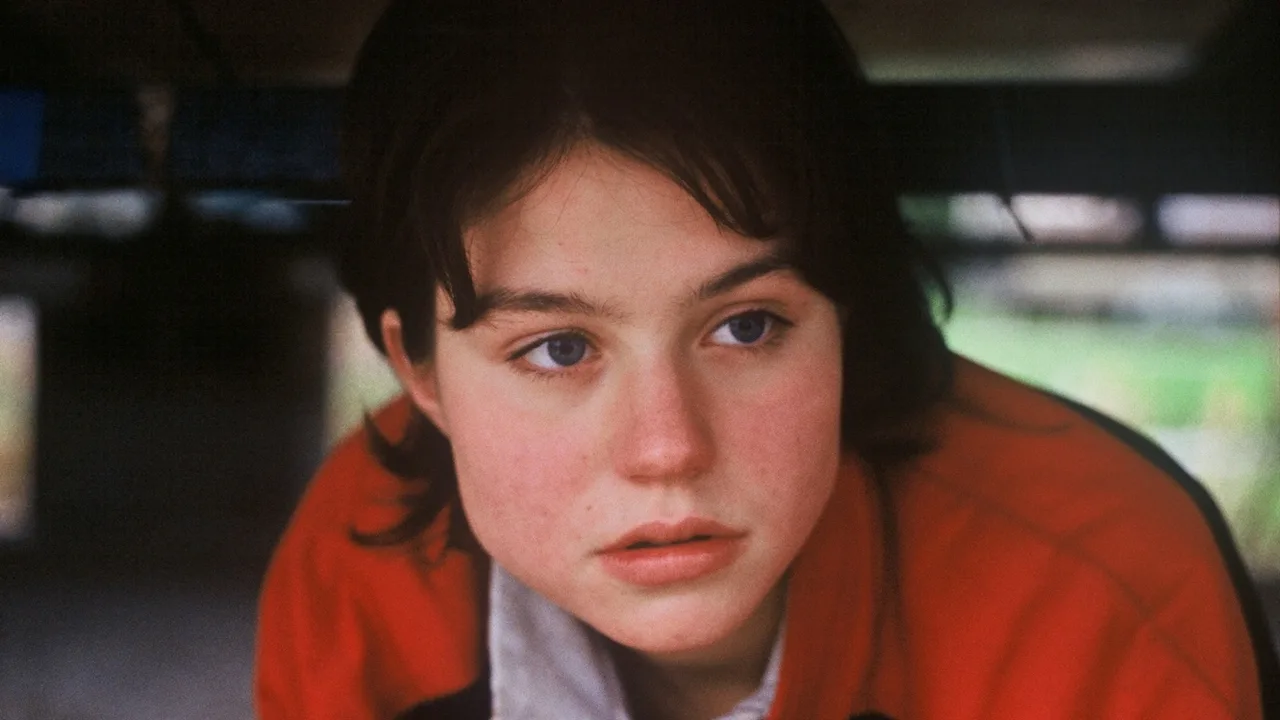
It must have been an emotional experience to see this film presented at the Cannes Film Festival earlier this year, given the then-recent passing of Émilie Dequenne, who won the best-actress prize there a quarter-century ago for her performance in “Rosetta.” If you’d be so kind, what memories could you share about working with Dequenne on that set, about her place in your films?
LD: We could see what Émilie brought to the table as soon as we saw her during the audition. She was remarkable, and she came twice; the second time, we shot two scenes. The first scene was especially good. You might remember the scene where Rosetta is terminated from her job at the waffle stand; her boss decides to hire his son and fires her. She refuses and clings to a heavy sack of flour, pleading with the baker that she doesn’t want to lose the job.
Well, we didn’t have a sack of flour while casting—we had a table which we put her behind, telling her that it was the waffle stand. And we told her, “You’re hanging on to the table, and we’re going to try to pry you loose.” In the scene, we were telling her, “You have to understand that you no longer have the job. I’m going to give it to my son,” but Émilie refused to accept this. Neither he nor I could get her to relinquish her hold on the table; Émilie was so committed to the role that we literally could not remove her. We looked at each other and said, “She really wants this job.” [laughs]
Then, later in the film, there’s a scene where Rosetta is carrying the propane gas tank and stumbles under its weight, collapsing in tears… The first thing to say about that is we didn’t have a gas tank during the audition. We had stacked up plastic chairs, and she was carrying about ten of them while playing the scene. We weren’t sure how that would turn out, with all the chairs in the way, but it was the way that she completely melted down crying during the scene that convinced us, “It’s you. You are this role. You are Rosetta.”
JPD: Another memory I have is related to the wardrobe for “Rosetta.” We’d figured out how she would be dressed, with these rubber boots, and she tried them out. At a certain point, we said that we were going to go into town to film a scene, and we turned around to see that she was removing those boots to put on the shoes she’d come with. We asked, “Why are you removing the boots?” Without knowing the scenario we intended to shoot, she said, “I’m not going to go into town wearing these.” And that struck us—because that’s exactly what we had envisioned the character doing. She was already playing the character and acting like her without knowing the story we intended to tell.
LD: In Cannes, when she won the award, for the first time, we saw Émilie with her back to us as she went to climb the stairs onto the stage. When the movie went to Cannes, she was worried about being cornered into playing only that type of character, so she made a point of dressing to the hilt. To us, when we saw her climbing the stairs in this beautiful dress, we could finally say, “She’s finally leaving the character. She’s becoming someone else. Goodbye, Rosetta; hello, Émilie.”
“Young Mothers” opens in New York theaters Jan. 9, then expands in subsequent weeks, via Music Box Films.