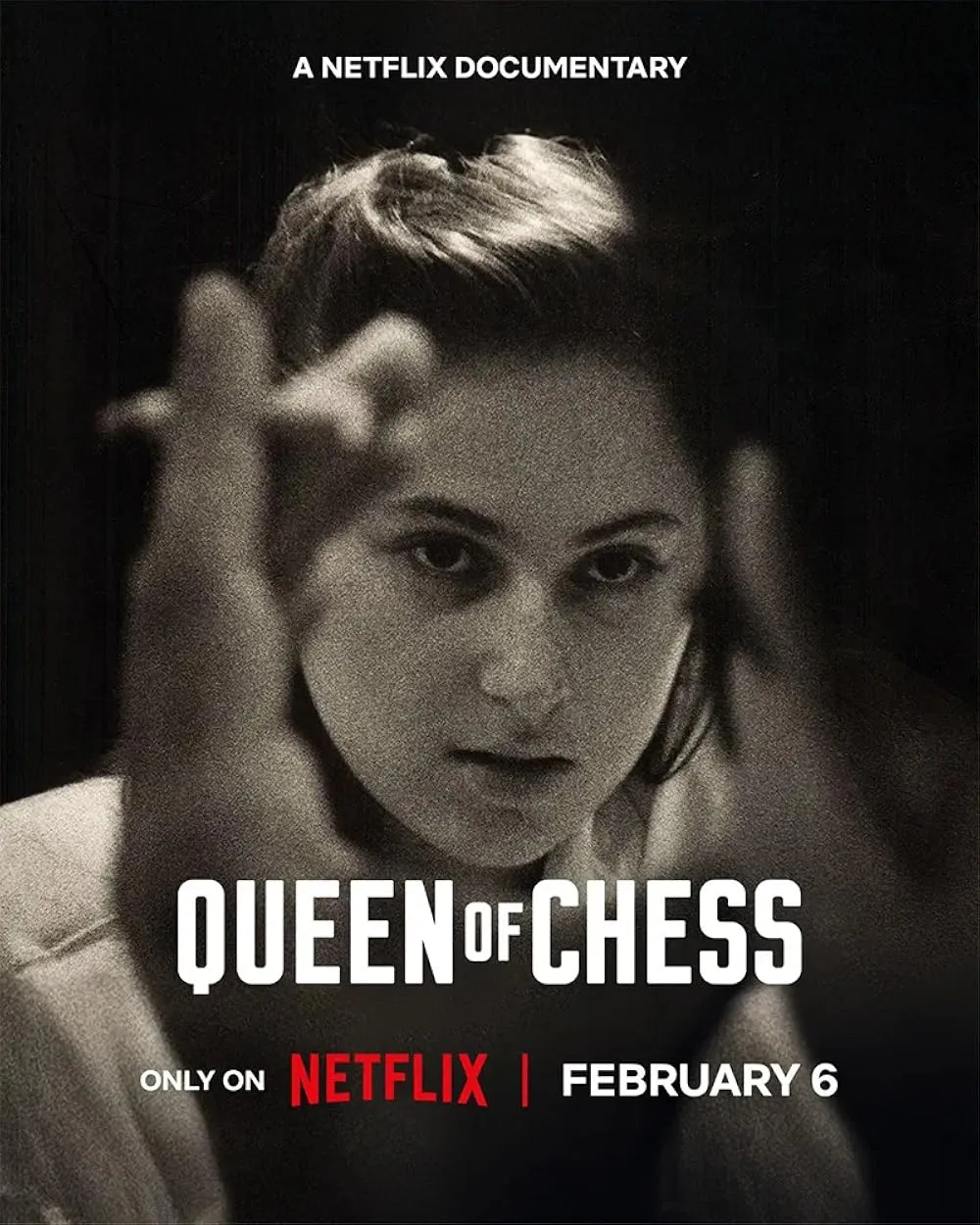
There has been no shortage of media exploring the cinematic potential of chess, from “Queen of Katwe” to “Pawn Sacrifice.” Still, few have demonstrated the intensity of the sport more than director Rory Kennedy’s documentary, “Queen of Chess.” Given its sedentary nature, where the moving around of plastic pieces on a board is punctuated only by the steady tapping of the clock, you’d be forgiven for thinking it’s more cerebral than corporeal, but there’s a toll it takes on the body and mind.
It’s a sport where the line between victory and loss is measured one square at a time and where you’re already behind if you’re only thinking two moves ahead of your opponent. As someone says in the film, chess is a game of “infinite possibility.” A match serves to tame infinity, distilling the numerous ways a game can go into a streamlined set of moves that involve luck, strategy, and perception.
For that reason, Kennedy’s rhapsodic direction is an appropriate pairing with her subject: Hungarian grandmaster Judit Polgár. As the film shows, Polgár’s playing style was one marked by a relentless yet genteel aggression; as someone remarks, she “turned opponents into pitiful victims.” At the same time, an adult Polgár is introspective as she reflects upon her unconventional upbringing and hard road to success. “Queen of Chess” embodies both sentiments, acting not only as a celebration of the sport’s versatility but as a testament to the enlivening power of one woman’s ambition and determination.
It falls short of fulfilling its potential, given a cursory exploration of some of its more interesting ideas around the trauma of conflating one’s self-worth with victory. But as any chess player will tell you, a lackluster ending doesn’t have to negate the good of the whole match.
To hear a shorthand of Polgár’s accomplishments is showstopping enough: By the age of 12, she was the number one female chess player in the world, and less than four years later, she became the youngest chess grandmaster. The film dispels any idea that Polgár’s success is due to natural gifts; she labored hard for her trophies and titles, and worked hard in turn. Polgár was raised in communist Hungary, and her father wanted to cultivate geniuses, training his daughters to excel in chess. Former world champion Garry Kasparov shares how chess was “viewed as a political weapon” to “demonstrate the intellectual superiority of the communist regime over the decadent West.” This also fueled Judit’s work and adds a moral and political layer; for Judit, chess was never just a game.
This throughline, that the plastic pieces, board, clock, and tactics represent something larger, is a thread Kennedy explores when depicting Judit’s struggles as a woman in playing. Kennedy uses Judit’s victories as a way to comment on this sexism often to cathartic effect; we see a clip of world champion Bobby Fischer saying, “They have never turned out a good woman chess player.” When Judit passes Fischer’s record and becomes the youngest grandmaster in history, you can almost feel Kennedy’s and Polgár’s mirth be exorcised from the screen. It’s inspiring to see Polgár respond only by matching her opponents’ aggression and letting her talent speak for itself; “I was dreaming of being able to show our strength to the world.”
Polgár’s rivalry with Kasparov is another throughline for the film, and it’s rewarding to see their rivalry develop over time. Even in talking-head interviews (they’re never shown on-screen together, except for archive footage of the two playing chess), they take different approaches, postures, and tones when describing their charged scrapes over the years. Kennedy mines these discrepancies to dramatic effect. This comes into play during a well-documented moment where Kasparov knowingly breaks a rule in the game with no one but Judit witnessing it. It’s a moment where Kennedy and editors Jesse Overman and Azin Samari intercut the two perspectives like a chess match, with the two going back and forth while trying to be respectful and courteous.
It’s disappointing that Kennedy doesn’t expand some of the film’s most interesting ideas, namely Judit’s personal struggles around whether being her father’s “experiment” was worth it. The latter part of the documentary comments on this, but it’s awkwardly structured, and the attention it gives feels as though it’s crafted a verdict for Polgár when, in her interviews, one can clearly tell she has complicated feelings about it. A more nuanced documentary might have allowed some of these ideas to marinate further.
Yet as it stands, “Queen of Chess” gives a champion her flowers, reminding that you can always build your own chair and pull up at the gatekeeping tables. That’s worth celebrating in and of itself.
This review was filed from the world premiere at the Sundance Film Festival. It releases on Netflix on February 6th.