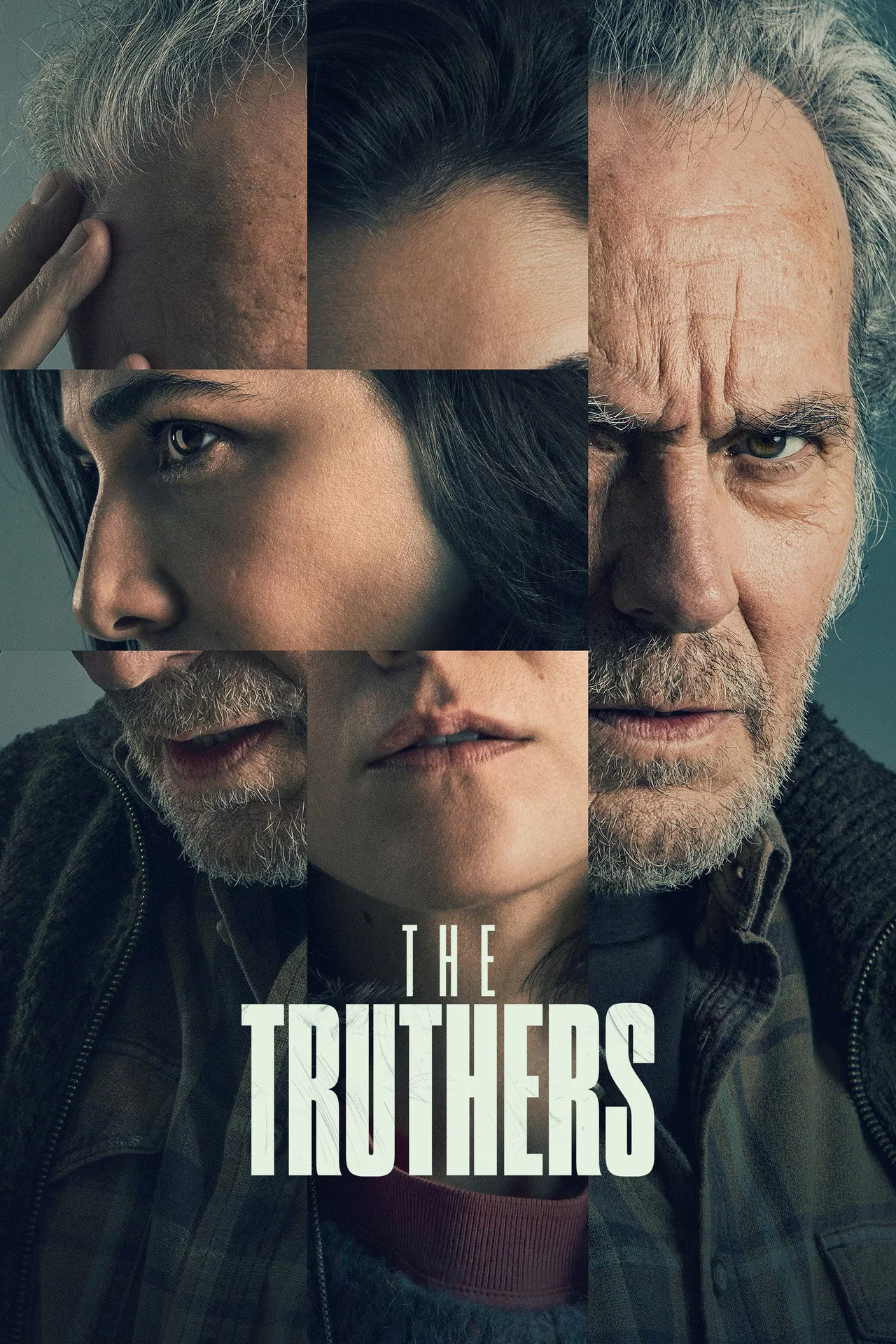

The undemanding Spanish murder mystery “The Truthers” teases viewers with a deceptively simple question: is there a conspiracy at the heart of this movie? That’s a variation on an archetypal theme, and in this case the plot concerns the mysterious death of Lucía (Fanny Gautier), a mother to the estranged bartender Ruth (Stéphanie Magnin) and wife of the alienating retiree Martín (José Coronado).
Lucía died in her bathroom with the door locked and a glass of red wine at hand. Ruth suspects foul play since the mother she knew wasn’t a drinker or a fan of locked doors. Martín, who coincidentally locks the door to his attic study, insists that Ruth doesn’t know what she’s talking about since his daughter fell out of touch with her family when she moved to Berlin. So Ruth starts her own investigation, starting with Martín, who’s currently fixating on a missing neighborhood boy, Alejandro.
Martín’s convinced that Alejandro has been abducted, experimented on, and then buried by Certyx, a powerful pharmaceutical company. But what, if anything, does Alejandro’s disappearance have to do with Lucía’s death? And who’s right, the self-righteous but out-of-touch daughter or her standoffish father?
That overstressed question has a negligibly complicated solution for anyone hoping that a movie called “The Truthers” has something meaningful to say about the conspiratorial mindset. Instead, the filmmakers blithely point out how prone we all are to connecting various disparate dots. That dismal sort of both-sides equivocating may not completely tank such a slight potboiler, but it comes awfully close.
To be fair, any genre movie that focuses on whether or not we should indulge magical thinking is bound to nettle some viewers given its focus on mysterious, withholding characters who also happen to be conventionally unlovable. Martín’s never really likable, but he does occasionally appear sympathetic enough to sell a number of scenes where Ruth either pushes back against his claims, both about her mom and Certyx.
Coronado’s performance also has enough nuance to make you suspect that, despite Martín’s unyielding righteousness, there’s more to his claims than Ruth might think. Unfortunately, so much time is spent trying to bait Ruth into starting her own counter-conspiracy—Did dad kill mom?—that it adds a little too much extra dramatic stress to the movie’s brittle conclusion.
Ruth’s a more likable character, partly because she’s more active than Martín in this story, but also because she has greater social connections and a general facility for conversation. See her reunite with her ex-lover Arón (Alberto Olmo), now a colon cancer survivor and Certyx employee. Now watch as Ruth leads conversations with the local Civil Guard officers and other supporting characters. Enjoy her deductive sleuthing as she tries to open locked doors, review closed-circuit camera footage, and pore over her mom’s autopsy report. If there’s somebody to blame, then Ruth will find out, maybe!
Martín, on the other hand, will probably seem unappealing to anyone who isn’t already on his side. Like most conspiracy theorists, Martín has a convoluted narrative in mind, one whose unbelievable twists include secret tunnels and an underwater burial ground. This, of course, sounds crazy to Ruth, and eventually her impatience with Martín leads to a standoff, where she tries to force him to admit that while they can test parts of his wackadoo theory, he simply doesn’t want to. The filmmakers predictably stop Ruth from bursting her pop’s bubble, but that’s to be expected in a movie whose main selling point isn’t its central mystery, but rather the stifling atmosphere surrounding its characters. After all, a cozy, autumnal detective thriller set in a hilly lakeside village does have its low-stakes charms.
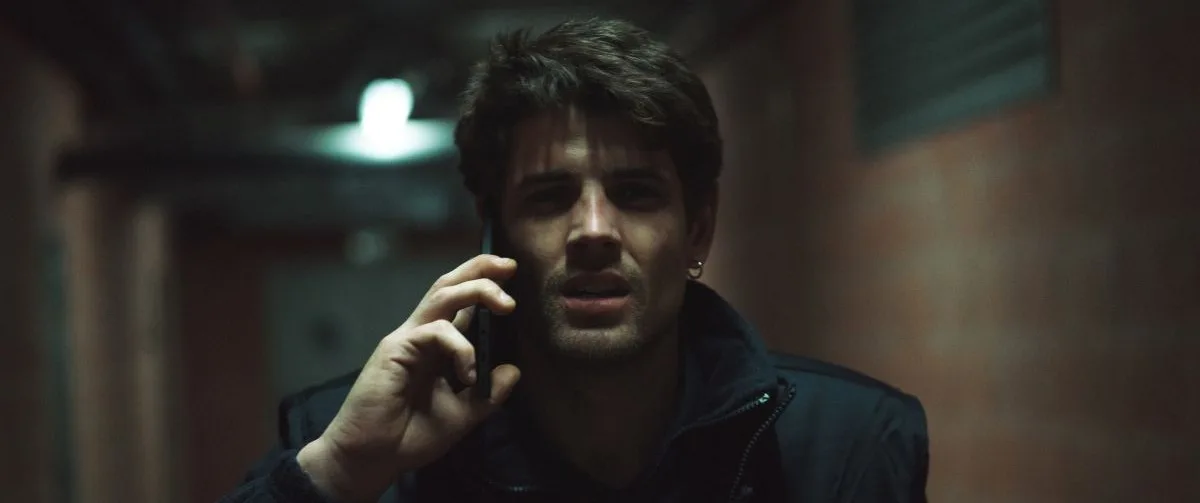
Eventually it becomes clear that Ruth’s mainly interesting when she’s pushing the plot forward. She gets a phone call from her boss in Berlin, and it’s something of a shock since Ruth doesn’t have much of a life outside of investigating her mom’s death. Arón even accuses her of not caring for him or anyone else in town since, for Ruth, they’re just means to an end. Well, yes, Arón, but isn’t that how this type of movie works?
The makers of “The Truthers” spend more time winding you up, especially by focusing on Martín’s suspicious activity, than establishing the sort of secondary details needed to make either Ruth or her father seem more real than their character-defining talking points.
And while it’s sometimes fun to shout at the screen—don’t drink that tea!—the speed with which the filmmakers dangle and then defuse various loaded scenarios eventually creates its own frustrating pattern. So while “The Truthers” isn’t a deconstruction of the genre, it does repeatedly deny viewers the formulaic pleasures that it promises. An anti-climactic finale is one thing, but a series of them leaves one wondering: What’s the point of all that empty hand-wringing?