As Fantasia chugs mightily along its first full week, its selections grow ever more niche and specific. That’s nothing new; Fantasia is nothing if not a pure genre festival, less concerned with attracting A-list talent than offering film dorks like myself a taste of the offbeat, the microbudget, the locally endorsed. That’s certainly true with today’s dispatch, featuring three films as constrained by their budgets as their locations and concepts, using small spaces and casts to nonetheless explore big ideas about art, predation, and creativity.
Makoto Ueda’s works are hardly new to the fest; “Beyond the Infinite Two Minutes” and “River,” both written by Ueda, were featured at previous fests and revealed his penchant for small-scale, charming works that play with time. His latest, “You Are the Film,” features two modest changes: This time, he’s also behind the director’s chair, and the twists shift beyond looped time to the gossamer-thin veil between fantasy and reality that is the cinema screen.
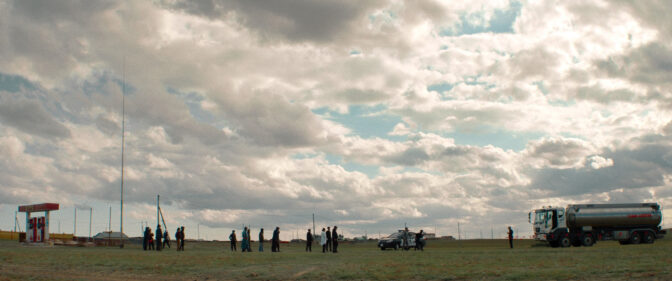
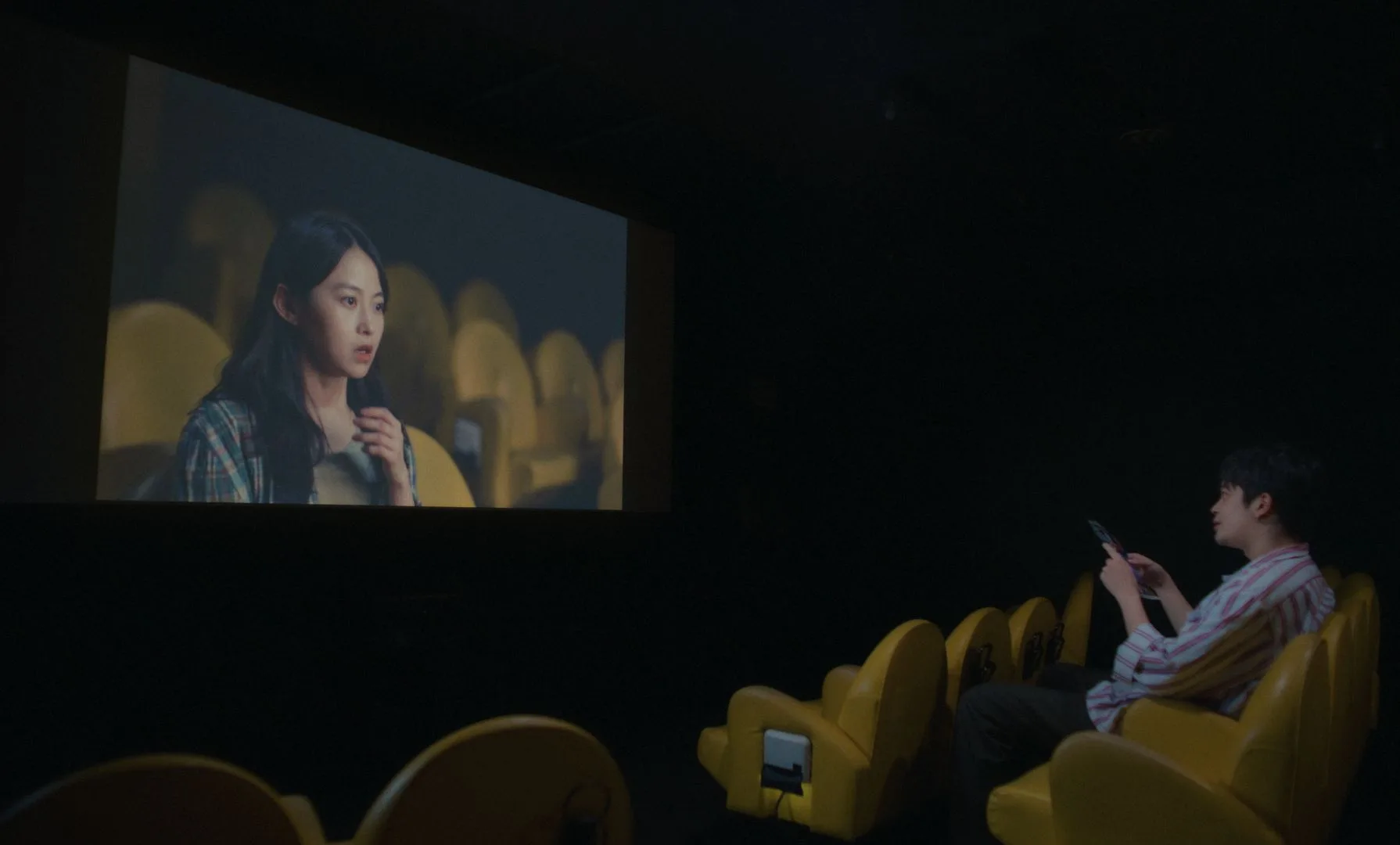
We’re introduced to Madoka (Ito Marika), a struggling playwright grappling with the usual struggles: creative blocks, the logistics of storefront theater, actor friends who are thinking of leaving for greener pastures. After a recommendation from the manager (Ishida Gota) leads her to a cute nearby theater for a film called “Sangenjaya Escape,” she plops down to see the beginnings of another charming tale of creative frustration. In it, a frustrated musician named Kazuma (Kai Inowaki) bickers with the lead guitarist of his band about everything from his inability to practice to some missing cash. That is, until he is encouraged to go to a very similar-looking movie theater.
It’s less than ten minutes into this 68-minute feature that Ueda brings his protagonists together—not in romantic union, but as witnesses to the “movie” of each other’s lives. You see, they’re each watching each other on the screen and are somehow able to converse through it. Neither knows why this is happening, and despite some hokey explanations later on about “cinematic multiverses,” Ueda’s film doesn’t really concern itself with the logistics of such metanarratives (especially the theater pamphlets that allow each of them to warn the other of even the most minuscule plot beats). All that matters is that each of them can help each other solve their problems and find solidarity in the curious situation they’ve found themselves in.
Of course, “You Are the Film” does a lot more with its premise than that, as their respective crises escalate from the quotidian aggravations of the working-class artist into stakes ranging from gangland violence to alien invasions. Yet through all of those wacky, goofy turns, Ueda keeps the tone light, his cast effervescently throwing themselves into each new twist with tremendous aplomb. And, like so many of Ueda’s works, we see the delight that comes from engaging in artistic play: even within the four walls of a tiny boutique theater, universes can be created, and lives changed.
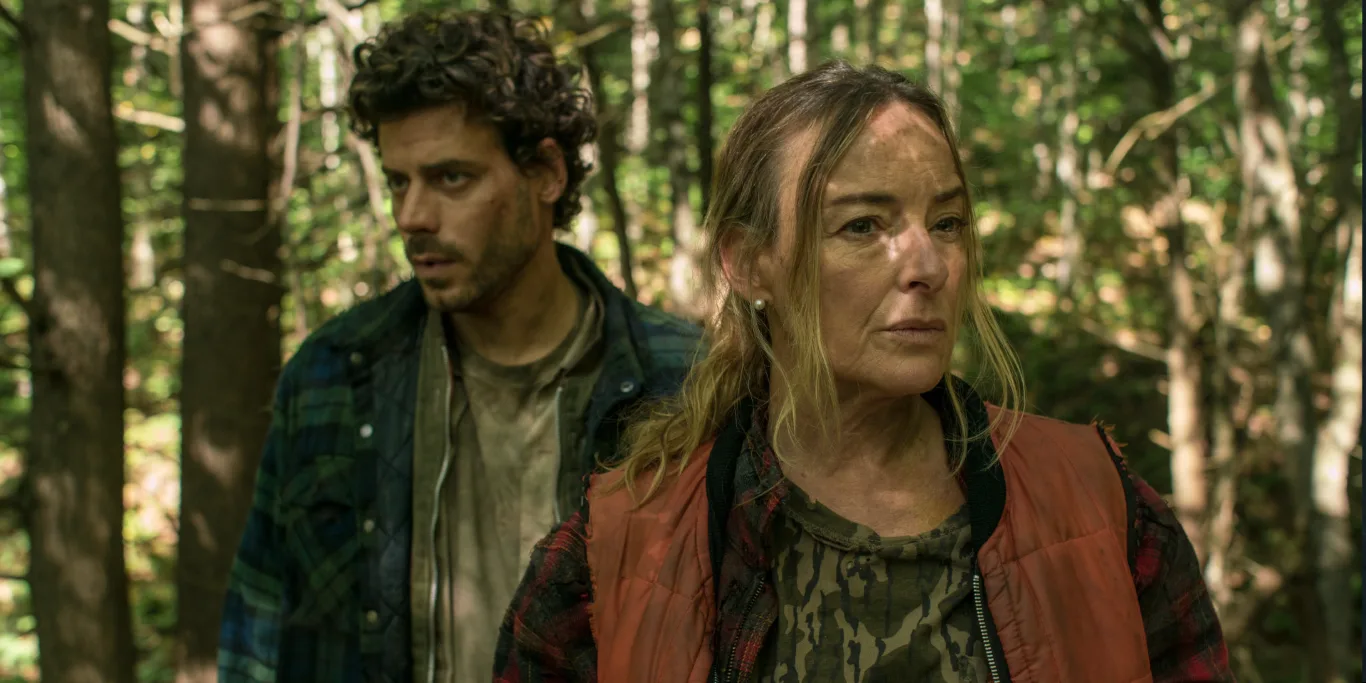
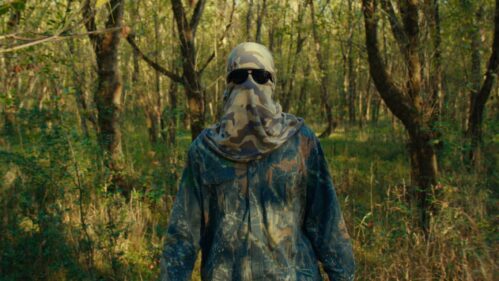
The local press was out in force for the premiere of Wiebke von Carolsfeld’s intimate thriller “Someone’s Daughter,” and it’s easy to see why. The film co-stars “Heated Rivalry” breakout François Arnaud (though he only offered a video intro after not being able to make the festival premiere), and (crucially) was shot in Quebec’s Eastern Townships region, a mere hour’s drive from Montreal. Its Appalachian hills and thick foliage offer a suitably claustrophobic setting for the film’s high-concept conceit, even as von Carolsfeld’s script doesn’t explore it with as much depth (or pulp) as one would like.
“Someone’s Daughter” wastes little time setting its characters and its stage: fiftysomething defense attorney Sam (Pascale Bussières) wakes up in a car, kidnapped by the father (Peter Outerbridge, making the most of a few minutes’ appearance) of a young girl who lost her trial against the man who allegedly raped her (Arnaud), years prior. Sam is told that the girl has since died of drug use spurred by trauma and grief, and the father has chosen a particularly noxious mode of revenge: Stranding Sam and her ex-client, Paul, out in the Canadian wilderness. A boat ride and three haunting gunshots later, Sam and Paul are stuck in the wilds on their own, with no food and a long, dangerous hike back to safety.
And so begins a patient, if occasionally lumbering, morality play, as the two people wrestle both with their immediate survival needs and the innate tension of the role they played, both directly and indirectly, in the destruction of a young woman’s life. Sam, a widower whose hikes with her late husband imbued her with some essential survival skills, must play mother and survival guide to the urbane, whiny Paul; he’s impulsive and childish in ways that hardly endear him to Sam, much less the audience. Still, both actors play off each other electrically, Bussières’s measured resolve giving Arnaud plenty of runway to run pages from the manipulator’s playbook. Should he ingratiate? Should he cower in need? Should he bide his time, waiting for the right moment to take advantage of their situation?
These tensions are occasionally explored in a few bubbling outbursts of conflict, especially in its final act. But “Someone’s Daughter” remains frustratingly sedate for most of its runtime, preferring not to explore the characters’ thorny pasts in favor of a more straightforward survival narrative. One would hope that this lack of trust in each other, this lack of certitude about one of the most important truths in their lives, would play more actively in the drama. Instead, it fizzles in the background for long stretches before exploding in a thorny but abrupt ending that makes room for Michael Greyeyes to make a far-too-short cameo. A beautiful showcase for two fine actors and the claustrophobia of the Canadian wilderness, but more dramatically inert than one might hope.
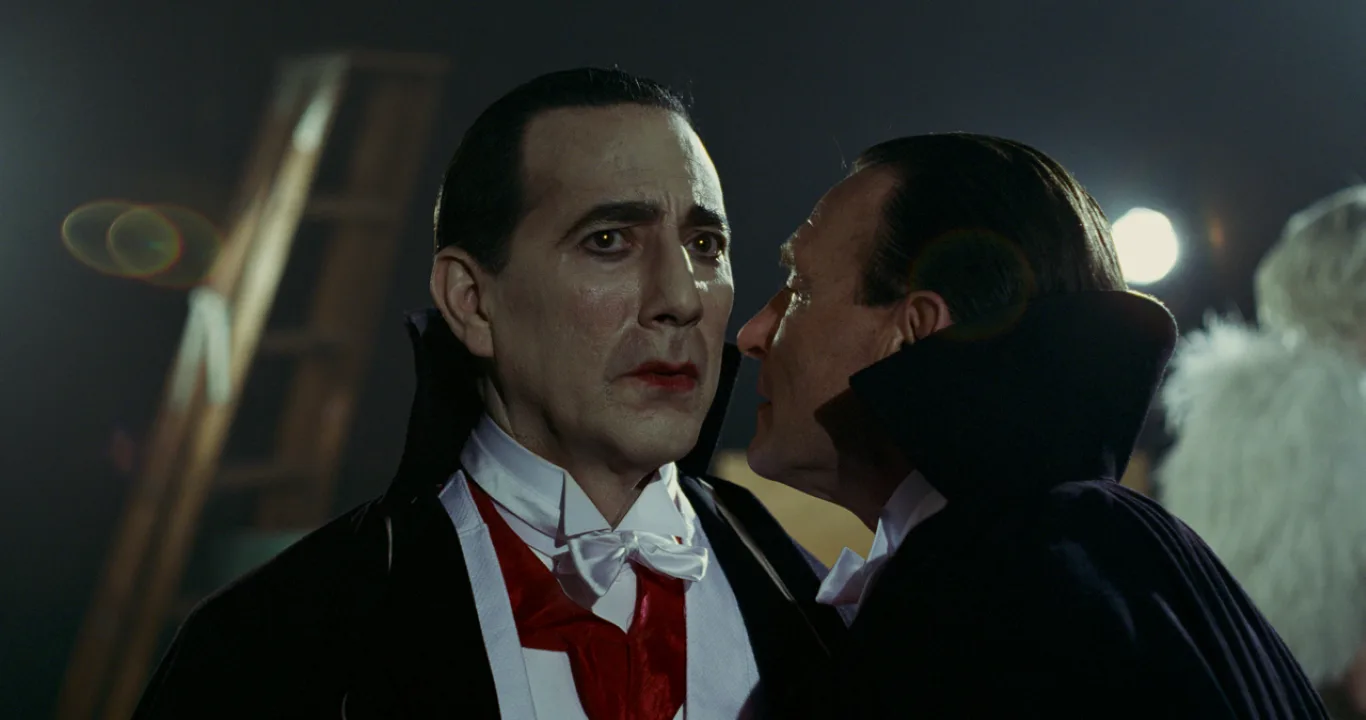
The battle of wills between two people more alike than they’d like to believe continues in Craig Mitchell’s beguiling “Los Vampires,” which thinly restages the presumed behind-the-scenes production of George Melford’s 1931 Spanish-language adaptation of “Dracula,”—shot at the same time as Tod Browning’s classic, on the same sets, at night when the English-language film would stop production. Here, we follow Luis de Ossorio (“Lost”‘s Henry Ian Cusick), the Spanish actor cast to play “Count Vlad”; he’s been tasked to watch the day’s dailies of his English-language counterpart, Hans Orlov (Thomas Krestchmann), as Orlov (and the producers) insist he emulate each mannerism to a tee. Luis, however, bristles; he is an ack-tor, after all, and wants to make the role his own. (He’s even brought some custom-made fangs for the trouble.)
But Luis’ growing rivalry with Orlov, and their growing mutual fascination with the Spanish-speaking ingenue, Vianca (newcomer Daniela Couso), who’s been cast alongside him, begin to turn the production into a psychological nightmare for the struggling actor. And that’s before a series of mysterious murders around the soundstages begin to threaten the production itself.
It’s hard not to think of E. Elias Merhige’s haunting “Shadow of the Vampire” when watching this, finding similar supernatural sins in Spanish “Dracula” as that film did with “Nosferatu.” And granted, Mitchell makes the most of what was an exceedingly modest budget (the film was self-funded); the sets feel sparse in ways that match the charms of Old Hollywood, with graveyards backed by ominous backdrops featuring gigantic moons. The famous Dracula steps are emulated too (though not too much, to avoid litigation), and Simon Coull’s cinematography coats the whole thing in a soft-focus dream haze.
The central performances are uniformly excellent, too; Cusick’s antic disposition as Luis bounces wonderfully off Krestchmann’s Romanian diva. The real standout, surprisingly, is Couso, who finds a delicate balance between slinky ingenue and more complex aims as the film progresses. Mitchell’s script juggles a murderer’s row of thematic aims: acting as vampirism, the immortality of cinema, Old Hollywood’s fear of the immigrant, the impending censorship of the Hays Code, the predation of older men upon younger women. Some get plenty of room to shine; others get lost in a few moments of miscalibrated comedy and a wonky sound design (the English-language dialogue suffers most for this; the Spanish, helpfully, is subtitled).
But there’s a hallucinatory mist that surrounds “Los Vampires” that still intrigues among all its formlessness, especially as it stalks its way toward a surprising, somber grace note that evokes everything from “The Assassination of Jesse James by the Coward Robert Ford” to “Boogie Nights.” Some actors lose themselves in the part; others succumb to it.