
No other children’s cartoon has had a legacy quite like Nickelodeon’s beloved animated series “Avatar: The Last Airbender.” The 2005-2008 run series immersed viewers in a rich martial-arts-influenced fantasy world rooted in Asian history, rounded out by a complex ensemble and an anime-inspired visual language. Across 12-year-old Aang’s quest to master all four elements as the Avatar and defeat the imperialist Fire Nation regime, the show deftly explored heavy topics (genocide, totalitarianism, sexism, etc.) without condescending to its young demographic.
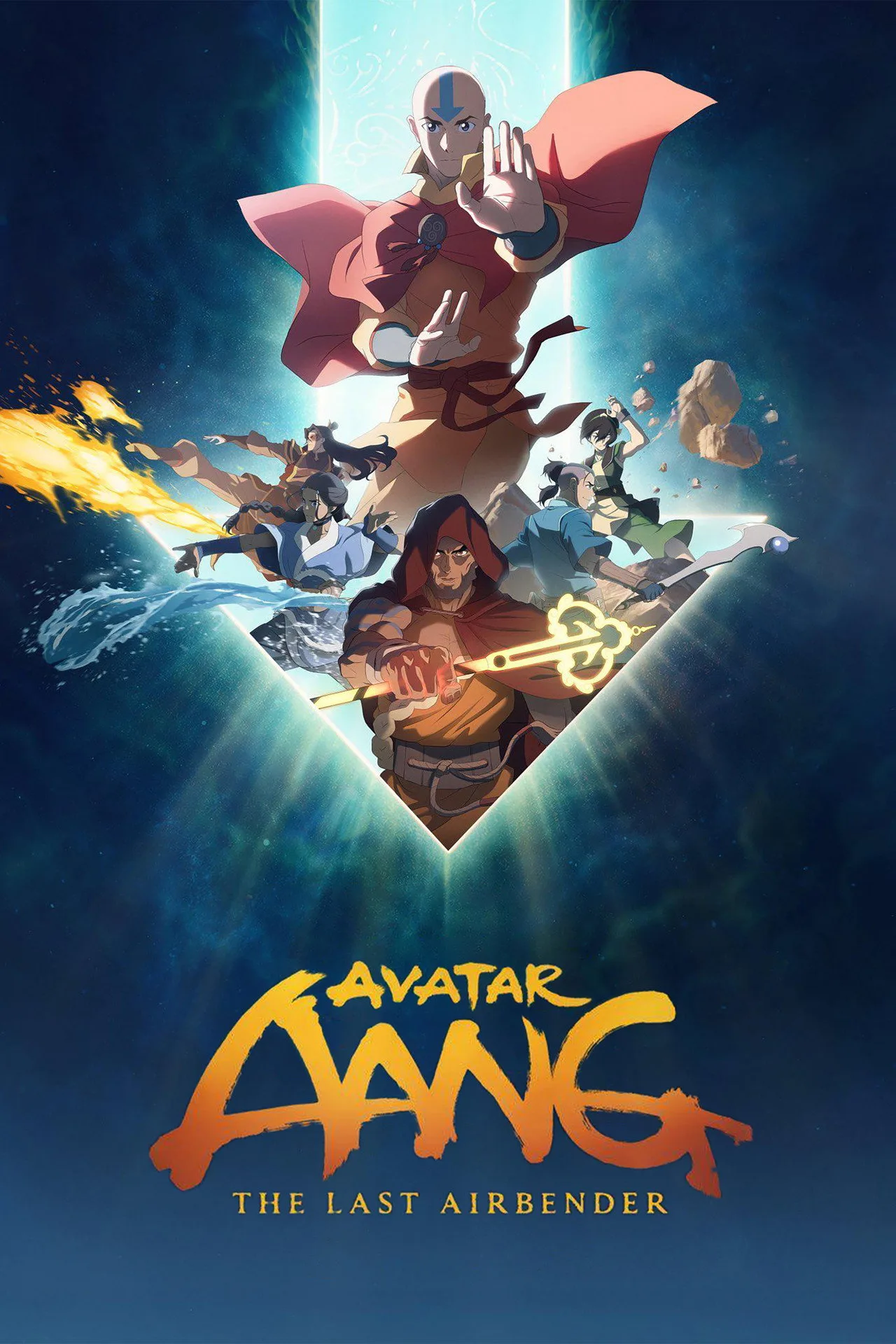
More than 20 years after Aang awakened from his iceberg, the franchise’s inaugural animated feature under Nick’s new banner, Avatar Studios, “Avatar Aang: The Last Airbender,” leads fans into uncharted territory for the now-adult Avatar: existentialism. The film’s title alone is wordplay befitting its overall thesis: everyone asks about the Avatar, but not how Aang feels about being the last airbender.
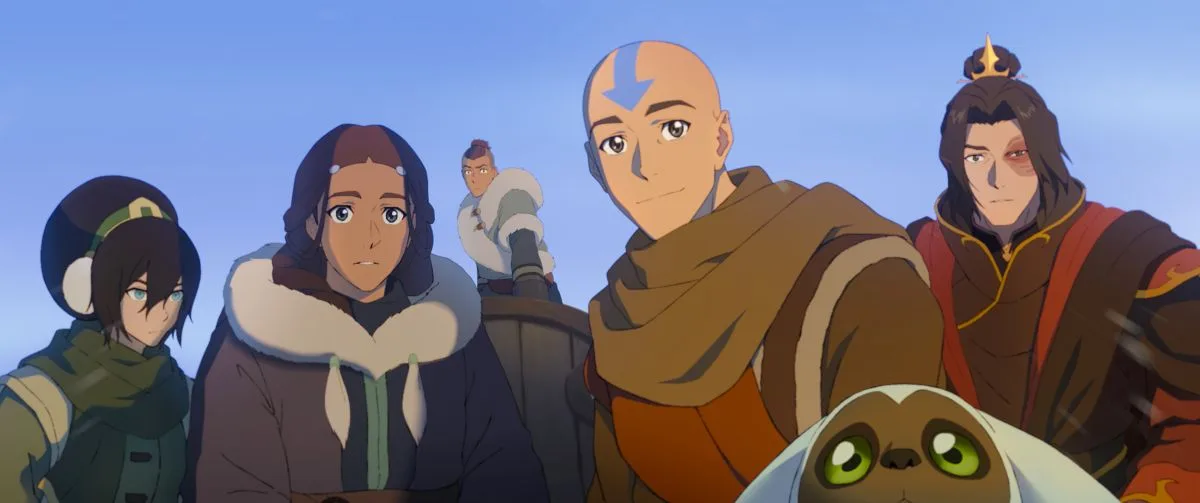
Set years after the end of the Hundred Year War, the four nations finally live in harmony. A 20‑something Aang (Eric Nam), however, begins to feel the weight of being the nation of one. Despite having a supportive partner in waterbending master Katara (Jessica Matten), Aang’s grief for his fallen Air Nomad brethren leads him to abandon his Avatar duties in Republic City and visit abandoned air temples, clinging to memories of the monk mentors and friends who raised him.
But one of his visits is disrupted by a non‑bending terrorist group called “The Denied,” who are searching for a staff that grants bending abilities to non‑benders. Realizing that he can resurrect airbending, Aang assembles the rest of the Gaang—Katara’s wisecracking warrior brother Sokka (Román Zaragoza), sassy Earthbender Toph (Dionne Quan), and honorable Fire Lord Zuko (Steven Yeun)—to find the staff before The Denied. Their journey leads them to Tagah (Dave Bautista), an enigmatic but powerful airbender frozen in time, much like Aang was. With his arrival, Aang is confronted with a new internal paradox, forcing him to contemplate the future of his fallen culture.
It’s this kind of character predicament that illustrates why “Avatar” is as beloved as it is. The narrative, developed by series creators Bryan Konietzko and Michael Dante DiMartino (sharing a story credit alongside Kenneth Lin and co-writer Tim Hedrick), expands on the titular Avatar’s psyche as he ages alongside the Gen-Z and millennial demographic that grew up with it. It poignantly challenges Aang’s existentialist struggle, as he and Tagah shape the film’s depth. Both are foils, products of war, struggling with variations of the same trauma—bound by the weight of being the last airbender. Eric Nam’s voice performance further deepens the film’s emotionality, sincerely conveying Aang’s conflicting struggles, particularly in contrast to Bautista’s signature gruff-yet-effective work.
After enduring a frustrating pipeline—surviving a shift from a theatrical release under ViacomCBS to a Paramount+ debut in the Skydance era, and suffering a terrible leak—“Aang” is the finest the series has ever looked. The 2D hand‑drawn quality under its new cinematic lens is nothing short of remarkable. The bending-oriented fight sequences and action choreography are blisteringly kinetic and beautifully fluid, while the energetic cartoonish comedic beats are expressive.
As if everyone who worked on it entered their own Avatar State, director Lauren Montgomery and the animators at contributing houses Flying Bark and Studio Mir performed a staggering feat of 2D feature animation that is rare in today’s studio landscape. Not since the early 2000s—when Disney dropped the underrated “Atlantis” and “Treasure Planet”—has a Western studio‑produced, 2D‑animated fantasy action‑adventure film operated on a widened scope with epic grandeur. Undeniably, it’s one of the finest traditionally animated pieces of art put to film this decade thus far. Each frame is further proof that “Avatar” should only exist in animation. The show itself already proved that the lesser, abridged forms via the mediocre ongoing Netflix series and (shudders) M. Night Shyamalan’s “The Last Airbender” adaptation pale in comparison.
There’s no way not to walk away from this furious with the dunderheads at Paramount responsible for dumping it on streaming. Moviegoers and fans deserve to experience this passionately crafted work, theatrically where it belongs. At the time of this writing, it has a short week-long engagement in NYC and LA for Oscar consideration and needs to be expanded nationwide.
To be fair, apart from contributing to the action, some Team Avatar members aren’t utilized to their best abilities in some departments. The updated voice cast—now consciously reflecting the ensemble’s AAPI ethnicities—all provide fine voice work capturing the Gaang’s adult ages. But while it seems a necessary sacrifice for a more Aang‑centric story, the film often opts out of potential character work with its supporting cast and the rather underdeveloped “Denied” in favor of visual spectacle. And while insanely striking, that spectacle can be too bloated for its own good, especially within a very destructive‑oriented climax.
Additionally, Konietzko and DiMartino’s writing touch is sorely missed in the dialogue. The screenplay by Tim Hedrick and Christopher Yost arrives watered down compared to the sophistication of both Avatar series. Much of the dialogue is frequently expository, deepening lore but feeling a bit too kiddified, even by “Avatar” standards.
Considering that “Aang” is the first in a long line of “Avatar” productions, the debut venture for Avatar Studios makes a rock-solid mark that one can only hope gets sturdier in future entries. Nevertheless, it delivers a gratifying cinematic experience to the fanbase, as visually mesmerizing as it is a worthy storytelling contribution to a brilliant fantasy series.