Crime thrillers are one of television’s most popular genres, and in recent years, they’ve found themselves repeating the same narrative structures and regurgitating the same themes. Yet somehow, they keep audiences wanting more. When “Furious” was announced, its storyline mirrored that of many shows that have come before it; a female detective is trying to hunt down a serial killer as her personal life falls to pieces. Yet by the end of its first episode, it’s clear that the series is unlike any other released this year.
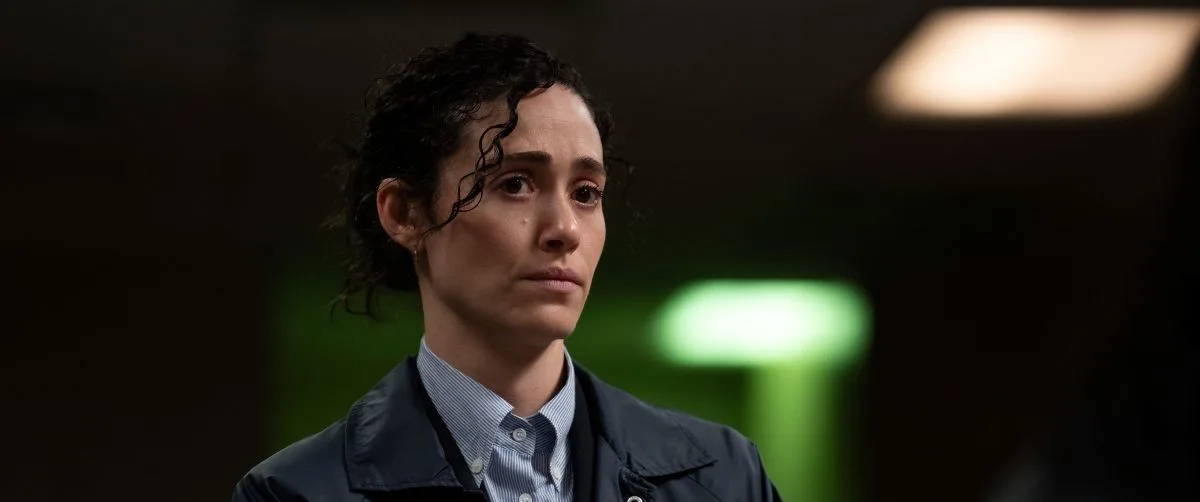
The series follows Alice Black (Emmy Rossum), a homicide detective turned FBI hotline operator. When she’s called in to help investigate the murder of an affluent man, she realizes that it’s connected to another case she worked on a year prior. The main suspect of both is a young woman named Catherine (Lola Petticrew), who dated both men before their subsequent deaths. Evading CCTV by wearing a mask and looking unsuspecting due to her small stature, we watch as Catherine injects her victims with drugs and interrogates them before killing them. As Alice gets pulled further into the case, it becomes clear that she and Catherine exist as two sides of the same coin, and the intrinsic link between them unfolds into a fascinating cat-and-mouse chase.
What “Furious” does differently than its peers is provide viewers with a fascinating examination of violence, questioning how survivors of abuse engage with these acts in different ways. In Alice’s case, she invites men over to get physically rough with her, before kicking them out and masturbating in her bedroom. She understands that the abuse she suffered has done something to her psyche, but instead of shaming her for it, creator Elizabeth Meriwether boldly explores how Alice’s past has gotten her here, and what it means for her future as someone attempting to heal from past traumas. On the other end of the spectrum, Catherine uses violence as a means to take control of her life, brutalizing men who, as the series goes on, are revealed as people whose power has allowed them to victimize countless women and girls.
Both of these characters fall outside of the category of being “proper” representations of womanhood, and the series slowly unfolds as an empathetic look at how abuse shapes how survivors see themselves and the people in their lives. It’s clear that Alice sees a version of herself in the woman she’s desperate to capture, and this kinship allows her to understand Catherine’s motives, as well as her next moves. While there isn’t anything formally to write home about in the way that “Furious” presents itself on screen, the stark lighting and dull backdrops give way to a thrilling character drama that trumps every other crime series released this year.
Rossum and Petticrew are both phenomenal in the series, and they are joined by a fantastic ensemble. One of the few people in Alice’s corner is her friend Dan Kelly (Scoot McNairy), whose closeness to Alice in an occupation led by men who foster dedication to one another no matter the cost has impacted his standing at their jobs. The relationship between them transcends platonic and romantic tendencies, and is incredibly tender to the point that when they’re on screen together, they often feel like they exist within a different series. Each conversation they have, whether it’s an argument in a car or a whispered conversation on a bathroom floor, adds levity and a staggering amount of heart to the series.
Violence against women and girls has long been entangled with crime dramas, and more often than not, instances of assault and murder shape how we understand victims and survivors on screen. Finally, after decades of existence and exploitation, “Furious” chips away at conventions of the genre it exists in, forcing viewers to confront how they consume these stories, and how they see and speak about victims of abuse, whose paths to healing are neither pretty nor linear. The series allows both Alice and Catherine grace, allowing them to transform in front of our eyes into two women shaped by the violence that made them, for better or for worse.
While “Furious” is chock-full of thrilling twists and turns, its existence is undeniably more significant than just being a crime drama. What this series has done is shift the genre from one that asks its audience to gawk at the violence enacted upon women and girls, and instead forces them to confront how these acts shape the people around us, and how we as viewers of this genre—whether it be fictional series or documentaries—may be culpable in its very existence.