
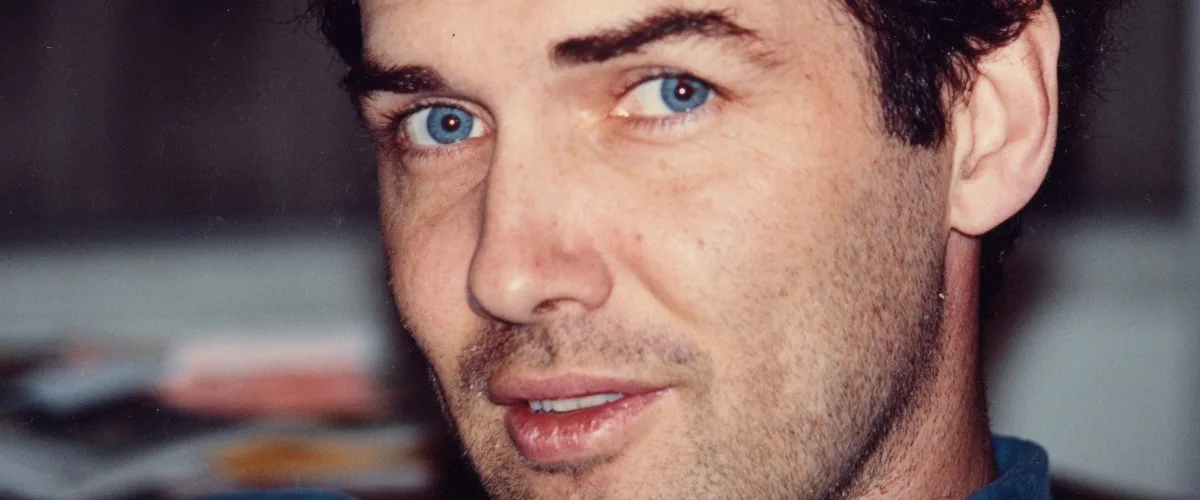
One of the great things about Norm Macdonald is that he always seemed to have zero fucks to give.
Whether Macdonald was stretching his notorious “Dirty Johnny” joke (don’t ask) to seven, eight, nine minutes, inexplicably playing the 1970s version of Burt Reynolds on “Saturday Night Live” in the late 1990s, showing up in character as Bob Dole on “The Howard Stern Show,” or hammering O.J. Simpson every week on “Weekend Update” to the point it cost him the gig, nobody could tell the guy to pull back, to ease up, to play it safe.
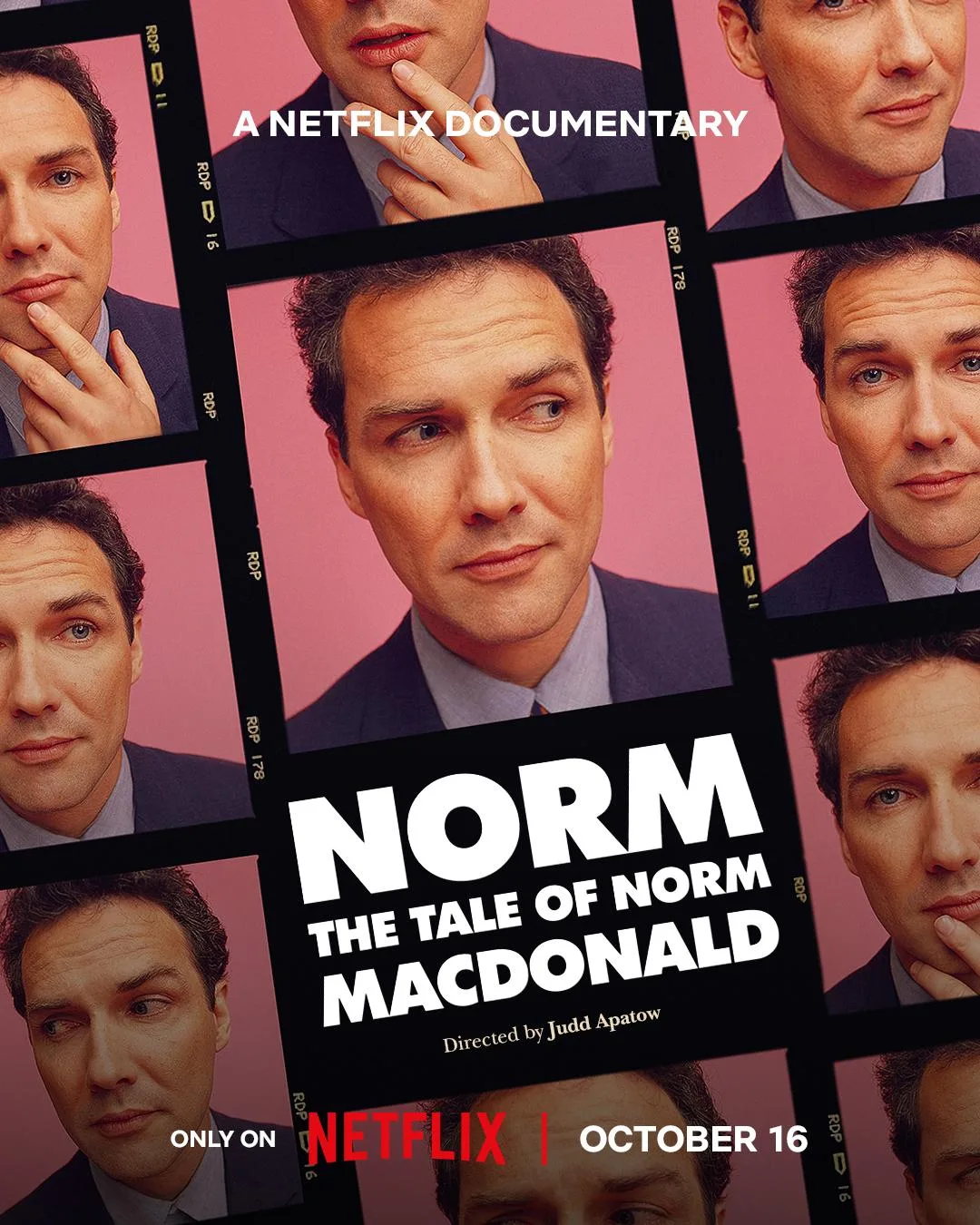
Director Judd Apatow employs a clever framework for the Netflix documentary “Norm: The Tale of Norm Macdonald.” Instead of the usual formula of retrospective talking-head interviews, Apatow compiled “archival footage, personal photos, and rare home videos contributed by fans and friends,” according to Netflix. It’s access combined with crowdsourcing, putting a fresh spin on an already well-documented life and career.
Early on in the documentary, we see a clip of the late Larry King introducing Macdonald as his guest and observing, “Show business has never really found a place to put him.”
Larry wasn’t wrong. Macdonald never really broke through as a film star, though he starred in “Dirty Work,” appeared in “The People v. Larry Flynt,” “Man on the Moon,” and a bunch of Adam Sandler movies, and did voice work for animated movies. His sitcom ran for three seasons on ABC-TV. He was best known for his tumultuous three-year run as “Weekend Update” anchor in the mid-1990s—and for being one of the best talk show guests of all time. Norm’s fellow comics routinely called him the funniest of them all, yet he never achieved the arena-level status of a Seinfeld or a Kevin Hart or a Bill Burr. John Mulaney performed at a sold-out Wrigley Field and killed. You get the feeling Norm would have said, “Wrigley Field? Are ya nuts?”
“Norm” reminds us that first and foremost, Macdonald was a road warrior, “staying at shabby hotels and telling jokes you no longer find funny.” Ah, but those jokes were meticulously crafted gems, often making you squirm a little even as you laughed, e.g., a joke about how Hitler’s dog didn’t know Hitler was Hitler, and loved him unconditionally.
We get the obligatory flashback to Macdonald’s upbringing in Canada on a broken-down farm—but by the time Macdonald moved to Los Angeles in the early 1990s, the mythology of Norm was firmly in place. Did he drink, or not? Was he of Scottish descent, or was he Polish? We see him saying, “I never went to college,” accompanied by clips of Norm at Algonquin College. He would lie about his age (usually making himself older). His “memoir” was in fact a novel. Macdonald’s public persona had a low-key, Andy Kaufman-like performance-art aspect, but it rarely seemed off-putting or aggressively confrontational. You got the feeling he was just keeping himself amused.
The documentary also delves into the darker chapters of Macdonald’s life. Few people knew that as a young man, he had stomach cancer and spent a year recuperating. He had a serious gambling problem, at one point wagering $400,000 on the Falcons against the Browns in an NFL game. We hear Macdonald explaining the rush: “It is a particular moment, a magic moment, that occurs after the placing of the bet and before the result of that bet. Hope is a wonderful thing to be addicted to.”
As you’d expect, “Norm” walks us through the “Weekend Update” controversy, with Norm firing off edgy (and hilarious, and accurate) jokes about O.J. Simpson week after week, which led to NBC president Don Ohlmeyer (a close friend of Simpson) firing Macdonald. We also hear Macdonald’s self-deprecating assessment of his acting: “Actors look on me the way vampires look on Count Chocula.”
Macdonald was diagnosed with leukemia in 2012 and kept his illness secret from all but a few in his trusted circle, to the point where his death in 2021 came as a shock even to some colleagues who had known him for decades. Still, signs showed he was dropping his keep-them-at-a-distance veneer, in his comedy and his sincere embrace of Christianity. “If you want to know if I believe in God, sometimes I do and sometimes I do not,” he said. “Such is faith.” We see footage of Norm with his mother, as he notes, “She lives right beside me.”
In a contemplative mood, Macdonald says, “I think about laughter quite a bit. The biggest laughs you’ll ever hear in life are like at a Thanksgiving dinner with a bunch of loved ones.”
After all those decades of Macdonald mastering the cynical wisecracking persona, it’s lovely to see he was also a man of keen wisdom and a huge heart.