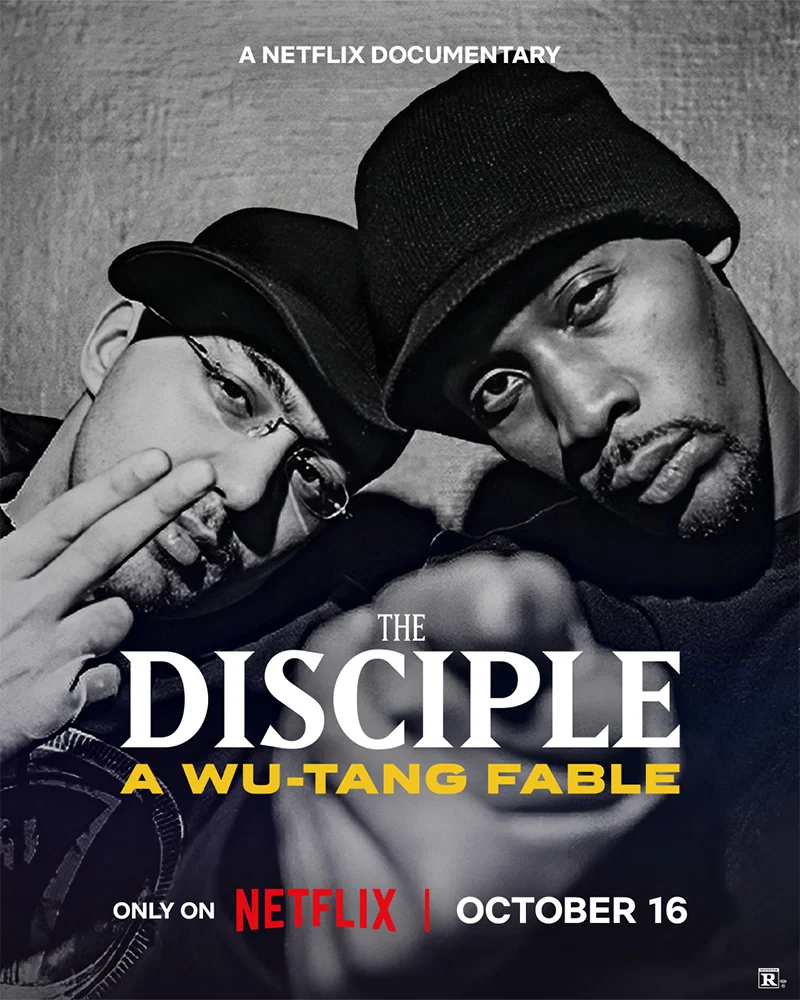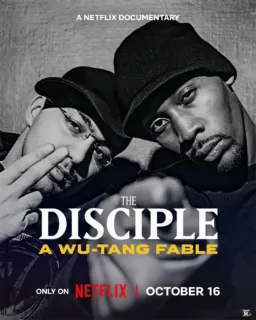

It’s arguable that “The Disciple: A Wu-Tang Fable” intentionally feels like a side project rather than a full Wu-Tang Clan joint. After all, it’s about one of the biggest “Wu-Tang Killa Bees,” artists promoted by and affiliated with the Wu-Empire but not actual members of the Clan, usually artists encouraged and amplified by RZA. One of the most striking elements of Joanna Natasegara’s film is how much it reveals that RZA was more than just the leader of a rap group; he’s a visionary creator and producer, someone who’s honestly invigorated by creative exploration.
The fact that one of those people emboldened by RZA, Cilvaringz (aka Tarik Azzourgarh), went from a Wu-Tang Clan fan to someone embroiled in one of the biggest music production stories in history is inherently interesting. But Natasegara’s approach feels insular and too shallow to really illuminate this story beyond the details of what happened when.
Part of the problem is that Cilvaringz himself remains a bit of a cipher, joking in the film’s best scene about how his ability to blow off severely traumatic events, including child sexual abuse, might mean he’s a sociopath. There’s a movie there: One about how you have to be a little crazy to make One Once Upon a Time in Shaolin. But Natasegara doesn’t dig deep enough or place it in a broad enough context of how hip-hop and capitalism intersect. As a huge Wu-Tang Clan fan, I can’t dismiss this great archival material entirely, but it’s a B-side, not a smash hit.
Let’s start with the end: Once Upon a Time in Shaolin. From 2007 to 2013, Cilvaringz and RZA produced what would officially become the seventh Wu-Tang Clan album, though reports conflict on whether the other Wu-Tang members thought they were making a group project or just featuring on Killa Bees songs. (It would become an issue in the Clan re: compensation, as it’s understandably higher for a Wu album than it is for a guest spot or two.)
In 2015, RZA announced that Once Upon a Time in Shaolin would exist in only one form: a single copy sold with a clause stating it could not be released to the public for 88 years. The idea was to bring the concept of art back to music. There’s only one Mona Lisa. There would be only one Once Upon a Time in Shaolin.
To say it backfired would be an understatement. Fans of a group don’t love being told they can’t afford to even hear a sample of an artist’s work. It got worse when the winning bidder turned out to be one of the most hated men in the world: Martin Shkreli. One of the most interesting stretches of “The Disciple” details a backup plan to get Shaolin to the masses, but it would require a “bit” in which RZA would beat up Shkreli on camera, getting him to agree to sell copies directly to fans. Would people buy an album from someone they hated?
Shkreli himself screwed up this plan by amplifying the beef with the group, talking shit about RZA online as a lead-up to the “attack.” Then he got arrested, and the government seized his assets, including Once Upon a Time in Shaolin. An NFT group called PleasrDAO now owns it, and they’ve been holding expensive listening parties I dream of attending.
While Shaolin is about half of “The Disciple,” Natasegara spends much of the first half of the film on Azzougarh’s background, starting with a story about a racist woman who sics her dogs on him as a child. These personal anecdotes circle back to how Azzougarh’s unflappable commitment becomes both his greatest asset and his fatal flaw. The fact that he made it to a Wu-Tang show and got on stage—and that they have incredible footage of it—speaks to his ability to make his dreams come true. How many RZA fans get to travel the world with him, basically producing the group’s biggest world tour?
And yet that same passion led to the historical oddity that is Shaolin, a Guinness record-holder (the most expensive album of all time) that no one can hear. To the film’s credit, Cilvaringz seems unsure whether it succeeded or failed, and the music industry needs more ambitious ideas. A stronger argument is that everyone who made the Wu-Tang Clan world famous should hear every Wu-Tang Clan recording.
That’s where Method Man seems to fall on the issue, but we only hear him in a few soundbites from 2010s interviews. He likely declined, but the limited focus on “The Disciple” becomes a noticeable flaw. We get a lot of Cilvaringz and a bit of other players like producers on Shaolin and fellow Killa Bee Shabazz the Disciple.
We hear more from RZA’s Shaolin Monk BFF than from RZA himself, who seems to spout wisdom and play chess in black and white instead of really talking about Cilvaringz or Shaolin. Have any of the members changed their minds about Shaolin in the last decade? What does the hip-hop industry think of its production and the issues it raised about what consumers and artists owe each other?
If “The Disciple” doesn’t ask or answer enough of these questions, it’s still entertaining enough, especially for Wu-Tang fans. And it actually features about 10 seconds of Shaolin! The bad news? It sounds incredible.