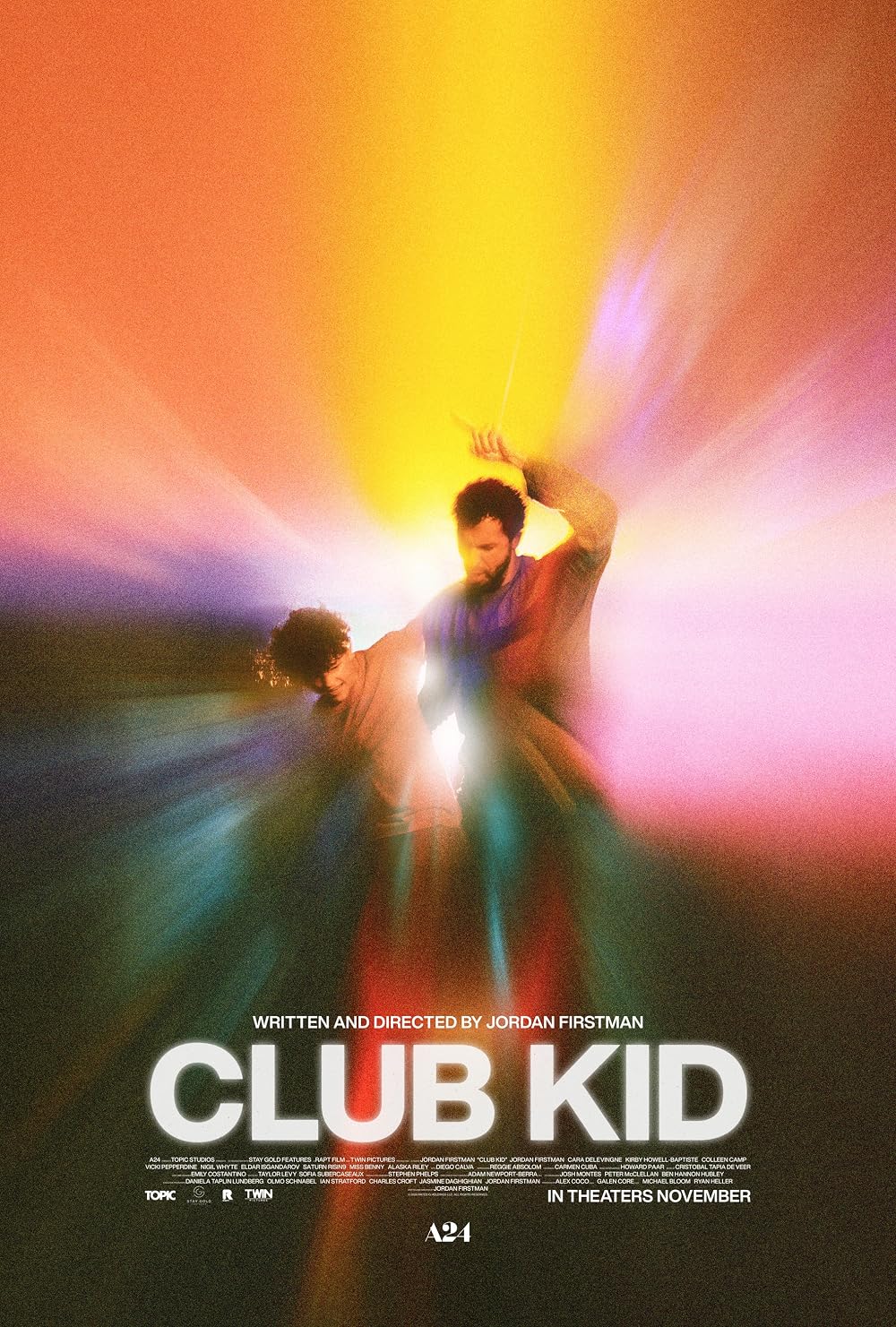

Growing up is hard to do, especially when you’ve made immaturity and irreverence your stock in trade. In the case of Instagram-comedian-turned-filmmaker Jordan Firstman, who’s made a career up to this point lampooning every vapid LA gay guy you’ve ever run into at a circuit party on social media. His work works, at least in part, because you suspect he is that guy, and he’s just a little more self-aware about it. But now he, like his lead character Peter in his directorial debut “Club Kid,” is ready to grow up a little, and it’s a shock that this tonal shift works as well for both character and man.
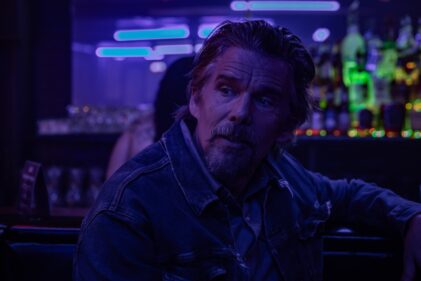
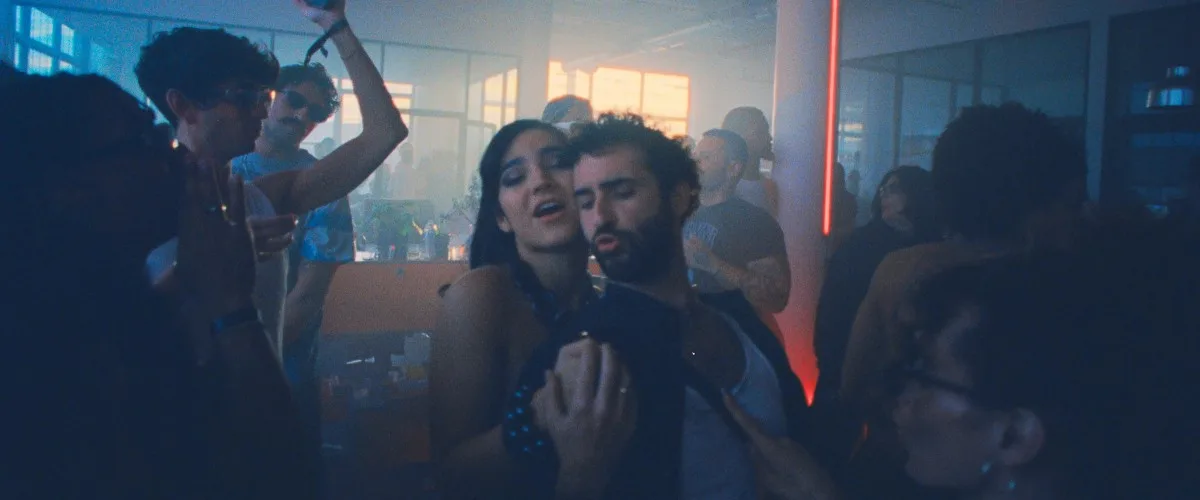
“Club Kid”‘s opening shot drops us into the social tornado that is Peter’s life: in a prologue in 2016 Brooklyn, Firstman mounts a camera in the middle of an Uber van picking up six squealing queer partiers, Peter included, spinning around the cab as they loudly sing along to Rihanna’s “Sex With Me.” It’s whirling and disorienting, and that feeling continues as cinematographer Adam Newport-Berra follows them into the underground party they’re headed to. Neon lights wash over undulating bodies as loud, thumping dance music plays over their barely-heard dialogue. The whole thing feels evocative of the lost-time feeling of being on ketamine. Indeed, that’s what happens with Peter, as he’s pulled into a darkroom threesome involving a British woman that he’s just met that night; he’s gay, but it’s clear his male hookup wants her to join, so he relents.
Cut to ten years later: Peter’s still the same guy, just a bit more worn out by his party-promoter lifestyle. He lives in his spacious, rent-controlled Brooklyn apartment with a freeloading twink from Azerbaijan named Nicky (Eldar Isgandarov, a droll highlight), who promises he’ll start paying rent as soon as he can find a six-figure job as a philosopher. But his K-hole lows finally cause an irreparable rift with fellow promoter Sophie (Cara Delevingne), who summarily kicks him out of their business after he shows up faded to an important business meeting. It’s clear something needs to change, and our thirtysomething club kid needs to grow up.
Cut to an inciting incident straight (well maybe not straight) out of Adam Sandler’s “Big Daddy“: Edison (Kirby Howell-Baptiste), the best friend of the woman from the prologue, pops up out of nowhere with Peter’s broccoli-haired ten-year-old Arlo (the adorable Reggie Absolom) in tow. The mom died by suicide, and now it’s Peter’s job to take care of him. Before he knows it, Edison has dipped, and Peter must contend with the seventy-pound bundle of adult responsibilities that have just dropped in his lap.
From here, “Club Kid” swerves hard (though not too hard) from the sweaty, acerbic tone of its first act, in which Firstman preens and cattily quips his way through interactions with his queer brethren and sistren, into something decidedly sweeter and more effervescent. Granted, it’s hard for an old queen to learn new tricks, and Peter struggles at first to figure out what to do with the kid (“You like pizza?” he asks, before taking him to a pizza joint that leads to Arlo puking in the bathroom, and Peter hilariously sympathy-puking on Arlo’s hair; hello, lactose intolerance).
But the most refreshing part of this spin on the formula is that Arlo isn’t bratty, difficult, or even temperamental; he’s sweet as sweet can be, and a pretty chill hang. He knows Slipknot and The Cocteau Twins, and because he lived in London near other party monsters, he’s very cool with the queer and trans folks who barge into Peter’s house looking for a party. “I like dolls,” he tells several of Peter’s trans friends, who are thoroughly charmed. “When’s the last time you saw a kid?” another clubgoer asks. It’s a clever jab at the child-free insularity of the party scene, occupied by lifers whose major life ambitions at this point seem to be DJing.
But to their credit, none of Peter’s friends try to corrupt Arlo. Instead, they bring him into their confidence and meet him on his level. There’s no culture clash, just a welcome adjustment, and so much of “Club Kid”‘s warmth comes from seeing a community rally around Peter in unexpected ways.
As both writer and director, Firstman manages these tonal swings with remarkable alacrity for a first-time filmmaker. Newport-Berra’s shot-on-film naturalism captures New York City skylines with the same bright-eyed romance as he does the perspiring, thumping confines of Peter’s parties. And Firstman himself delivers a fine, layered performance, with something in his eyes that suggests Peter (and perhaps Firstman as well) is ready to grow up, and he’s just going to fuck up massively along the way. When father and son trade their first “I love you”s, it feels earned, and Firstman and Absolom have chemistry rivaling Joaquin Phoenix and Woody Norman in that other reluctant-dad-figure film from a few years back, “C’Mon C’Mon.”
It’s not all roses, and “Club Kid” stutters a bit when the hangout vibes of Peter’s growing dadhood clash with the expected hurdles of this type of story. Diego Calva brings welcome chemistry as Arlo’s social worker/Peter’s love interest, but beyond a few scant scenes of flirtation, we don’t see much of their love story. And the second-act low comes both expectedly—Arlo’s fuzzy immigration status offers the predicted barriers to Peter and Arlo’s future happiness—and abruptly, bringing the party to a screeching halt in ways that feel as unsatisfying for us as they do to Peter (even if his hail-mary courtroom speech does bring a tear to the eye).
These minor quibbles aside, “Club Kid” works remarkably well as a functional, heartwarming coming-of-age story and a case study in Firstman’s ability to transition from influencer to actor to filmmaker. (He also charmed, of course, as versions of himself in “Rotting in the Sun” and Rachel Sennott’s delightful “I Love LA“.) There’s a temptation to accuse this film of criticizing urban circuit queers of being perpetual drug-addled children who don’t have their shit together, but “Club Kid” manages to find the silver linings of queer community that can accommodate something like parenthood into its orbit. Like Peter, Firstman is trying to grow up without losing who he is in the process.
This review was filed as part of our coverage of the 62nd Chicago International Film Festival. Releases in theaters November 6th, courtesy of A24.