Busan has several major sections. The biggest, of course, is its Main Competition. Next is its Vision section, split into two geographic categories: Asia and Korea. Both are meant to uplift filmmakers, typically on their first or second film. This dispatch concerns a trio of works from the Asia vertical. Two hail from India; one comes from Vietnam. All of them extol unquestionable vitality.
One of Busan’s great discoveries is Shashank Walia’s sumptuous, swooning queer political romance “Birds in the Dark,” which won the festival’s Songwon Vision Audience Award.
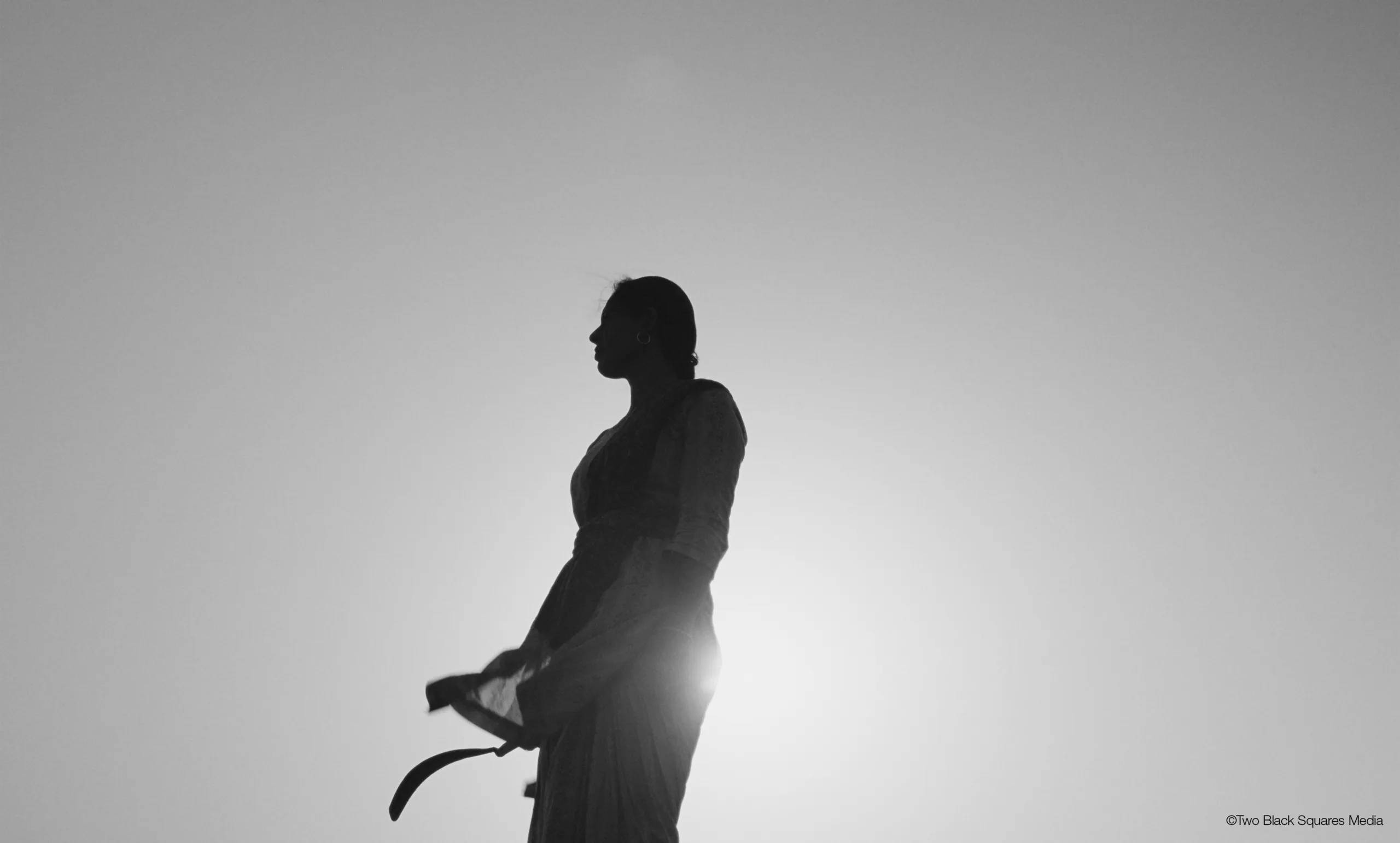
The film begins on an arresting note: From a low angle, we see a serene Jagtar (Harwinder Singh Aujla) smoking, a shackle hugging his wrist, a cigarette resting on his lips, and the sun piercing the trees of this Indian forest to kiss his cheeks. His prisoner, Amir (Shahnawaz Bhat), lies beneath him, using his book bag as a pillow. In Walia’s overwhelmingly poignant black-and-white photography, he’s a cinematographer by trade, and the power dynamic is alluring.
As Jagtar drags Amir past dense thickets and imposing trees to a ramshackle bus, we don’t know whether he’s a cop, a bounty hunter, or what Amir’s offense could possibly be. We do, however, see the two men grow closer. The film’s title card hits at the thirty-minute mark, cementing the director’s assured control.
An undisclosed amount of time passes from Jagtar and Amir’s first meeting to the former’s return to his village and family in rural Punjab. Once a landowner, Jagtar’s property was seized by the bank, so Jagtar left in hopes of becoming a cop, only to find work as a paid informant. He re-immerses himself in his old life with friends and former flames: Raman (Navdeep Bajwa), the wealthiest man in town, was his lover; his best friend, a landless woman (Mauli Singh), wants to organize a farmer collective against exploitative, patriarchal landowners who target these workers’ wages and bodies. Amir, an Agrarian socialist from Kashmir, arrives just in time to rekindle his romantic spark with Jagtar and advise the villagers on collective action.
Spanning a year, with chapters divided by the seasons, “Birds in the Dark” moves with the propulsive energy of change. In wide panoramic shots, Walia juxtaposes the divergent treatment of vast fields: half the land is tended by hand with scythes, while the other half is mowed by industrial tractors. Many of the characters, those of a lower caste, define new roles for themselves as organizers, and Jagtar considers who he loves and in what settings he can express those ardent feelings. Engrossing and heart-shaking, “Birds in the Dark” lands with remarkable precision and soars to incredible heights.

In Tamil director Sailesh Rathnakumar’s angsty woman-led melodrama “Selvi,” the film’s guilt-ridden protagonist contends with her best friend’s eroding mental health and her own secret role in that pain. Nevertheless, the film begins with almost too light a touch. Selvi (Anjali Patil) and her roommate Kavitha (Swathy Krishnan) fly kites on the beach when their other two flatmates arrive to celebrate Selvi’s birthday. Rathnakuma wraps the scene in a pop sheen, complete with a girl-ballad needle drop.
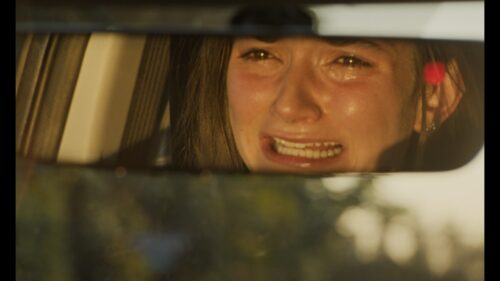
That dreamlike bubblegum tone suddenly dissolves into something meatier when, later, Selvi’s roommates find Kavitha crying; she’s attempted suicide due to her boyfriend Purushothaman (Vinoth Kishan) breaking up with her. While she convalesces in bed, trapped in a mourning fugue state, Selvi picks up her shifts. The pair are overworked in-home nurses whose agency expects much of them but gives little in return.
The strain of working doubles on behalf of Kavitha—which includes tending to an older man (Raja Krishnamoorty) with dementia whose demanding, affluent daughter-in-law lords over Selvi—is exacerbated by Selvi’s studying for her exam, which will offer her a chance to be a nurse in Singapore, the health of her father, and Kavitha’s ex-boyfriend’s persistent phone calls.
Rathnakumar’s film, which won the festival’s Hylife Vision and Taipei Film Commission Award, rests on Patil’s exhaustive performance, as she often fights the overly twitchy score to find contours for a woman carrying a weight that’ll never dissipate. Patil conveys this woman’s stress through vacant eyes and a bent posture that matches the shape of her anguished spirit.
Within her personal struggle, Rathnakumar observes the divide between rural and urban life and the emotional and physical exploitation of this caregiving profession, but one quickly senses that these themes find life more through an exceptional Patil than the conventional storytelling around her. Through her efforts, “Selvi” remains fixed in the mind and nailed to the heart.
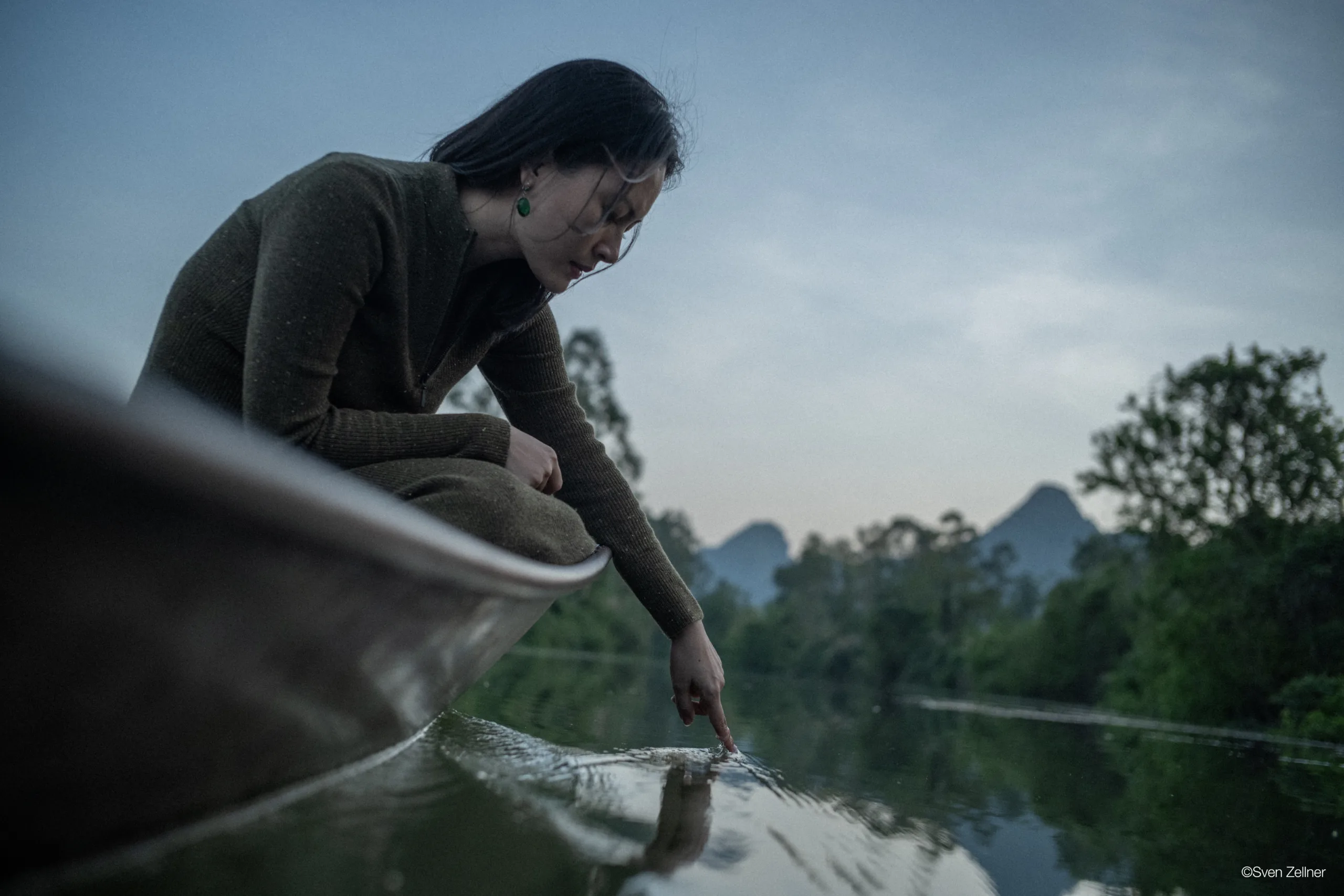
Deeply personal yet achingly hypnotic, Nguyễn Hoàng Điệp’s “1982” explores the uneasy line between creation and destruction. It follows Yen (Đỗ Thị Hải Yến), a bankrupt independent director who, along with her siblings, tries to care for her mother (Chiều Xuân), who has dementia. On the one-year anniversary of their father’s death, however, their mother suddenly and mysteriously vanishes. The three siblings band together to find her, though one might question how intense their efforts are.
They all have money problems: the spoiled youngest sister (Thùy Anh) is on the run from creditors while their only brother (Nguyễn Trường Khang) is expecting a child with his fiancée. Meanwhile, Yen is desperate to make one last film before her career slips away. Their mother’s home is worth quite a lot. You can connect the dots.
Yen’s artistic worries are somewhat inspired by Điệp’s own career. Yen, once a rising filmmaking star, made a movie a decade ago that earned her acclaim at international film festivals around the globe. She had to pause her pursuits two years later when her father’s health began failing. In this film, we see her attempting pre-production on several projects, including casting a film about Tet and a documentary about Quan họ singers, but nothing comes close to starting, let alone nearing completion.
A little over a decade ago, Điệp’s “Flapping in the Middle of Nowhere” drew similar attention, launching her to Venice and AFI Fest. She hasn’t made a feature until now. In the film’s post-screening Q&A, Điệp also revealed the film is also a love letter to her real-life mother.
However, moments in “1982” appear to defy definition. Idiosyncratic cuts weave viewers in and out of perspectives, the past and present, and dream and reality as authorities investigate what happened to their mother. Religion further muddies our perception as well, immersing us in sensorial rituals that reveal the painful truths these characters are hiding.
Yet the film’s most galvanizing moments arrive whenever Yen expounds on the obstacles to making a new film and the spiritual rot that grows from that creative void. In one of this film’s many fourth-wall breaks, bathed poetically in natural light, Yen lifts a beer to the audience and toasts us with the declaration: “Viva cinema!”
If “Flapping in the Middle of Nowhere” concerns the tension between money and life’s beginning, then “1982” is deeply conscious of money, not only life’s end but also the end of a career. And while it’s not always altogether clear if the film’s many tonal digressions all land with equal footing—though an early scene where a mysterious black-clad woman shows up with a taxidermied Bay cat is a notable finger-snap highlight—the deep excavations of Điệp’s apprehensions bind together some of the more disparate scenes into a cathartic ode to the power of cinema.