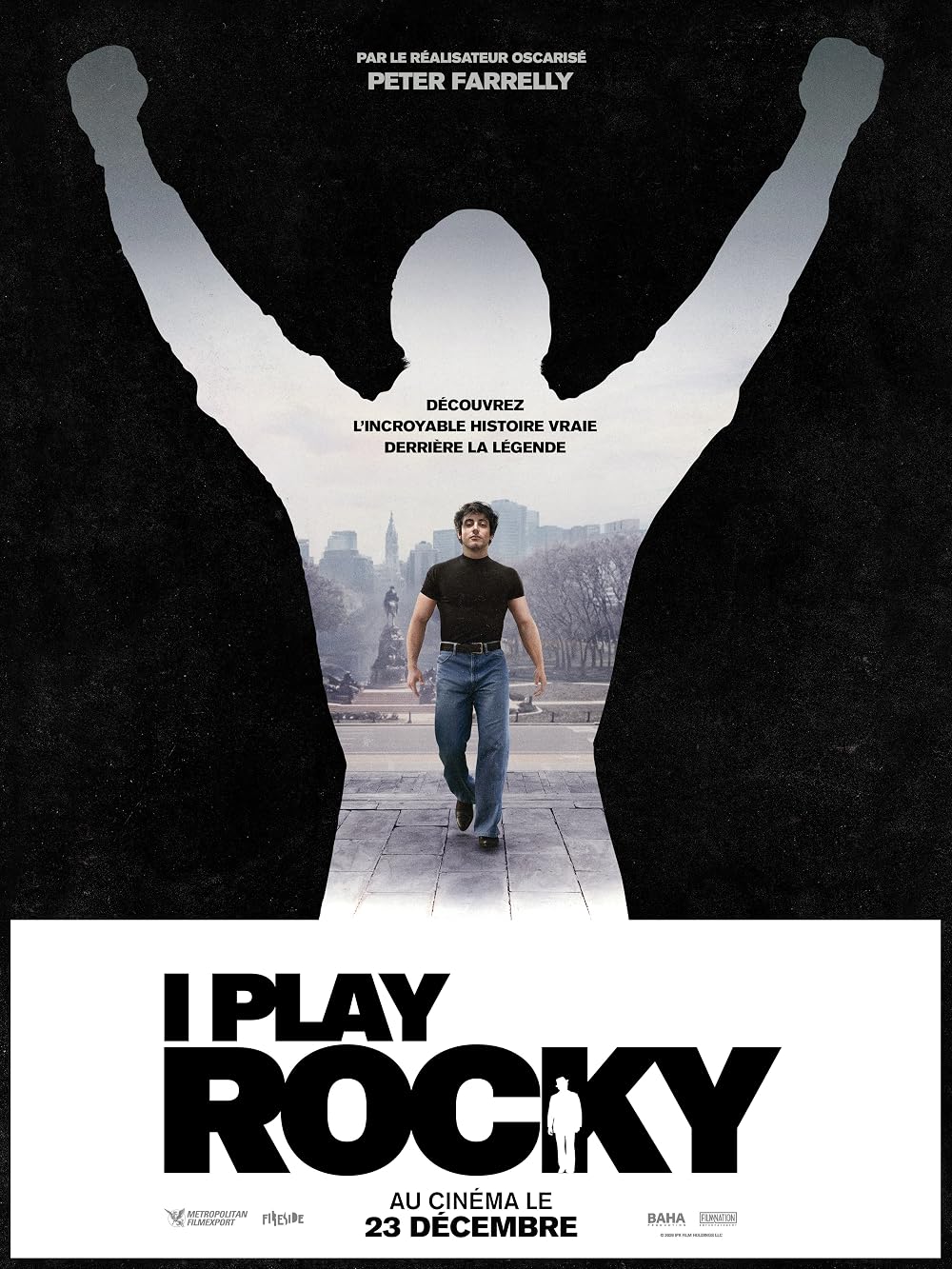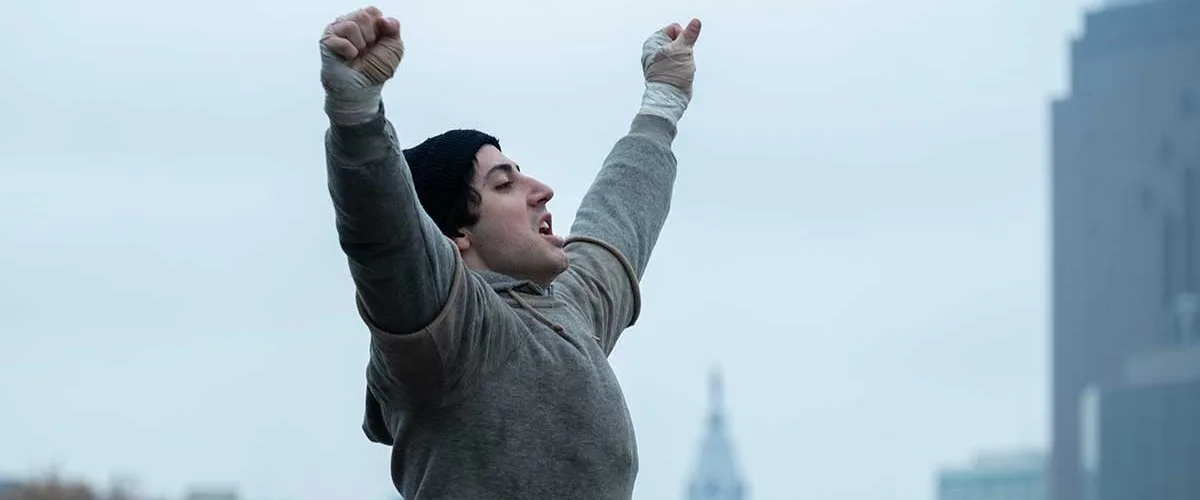
Peter Farrelly’s “I Play Rocky” uses the generation-spanning love for John Avildsen’s classic underdog tale “Rocky” as an emotional right hook, and that’s not necessarily as critical as it sounds. For about an hour, it’s an impressively made dramedy that mirrors the story of Rocky Balboa in that of the man who brought him to life: Sylvester Stallone. As Stallone battles homelessness, finds love, and writes his way into a cultural phenomenon, Farrelly and his team land their punches in remarkably crowd-pleasing ways.
Sure, some of the stretch wherein Stallone had to sell his dog to pay the bills and do soft-core porn so he didn’t starve is definitely softened for mass consumption, but an engaging performance goes a long to make this one of the most likable hours of Farrelly’s career. The second half of “I Play Rocky” will be even more effective for the serious Balboa-heads, but it feels a little cheaper to this viewer. As the film about the film gets to the behind-the-scenes drama behind iconic moments, “I Play Rocky” starts to feel a little easy, counting on love for the 1976 film to do the cinematic lifting for the 2026 one. In essence, it’s like a concert wherein the band plays some engaging new tunes for a set before turning to a collection of covers of greatest hits. You’ll tap your toes and sing along, but mostly because you liked them the first time. Of course, there’s some fun stuff even in the encore section, especially one great B-T-S detail and a fun supporting turn, but the ambitious character study of a man who believed in himself gets a little lost.
Throughout, newcomer Anthony Ippolito disappears into a star-making role. It’s remarkable how much what feels like an impression in the first two scenes or so quickly fades into something genuine. It’s mere minutes into the movie and you’ve forgotten that you’re watching someone who clearly studied the vocal patterns and tics of one of the biggest stars of his era but there’s heart underneath it; it just feels like Sly. It’s truly hard to overstate how important Ippolito’s work is to the general success of the piece, especially early. He doesn’t just make easy choices; he’s playing a character. And this character is a guy who wants to be an actor, and maybe a writer. He goes on auditions for parts like “Thug #2,” and dives into the persona of the Italian Stallion when he becomes so broke that he lives on the street. He finds a stray dog that he names Butkus because of his resemblance to the football star Dick Butkus, but the dog is also kind of a stand-in for Sly: Rough and tough, but also sweet and adorable.
It’s those latter qualities that attract fellow movie theater worker Sasha Czack (AnnaSophia Robb) to Sly. She’s drawn to how much he’s not what he seems on the outside. The tough guy hides a heart of gold and a deep intelligence. She’s even the one to suggest that he stop using “Mike” as a pseudonym; Sylvester is much better. After they move in together, Sasha starts typing up Sly’s scripts for him, which he writes longhand. One of those scripts falls out of his heart in 3.5 days. It’s called “Rocky.”
Working as a valet at a fancy L.A. eatery gets Sly closer to the producers that would change his life. After an initial meeting leads to a bit of a letdown, Sly drops one of his scripts on the desk of the receptionist for Irwin Winkler (P.J. Byrne) and Robert Chartoff (Toby Kebbell). They like it enough to suggest he come back with something more, and that’s how “Rocky” ends up on their desk. They flip for it, but studio head Sandy Maddox (Tracy Letts, at his hysterically profane best) insists that his producers must get a star. Maybe Ryan O’Neal? How about Burt Reynolds? Imagine how different movie history would be. Stallone bets on himself, refusing a writer’s fee that increasingly rises to north of $300k (in 1976 dollars) because he demands to play the lead in what he says is his story, even if he eventually reveals he doesn’t even know how to box.
Screenwriter Peter Gamble also lays a foundation of daddy issues behind Sly’s choices. A heavily made-up Matt Dillon plays Frank Stallone, Sr., Sylvester’s awful father, a man who beat his son and never supported him even after the kid was big enough to fight back. It’s almost as if Stallone is so insistent on playing the part of Rocky because his dad never believed in him, forging an almost irrational belief in himself.
Of course, we all know the history. Sly eventually got what he wanted, but it came with insane caveats like the fact that the shoot couldn’t go a day over schedule or a penny over budget. If it did, he would be replaced by Maddox. Jay Duplass drops into the movie with a wickedly fun performance, portraying the legendary Avildsen as a ‘70s wild card, someone who almost admires Sly’s determination because he’s so used to be the biggest maverick on set.
Despite the nice turn from Duplass and effective work from Kiki Seto as Talia Shire, it’s when production starts that “I Play Rocky” loses some crucial creative momentum. After being a partner on his journey to getting that big contract, Sasha basically disappears, and the film starts to feel like a repetitive series of items that would help you win “Rocky Trivia” at the bar. Did you know that the slabs of meat punched by Rocky were frozen, leading to some broken knuckles? Did you know that neither Talia nor Sly knew how to skate, which was discovered on the day of shooting that big scene? Arguably the best trivia about the production is how Grant Bader launched his Steadicam to help the production meet its impossible schedule. Watching how he literally ran up the stars with Sly to get one of the most iconic scenes of the ‘70s is movie fan catnip.
So much of “I Play Rocky” works from that kind of template: Amplifying the adoration of beats from the original and the life of the star who made it. It’s hard to believe this would work for people who don’t know “Rocky,” or, worse, don’t even like it. Luckily, for the producers of a movie that is likely to do very well, especially with people Gen X and older, there aren’t many of those people out there.
This review was filed from the premiere at the Toronto International Film Festival. It opens on November 6, 2026.