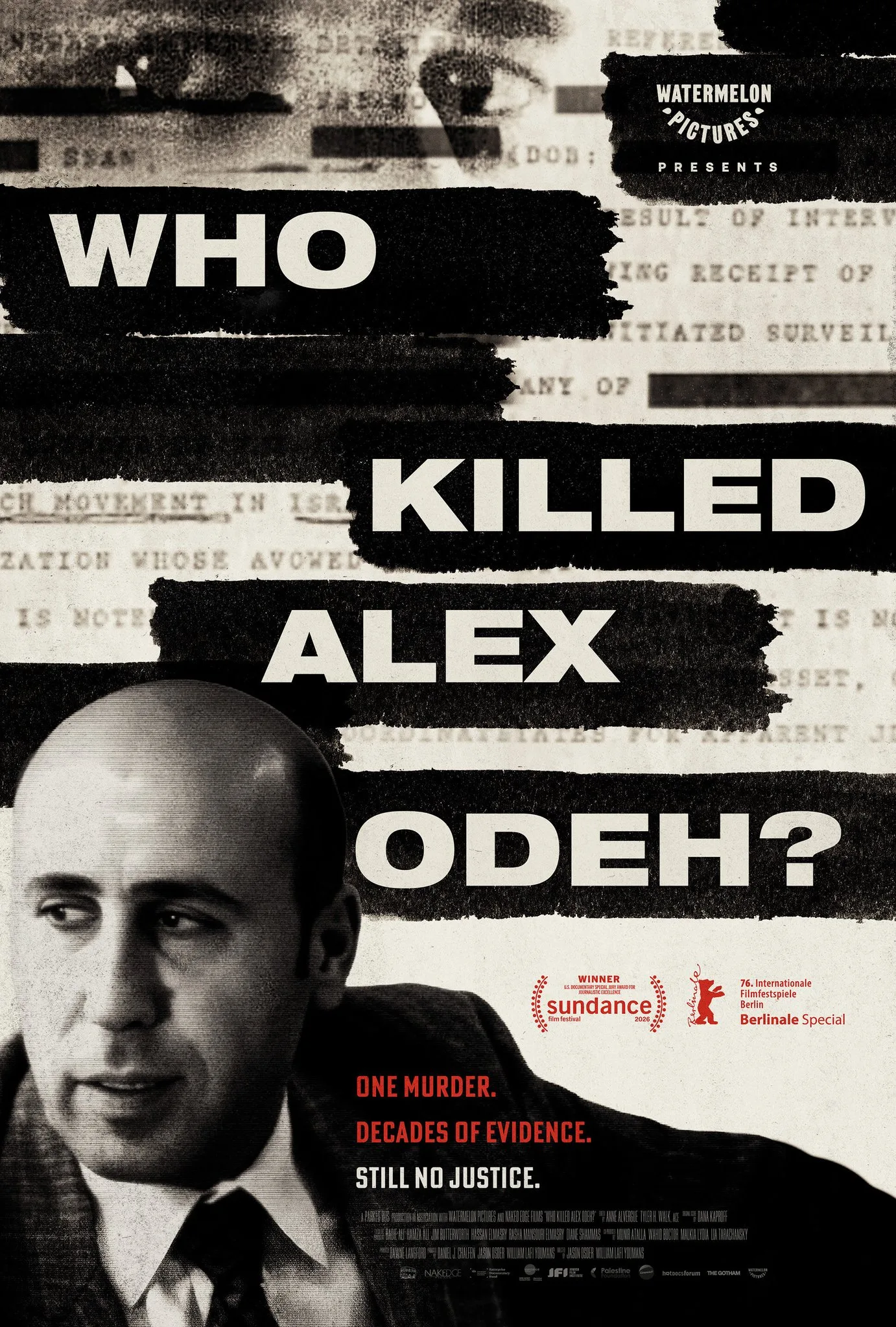
As the genocide in Gaza rages on, the decades-long conflict between Israelis and Palestinians has also been fought on the battlefield of documentary. But where docs like “No Other Land” and “NAZA” are laser-focused on the immediacy of Israel’s occupation of the West Bank and the actions taken by the IDF against Palestinian men, women, and children, Jason Osder and William Lafi Youmans’ doc “Who Killed Alex Odeh?” centers on a decades-old example of anti-Palestinian terrorism that reminds us that these conflicts are far from new, nor are they confined to the borders of those nations.
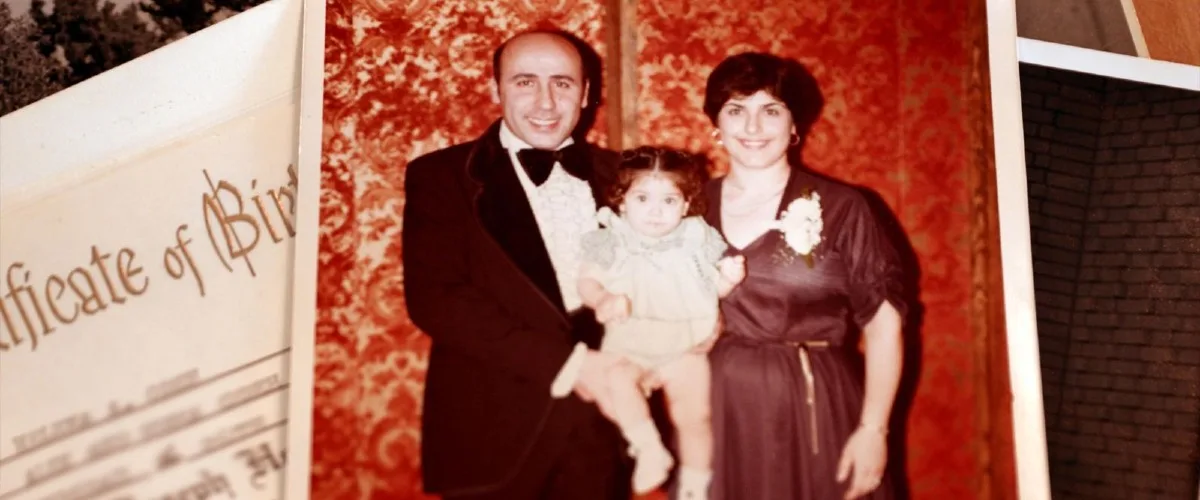
On October 11, 1985, a tripwire bomb exploded at the office of the American-Arab Anti-Discrimination Committee in Santa Ana, California. The blast notably killed Palestinian-American poet, speaker, and activist Alex Odeh, who had made it his life’s mission to advocate for Palestinian rights and safety, while also opening his doors to interfaith peace and resolution of the Israeli-Palestinian conflict. It was a devastating loss, one that the FBI vowed to Odeh’s widow, Norma, and daughter, Helena, that they would solve. Forty years later, the family still has no justice.
And so comes this documentary, which vacillates between a true-crime-esque investigation of Odeh’s death and who’s responsible and a heartfelt portrait of a family trapped in grief due to political forces. Perhaps the greatest spiritual frustration of “Who Killed Alex Odeh?” is that the question in its title is treated as rhetorical; we know who killed Alex Odeh, or at least, the filmmakers and Israeli activist journalist David Sheen seem to have an idea. Nevertheless, throughout the film, we see the many ways the FBI and Israeli intelligence have failed to act on this information—purposefully, the doc argues—on political grounds.
Osder and Youman’s approach is familiar to anyone who’s seen any worth-their-salt Errol Morris-inspired crime documentary: There’s the archival footage, the mournful talking-head interviews, the omnipresent scare-music score by Dana Kaproff. The pair methodically set down their case in the first act, showing the last days of Alex Odeh’s life and his public comments on the 1985 Achille Lauro hijacking (essentially expressing sympathy for the Palestinians who resorted to terrorism, even as his condemnation of such methods didn’t make the final news broadcast of his remarks), as well as Norma and Helena’s grief-filled ache that Alex’s killers haven’t found justice.
Then the film turns to Sheen’s work, and “Who Killed Alex Odeh?” becomes a journalistic thriller of sorts, one that knows the three suspects it wants to work on—Robert Manning, Keith Fuchs, and Andy Green—and goes down the list, man to man, to see where they can find them. Along the way, Sheen employs some intriguing, suspenseful tactics: A cursory LinkedIn search leads him all the way to an undercover fact-finding mission to Fuchs’ house in the West Bank, where he masquerades as a Zionist hoping to get Fuchs in a conversation captured on camera to confirm his identity. Another sees Sheen calling a retired detective who worked the Odeh case in his heyday, who casually drops anecdotes about how Mossad and the US attorney’s office told them not to pursue these known suspects. Sheen’s jaw drops at this info; it’s hardly the “Navalny” phone call in terms of journalistic heft, but it’s certainly surprising.
More than these lurid moments of investigative journalism, though, “Who Killed Alex Odeh?” offers its most enlightening points when charting the history of Israeli extremist terrorism and its connections to US-Israeli relations. Smack dab in the middle of all this is Meir Kahane, a radical rabbi who served as the founder of the Jewish Defense League, a group of militant Zionists who internalized their leader’s deep anti-Palestinian rhetoric (“There is a cancer that exists, and you can’t coexist with cancer”) and gathered in training camps to prepare to take action against their enemies. Kahane was eventually assassinated in 1990, five years after Odeh’s death; this merely seems to have martyred him, and a sect of religious extremism called Kahanism has taken hold, especially, the doc claims, in Netanyahu’s cabinet.
It’s striking, haunting stuff, stark reminders of the virulence of such religious hatred, which ripples out from its Reagan-era political roots into the bloody present. What keeps “Who Killed Alex Odeh?” from greatness, though, is its demonstrative form, with scattershot pacing and an eagerness to land emotional points with the weight of a pipe bomb. Odeh’s family, the ones who most want justice, is lost in the rubble for long stretches; Helena checks in with Sheen every so often, but otherwise we don’t get enough insight into the many ways these women grieve their loved one. (Especially as the government blows them off for four decades, despite arguably knowing exactly who to bring to justice.)
The moments that check in with Norma and Helena, who still mourn Alex and work to preserve his memory, and with Osder and Youmans, who remember the emotional core of this story, bring the story’s emotional center into focus. “Who Killed Alex Odeh?” is a question that can only be half-answered: We pretty much know who did it, and international politics demands that nothing be done about it. The filmmakers can only make this miscarriage of justice even harder to ignore. And in a world where the conflict in Gaza is now in its fourth year, it’s vital to remember that these are but the latest salvos in a religious conflict that has boiled over for generations. For Alex’s sake, and the family he left behind, one can only hope that peace is possible.