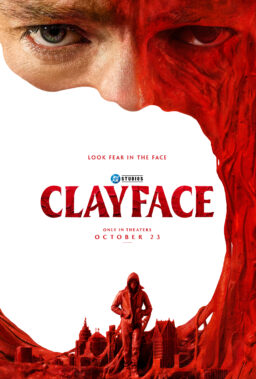
As much as “Joker” drew on Scorsese films like “The King of Comedy” and “Taxi Driver,” DC’s “Clayface” mirrors David Cronenberg’s body-horror classic “The Fly,” right down to a love affair doomed by melting body parts. It turns out “Cronenbergian” is harder to pull off than it looks because the mushy problem at the core of James Watkins’ origin story for one of Gotham’s most memorable villains is a complete lack of consistency regarding its themes or even how viewers are supposed to feel about its protagonist. You can’t just give viewers the ooey-gooey stuff; you have to put something behind it, or it’s just slop.
Is this a classic Icarus tale? A variation on so many myths about what happens when one plays God? Is it a commentary on the vanity of the celebrities a la “The Substance”? Could it even be a cautionary tale about the perils of A.I.? It’s a bit of all of these things, but also none of them. Talented writers Mike Flanagan and Hossein Amini (“Drive”) likely fell victim to the blockbuster machine, one that sands the edges off complex characters and themes until all that’s left is defiantly shapeless.
Matt Hagen (Tom Rhys Harries) is Hollywood’s newest It Boy, a handsome actor who appears on late-night TV and learns on the set of his latest sure-to-be hit production that he’s an Oscar nominee. After that career-defining nod, he heads out to Gotham’s hottest club, Vesuvius, where he dances with the sexiest woman on the floor, Mia Torrez (Joana Ribeiro), and takes her home that night. He barely hears from his BFF, Corey (Joshua James), that Mia is the go-to girl of local tough guy Markos Szabo (David Dencik), a Kingpin-esque character who has everyone on his payroll and a violent mean streak. He’s not the kind of guy you want to see when you wake up next to his naked girlfriend.
Szabo goes to work on Matt’s most precious asset: his gorgeous kisser. After mutilating his entire face to the degree that he’s nearly unrecognizable, Matt watches as his entire life falls apart. His agent dumps him, his manager (Eddie Marsan) embezzles him, and even his buddy Corey ends up with the roles that should have been Matt’s. Hagen tracks down a scientist named Caitlyn Corr (Naomi Ackie), who developed a nanocell technology that could repair the wounds that deformed this Chalamet wannabe. Of course, everyone knows how that’s going to go except for Matt and Caitlyn.
At first, the treatments appear successful: Matt even stuns on the red carpet for a movie that he was once attached to star in. And right here is where “Clayface” makes a choice to, well, not really make a choice. Matt running back to the red carpet immediately needs to have an impact, or say something about how we overvalue fame, but it’s one of many places where Flanagan and Amini refuse to sink their teeth into any potential thematic development.
As Matt’s face starts to fall apart, he first becomes a tragic figure: Someone who was mutilated, abused, and discarded by a system that uses other weapons than switchblades to do that to rising stars every day. But he just as quickly becomes a villain on the run. Is he being controlled by his vengeance or the technology coursing through his system? Or might he have always been a sociopath? (There’s no hint of that here, but it would have been way more interesting if there were.)
As quickly as themes rise, “Clayface” punches them with an oversized fist and simply becomes a vengeance thriller, complete with a cop (an effective Max Minghella) who becomes suspicious of how everyone in Matt’s world is turning into bloody mush (and who happens to be engaged to Caitlyn). It turns out that an overdose of Corr’s treatment has made Matt into a chameleon, someone who can not only take on anyone’s appearance but use his malleable body as a weapon.
While this can all get inventive in the Quality Kills department, it becomes remarkably hollow narratively. Should we cheer on Matt’s violence? Even Harries and Watkins seem unsure how to frame Matt’s journey, leading to an inconsistent performance, especially in the film’s final scenes as Matt makes choices that simply don’t emotionally fit with how this character was developed.
It doesn’t help that so much of “Clayface” lacks the visual language of the best of this universe, giving up on atmosphere and never looking like it takes place anywhere but on a backlot. Similar “dark” DC projects like “The Batman,” “The Penguin,” and even “Joker” feel like they exist in three-dimensional worlds of grit and danger. To say that visual tension doesn’t exist here would be an understatement; it’s just another aspect of the film that lacks in confidence. This might be the dullest vision of Gotham yet put on film.
“Clayface” ultimately gets to a few memorable set pieces, including a series of violent deaths in Vesuvius that might offer enough “ooh” moments to satisfy hardcore DC fans. And it’s always nice to see major studios explore the world of comic books in a way that doesn’t always center the same iconic heroes and villains. DC has found a lot of creative and commercial success with projects like “Lanterns” and, of course, “Joker,” projects that took risks, and projects that had strong POVs. A movie shouldn’t spoon feed you its themes, but it also needs to put more than misshapen mush on your plate.