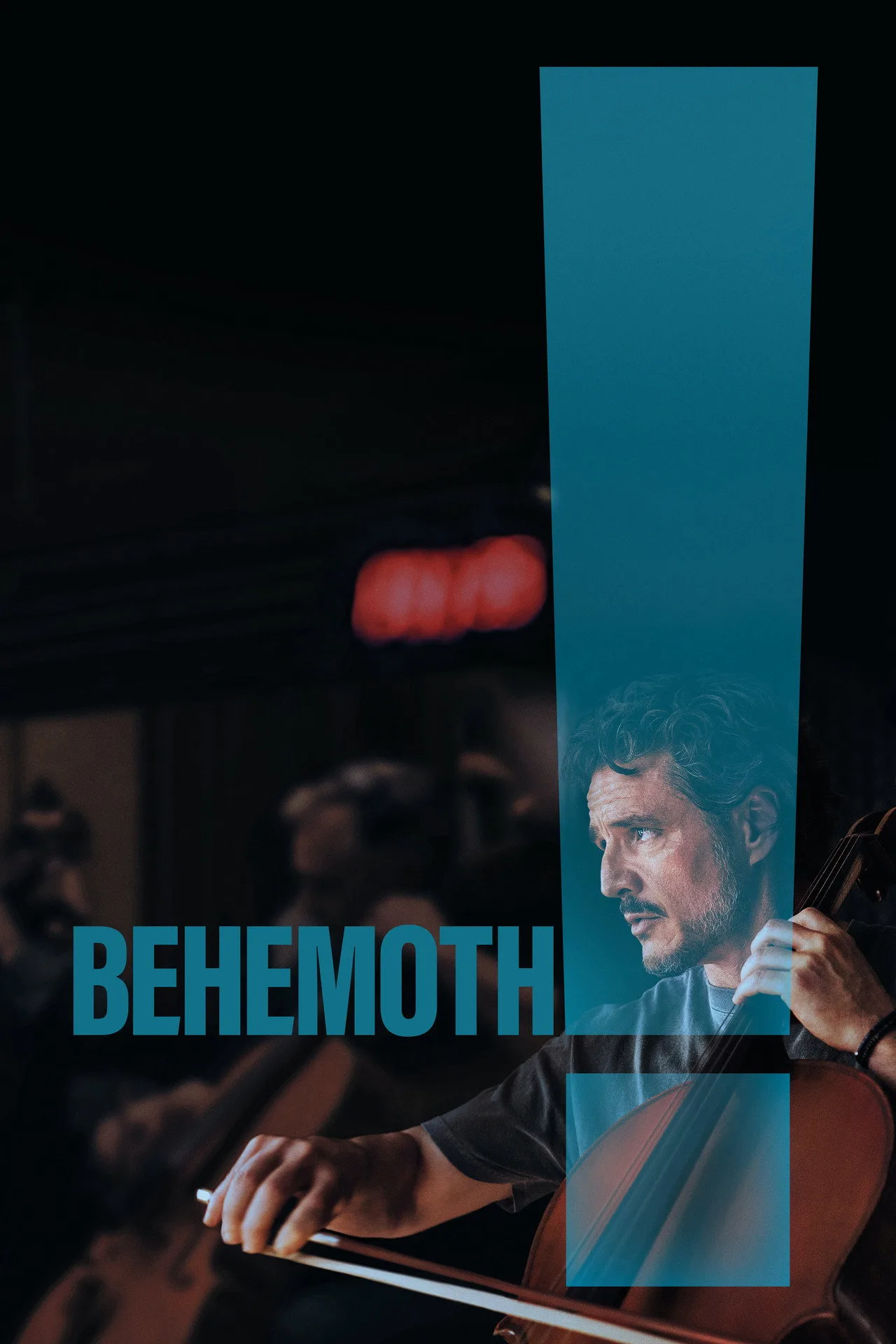
Tony Gilroy’s “Behemoth!” is more of a piece of a classical music than a traditional drama, ebbing and flowing through themes and memories in a manner that can feel a bit narratively shapeless as the “Michael Clayton” writer/director seeks emotional truth more than simple storytelling. While some have complained about the film’s structure since its NYFF premiere, the movie actually works best when it leans into an almost Malickian dream language, echoing late projects about middle-aged men seeking truth through memory, art, and faith like “The Tree of Life” and “To the Wonder.” Gilroy often finds himself stuck in a valley between this kind of poetic, musical structure and a more straightforward character study. Lucky for him, he has the best film work to date from “The Last of Us” star Pedro Pascal to hold them together.
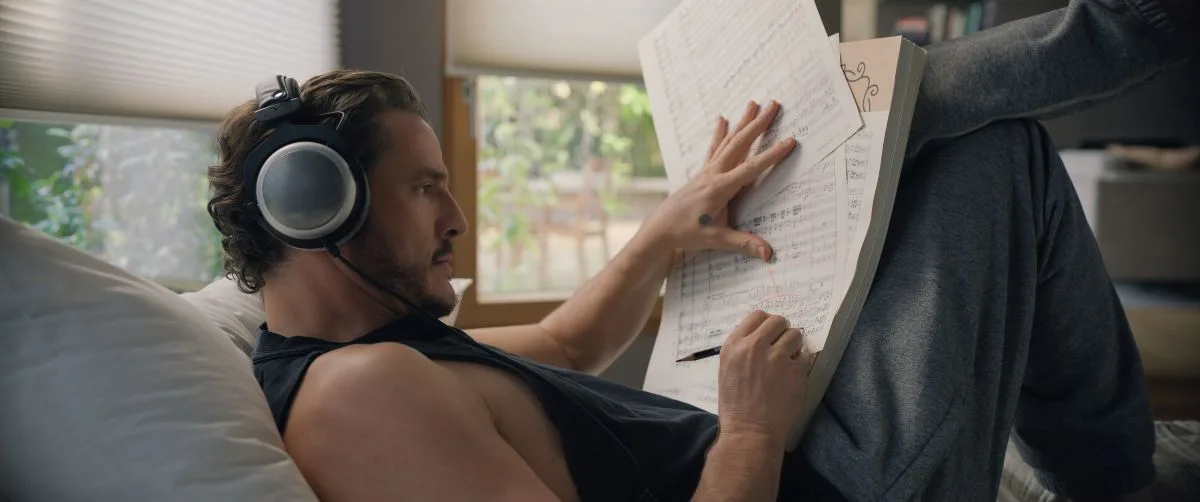
Pascal plays Alex Serian, a well-respected cellist who has returned to Los Angeles for a series of recording sessions, most commonly a score for the upcoming Hollywood production that gives this movie its title. Working with editor/brother John and an insanely talented group of composers known as The Behemoth! Collective (James Newton Howard, Alan Silvestri, Brandon Roberts, Michael Abels, Emily Bear, Lukas Frank, Michael Giacchino, Henry Jackman, and Nami Melumad), Gilroy allows Alex’s recording sessions for the film-within-a-film to become the soundtrack for his own. For example, Alex will be shown recording as the film segues into a flashback and back again, sort of allowing him to score his own memories. It can be a mesmerizing trick as memory and art intertwine, helped notably by one of the best scores of the year.
One of Alex’s first memories is that of Carol Spedding (Olivia Wilde), a woman that Alex was sleeping with in Chicago, putting his job in jeopardy given the fact that she was the partner of the symphony’s biggest donor. There are times when Wilde’s almost silly performance as a femme fatale feels like it comes out of another movie, but it continues the incredible year that the star of “I Want Your Sex” and “The Invite” is having in 2026. The three parts couldn’t be more distinct.
Almost fleeing the restraining-order-worthy Carol, Alex heads to L.A., where he makes ends meet with numerous sessions and for-hire gigs. Gilroy was likely drawn to the elusive nature of a man who pours his all into his art but then ends up having to do the same for someone else the next day. Alex Serian is another in a long line of fictional artists who struggle to find the same beauty in their relationships that they do in their craft. There’s an incredible, movie-best scene after a funeral in which he watches a young girl play piano, mesmerized by the simple beauty of the moment and how it intertwines his personal history with the art he loves. Alex Serian is seeking that connection between the ephemeral nature of art and the blunt reality of existence.
This journey introduces us, again largely through flashback, to a lover of Alex’s named Nadia (Eva Victor), who has a quick but life-changing fling with the cellist. It leads Alex to keep tabs on Viviana (Alexa Swinton), Nadia’s daughter and a rising star who has turned Internet Famous into pop culture stardom through her remarkably abilities. Alex sees a lot of things in the young Vivian, but one is the kind of young artist that his father Peter (Hank Azaria) never supported. A musician himself, Peter was clearly the kind of monster who couldn’t handle the idea that his children might be more talented or famous than him, lashing out at every success. Will Arnett is effective as Alex’s brother Andy, who started a podcast and has begun to unearth some of the skeletons in the Serian family closet.
All of these characters and plot points might make “Behemoth!” sound like a relatively traditional character-driven drama, which could be one of the reasons Gilroy chopped it up structurally. Again, we slide back and forth in chapters in Alex’s life in a manner that can be disorienting, but this Malick fan would argue that Gilroy would have been better served to push into this kind of memory logic even more than he does. Despite all its chronological issues, “Behemoth!” ends up being a pretty traditional piece of storytelling, and it’s actually more interesting when Gilroy allows it to be even more shapeless, more driven by emotion than the needs of the plot.
While some of Gilroy’s screenplay can frustrate, none of Pascal’s choices do the same. This is the kind of character study that an actor dreams of: The chance to play back story and immediacy in a manner that’s driven by his choices instead of the needs of the narrative. He makes so many smart choices in “Behemoth!,” often just in allowing Alex to be an observer as much as he is an active participant in his life.
When “Behemoth!” strikes an atonal note, Pascal’s performance, and Gilroy’s trusting direction of his leading man, drown it out. This is the story of a session musician, someone who is accustomed to being a part of an ensemble more than he is getting a solo, and Pascal goes wonderfully subtle instead of leaning into the pitfalls of a script that could have made this film’s protagonist into an obnoxious cad. He doesn’t demand that we like Alex Serian, only that we believe the emotional truth of the choices he makes. And we do.
This review was filed from the closing night of the Chicago International Film Festival. It opens on December 4, 2026.