The Japanese animators at Studio 4°C specialize in the kind of imaginative and eye-popping anime that genre fans worship and the general public either knows or simply doesn’t. Some highlights from their back catalog include the trippy/experimental 2004 fantasy comedy “Mind Game” and the jubilant 2006 urban coming-of-age crime drama “Tekkonkinkreet.” If you’ve seen those movies, then you know that Studio 4°C is not Studio Ghibli, and that’s more than ok.
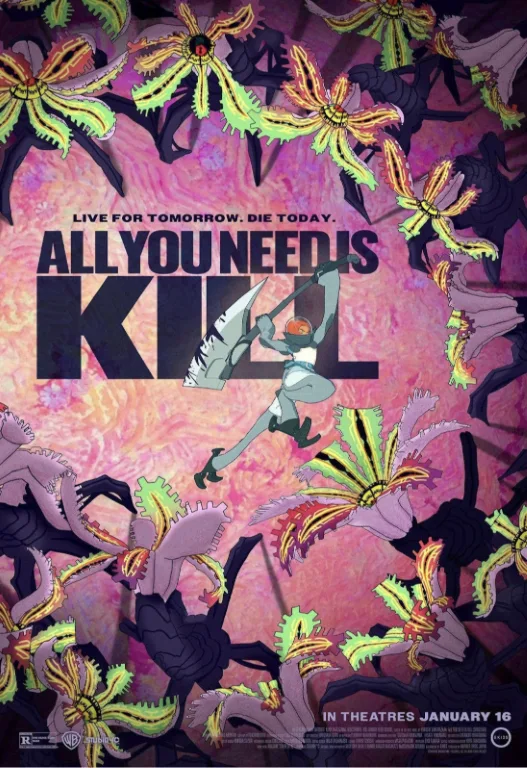
The studio delivers a fine showcase of its collective talents in “All You Need is Kill,” a more faithful adaptation of Hiroshi Sakurazaka’s popular young-adult light novel, which also inspired the 2014 Tom Cruise vehicle “Edge of Tomorrow.”
The Cruise-led version of this story, which follows an intrepid cypher who must stop an alien invasion after getting caught in a “Groundhog Day”-style time travel loop, notably re-shapes the source novel’s ending to better suit its star. Studio 4°C’s update sticks closer to the original book’s script, which might throw some viewers off, given the novel’s frantic stab at tying everything together. Thankfully, Studio 4°C’s sumptuous animation and sound design still make “All You Need is Kill” a vivid and worthwhile do-over.
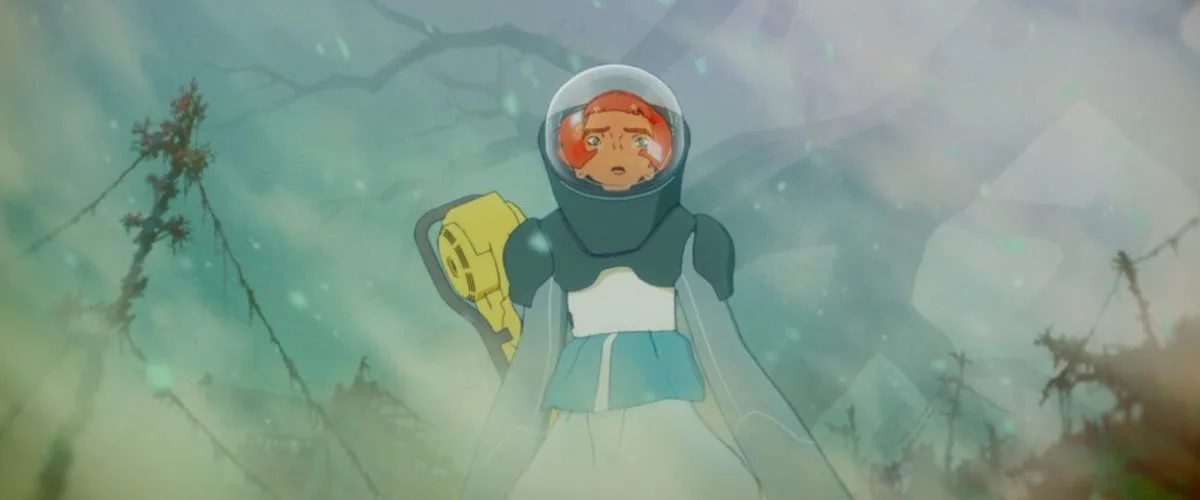
More than mere eye candy, “All You Need is Kill” combines hand-drawn animation, as in its human and alien characters’ edgy/hard-lined designs, and immersive computer graphics and compositing. That typically well-synthesized mix of styles complements the isolation that comes to define Rita (Ai Mikami), an inexperienced soldier, and her experiences as she relives the same harrowing day over and over again. The layered sound design, which notably juxtaposes different human voices and sounds on different tracks, adds extra value, too.
Rita’s part of the United Defense Force (UDF), a military unit dedicated to studying Darol, a gigantic plant-shaped alien that crash-lands on Earth and then, after a year of dormantly hanging around, vomits up an overwhelming electro-magnetic pulse and tries to wipe out the planet’s human inhabitants. Nobody believes Rita when she warns them about Darol’s agenda. So the creators behind “All You Need is Kill” focus on replicating Rita’s harried experience as she learns how to fight Darol on her own. Eventually, she’s joined by Keiji (Natsuki Hanae), another introvert with a mysterious connection to Darol.
“It’s like a video game,” Rita tells herself as she tries and often fails to learn from each successive death. The filmmakers skillfully match Rita’s energy as they selectively replicate her point-of-view. It’s a real thrill to see through her eyes as she rushes headlong past various obstacles and struggles to keep her distance from the carnivorous and fast-moving Mimic creatures that Darol spawns every time it erupts like a volcano.
In one scene, Rita wanders around the UDF home base’s warehouse until she happens upon a giant axe. Only she doesn’t really wander around. More like she’s drawn to the next item she needs to get to the next stage. This is obviously not just a game for Rita, as Keiji will remind her when he shows up later on. But before then: “It’s meaningless! It’s all meaningless,” Rita screams, right before she drives her first into a glass window.
In the background, we hear Rita’s uncomprehending colleagues; their voices are one part of the movie’s hyper-detailed atmosphere. The hand-drawn quality of the human characters’ sketchy features also suits the movie’s concern with people as individuals first and, more likely, as an omnipresent ambience. Sometimes background characters don’t even have eyes or noses, which heightens our sense of Rita’s disorientation.
Eventually, Rita’s story changes genres and becomes a kind of sci-fi romance. That shift in perspective is welcome given how familiar and numbing Rita’s routine threatens to become, and in a short span of time, too. The pace and pitch of Rita and Keiji’s romance is also mostly determined by their urgent circumstances, which means they’re human enough to disagree and even quarrel a little before they explicitly declare their feelings for each other. Repeating a day with anyone must be like riding in a hot car with your loved ones for too long. It’s refreshing to see two people fall for each other because they have to share the same intimate experience and not because they’re fated to be together.
That said, while Rita and Keiji’s unlikely bond eventually gives viewers what they came for, Studio 4°C remains the best reason to see “All You Need is Kill.” The animators pack so many enriching details into their adaptation that even the most incidental scene feels consequential. Their take on Sakurazaka’s novel also flies by with a speed to match its protagonists’ urgent dilemma, making it easier to forgive the filmmakers for rushing through the climax. The stars aren’t on-screen here like they are in “Edge of Tomorrow,” but their awesome craftsmanship still dazzles throughout this adaptation.