The anger of the festering fringe

I’ve had these thoughts for some time, but have been reluctant to express them. Now so many others have voiced them that it’s pointless to remain silent. I am frightened by the climate of insane anti-Obama hatred in this country. I’m not referring to traditional conservatives or Republicans. They’re part of the process. I’m speaking of the lunatic fringe, the frothers, the extremist rabble who are sweeping up the ignorant and credulous into a bewildering and fearsome tide of reckless rhetoric.

There have always been nuts. Remember when the John Birch society thought Kennedy was a communist? In those innocent days most of the American people were reasonable. They’d shake their heads in wonder at such a weird notion. Kennedy might be one of those liberals, but he wasn’t a commie. And when people said Johnson murdered Kennedy? Also ridiculous. But slowly, ominously, things began to change. After his death, it was said that Edward Kennedy was a Soviet agent. These theories have rabid subscribers.

Obama is a Muslim. Obama was born in Kenya. Obama was a terrorist. Obama will destroy Medicare. Obama will kill your grandmother. Obama is a racist. Obama wants atheism taught in the schools. Obama wants us to pay for the health care of illegal immigrants.


December 14, 2012

Open the hurt locker and learn how rough men come hunting for souls

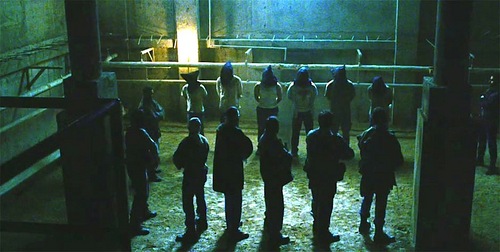
“The Hurt Locker” represents a return to strong, exciting narrative. Here is a film about a bomb disposal expert that depends on character, dialogue and situation to develop almost unbearable suspense. It contains explosions, but only a few, and it is not about explosions, but about hoping that none will happen. That sense of hope is crucial. When we merely want to see stuff blowed up real good in a movie, that means the movie contains no one we give a damn about.

December 14, 2012

Don’t read me first!

If you ever intend to read my review of “Tru Loved,” please read it now. This is so essential that I’m taking a risk by posting this blog entry on the same day the review goes up. The review brings into focus a belief that is at the core of my critical approach. I have cited it many times. Please forgive me for repeating it. As the critic Robert Warshow wrote, “A man goes to the movies. The critic must be honest enough to admit that he is that man.” In other words, whatever you saw, whatever you felt, whatever you did, you must say so. For example, two things that cannot be convincingly faked are laughter and orgasms. If a movie made you laugh, as a critic you have to be honest and report that. Maybe not so much with orgasms.

[Click clock to read dial.]

If you reached the end of my “Tru Loved” review, you found that I stopped watching at about eight minutes. How did this discovery make you feel? My editor, a wise and expert woman who has saved my ass many times over more than 20 years, was horrified.

December 14, 2012

Women are better than men

Women are nicer than men. There are exceptions. Most people of both sexes are probably fairly nice, given the nature of their upbringing and opportunities. But in terms of their lifelong natures, women are kinder, more empathetic, more generous. And the sooner more of them take positions of power, the better our chances as a species.

December 14, 2012

I’m a proud Brainiac

Roger Ebert is a moron! Transformers 2 is the best action movie ever. Don’t listem to that moron! He is only into slow boring romantic movies. That is his type of movies. Michael Bay did a great good. Roger… your an old fart! John C

Having now absorbed all or parts of 750 responses to my complaints about “Transformers,” I suppose I shouldn’t be surprised that most of those writing agree with me that it is a horrible movie. After all, look where they’ve chosen to comment. There have, however been some disagreements that I thought were reasonable. These writers mostly said they had a thing about the Transformers toys of their childhoods, or liked the animation on TV, or like to see stuff blowed up real good. In that case. Michael Bay is your man. If you enjoyed the movie, there is no way I can say you’re wrong. About yourself, anyway.

Another common line of attack was disturbing. It came from people who said I was out of touch with the tastes of the audience. That the movie’s detractors (lumped together as “the critics”) like only obscure movies that nobody else does–art films, documentaries, foreign films, indies, movies made 50 years ago–even, God forbid, “classics.” One poster argued that “Transformers” was better than that boring old movie “Casablanca.”

I was informed I didn’t “get” Michael Bay. I was too old, “of the wrong generation,” or an elitist or a liberal–although not, I was relieved to find, a “liberal elitist.” It seems to me “Transformers” also qualifies for conservative scorn. It is obliviously nonpartisan. Yet one commented said I hated the movie because it was an attack on President Obama. I was afraid to say I hadn’t noticed that, because then I would be told I hadn’t even seen the movie. It is possible to miss many of the plot points, strange in a movie with so few of them. Veiled in-jokes about politicians and famous people, popular in animation and mass market movies, come with the territory. I enjoy them. The apparent reference to Obama was no big deal, although a reader from Germany told me the actual name “Obama” was used in the German dub. That possibly didn’t happen without Bay hearing about it.

December 14, 2012

Memories are made of this

It was the best of times, it was the worst of times. Gene Siskel and I fought like cats and dogs, and we made some good television.

During those early years for “Sneak Previews” our favorite occupation was dreaming up “special editions” which were sort of like the “think pieces” we wrote for our papers.

December 14, 2012

OK, here’s the f***ing review

Ennis Ermer and Peter Oldring are roommates who co-star with Natalie Lisinska in “Young People F***ing.”

In my previous blog entry, I told of receiving a message from a reader in Montreal who wanted know how I would deal with reviewing a new Canadian film with the f-word in its title. Would my paper print the title? What were my thoughts? I now have an opportunity to deal directly with those questions, because Steve Hoban, the film’s producer, has sent me a DVD, along with a bulletin about its June 13 opening date in Canada, and a U.S. release later this summer.

December 14, 2012

The body count

I’ve never held a handgun in my life. I did some rifle target shooting with the ROTC in college. That’s it with me and firearms. Does this make me less of an American? I think handguns are dangerous, and the more people who walk around carrying them the more dangerous they are. I also don’t understand why civilians need to possess AR-15 assault rifles, such as the one used by James Holmes in Colorado. They fire 10 shots at a time, and are intended for combat use. In civilian hands, they are by definition weapons of slaughter. Do you need one in your home?

December 14, 2012

Time keeps on slip, slip, slippin’ away

I sense it’s about time to share some of my thoughts about television and movie critics, myself, and the past, present and future of my corner of the critics-on-TV adventure. My friends A .O. Scott and Michael Phillips are well into their first season as the new co-hosts of “At the Movies.” Richard Roeper just announced he will be streaming reviews on his web site, and they will re-run a week later on the Starz cable channel. I wish them all good fortune. And good health.

December 14, 2012

I Was a Teenage Newshound

My first professional newspaper job was on The News-Gazette in my home town of Champaign-Urbana, Illinois. I was 15. The pay was 75 cents a hour, eventually climbing even higher. I was not an intern. That was a salary. I was a sports writer, graduating to general assignment in the summer, and I pumped out reams of copy. I recall a special section commemorating the opening of a bowling alley, for which I wrote at least 15 stories, all with my proud byline; I even interviewed a pin-spotter and the owner of a shoe rental franchise.

December 14, 2012

The Fall of the Revengers

The day will come when “Transformers: Revenge of the Fallen” will be studied in film classes and shown at cult film festivals. It will be seen, in retrospect, as marking the end of an era. Of course there will be many more CGI-based action epics, but never again one this bloated, excessive, incomprehensible, long (149 minutes) or expensive (more than $200 million). Like the dinosaurs, the species has grown too big to survive, and will be wiped out in a cataclysmic event, replaced by more compact, durable forms.

Oh, I expect the movie will make a lot of money. It took in $16 million just in its Wednesday midnight opening. Todd Gilchrist, a most reasonable critic at Cinematical, wrote that it feels “destined to be the biggest movie of all time.” I don’t believe “Titanic” and “The Dark Knight” have much to fear, however, because (1) it has little to no appeal for non-fanboy or female audiences, and (2) many of those who do see it will find they simply cannot endure it. God help anyone viewing it from the front row of a traditional IMAX theater–even from the back row. It may benefit from being seen via DVD, with your “picture” setting dialed down from Vivid to Standard.

The term Assault on the Senses has become a cliché. It would be more accurate to describe the film simply as “painful.” The volume is cranked way up, probably on studio instructions, and the sound track consists largely of steel crashing discordantly against steel. Occasionally a Bot voice will roar thunderingly out of the left-side speakers, (1) reminding us of Surround Sound, or (2) reminding the theater to have the guy take another look at those right-side speakers. Beneath that is boilerplate hard-pounding action music, alternating with deep bass voices intoning what sounds like Gregorian chant without the Latin, or maybe even without the words: Just apprehensive sounds, translating as Oh, no! No! These Decepticons® are going to steal the energy of the sun and destroy the Earth! The hard-pounding action music, on the other hand, is what Hollywood calls Mickey Mouse Music, so named because, like the music in a Mickey Mouse cartoon, it faithfully mirrors the movements on screen. In this case, it is impatient and urgent. I recommend listening to it on your iPod the next time you have difficulty at the doctor’s office filling the little plastic cup.

December 14, 2012

Cannes #8: Of lies and ghosts and fathers

The days dwindle down to a precious few. At 6 p.m.on Friday, Cannes is oddly silent. The tumult on the streets a week ago today is forgotten. There are empty seats at some screenings. The locals of Cannes know this is the time to stand in the ticket lines. The daily editions of Varsity and Hollywood Reporter ceased Thursday. Friends are in Paris, or London, or home. Some few diehards stay for the award ceremony Sunday night.

December 14, 2012

Toronto #4: And the winner is…

The winner of the Academy Award for Best Picture will be Ben Affleck’s tense new thriller “Argo.” How do I know this? Because it is the audience favorite coming out of the top-loaded opening weekend of the Toronto Film Festival. Success at Toronto has an uncanny way of predicting Academy winners; I point you to the Best Pictures of the last five years in a row: “No Country for Old Men,” “Slumdog Millionaire,” “The Hurt Locker,” “The King’s Speech” and “The Artist.”

December 14, 2012

In the sweet bye-and-bye

One is the loneliest number that you’ll ever do. Or maybe it isn’t. Maybe Zero is lonelier, because it doesn’t even have itself for company. On the other hand, maybe Zero isn’t really a number. Even if it is, let’s not go there. Too deep for me. Let’s start out easy, with One. Everybody on board? Good. If one is lonely, what is the cure? Two, obviously, even if Two the loneliest number since the number one.

I believe that’s why reproduction in all species requires two mates. Except for species that reproduce all by themselves. That is known as parthenogenesis. It is a bleak life. You’re always the one who has to get up in the middle of the night, and when you masturbate, you fantasize about yourself.

December 14, 2012

It’s going to be a bumpy night

Jason Pankoke sends me a link from the Pantagraph of Bloomington-Normal, Illinois.

“Move over 3-D, here comes D-Box!” says the article by Dan Craft. “Instead of delivering movie thrills straight between the eyes, D-Box lifts and separates, so to speak — detaching the moviegoer from his or her seat via three levels of pitching, rolling and heaving.

“Moreover, the moviegoer also has control over the intensity of that action, via a control knob that can reduce the movement, or, if it all becomes too much, shut it off.”

December 14, 2012

I’m safe on board. Pull up the life rope

Having read through some 600 comments about universal health care, I now realize I took the wrong approach in my previous blog entry. I discussed the Obama health plan in political, literal, logical terms. Most of my readers replied in the same vein. The comments, as always, have been helpful, informative and for the most part civil. My mistake was writing from the pragmatic side. I should have followed my heart and gone with a more emotional approach. I believe universal health care is, quite simply, right.

It is a moral imperative. I cannot enjoy health coverage and turn to my neighbor and tell him he doesn’t deserve it. A nation is a mutual undertaking. In a democracy, we set out together to do what we believe is good for the commonwealth. That means voluntarily subjecting ourselves to the rule of law, taxation, military service, the guaranteeing of rights to minorities, and so on. That is a cheap price to pay.

As I’ve read through of those comments (and I’ve posted all but two I received), one thing jumped from the page at me: The unusually high number of comments from other countries. Canadians were particularly well-represented. Although we’re assured by opponents of the Obama legislation that Canada’s system of universal care is a failure, all of these Canadians, without exception, reported their enthusiasm for their nation’s system. One reader said her mother choose to fly to California to get a knee replacement more quickly, but even she praised the Canadian system.

December 14, 2012

Remembering Gene

Gene Siskel and I were like tuning forks. Strike one, and the other would pick up the same frequency. When we were in a group together, we were always intensely aware of one another. Sometimes this took the form of camaraderie, sometimes shared opinions, sometimes hostility. But we were aware. If something happened that we both thought was funny but weren’t supposed to, God help us if one caught the other’s eye. We almost always thought the same things were funny. That may be the best sign of intellectual communion.

Gene died ten years ago on February 20, 1999. He is in my mind almost every day. I don’t want to rehearse the old stories about how we had a love/hate relationship, and how we dealt with television, and how we were both so scared the first time we went on Johnny Carson that, backstage, we couldn’t think of the name of a single movie, although that story is absolutely true. Those stories have been told. I want to write about our friendship. The public image was that we were in a state of permanent feud, but nothing we felt had anything to do with image. We both knew the buttons to push on the other one, and we both made little effort to hide our feelings, warm or cold. In 1977 we were on a talk show with Buddy Rogers, once Mary Pickford’s husband, and he said, “You guys have a sibling rivalry, but you both think you’re the older brother.”

Once Gene and I were involved in a joint appearance with another Chicago media couple, Steve Dahl and Garry Meier. It was a tribute to us or a tribute to them, I can’t remember. They were pioneers of free-form radio. Gene and I were known for our rages against each other, and Steve and Garry were remarkable for their accord. They gave us advice about how to work together as a successful team. The reason I remember that is because soon afterward Steve and Garry had an angry public falling-out that has lasted until this day.

December 14, 2012

The effect of effects

I’ve just been watching “The Thief of Bagdad” (1940), which has probably the most influential special effects of all pre-CGI films. It’s going into the Great Movies Collection, not for the effects, of course, but because it is a sublime entertainment on a level with “The Wizard of Oz” or the first “Star Wars.” But there are few effects in “Star Wars” (1977) that were not invented for, experimented with, or perfected in “The Thief of Bagdad.” And some of them had their genesis in Raoul Walsh’s magnificent 1924 silent film of the same name starring Douglas Fairbanks, Sr.

Left: Rex Ingram, as the genie, towers over Sabu, as the thief, in “The Thief of Bagdad.” The shot was made by combining real footage of Ingram, close to the camera, and Sabu, several hundred feet away.

December 14, 2012

Bless me Father, for I have sinned

I have no way of knowing Robert McNamara’s thoughts in his final days. He might have reflected on his agreement to speak openly to Errol Morris in the extraordinary documentary “The Fog of War.” His reflections are almost without precedent among modern statesmen and those involved in waging war. Remembered as the architect of the war in Vietnam, he doesn’t quite apologize for not having done more to end that war–although he clearly wishes he had. His purpose in the film is to speak of his philosophy of life, to add depth to history’s one-dimensional portrait. Don’t we all want to do that?

“I have no regrets,” Edith Piaf sang. It is clear that she does regret. She is singing of love, not war. I think she is saying that she and her lover did the best they could. If she can say that, she need have no regrets. McNamara is saying the same thing about his years in power. He is honest in reporting a discussion at the time about leaving as Johnson’s secretary of defense. He told Katharine Graham, publisher of the Washington Post, “I don’t know if I resigned or was fired.” “Oh, Bob,” she told him, “of course you were fired.” One of the things he tells Morris is: “In order to do good, you may have to engage in evil.” That argument is denied by theologians, but much heard in realms of realpolitik.

He agreed to submit himself to Morris’s questions for an hour. He ended by speaking for ten. He went to subjects Morris might not have thought to take him, discussed things that were, at 85, much on his mind. He was a key aide to Gen. Curtis LeMay, who directed the fire-bombing of Tokyo when more than 100,000, mostly civilians, were burned alive. After the war, he says, in one of the film’s most astonishing moments, LeMay observed to him that if America had lost, they would have been tried as war criminals. What does he, McNamara, think about the bombing? By quoting LeMay’s statement that might have forever gone unrecorded, I think he lets us know.

December 14, 2012
subscribe icon

The best movie reviews, in your inbox