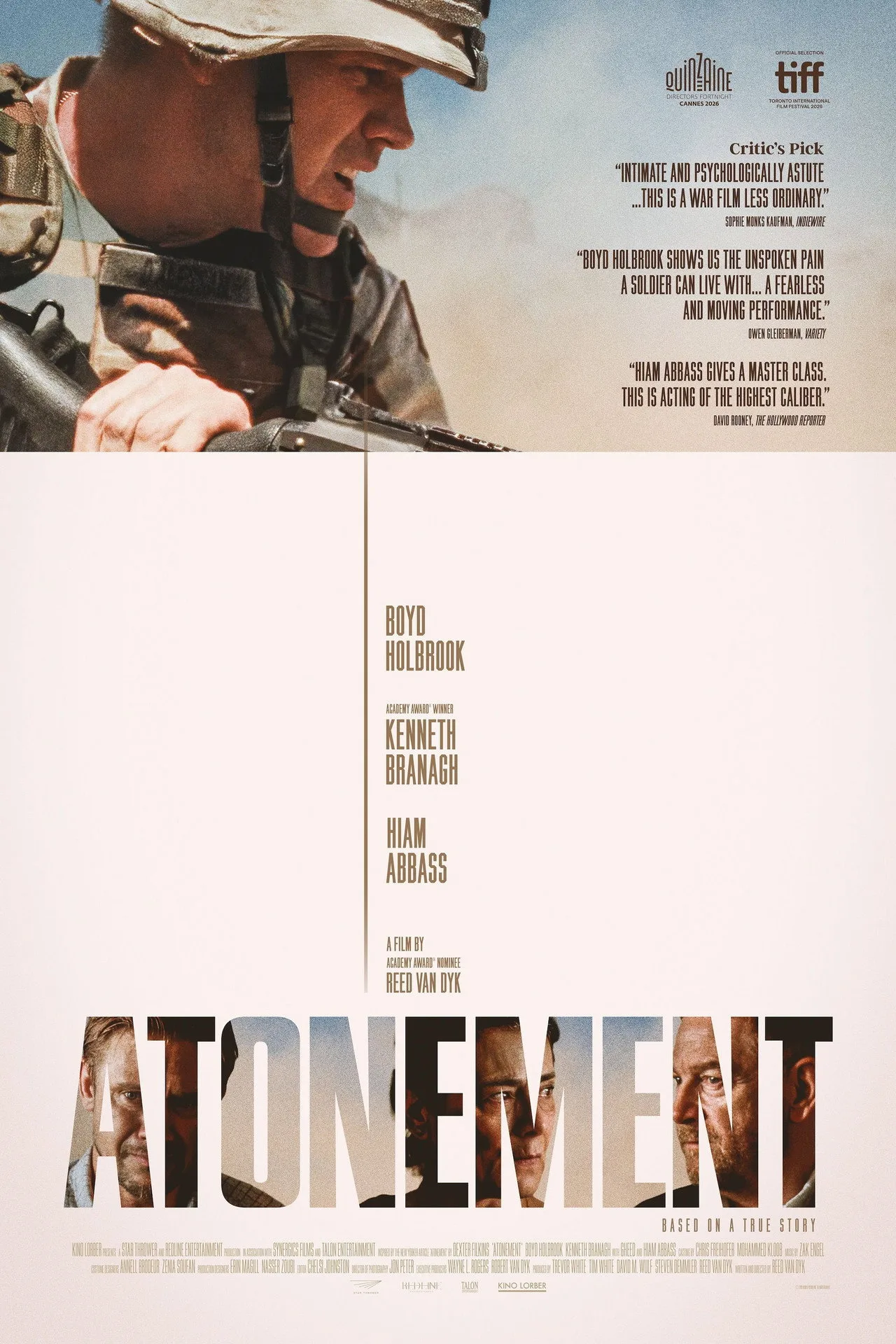
The conundrum of “Atonement,” a drama based on a 2012 New Yorker article by Dexter Filkins, is that it’s a good movie with some great scenes. Many people will love it, and they won’t be wrong. But it feels like a missed opportunity.
The article is about a United States Marine who accidentally killed members of a noncombatant Iraqi family soon after the 2003 invasion, then sought out the survivors, who had settled in Glendale, California, seeking reconciliation and forgiveness. Filkins knew all the principals involved from the Iraq War coverage he wrote for his previous employer, The New York Times, so he was the narrator and main character of the New Yorker piece. This approach is risky because it often makes the story feel like something that happened to the reporter rather than the events being reported.
But it worked in The New Yorker article because Filkins was so entangled with the main participants that leaving himself out would have been dishonest. Filkins was the one that the Marine contacted to help set up the meeting after his own attempts had failed. He made the meetup happen, and personally took the Marine to and from the family’s home.
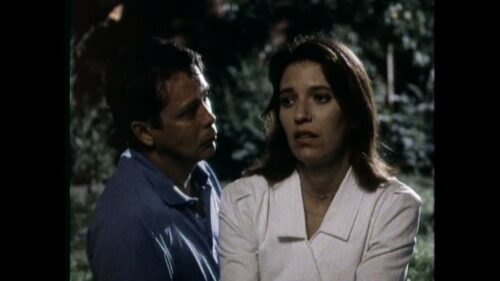
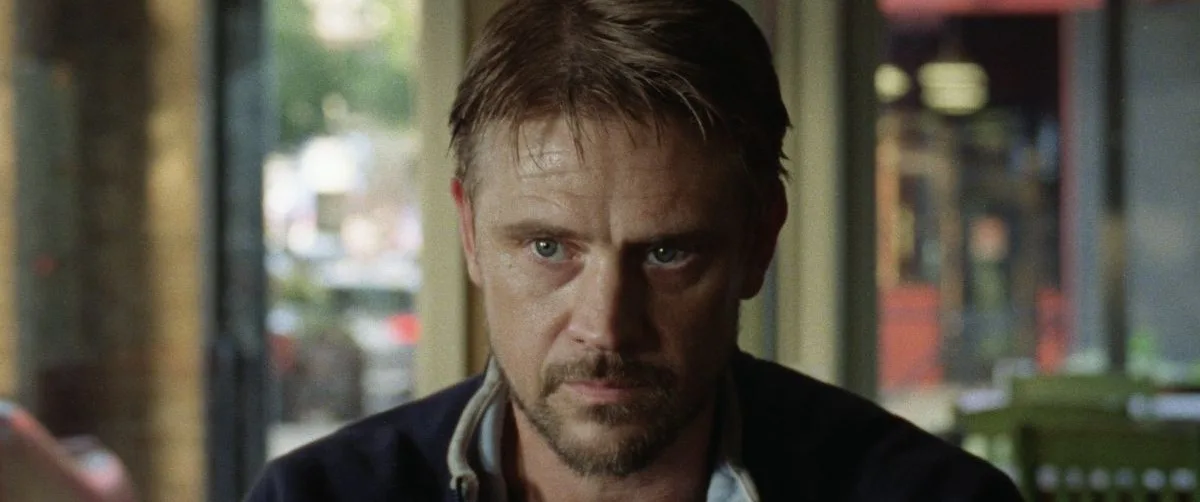
The last third of the movie version of the article, also titled “Atonement,” focuses on the meeting between the Marine (renamed Lou D’Allesandro here, and portrayed by Boyd Holbrook, who was Johnny Cash in the Bob Dylan biopic “A Complete Unknown”) and the family (renamed the Kachaturians, and headed by their matriarch Mariam, played by Hiam Abbass of “Succession”). With its awkward pleasantries and time-killing rituals, this is the subtlest, altogether finest section of the film.
There’s another reality (inside the reviewer’s mind, admittedly) in which “Atonement” the film starts with the journalist (named Michael Reid here, and played by Kenneth Branagh) parking his rental car in front of the family’s bungalow with Lou in the passenger seat, and ends at the same point where the filmmakers decided to end it—an art cinema “What do you think it meant?” ending that’s initially off-putting, but likely to grow on you.
Everything that precedes this one-act cinematic stage play about a shattered Iraqi family, the former Marine who helped shatter, and the reporter who told their story is exquisitely acted, directed, edited, and shot (By Jon Peter, on 16mm film, once the documentary filmmaker’s go-to format). It’s hard to say a word against any frame of the first two-thirds in terms of craft. First-time drama director Reed Van Dyk comes from the documentary world. He applies lessons he learned there with more delicacy than we might have expected, given that so much of the movie is about combat, PTSD, and unnecessary violent death.
Throughout, he and his editor, Chelsi Johnson, avoid war and action-movie clichés. The first explosion in the story happens in a way that might make the audience feel attacked; the cutting flouts the norms of screen geography so blatantly that it almost seems like a sudden projection error. Scenes built around conversations tend to start earlier than you expect and end much later. It’s unbalancing. That’s good for the movie, because it subtly puts you in the characters’ headspace.
Also noteworthy is the way Van Wyk and company use filmmaking to suggest things that most movies would have offloaded onto the dialogue, such as the sound of the wind near the end of the Baghdad sequence (dust envelops Mariam like a literal fog of war) and reappears in a scene where the now-civilian Lou stands in the lobby of his apartment building on a lonely night, listening to the wind moaning out back. You know what he’s thinking. And it’s bracing to realize that it’s probably what Mariam thinks about, too, any time the wind rises.
The actors contribute greatly to this non-documentary documentary aesthetic, which respects the audience by assuming unspoken thoughts are legible as long as we understand what matters to the characters. A plain medium shot of Branagh’s reporter waiting for an elevator instantly communicates “He’s thinking about the war” without any help from war sounds or silent flashbacks. More films should embrace the idea that all you really need to get a point across is a camera and an expressive face.
It’s a shame that all this brilliantly realized material delays and impedes the main event, which is where we finally get to see moments we’ve never seen in a movie before after 75 minutes of material we’ve seen in many other movies. The opening sequence echoes the most harrowing you-are-there moments of early Oliver Stone features like “Salvador” and “Platoon.”
The Baghdad firefight that leads to the Marines shooting at the Khachaturian family and killing three of its male members is properly frightening, confusing, and exhausting (although an infant who was shot dead in the real incident is spared here; is it out of fear that viewers might abandon the movie?). But more time is spent on the details of the atrocity (which are clear and never in dispute) and the logistics of the meetup between Lou and the Khachaturians than on Mariam’s unhappy feelings once Lou is loping around in their home and backyard—which, dramatically speaking, is where the real action is.
Related: although Van Dyk’s screenplay acknowledges the pushy narcissism of Lou’s obsession (most bluntly when another journalist says of Lou’s redemption odyssey, “Sorry, but it is selfish”), it mostly handles it with kid gloves. Abbas’ performance is so raw and real that it nearly gives us what the film can’t bring itself to deliver: repulsion and astonishment at Lou’s aw-shucks audacity and defensive humility as he refuses to take no for an answer and eventually gets what she wanted: a pantomime of forgiveness, if not the substance.
At least the movie’s Antonioni, Jr., ending briefly incorporates this uncomfortable truth about Lou. For all his polite language and statements of regret and gestures of, well, atonement, Lou is still an emblem of the US military invading Iraqi territory in search of something that only exists in his imagination. The movie gets this. To what extent, though? It seems to want to appear fair to everybody, even when they don’t deserve it.