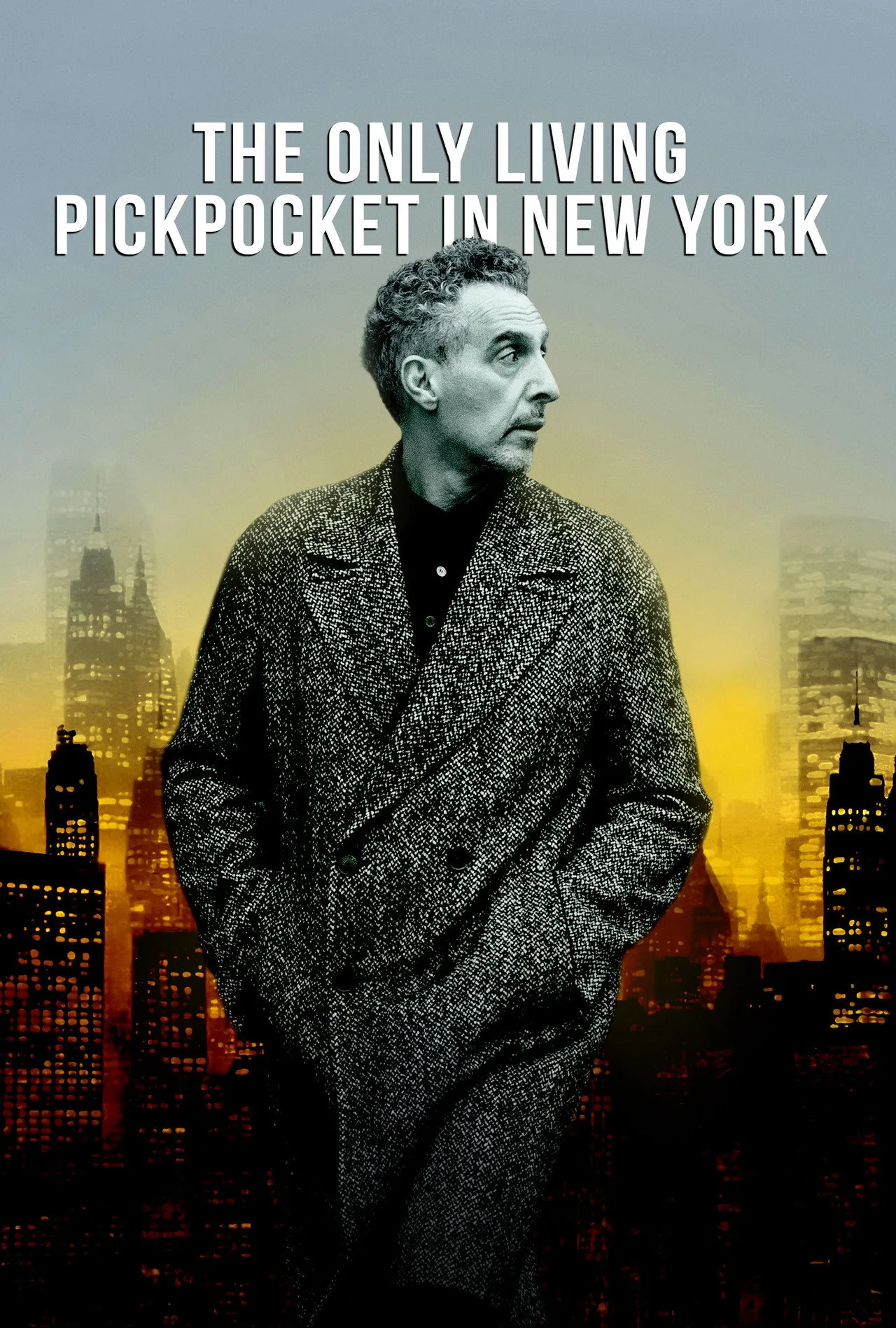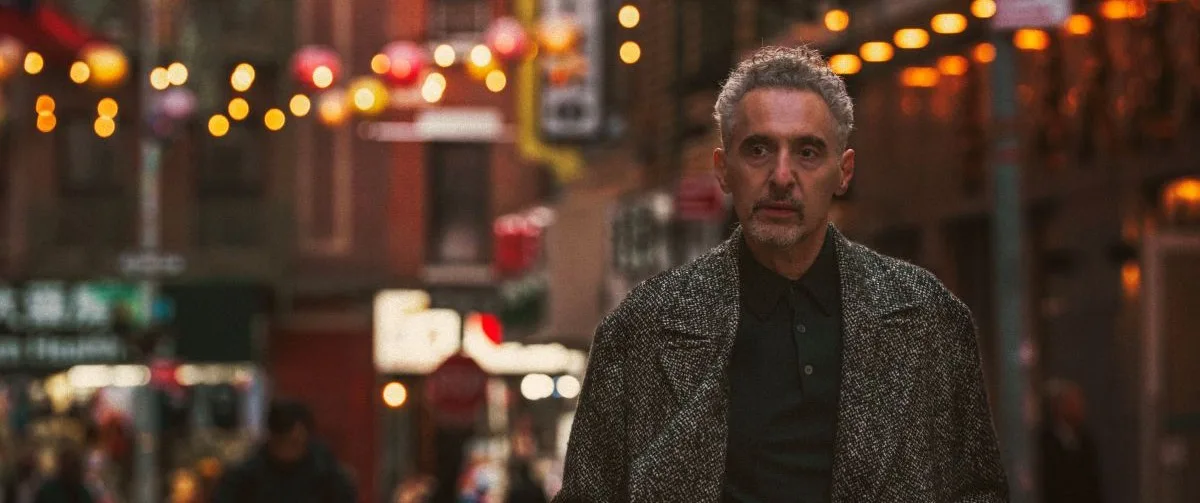
Noah Segan’s “The Only Living Pickpocket in New York” is a spiritual film, but not in a religious sense. It’s attempting to conjure the spirit of an era, of a specific genre, of a particular kind of person. It harks to 1970s filmmaking, both overtly white crime pictures and to Blaxploitation. You can see the latter in the film’s opening scene, as the camera pushes in on suave pickpocket Harry Lehman (John Turturro) whose long overcoat and trim black button-up inspire a soulful cool. You can also hear the latter in Gary Lionelli’s confident score, whose shape and rhythms recalls “Shaft!” But instead of Harry being on the forefront of these streets, like those Blaxploitation heroes, he’s on the backend of his life.
This is a movie about a fish who hasn’t accepted the pond is drying up. Targets don’t carry cash anymore. So, when Harry visits his pawnbroker friend Ben (Steve Buscemi), he’s delivering useless, trackable phones and crappy watches. Harry needs big scores if he hopes to support his mute, disabled wife. He seemingly gets a break when he runs into Dylan (Will Price), the scion to a mob family driving a classic muscle car. Harry breaks into the car, absconding with cash, a premium watch, and a USB that he doesn’t at all understand. He keeps the goods and gets rid of the drive not knowing that this tiny device from this tech-bro rich kid holds great wealth.
As you’d guess, Dylan and his goons quickly hunt down Harry at his apartment. They threaten to kill his wife if Harry doesn’t retrieve the USB before the day is out. That kind of set-up would make one think we’re dealing with a ticking clock thriller. But Segan is a bit smarter and more philosophical than that. He takes these genre trappings for a mortality-based character study whose familiarity is given renewed vitality by its veteran cast. After premiering at Sundance, “The Only Living Pickpocket in New York” takes its bow at Telluride as a proud throwback, one unafraid of executing its simple formula: Let the actors carry the film.
Oftentimes, however, Segan’s flat dialogue gets him into trouble. Sometimes it feels like the simplicity is trying to match 1940s crime movies. Unfortunately, these lines lack bounce; they sound like words spoken during a late-night writing session rather than feelings and thoughts on the edge of innate. Nevertheless, wonders can be achieved when you have a dedicated cast who understand the proverbial assignment—especially when they have concrete history working together. Buscemi, despite the squirrely potential of the role, remains deeply human, moving through the space of his pawnshop and communicating with Turturro with an informal, energetic flavor. Giancarlo Esposito as the obsolete Detective Allan Warren—a man giving technical and emotional aid to Harry—operates with a similar steadiness, giving breadth to moments in a way that gives them meaning.
But the obvious star is Turturro. He and Segan, an actor by trade who shoots Turturro with unwavering intimacy, wholly understand this desperate character. It’s amazing how he allows himself to age throughout the brief 88-minute runtime. His face not only begins to look weary; his body and his coat also weigh his frame down. His active eyes, which have either been used for comedic or dastardly effect, are retooled to literally look for answers. Harry travels across New York, thinking about his many personal regrets, the highs he lived through in a different period in New York, and the precious memories he shares with his wife.
In the final act, Segan seems to believe he needs to make this into a movie. Harry, for instance, mentors another young pickpocket by showing him the tricks of the trade. You just know that this young man will factor heavily into the film’s finale, which turns out to be a multi-step gamble meant to use Dylan’s arrogance against him and to introduce a last-second cameo by Jamie Lee Curtis. By trying to make every piece of the puzzle fit perfectly, the film loses some spontaneity. Everything becomes a tad too overcalibrated.
This wistful story is best when it leans on these people being people: hurt, broken, and imperfect. Turturro shines, offering a performance that not only gives justice to this honorable character—but also proves that he’s among the last of a certain type of professional actor, a performer capable of giving every part of himself over no matter the size of the role or the genre, place, or time in which it occurs.
This review was filed from the Telluride Film Festival premiere on September 4.