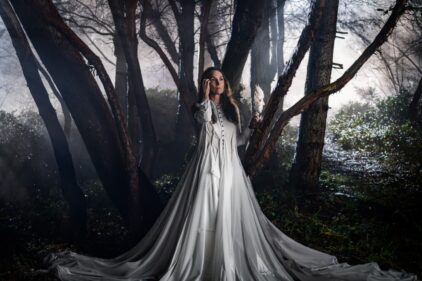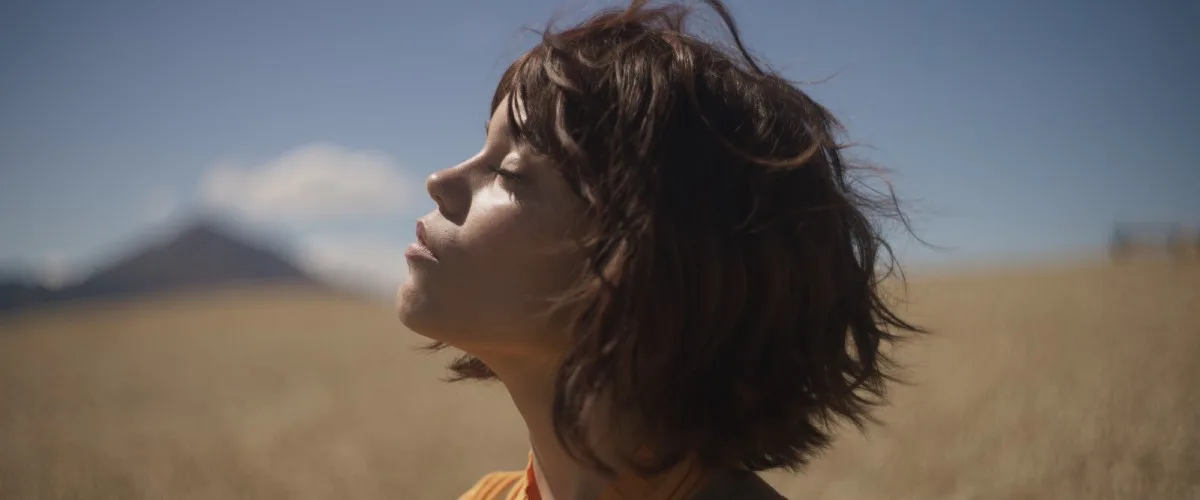
Challenging preconceived notions about artificial intelligence, “Klara and the Sun” opens with its titular robot practicing devotion to its creator. Klara (Jenna Ortega) prays to the sun by any means necessary. Like me, she would worship Lorde’s underappreciated 2021 album, Solar Power. Her grateful affirmations and the glint in her eye are filled with wonder, and an air of existentialism hangs over it all.
Based on the book of the same title by Nobel Laureate Kazuo Ishiguro, “Jojo Rabbit” director Taika Waititi has adapted the novel alongside co-writer Dahvi Waller. On the surface, “Klara and the Sun” is a story of unconventional friendship. Klara, an old-gen Artificial Friend, is on display in a storefront window for 3 days as a last chance to find her human companion. Unlike her fellow AFs, who resemble Gap models, Klara is visibly and personally quirkier. On the last day, Josie (Mia Tharia) spots her, and their bond is instantly palpable. As Josie enters the store with her reluctant mother (Amy Adams), the maternal, oddball store manager (Natasha Lyonne) retrieves Klara from the back closet she’s locked in; soon enough, Klara is unboxed and recalibrating in her new countryside home with her new family.
Like a toddler, Klara stumbles around, grasping at objects to understand. The human house manager, Melanie (Rachel House), is instantly rude and rightfully reserved about Klara’s presence. Their post-WWIII, non-Internet world is riddled with dystopian oddities that feel like an inevitable iteration of reality. Yet the premise is far more existential than Waititi’s adaptation makes it.
As Klara grows closer to Josie, their friendship develops in a very textbook way. As expected, Josie gives Klara a wardrobe makeover, and together they do things Chrissie, Josie’s mom, would disapprove of. Ortega and Tharia’s chemistry makes this sudden codependency feel believably cute. While their platonic partnership is the manufactured heart of the film, the “Klara and the Sun” subplots are overpowering, and their dialogue dissolves any semblance of mystery about how things will unfold.
Soon into their quasi-sistership, Klara learns Josie’s family lost her sister unexpectedly when Josie was only 4 or 5. The grief of losing a child explains a bit about Chrissie’s cold, absent nature, but to learn of her experimentation on Josie, as a result of this unfortunate loss, lands as equally absent-minded. Josie’s gene-sequencing enhancement, a popular procedure called “Lifting,” did not go as planned. Klara’s first and only friendship is already in jeopardy, but we’re also supposed to feel bad for Chrissie.
Put plainly, Adams phones in her performance as her cardboard-cutout character (who happens to have great costuming). The “Nightbitch” star is more equipped to play a mother of complicated, absurd substance rather than the sterile character she embodies in this film. The only character worth caring about, due to being the most fleshed out in writing and performance, is Klara. Ortega’s physicality packs a punch, bringing soul to Klara’s man-made being. Her balance of innocence and ignorance in her eyes stems from the care-filled curiosity she has for a world she has yet to compute. Even when expressing anger, Ortega’s tone is tempered so she doesn’t show too much emotion, despite being fixed with faulty software that makes her “too empathetic” to be a good AF.
In trying to reach every audience the filmmakers assume will attend, likely a variety of ages and many book fans, it loses focus. Although the screenplay scrambles to tie up every thread it’s woven, the film still manages to emulate the warmth that Klara thanks the Sun for every day through its visual language. When she buffers, Klara’s perspective hypopixelates the screen. The morality of Ishiguro’s novel has been watered down, but Waititi’s simplification of the story into a saturated dreamland feels like a Dr. Seuss adaptation. It’s refreshing, almost blinding, to see a near-future dystopian film so colorful and so concerned with building a microcosm worth saving.
Josie’s declining health and her mother’s questionable decisions aside, “Klara and the Sun” thrives on its main character’s individuality and becoming. It is so joyous to witness that it’s easy to forget Klara is not of body and blood, no true mind in that head of hers, no air in her lungs to blow out a birthday cake. From the beginning, her fascination with love manifests as a glowing daze she longs to be surrounded by, charming the audience into looking for that feeling in everyday moments between ordinary people. Left underexplored, Klara’s capacity for faith in the divine, and the language to convey it, is the film’s most human element.