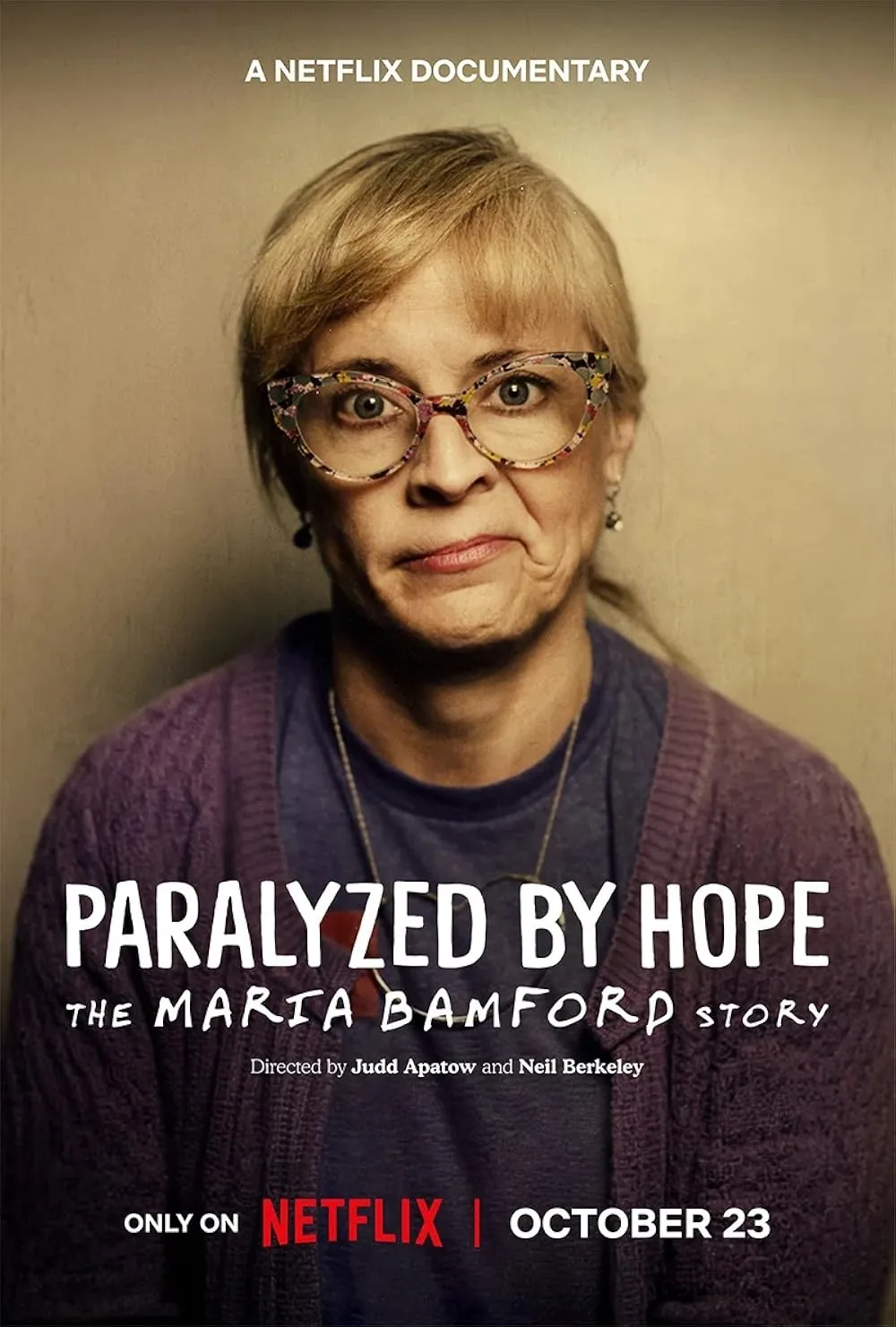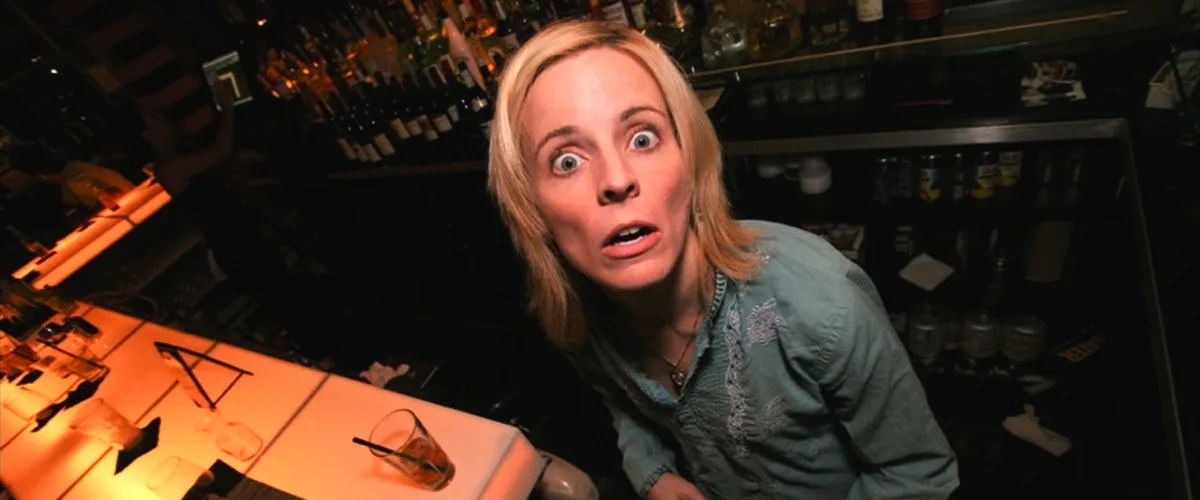
Stephen Colbert says Maria Bamford is his favorite comedian. Netflix Co-CEO Ted Sarandos says that of all the productions he’s overseen, Bamford’s series “Lady Dynamite” is his favorite because “it’s so raw and real and vulnerable you’re all in for the ride.” Yet that series ended because the pressure of producing it became a tipping point between a comedy show about mental illness and exacerbating the mental illness to the point of not being able to work on it anymore.
This exceptionally thoughtful and often hilarious documentary about Bamford explores the way she uses humor to filter her experiences and performance to temper her anxiety, depression, and intrusive thoughts.
Happy people may be jolly but are rarely funny. Jokes are an adaptive mechanism to deal with internal concerns (anxiety, depression, OCD) and external concerns (injustice). According to George Vaillant, who conducted a groundbreaking long-term study of mental health, translating discomfort and stress into humor is one of the most mature responses to life’s challenges.
Recent documentaries like “Group Therapy,” “Anxiety Club,” “Gary Gulman: The Great Depresh,” “Chris Gethard: Career Suicide,” and “Misery Loves Comedy” explore the experiences of stand-up comedians who use comedy to help them with mental illness but often need medical support as well.
As an oyster turns the irritation of a grain of sand into a pearl, comedians turn the irritations of daily life into comedy. Some do it by exaggerating the tiniest nuisances (think Larry David). Others miniaturize the most terrifying, as Bamford does here, making comedy out of severe mental illness and, ultimately, out of the big kahuna: death.
Bamford had a happy childhood, but she was not a happy child. She had loving parents and a comfortable home, but by age 9 she realized that she was different. We see some of her childhood drawings as she describes her feelings of suicidal ideation, later, as she learned via a Google search, a symptom of OCD. She matter-of-factly tells us about faking her own death as a child so that when her parents came home, they found her lying on the floor covered with ketchup intended to look like blood.
In college, she discovered theater. Performing gave her a way to feel connected to people, part of something. This led to developing a stand-up act. The film’s generous archival footage is beautifully assembled to illuminate the biographical details. It’s also hilarious. The earliest set we see is from a show called “Sex and Violins,” where Bamford tells the audience she will give them the history of her relationships through violin music.
Later, when she moved to Los Angeles, she learned two other women were doing stand-up with violins, and by then she was happy to give it up. Instead of music, she told stories in a wide range of very specific voices, including her mother and the temp-job boss who chirpily tells her, “We do things a little differently around here!” “But it never is.” She also makes weird sounds; her “Old MacDonald” verse about the pterodactyl is unforgettable.
Bamford often imitates, or rather seems to slip entirely into, her mother’s persona, as she later says, with “less than accurate and highly embellished portrayals.” Her mother responds, “That’s okay honey, it’s very funny.” Her parents may not have understood her as a child or sought out help for her, but they are benignly supportive of her career. Their declines and deaths are painful, but she is able to tell them how much she loves them; those stories become part of her act. She also tells one of her sister’s stories, but, after a tough conversation, agrees not to do that again.
Medication, therapy, a loving partner, and some professional success give her some stability. She has enough money to retire, but instead she puts on shows for people she finds on social media, pays to try out material one or two at a time, and does 8 am shows at a tiny venue. She speaks at a conference about OCD, cheerfully greeting the crowd, “Welcome, fellow weirdos!”
The film’s highlights include comments from top comedians, including Colbert, Conan O’Brien, Sarah Silverman, Zach Galifianakis, and Patton Oswalt, with the best part being their reactions to some of these more recent performance choices.
Judd Apatow, who co-directed with Neil Berkeley, is a lifelong comedy nerd who started interviewing stand-up comedians in high school. His narrative features may do better at the box office, but his legacy will be the enormously appreciative, understanding documentaries about comics, including Mel Brooks, Greg Gulman, George Carlin, Garry Shandling, and this one.
There is a touching moment near the beginning of the film, when he reassures Bamford (and pays her $500 cash, deadpanning, “I don’t know if in a documentary we’re supposed to be just handing out cash, but maybe we have no ethics here.”) The film lets us see that we are touched by Bamford because of her sharp observation and vulnerability. We cannot help but be cheered by how she uses comedy to manage a mind that feels out of control. Like all great comedians, she shows us that the specifics of her experience illuminate our universal fears and frustrations.