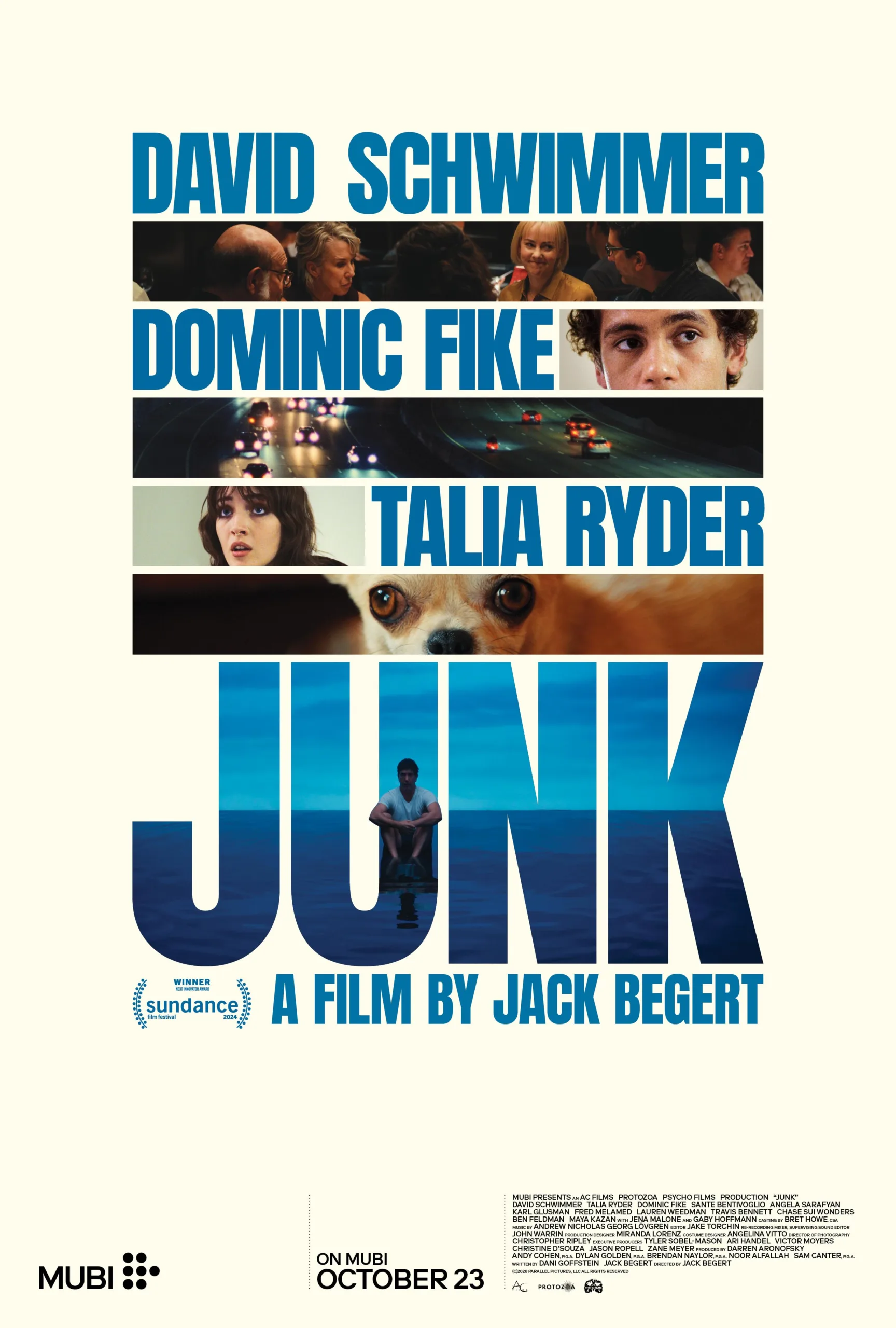
The summer of 2024 will be remembered as the messiest, yet most academic, rap beef of the century so far. On the 4th of July, Kendrick Lamar’s music video for “Not Like Us” dropped. The song was a scathing diss to Drake; the video was a joyous love letter to Los Angeles. Jack Begert, a music video director and editor, produced the project and now, making his feature film debut with “Junk,” directs (and co-writes with Dani Goffstein) his own ode to the City of Angels.
Set at the collision of two very different LA communities, “Junk” is a Venn diagram of a film. It examines opposing spheres of wealth and privilege, and where they meet angst and ambition. Specifically, this happens under the umbrella of addiction. Martin (David Schwimmer) is a pill-popping, white-knuckling writer trying to transition from the kitschy body-swap sitcom that made him a success to the world of auteur autofictional filmmaking. He’s crushed by writer’s block, clinical depression, and a fraught relationship with his condescending, perpetually unpleased wife (Jena Malone).
Martin constantly pleads to be understood. His therapist is less interested in hearing him out than in pushing a new prescription, and he has to fight for his life at a roundtable of highly pretentious conversation about the value of his dream.
Meanwhile, AJ (Dominic Fike) and Karla (Talia Ryder) are a drug-addicted duo of drifters. They make an odd pair (Karla is the little sister of AJ’s ex-girlfriend), and do even odder jobs to score. Buckled up as the getaway drivers for a home burglary, they get two-timed by the thieves: mugged of their phones, belongings, and car. The thieves rob AJ’s backpack from Karla’s car. It contains his passion project: a stack of documents that served as proof of concept for bringing an authentic LA taco truck to New York City.
He needs his bag before his 9 a.m. meeting, and it’s the night before Karla’s birthday. So the duo strays through the LA night with a stolen chihuahua, from pig-race parties with their eccentric drug dealer to a harrowing encounter at their supplier’s Patrick Bateman-esque apartment, hoping to salvage their tomorrow.
In an overly direct line of narration, Martin explains that there are two kinds of drug addicts: those with their name on the bottle and those without. It’s an evocative reflection of big pharma delivered with insecure clarity. Yet the overstatements of “Junk” don’t entirely detract from its impact. These protagonists are unlikeable but no less empathetic. Martin is a neglectful partner who values his ideas over people. AJ is selfish and manipulative. Karla is listless, blown any way so long as there’s a score on the other end. Yet these flaws are byproducts of an endless chain of desperate acts.
Begert plainly, yet sometimes poignantly, examines how culture and systems have produced these cultural kinks in the hose. Where, if anywhere, is the difference between who is to blame and who is responsible? Under capitalism, the guidebook of how to ascend is annotated with invisible ink. Martin, already in his desired industry, struggles to make something authentic because of marketability. AJ, trying to work from the ground up, lacks the resources to do so. Both of them are ridiculed for their optimism.
The film is sometimes funny and other times hard-edged. The side characters are caricatures. It uses animation spuriously well, and it’s a particularly effective, poetic tragicomedy. Fike feels deeply embedded in AJ’s truth. In a role somewhat similar to his part on “Euphoria,” he feels much more lived-in here. Ryder embodies a tragic tumbleweed of a character. She carries herself with a pitiful adolescent tenderness that shapes her sororal relationship with AJ. In this dynamic, the dialogue feels dead-on genuine. Schwimmer, as Martin, fumbles yet steadfastly pursues his own authenticity, oscillating between flat and affecting. Free of the script, which is over-hammered from Martin’s perspective, his performance shines most in moments of wordless disquiet.
Perhaps something that contributes to the personal touch of “Junk” is the cultural context of its stars. Fike, publicly and openly, has discussed his lifelong relationship with addiction, being raised poor with parents who were also addicts. Schwimmer is impossible to separate from the legacy of “Friends,” and therefore the late Matthew Perry, who struggled with addiction despite a successful career and resources.
It may be an act of projection to assume that these characters, each aligned so closely with the very public personal histories of the performers, contributed an additional passion for the project. Nevertheless, it is felt. “Junk,” while not quite finished, is a promising indie darling that closely resembles the type of film Martin longed to make, both in theme and biography; it makes you appreciate its existence, however imperfect.